Korean Highway Rest Stops Explained: What You Need to Know
- Note your bus departure time the moment the driver announces it — rest stop breaks are usually 15–20 minutes
- Head to the restroom first; they are clearly signed and always free
- Check the food court menu boards for pictures and point to order if needed
- Pay by card or cash at the counter; most stalls accept both
- Look for the regional specialty section near the entrance or exit for local snacks
- Buy convenience store drinks or packaged snacks for the road before you leave
- Return to the bus or car a few minutes early — buses leave on schedule
What a Korean Highway Rest Stop Is
If you stop at a Korean highway rest stop, you can usually eat a quick meal, use clean restrooms, and buy local snacks or regional souvenirs in one place. They are designed for fast, efficient breaks, so knowing what to expect helps you order quickly and avoid wasting time.
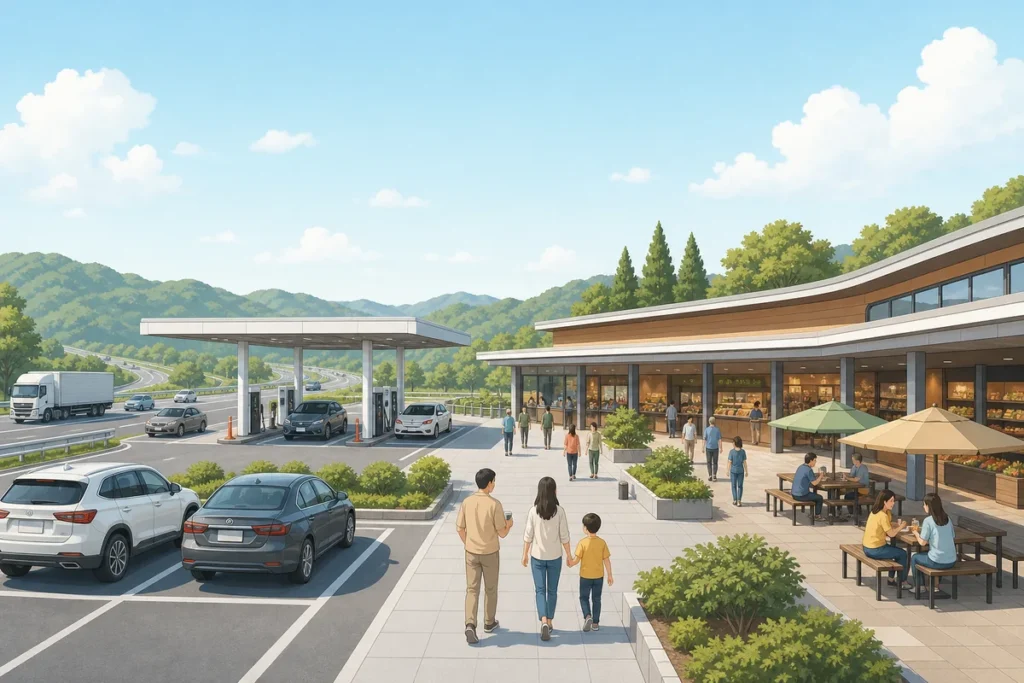
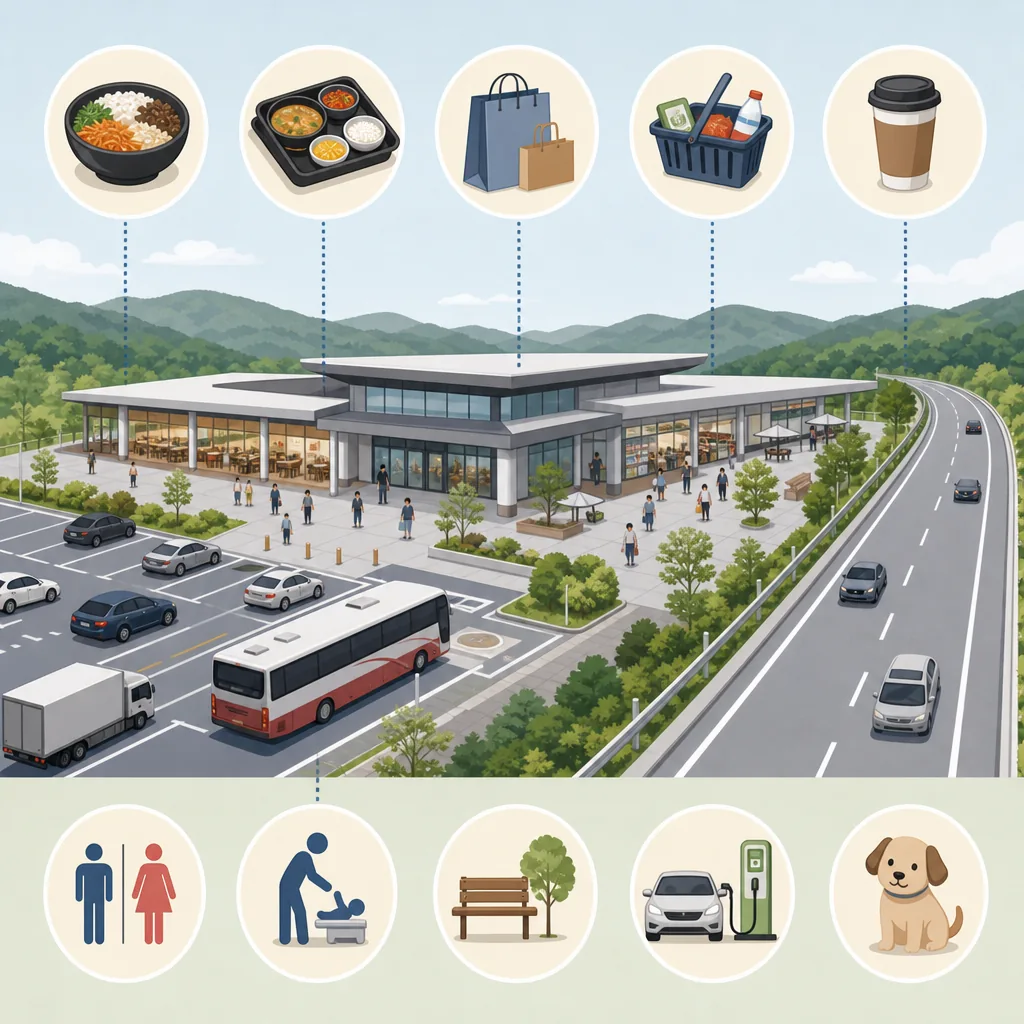
The Korean word is 휴게소 (hyugeso), and these are nothing like a simple gas station pull-off. Think of a compact travel plaza: a large building with a food court, a convenience store, a regional specialty shop, public restrooms, and sometimes a small outdoor seating area. The gas pumps are outside and separate from the main building, so you walk straight into the shopping and dining area.
Sizes vary a lot. A major rest stop on a busy route like the Gyeongbu Expressway can feel like a small indoor market. A smaller stop on a rural route might have just a few food stalls and a basic shop. Either way, the layout is intuitive: restrooms are always clearly signed, the food court is usually the largest section, and the specialty goods area is near the entrance or checkout zone.
Rest stops are operated by the Korea Expressway Corporation and private operators, and most are open 24 hours. Smaller ones on quieter routes may have reduced hours late at night, so if you are traveling very late, expect a simpler selection.
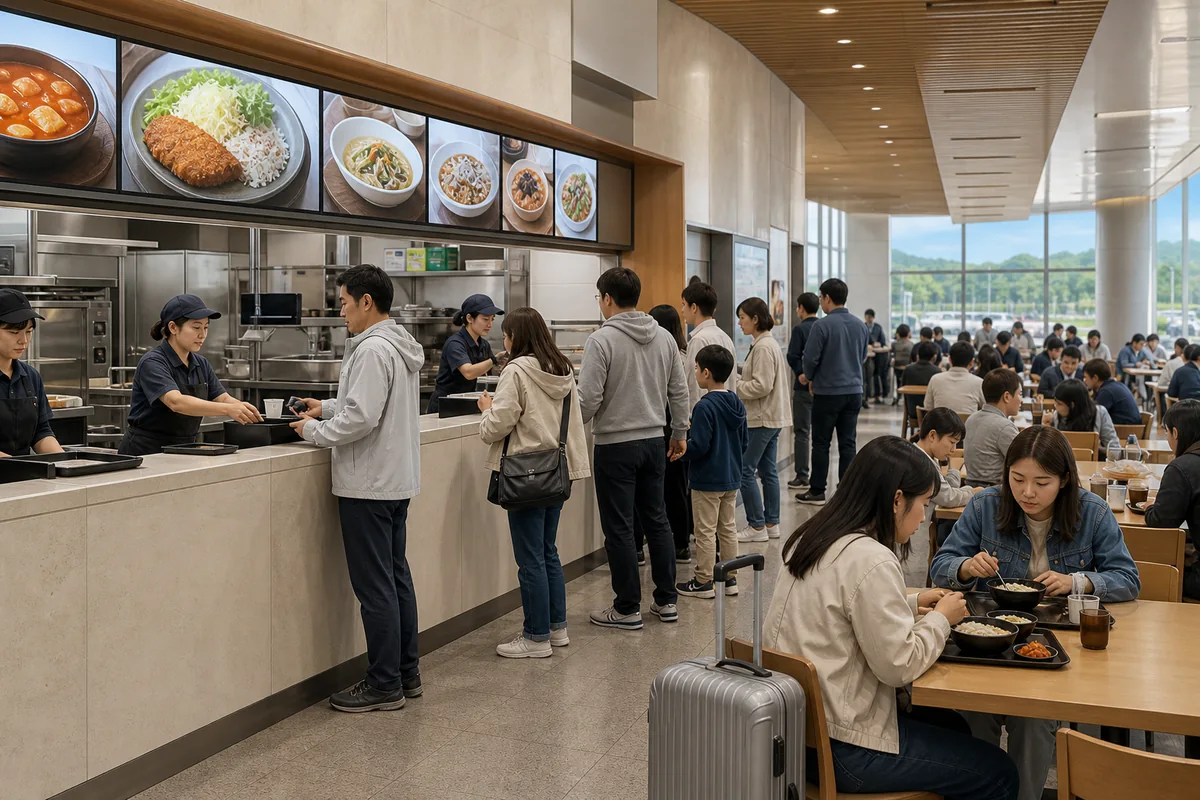
What You Can Eat There
The food at Korean highway rest stops is genuinely good — this is not airport-terminal mediocrity. Koreans take rest stop food seriously, and some dishes have become famous enough that people detour just to eat them.
The food court is a row of individual stalls, each selling a different type of dish. You walk along, look at the picture menus above each counter, decide, pay, and get your food within a few minutes. Most stalls have numbered trays or buzzers so you can sit down and wait if the dish takes slightly longer.
Common dishes you will see at almost every stop:
- Ramyeon (라면) — instant noodles cooked fresh, served hot, very cheap
- Bibimbap (비빔밥) — rice bowl with vegetables and a fried egg, quick and filling
- Sundae (순대) — Korean blood sausage, a classic rest stop snack sold by the portion
- Tteokbokki (떡볶이) — spicy rice cakes, usually sold at a small snack counter
- Kalguksu (칼국수) — hand-cut noodle soup, popular at larger stops
- Fried chicken or corn dogs — fast snacks near the entrance at many stops
- Coffee and drinks — a small café counter or vending machines are always available
Prices are reasonable. A bowl of ramyeon runs around 3,000–5,000 won, and a full rice dish is typically 7,000–10,000 won. You pay at the stall counter before or after ordering depending on the system — watch what the person ahead of you does. Card payment works at almost all food stalls now, and cash is always accepted.
If your break is only 15 minutes, go straight to the snack counters near the entrance — sundae, tteokbokki, corn dogs, and hotteok (sweet pancakes) are ready immediately and easy to eat standing up or back on the bus.
Useful Phrases at the Food Counter
How the Restroom and Facilities Work
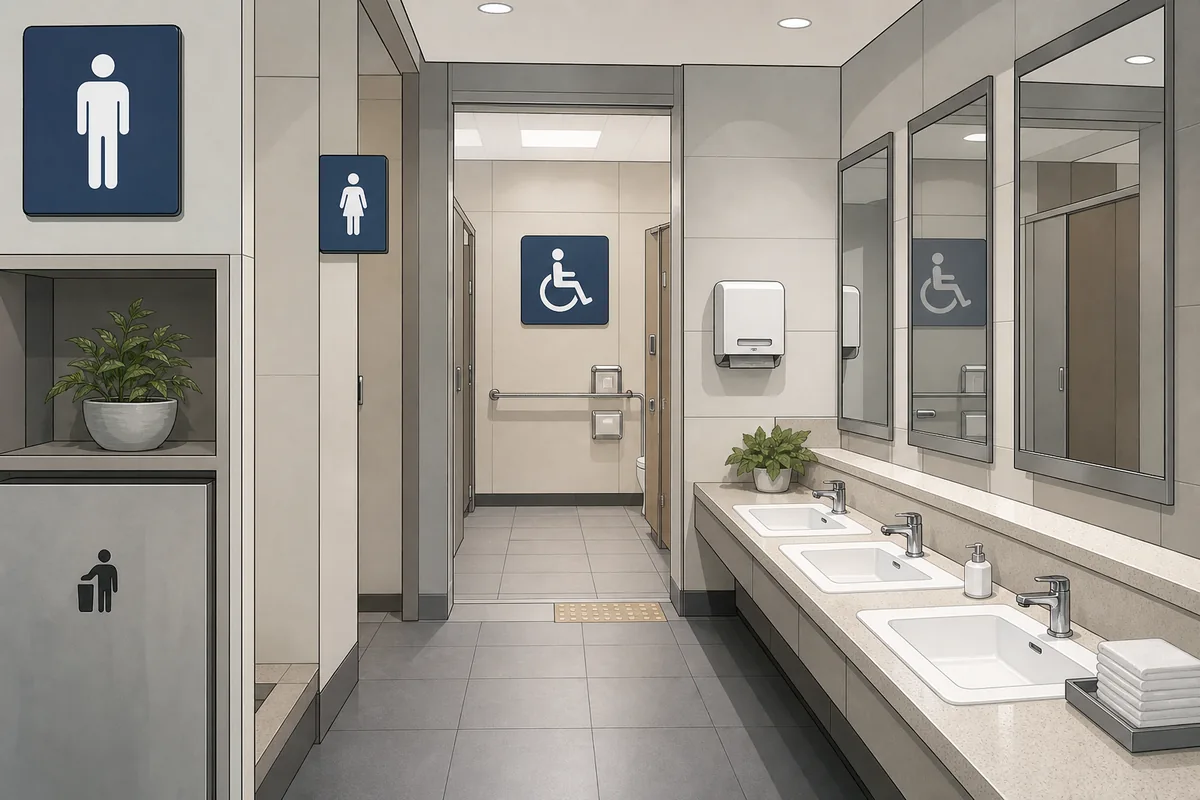
Restrooms at Korean highway rest stops are free, clean, and well-maintained. This is one of the things visitors consistently notice — the standard is genuinely high, even at smaller stops. Attendants clean them regularly throughout the day.
Finding them is easy. Look for the blue 화장실 signs as soon as you enter the building, or follow the pictogram signs on the walls. At larger stops, restrooms are sometimes in a separate building just outside the main entrance — the signs will guide you there.
Most restrooms now have Western-style sit-down toilets, though a few older or smaller stops still have squat toilets in some stalls. If you prefer Western style, check the door icons or try a different stall. Toilet paper is provided inside each stall. At some stops, there is a note asking you to dispose of used paper in the bin rather than flush it — follow the sign in the stall if you see one.
Baby changing facilities are available at most medium and large stops, usually inside or just outside the main restroom area. Nursing rooms (수유실, su-yu-sil) are also present at many larger stops — look for the sign near the restrooms or ask at the information desk.
Other facilities you will often find:
- Convenience store — drinks, snacks, travel essentials, phone charger cables
- ATM — usually near the entrance; accepts foreign cards at most major stops
- Seating areas — indoor tables and sometimes outdoor benches
- Smoking areas — designated outside, away from the main entrance
- EV charging stations — available at newer or upgraded stops
Signs to Know
What Regional Specialties and Souvenirs to Look For
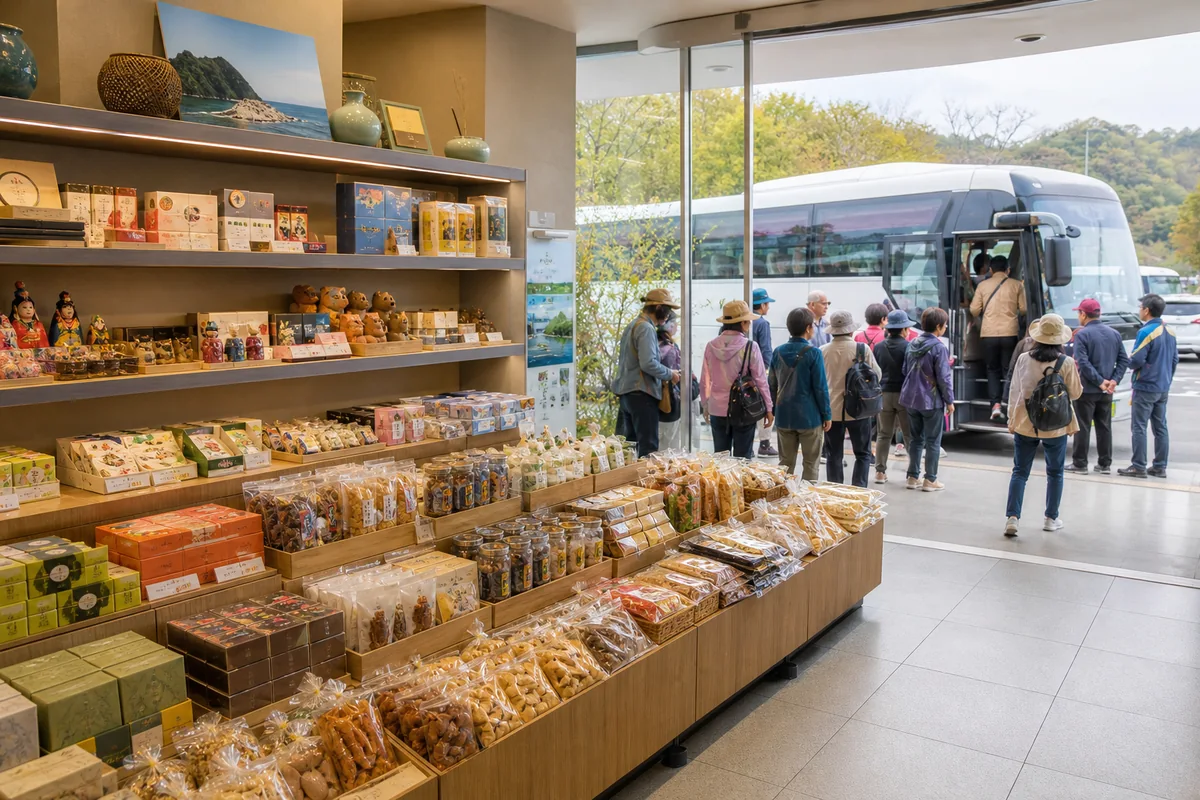
This is where Korean highway rest stops become genuinely interesting. Each stop stocks regional products from the area it serves, so what you find at a stop on the way to Gyeongju is different from what you find near Jeonju or on the way to Sokcho. Browsing the specialty section is one of the small pleasures of a Korean road trip.
The regional goods section is usually near the main entrance or along one wall of the building. It looks like a cross between a gift shop and a local market stall, with packaged foods, snacks, and sometimes fresh or semi-fresh local products.
Things worth looking for by region:
- Gangwon-do (east coast / mountains) — corn snacks, dried squid, pine nut products, potato-based foods
- Gyeongju area — hwangnam bread (황남빵), a red bean pastry that is famous across Korea
- Jeonju / Jeolla area — fermented sauces, traditional rice crackers, dried persimmon
- Chungcheong area — walnut cookies (호두과자), one of the most iconic Korean rest stop snacks
- Gyeonggi / Seoul outskirts — a wider mix, less regionally distinct but still well-stocked
Walnut cookies (호두과자, hodu-gwaja) deserve a special mention. They are small, warm, walnut-shaped pastries filled with sweet red bean and a walnut piece, and they are sold fresh at many rest stops. If you see them being made in a little press machine at a counter, buy a bag — they are best eaten warm.
Packaged snacks travel well and make good gifts. Prices are fair and usually labeled clearly. You do not need to bargain; these are fixed-price shops.
How Bus Travelers Use Rest Stops
If you are traveling by intercity express bus (고속버스, gosok-beoseu) or long-distance bus (시외버스, sioe-beoseu), your bus will stop at one or more highway rest stops during the journey. This is standard practice on routes longer than about 90 minutes to two hours.
Here is how it works in practice: the driver will pull into the rest stop and make a short announcement in Korean. The key information is the departure time — how many minutes until the bus leaves. Listen for a number followed by 분 (bun, meaning minutes). Common break lengths are 15 minutes (15분) and 20 minutes (20분). If you miss the announcement, ask a fellow passenger or check the time yourself and aim to be back at the bus five minutes early.
The bus parks in a designated bus bay, separate from the car parking area. When you return, look for the bus bay signs or simply walk back toward where you arrived. Your bus will be there — but it will leave on time whether you are on it or not.
During your break, you have full freedom to use the restroom, eat, shop, or just stretch your legs. You do not need to stay near the bus. Just manage your time. A 20-minute break is comfortable enough for a restroom stop, a quick snack purchase, and a coffee. A 15-minute break means restroom first, then one quick purchase — do not try to sit down for a full meal.
Phrases for Bus Stop Situations
What to Expect During Busy Travel Times
Korean highways get very busy during national holidays, and rest stops feel it immediately. The three biggest travel periods are Chuseok (추석, the autumn harvest holiday), Seollal (설날, Lunar New Year), and the summer vacation peak in late July and August. During these times, rest stops are crowded, food lines are longer, and parking lots fill up fast.
If you are driving during a holiday period, expect to wait 10–15 minutes for food instead of the usual 3–5 minutes. Restroom queues, especially for women, can be long. The regional specialty shops get picked over quickly, so popular items like fresh walnut cookies sell out fast.
Practical adjustments for busy periods:
- Use the restroom before you think you need to — queues build up fast
- Go for the quickest food options: pre-packaged snacks, corn dogs, or drinks from the convenience store
- If you are driving, consider stopping at smaller, less-famous rest stops on the same route — they are often much quieter
- Give yourself extra time at each stop; everything moves slower on holiday weekends
Outside of holiday periods, rest stops run smoothly and efficiently. A normal weekday or weekend stop is pleasant and unhurried.
Quick Tips for First-Time Visitors
- Everything is labeled with pictures. You do not need to read Korean to order food — point at the menu photo and say 이거 주세요 (i-geo ju-se-yo).
- Card payment is widely accepted, but keep some cash for very small snack stalls or vending machines that may not take cards.
- The convenience store inside the rest stop is great for road snacks, drinks, and basic travel supplies. Prices are similar to regular convenience stores in the city.
- Do not skip the regional snack section. Even if you are not hungry, a bag of local crackers or a box of regional sweets makes a good souvenir and costs very little.
- Trash bins are clearly placed near food areas and exits. Sort your trash if bins are labeled — most stops have separate bins for general waste and recyclables.
- If you are driving, the fuel station is separate from the main building. Fill up before you park and walk in, or after you finish inside.
- Phone signal is generally fine at rest stops, so you can check maps, translate menus, or message your travel group without issues.
Frequently Asked Questions
What can a visitor buy at a Korean highway rest stop?
You can buy hot meals, snacks, coffee, packaged regional foods, souvenirs, travel essentials, and convenience store items. Most stops have a food court with multiple stalls, a convenience store, and a regional specialty section stocking local products from the surrounding area.
Are toilets free at Korean rest stops?
Yes, restrooms at Korean highway rest stops are completely free and well-maintained. You do not need coins or tokens. Toilet paper is provided inside each stall.
Can a visitor eat Korean food quickly at a highway rest stop?
Absolutely. Most food stalls serve dishes within a few minutes, and snack counters selling tteokbokki, sundae, corn dogs, and hotteok are ready immediately. Even with a 15-minute bus break, you have enough time to grab a snack and a drink.
Do intercity buses stop at highway rest stops in Korea?
Yes, intercity express buses and long-distance buses regularly stop at highway rest stops on routes longer than roughly 90 minutes. The driver announces the break time in Korean — listen for the number of minutes. Buses leave on schedule, so keep track of your time and return early.
Korean Highway Rest Stops Explained becomes easier to handle when you recognize the situation and follow the practical steps above.
Korean Highway Rest Stops Explained becomes easier to handle when you recognize the situation and follow the practical steps above.
Note: This guide is for travel navigation in Korea. It is not medical, legal, or emergency professional advice. For urgent situations, contact local emergency services, official staff, or your embassy/consulate as appropriate.
Sources & Verification
- AREX 공항철도 — www.arex.or.kr
Last checked: July 30, 2026