Quick Answer: Which Terminal You Probably Need
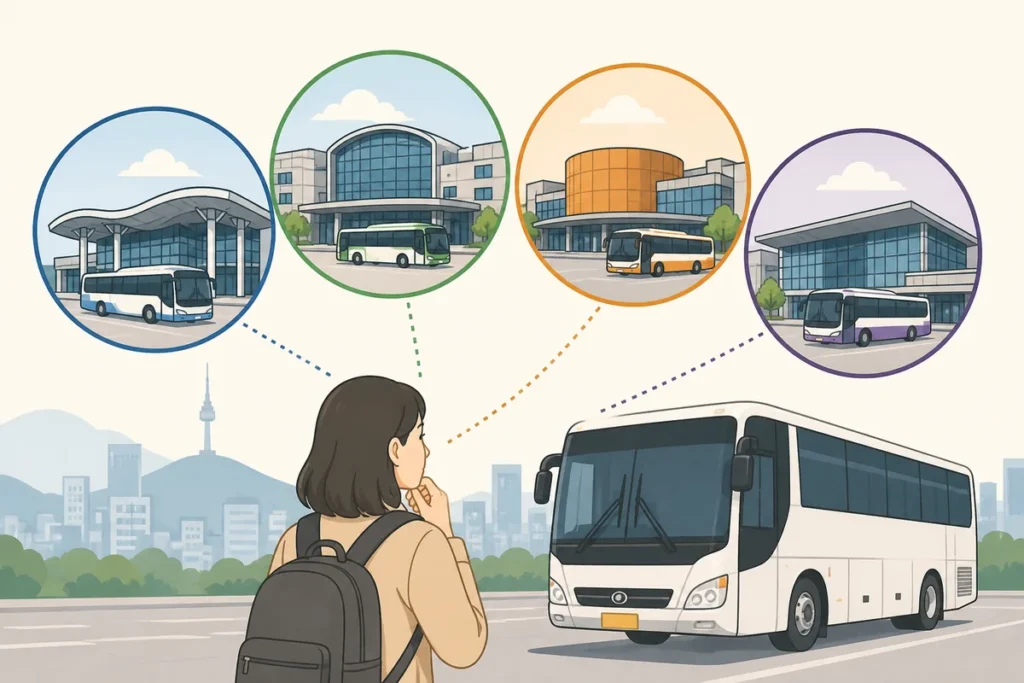
If you know your destination but not which seoul bus terminal to use, start by checking the route type and direction first. In most cases, Seoul Express Bus Terminal or Central City handles long-distance highway routes heading south and southwest, Dong Seoul covers the east, and Nambu fills in routes that the bigger terminals do not serve well.
If you know your destination but not which seoul bus terminal to use, the first thing to sort out is route type and direction. In most cases: Seoul Express Bus Terminal or Central City handles long-distance highway routes heading south and southwest, Dong Seoul covers the east, and Nambu fills in routes that neither of the bigger terminals serves well. Check Seoul Metro | 공지사항 for the current details.
How Seoul Bus Terminals Are Divided
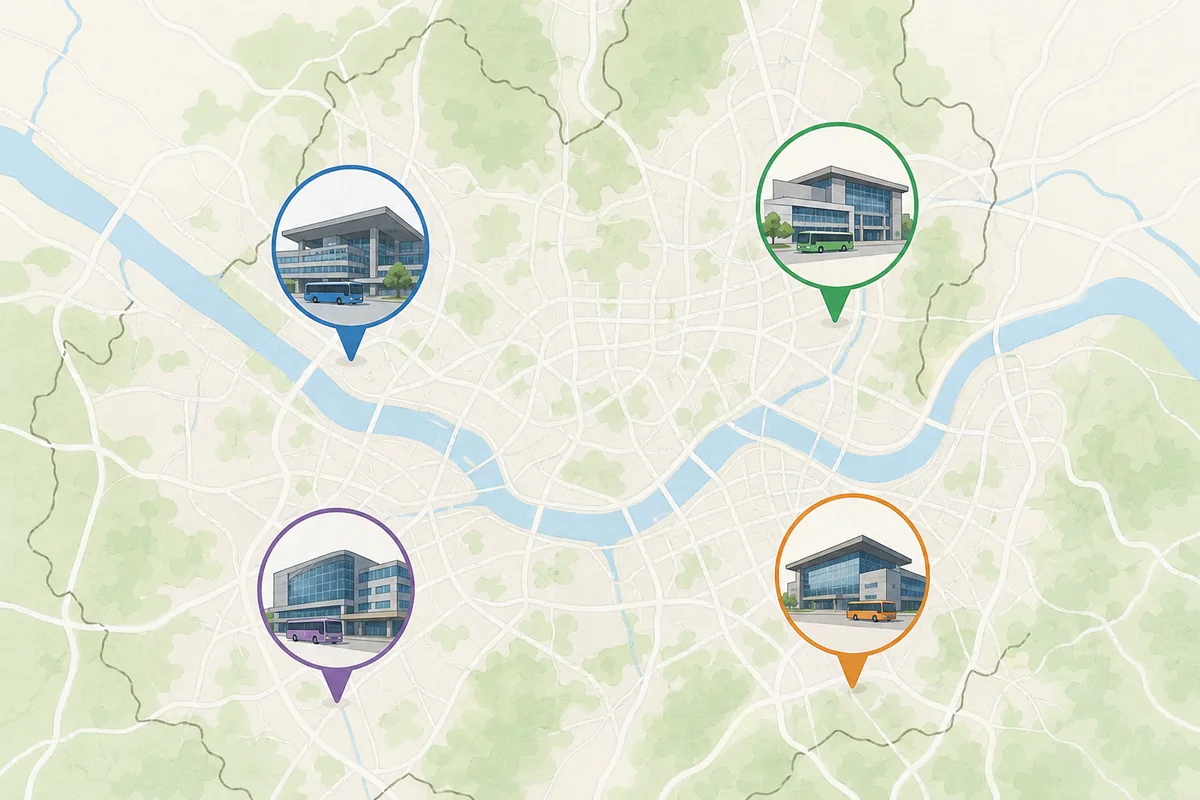
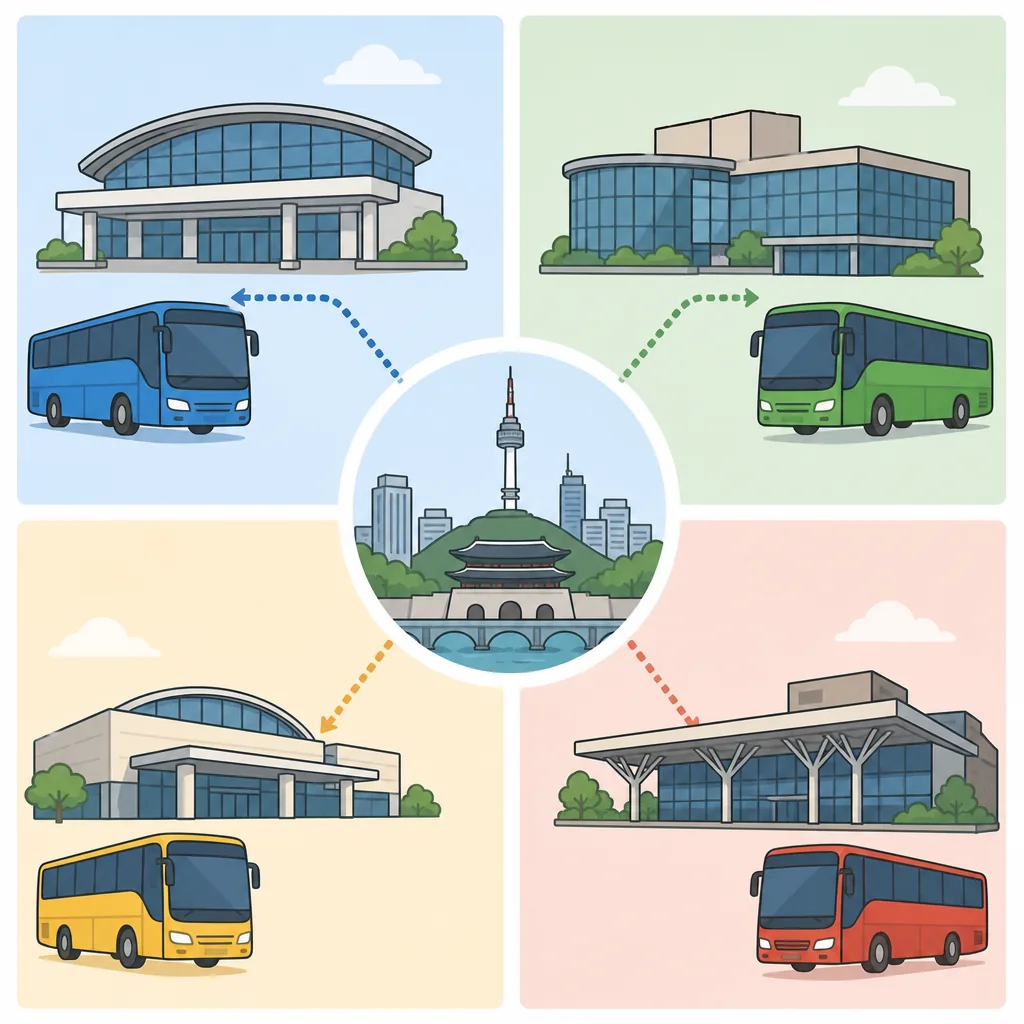
Seoul does not have one central bus station. Routes are split across four main terminals, and the split follows a rough geographic and route-type logic, not alphabetical order, not bus company, and not how far you are going.
The four terminals foreign visitors most often need are:
- Seoul Express Bus Terminal (서울고속버스터미널) — Gangnam side, at Express Bus Terminal station
- Central City Terminal (센트럴시티 / 호남선) — attached to Seoul Express Bus Terminal, same subway station, different building
- Dong Seoul Terminal (동서울터미널) — east side of the city, at Gangbyeon station
- Nambu Terminal (남부터미널) — south Gangnam, at Nambu Bus Terminal station
The confusion usually starts because two of these share a subway station, and because “express” sounds like it describes speed rather than a specific place.
Seoul Express Bus Terminal vs Central City: The Common Confusion
These two are the ones that trip people up most. They are not the same terminal, but they are next to each other, connected by a shopping mall, and they share the Express Bus Terminal subway station (고속터미널역) on Lines 3, 7, and 9.
Seoul Express Bus Terminal handles routes on the Gyeongbu line (경부선): Busan, Daegu, Daejeon, Ulsan, and cities along that corridor heading southeast.
Central City Terminal handles routes on the Honam line (호남선): Gwangju, Mokpo, Jeonju, Yeosu, and destinations in the Jeolla provinces heading southwest. It also covers some Chungcheong routes and has connections toward Jeju ferry terminals.
When you arrive at the subway station and follow signs for “고속터미널,” you will see both buildings. The key is to know which one your route departs from before you get there. Booking on the official site will show the terminal name clearly, but only if you read it carefully rather than clicking the first result.
Dong Seoul Terminal and Nambu Terminal: When They Matter
Dong Seoul Terminal (동서울터미널) is the right starting point for eastern Korea. Gangneung, Sokcho, Yangyang, Wonju, Chuncheon, and many smaller towns in Gangwon Province depart from here. It is at Gangbyeon station (강변역) on Line 2, which is straightforward to reach from most parts of Seoul.
Nambu Terminal (남부터미널) is smaller and serves a patchwork of southern routes that do not fit neatly into the express network. Think Suncheon, Hadong, Tongyeong, Geoje, and some routes into South Gyeongsang Province. It is at Nambu Bus Terminal station (남부터미널역) on Line 3.
A practical note: some destinations are served from multiple terminals. Cheonan, for example, appears at both Seoul Express Bus Terminal and Dong Seoul depending on the operator and route type. This is why checking the booking site by destination, rather than guessing by region, is the reliable method.
Highway Bus vs Intercity Bus: Why the Category Changes Your Terminal
Korea separates its long-distance buses into two official categories, and this distinction affects which terminal you use.
고속버스 (express bus) runs on highways with few or no stops. These routes operate out of Seoul Express Bus Terminal and Central City Terminal. Tickets are often bookable online in advance, seating is assigned, and the buses tend to be faster.
시외버스 (intercity bus) stops at towns along the route and serves destinations that the express network does not reach. Dong Seoul and Nambu Terminal are primarily intercity terminals. Some routes at these terminals still require advance booking; others sell tickets at the counter on the day.
The practical takeaway: if a booking site shows your destination only under 시외버스, you are almost certainly heading to Dong Seoul or Nambu, not to the main express terminal complex in Gangnam.
How to Check the Correct Terminal Before You Leave
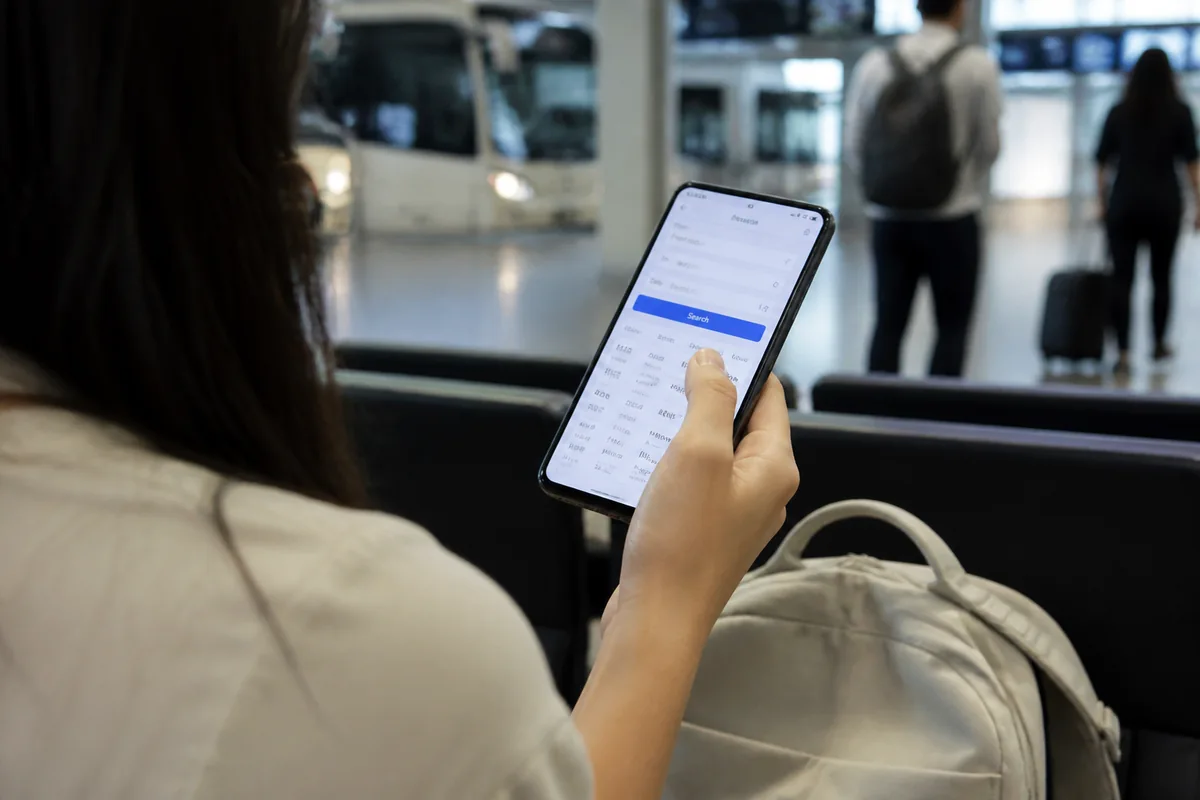
The most reliable method is to search by destination on an official Korean bus booking platform. Two widely used options are Kobus for express routes and Bustago for intercity routes. Both have English-language interfaces.
When you enter your destination city, the result page will show the departure terminal name alongside the departure time and seat class. Read that terminal name before you book; that is the building you need to go to.
Before You Book: Quick Checklist
- Search your destination on Kobus for express routes or Bustago for intercity routes
- Note the exact terminal name shown on the result, not just the time
- Check which subway station serves that terminal
- If results appear on both sites, compare times and confirm which terminal each uses
- Save a screenshot so the terminal name is visible offline
If you cannot find your destination on either site, it is worth checking whether a KTX train or intercity train covers the same route. Some cities are better connected by rail than by bus from Seoul.
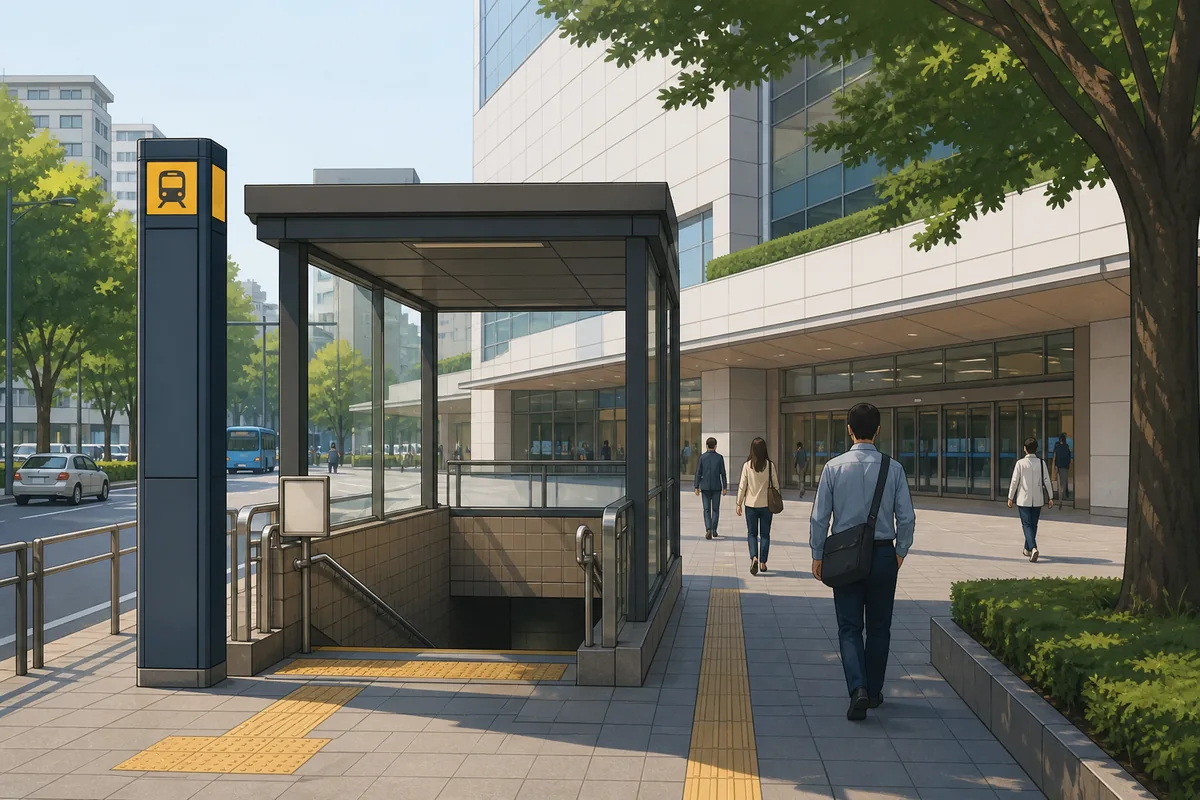
Subway Access: Which Station for Each Terminal
For Seoul Express Bus Terminal and Central City, exit numbers matter. Once you are at 고속터미널역, follow signs for the specific terminal name, not just “bus terminal.” The underground mall connecting the two buildings can disorient first-time visitors, so having the Korean name of your terminal written down helps.
Korean Signs and Words to Know at the Terminal
Korean Phrases You Can Show
Common Mistakes Foreign Visitors Make
Assuming “Express Bus Terminal” is one building. The subway station name leads many visitors to walk into Seoul Express Bus Terminal when their ticket is for Central City, or vice versa. The station serves both, but the gates do not.
Booking on the wrong platform. Kobus only lists express bus routes. If your destination is not showing up there, it does not mean no bus exists; it means the route runs as an intercity service, and you need to check Bustago or the terminal’s own schedule board.
Confusing bus category with terminal name. “고속버스” is a bus type, not a terminal name. Dong Seoul Terminal also runs some routes labeled 고속 depending on the operator, so the category alone does not tell you which building to go to.
Arriving with no buffer time. Korean intercity buses depart on schedule. If your ticket says 14:30, the bus closes its doors at 14:30. Aim to be at the departure platform at least 15 minutes early, especially at larger terminals where finding the right platform takes a few minutes.
Not reading the terminal name on the ticket. The booking confirmation shows the departure terminal in Korean. If you do not read it before leaving your accommodation, you may only notice the mismatch when you are already underground.
Official Resource
Use the official reservation systems to confirm the exact departure terminal before you travel: Kobus for express routes and Bustago for intercity routes.
FAQ
Which Seoul bus terminal goes to my city?
The fastest way to find out is to search your destination on Kobus for express routes or Bustago for intercity routes. The result will show the departure terminal name. As a rough guide: southwest destinations like Gwangju and Jeonju use Central City; southeast destinations like Busan and Daegu use Seoul Express Bus Terminal; eastern destinations like Gangneung and Sokcho use Dong Seoul; and some southern routes use Nambu. Always confirm on the booking site, because some cities have routes from more than one terminal.
What is the difference between express bus and intercity bus in Korea?
Express buses (고속버스) run on highways with no intermediate stops, operate from Seoul Express Bus Terminal or Central City, and usually have assigned seating. Intercity buses (시외버스) stop at towns along the route and cover destinations the express network does not reach. They mostly depart from Dong Seoul or Nambu Terminal. The ticket price and travel time differ, and so does the terminal you need to go to.
Is Central City the same as Seoul Express Bus Terminal?
No. They are two separate terminals that share the same subway station, Express Bus Terminal (고속터미널역). Central City handles Honam-line routes to the southwest, while Seoul Express Bus Terminal handles Gyeongbu-line routes to the southeast. The buildings are connected by an underground mall, but the departure gates are separate.
How do I check the correct terminal before booking a bus?
Search your destination city on Kobus or Bustago. Both sites display the departure terminal name on the results page. Read that name carefully and note it before completing your booking. If you are unsure whether the name refers to Seoul Express Bus Terminal or Central City, look for the Korean text: 서울고속버스터미널 versus 센트럴시티.
Which subway station is closest to Seoul Express Bus Terminal?
Express Bus Terminal station (고속터미널역) on Lines 3, 7, and 9. The same station also serves Central City Terminal. For Dong Seoul Terminal, use Gangbyeon station on Line 2. For Nambu Terminal, use Nambu Bus Terminal station on Line 3.
Note: This guide is for travel navigation in Korea. It is not medical, legal, or emergency professional advice. For urgent situations, contact local emergency services, official staff, or your embassy/consulate as appropriate.
Sources & Verification
- Seoul Metro | 공지사항 — Seoul Metro
Last checked: August 14, 2026