Quick Answer
bus taiti in Korea means tapping your transit card when you board and again when you exit. Find your stop, check the bus number and direction, board through the front door, tap your T-money or Cashbee card on the reader, hold on while riding, press the stop button before your stop, and tap again as you leave through the rear door.
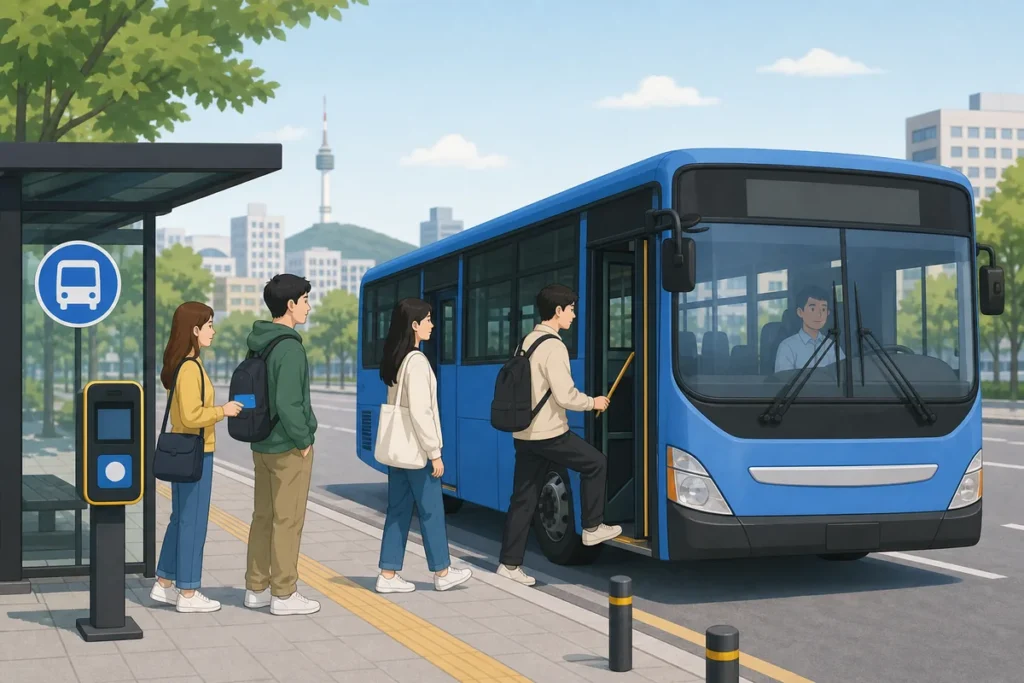
Table of Contents
- Introduction
- How bus taiti in Korea Works
- Step-by-Step: How to Ride a Korean Bus
- Bus Types You Might See
- Common Situations
- What Foreigners Often Get Wrong
- Useful Korean Phrases
- Warnings and Things to Check
- FAQ
- Summary
Introduction
bus taiti in Korea is one of the most useful transit skills for visitors who want to move around beyond the subway. Korean buses are frequent, affordable, and often more direct for neighborhood travel. The process is simple once you know the routine: check the stop, board the correct bus, pay with a transit card, press the stop button, and tap out when you leave.
This guide explains the whole process in plain English so you can ride a Korean city bus with confidence on your first try.
How bus taiti in Korea Works
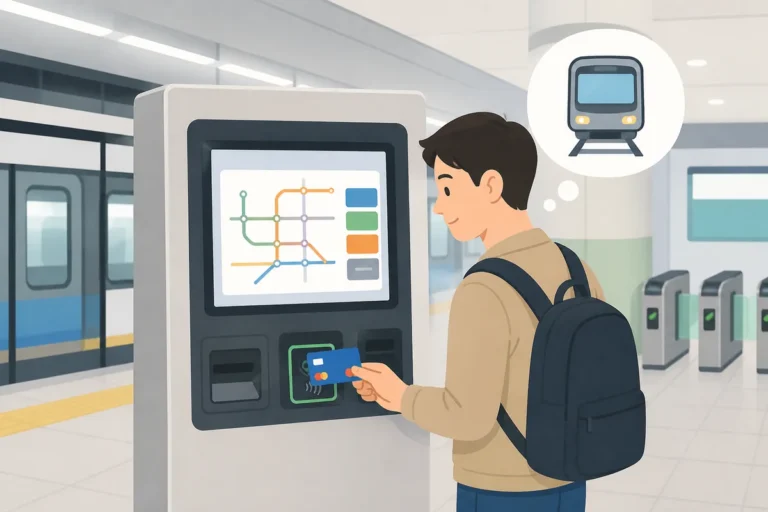
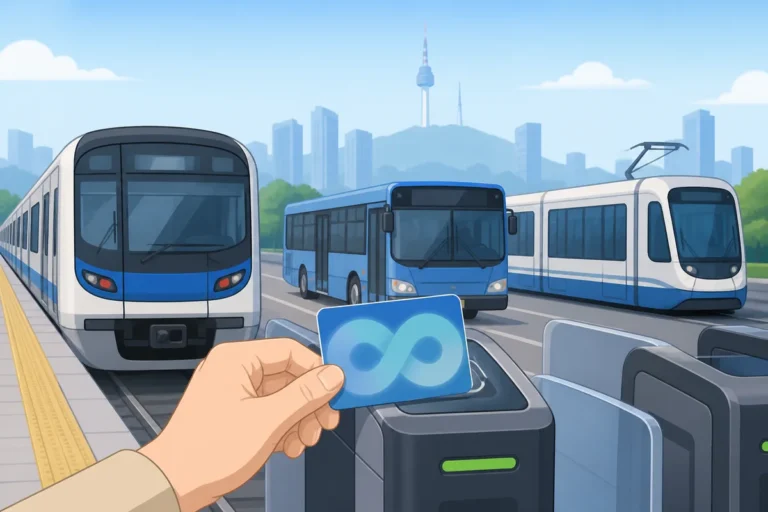
Korean city buses run on fixed routes identified by number. Each route stops only at designated bus stops, and the bus may not stop unless someone signals to board or a passenger is waiting to get off. Most riders pay with a rechargeable transit card such as T-money or Cashbee, which also works on the subway and, in many places, taxis.
Cash is sometimes accepted, but a transit card is usually easier and can help with transfer discounts. In many cities, the fare is distance-based, so tapping out matters because it tells the system where you exited.
Step-by-Step: How to Ride a Korean Bus
Step 1 — Find the Right Bus Stop
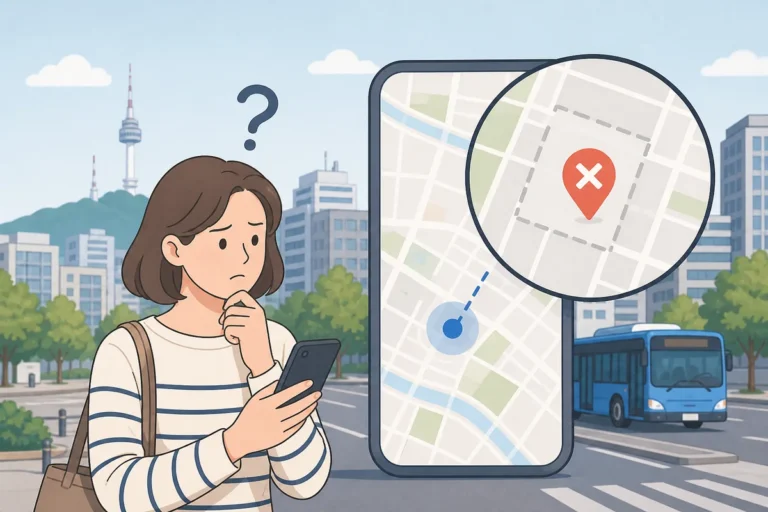
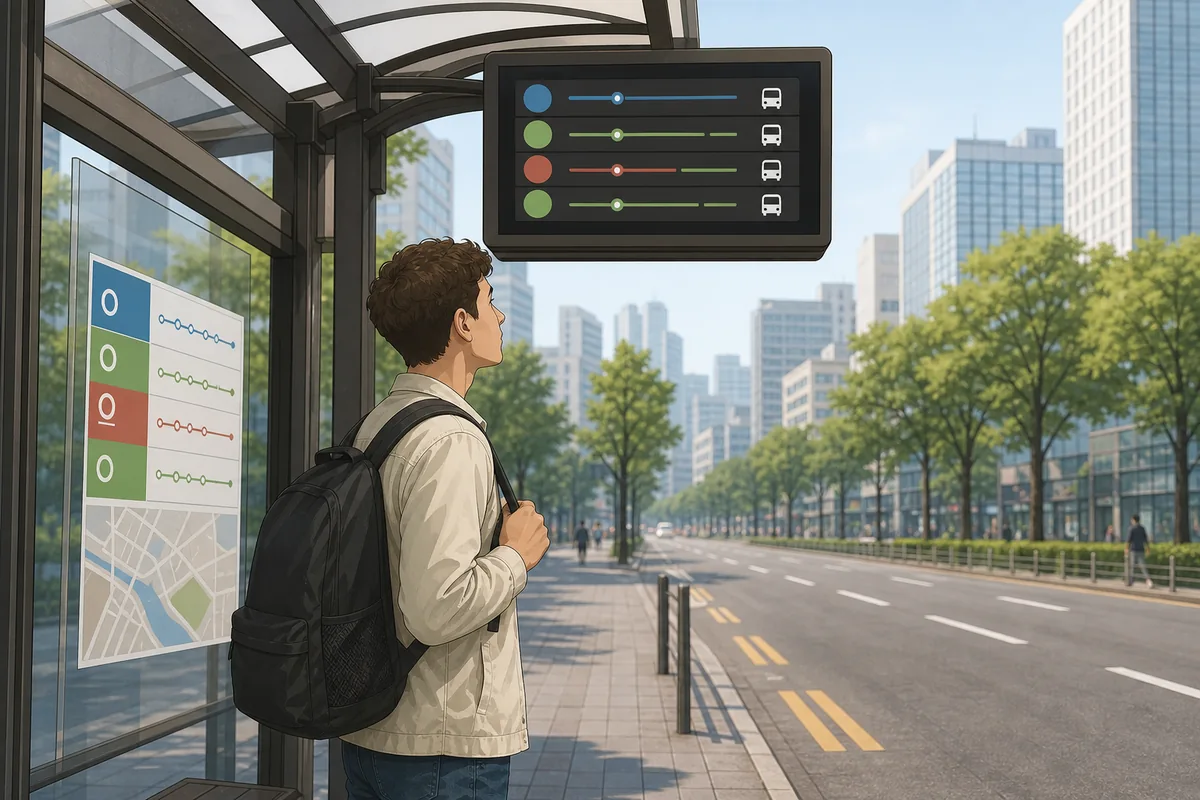
Use Naver Map or Kakao Map to find the correct stop name and bus number. Bus stops usually have a sign listing the routes that stop there, plus an electronic arrival board in many cities. Make sure you are on the correct side of the street for your direction of travel.
Step 2 — Signal the Bus
When your bus approaches, raise your hand clearly. In Korea, drivers may not always stop if the bus looks empty or if they are unsure anyone wants to board.
Step 3 — Board Through the Front Door
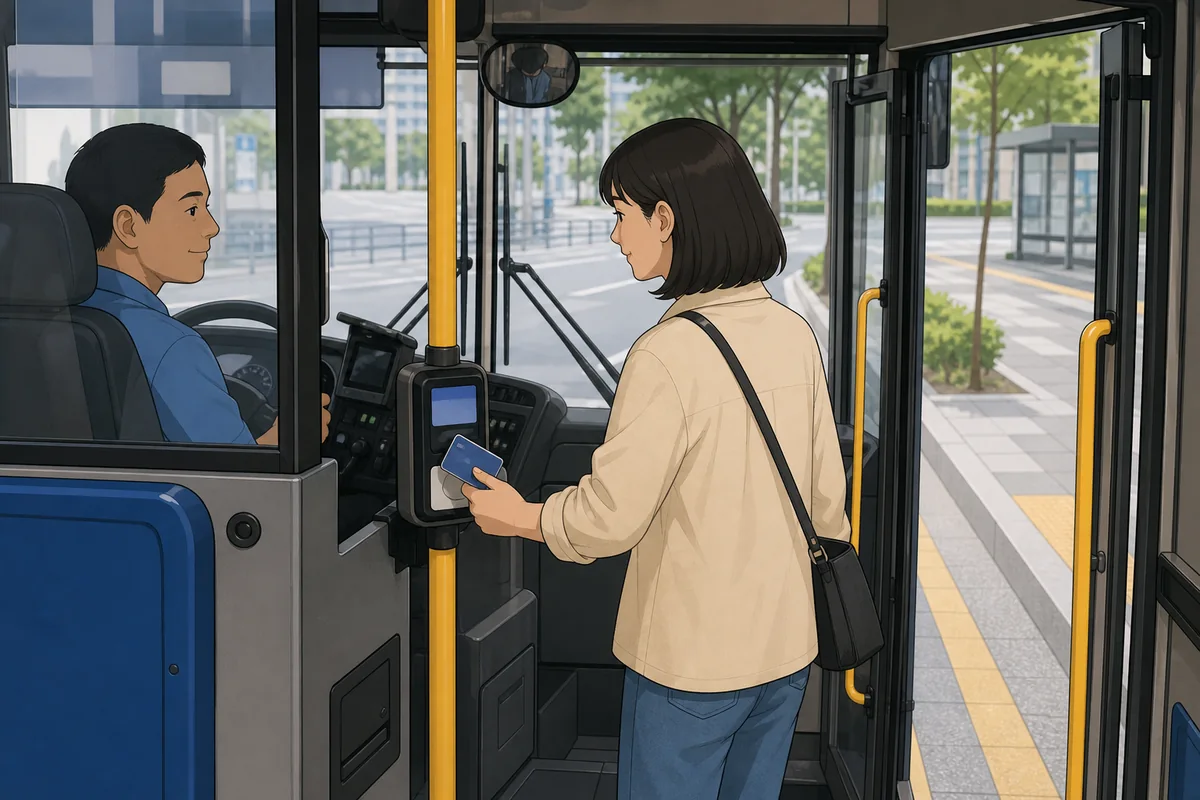
Board through the front door only. The card reader is usually near the driver. Tap your transit card firmly on the reader and wait for the beep. If you are paying cash, exact change may be required and change is usually not given.
Step 4 — Move In and Watch Your Stop
Move inside quickly so other passengers can board. Hold a rail or strap, because city buses can brake sharply. Follow the stop announcements on the display or in audio form, and watch your map app if you want extra confidence.
Step 5 — Press the Stop Button
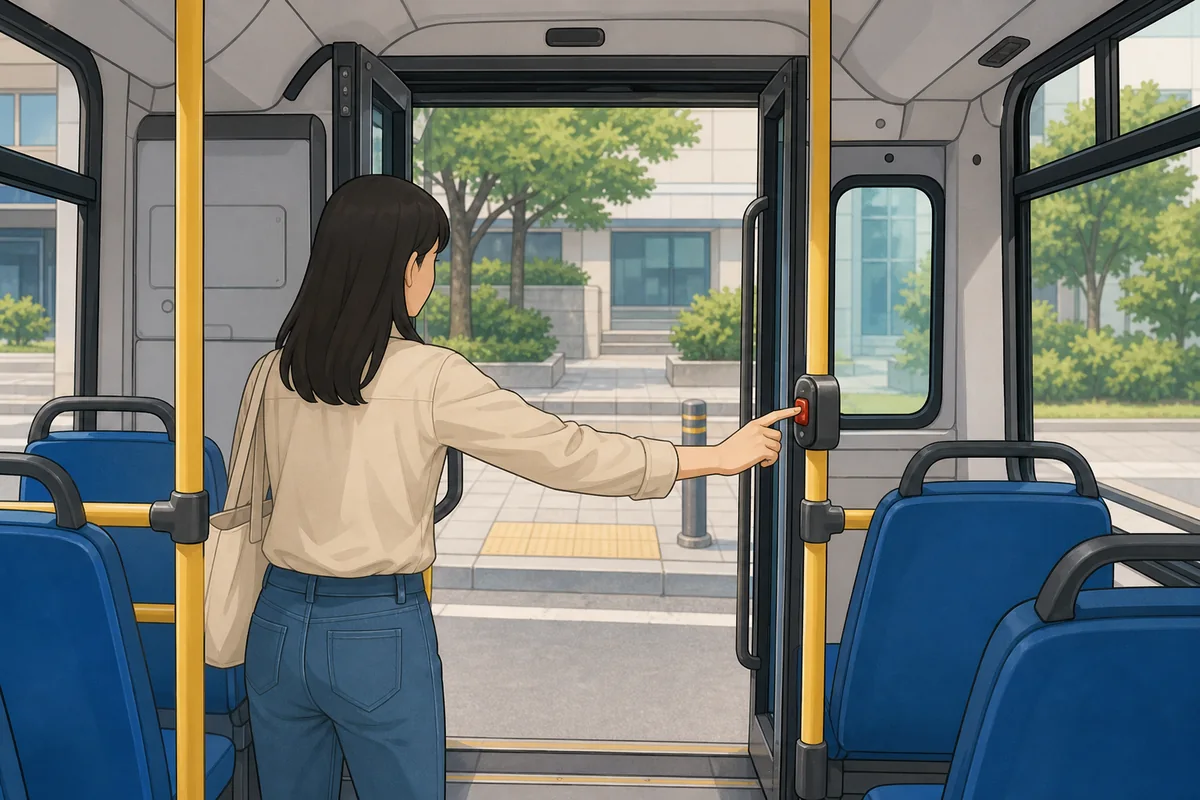
Press the stop-request button before your stop. On quieter routes, the driver may not stop unless someone has requested it. When you press the button, you should hear a chime or see a signal confirm the request.
Step 6 — Exit Through the Rear Door and Tap Out
As the bus slows, move toward the rear door. Tap your transit card on the reader near the rear door before stepping off. This tap-out step helps calculate your final fare and transfer eligibility.
Bus Types You Might See
In large cities such as Seoul, buses are often color-coded. The system can vary by city, but these general categories are common in Seoul:
| Color | Type | General Use |
|---|---|---|
| Blue | Trunk route | Long cross-city routes |
| Green | Branch route | Neighborhood routes and subway connections |
| Red | Wide-area route | Longer commuter routes to suburbs |
| Yellow | Circular route | Short downtown loops |
Color and fare systems can vary by city, so it is best to confirm details with official local transit information.
Common Situations
The Bus Is Very Crowded
Rush-hour buses can be packed. Board if there is space, move inward quickly, and hold on securely. If the bus is too full to board safely, wait for the next one.
You Boarded the Wrong Direction
If you realize you are going the wrong way, press the stop button and get off at the next stop. Cross the street and take the same route number in the opposite direction.
You Want to Transfer
Tap out when you exit the first bus, then tap in again on the next bus or subway within the transfer window. The exact rules can vary by city, so local transit apps or official city transport pages are the safest reference.
Night Buses
Some cities, including Seoul, run late-night buses. The route system and stop coverage may differ from daytime buses, so check the route in advance if you are traveling late.
Warnings and Things to Check
- Always tap out. Forgetting the rear-door tap can affect your fare and transfers.
- Check the full bus number. Similar numbers can mean very different routes.
- Do not rely on cash alone. A transit card is usually easier and more reliable.
- Signal clearly when boarding. The bus may not stop automatically at an empty stop.
- Hold on at all times. Korean buses can start and stop quickly.
What Foreigners Often Get Wrong
Forgetting to Tap Out
This is the most common mistake. Make tap-out part of the routine every time you get off.
Boarding the Rear Door
The rear door is for exit. Board through the front door so your card is read correctly and the driver can see you.
Assuming the Bus Stops Automatically
In some cases, you need to signal the driver or press the stop button yourself. Do not assume the bus will stop without a request.
Confusing Similar Route Numbers
Double-check the number before boarding. A small difference in digits can mean a completely different route.
Useful Korean Phrases for the Bus
FAQ
Can I use a foreign credit card on a Korean bus?
Some buses may accept contactless payment, but it is not always reliable. A local transit card is the safest option for most visitors.
What if I miss my stop?
Get off at the next stop and use your map app to return or continue by another bus or subway line.
Do I need to tap out if I paid cash?
Cash payment rules can vary, but transit-card tap-out is the standard and most reliable method for correct fare handling.
Are bus rules the same in every Korean city?
The basic process is very similar nationwide, but fares, transfers, and route details can vary slightly by city.
Can I bring luggage on a Korean bus?
Small bags are fine, but large luggage can be difficult on crowded city buses. If you have big suitcases, a taxi or airport bus may be easier.
Summary
bus taiti in Korea is simple once you learn the routine: find the right stop, signal the bus, board through the front door, tap your card, press the stop button, and tap out at the rear door. If you remember those steps, riding a Korean city bus becomes easy and efficient.
For reliable route and fare details, always check official transit information before you travel.