K-pop Concert Entry Rules in Korea: Identity Check, Admission, and Waiting Line
K-pop concert entry rules in Korea can be stricter than many first-time visitors expect. At the venue, staff usually check your ticket, your identity document, and sometimes your booking account or QR code before letting you enter. This guide explains the typical process from arrival to gate entry so you can prepare with fewer surprises.
K Pop Concert Entry Rules: What You Need to Know
Bring your physical passport in most cases, because the name on the ticket usually has to match your ID exactly. Arrive early, especially for standing zones or fan club entry. Follow the official organizer notice for your specific concert, since rules can change by artist, venue, and ticket platform.
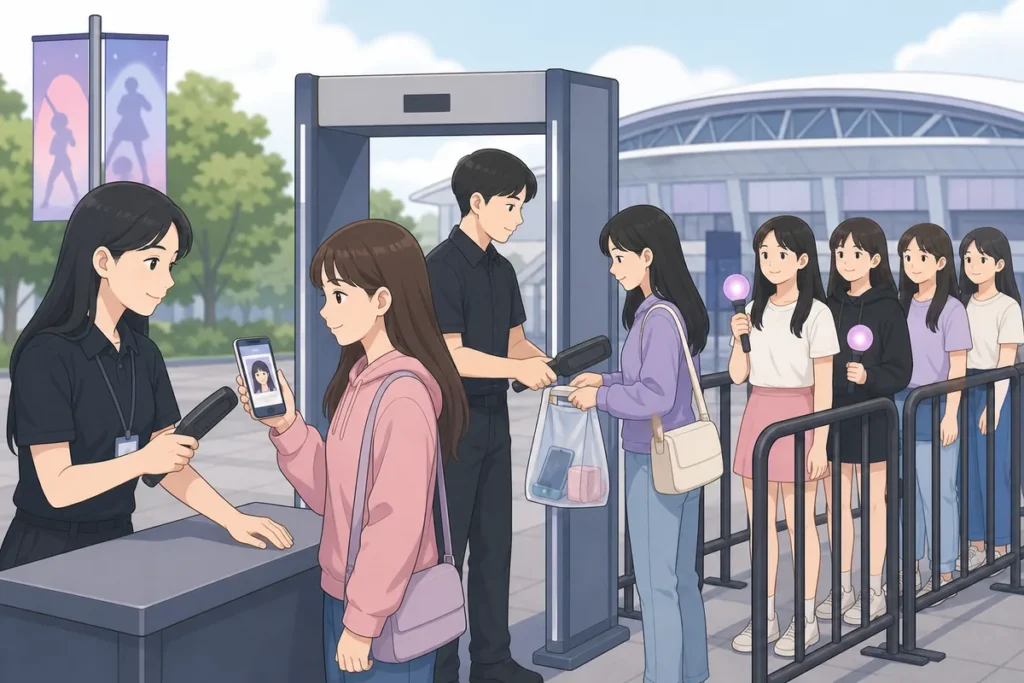
Table of Contents
- How Entry Works at a Korean K-pop Concert
- Identity Check at the Gate
- Why the Ticket Holder Name Matters
- Which ID Foreigners Should Use
- How Waiting Lines and Queue Numbers Work
- Reserved Seats, Standing Zones, and Fan Events
- Common Situations and How to Handle Them
- Useful Korean Phrases and Signs
- Warnings and Things to Check
- FAQ
- Summary
How Entry Works at a Korean K-pop Concert
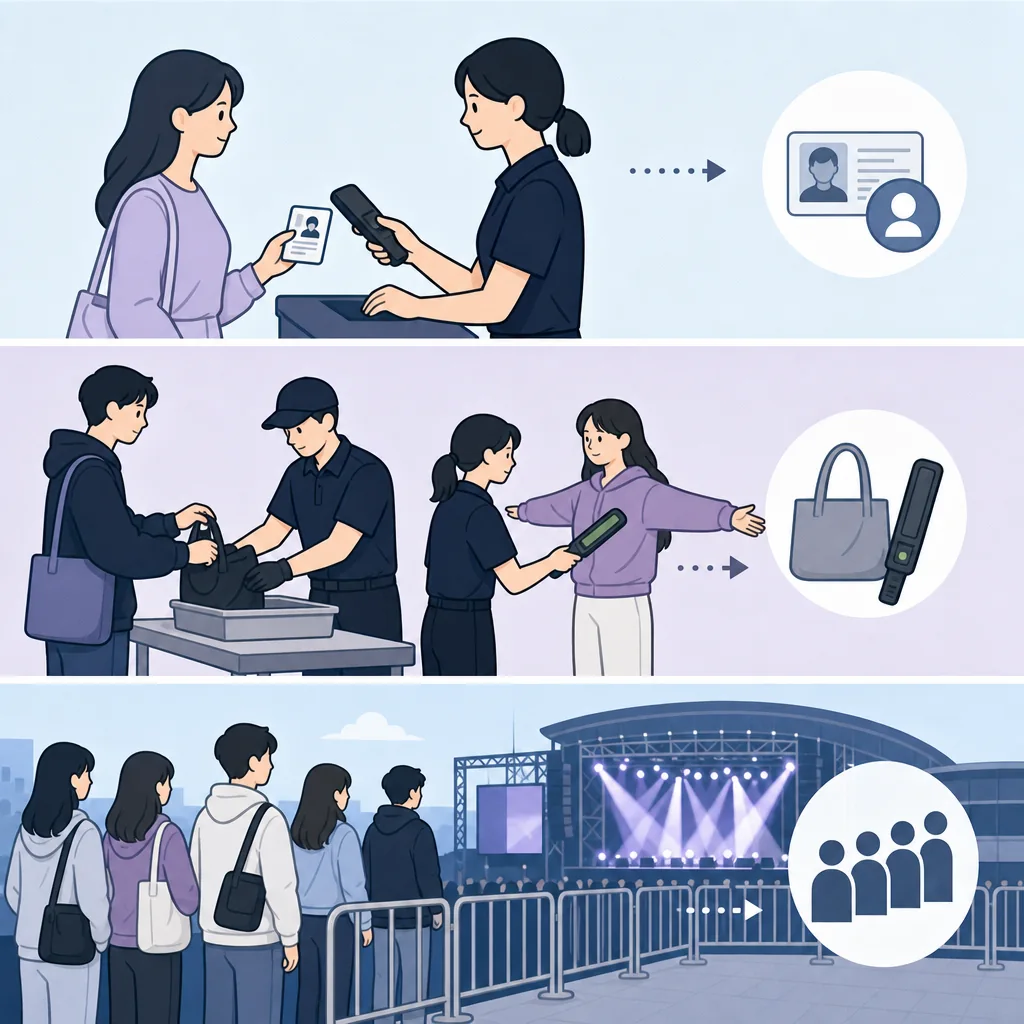
Most concerts in Korea follow a clear sequence: queue distribution or line-up, ticket and identity verification, then gate entry. The exact order depends on the event. Reserved-seat concerts are usually simpler, while standing zones often require early queue numbers or wristbands.
The most important document is the official organizer notice. It is usually posted on the ticketing platform or the artist’s official channel, and it overrides general advice. If the notice says a certain document, time, or gate is required, follow that instruction even if other concerts worked differently.
Identity Check at the Gate
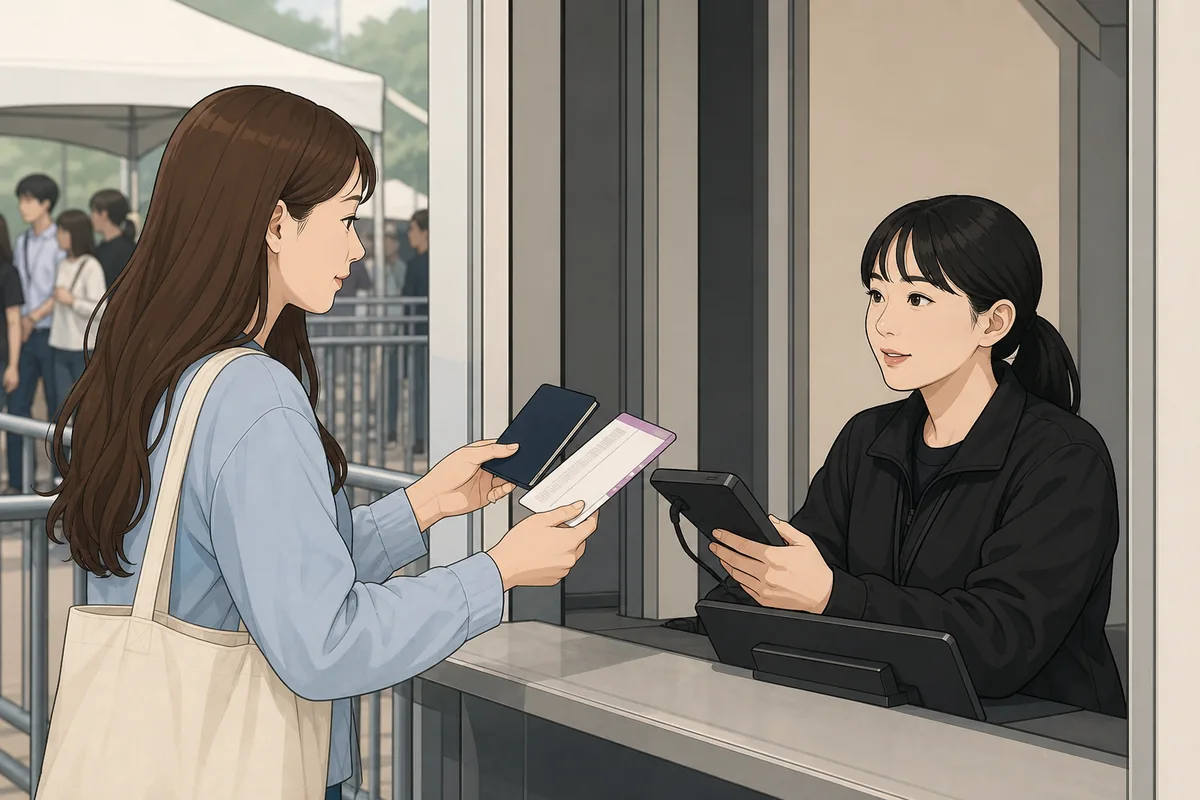
At the entrance, staff usually compare the name on your ticket with the name on your ID. They also scan the QR code, barcode, or mobile ticket. Keep both items ready before you reach the front of the line so the process moves quickly.
If your name does not match exactly, staff may send you to an information desk or ask for extra proof of purchase. This is common in Korea because many concerts use real-name verification systems to reduce resale and scalping.
Warning: A screenshot alone may not be enough for some events. If the notice requires an app-based ticket, keep the official ticketing app installed and logged in.
Why the Ticket Holder Name Matters
K-pop concert entry rules usually connect the ticket to one specific person. On many Korean platforms, the buyer’s name becomes part of the entry check. If you bought a ticket from someone else, check whether an official transfer or name update was completed on the platform before the deadline.
A private agreement between two people is not enough if the platform still shows another name. At the gate, staff care about the official record, not a verbal explanation.
Which ID Foreigners Should Use
For most foreign visitors, the accepted document is a physical passport. Some residents in Korea may also be able to use an Alien Registration Card. A photo of your passport on your phone is usually not accepted as official ID.
Use the same romanized name when booking the ticket that appears in your passport. If your spelling changed, or if you used a different order for your given name and family name, check the platform policy before concert day.
How Waiting Lines and Queue Numbers Work
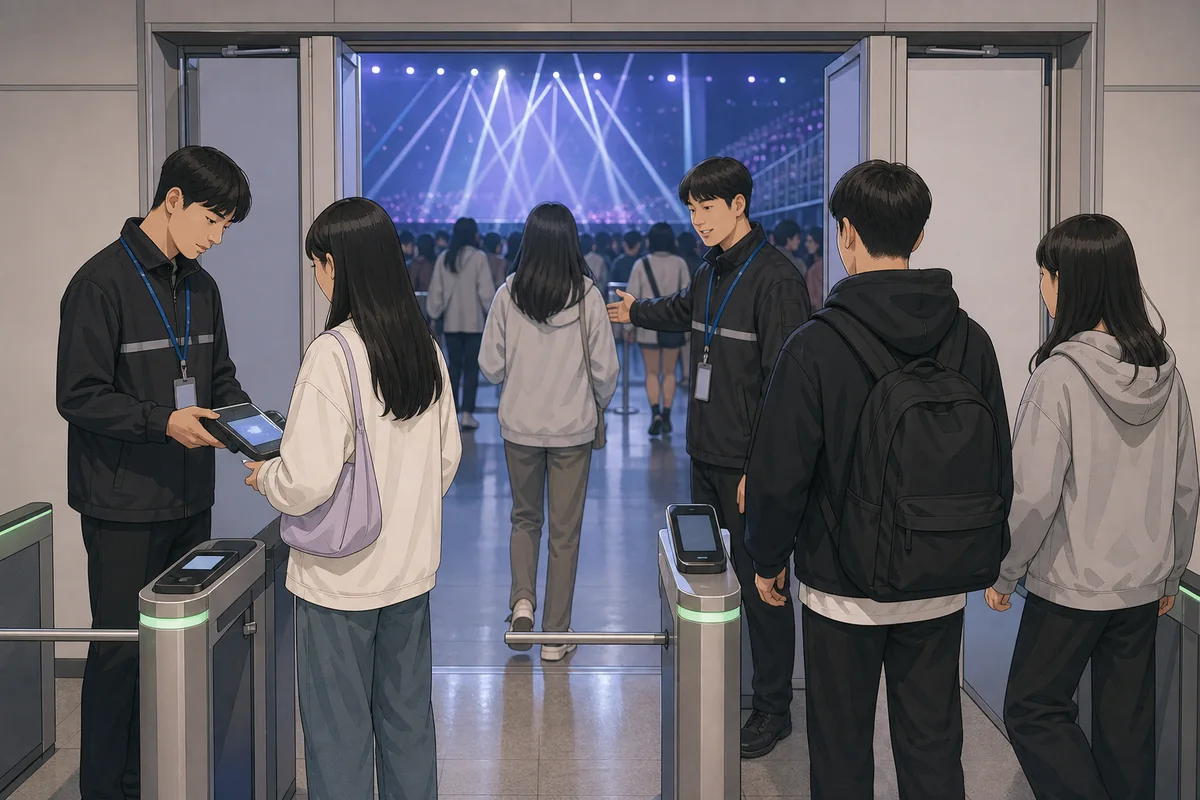
Reserved seats are usually the easiest. You go to the correct gate, show your ticket and ID, and enter when staff direct you. Your seat is already assigned.
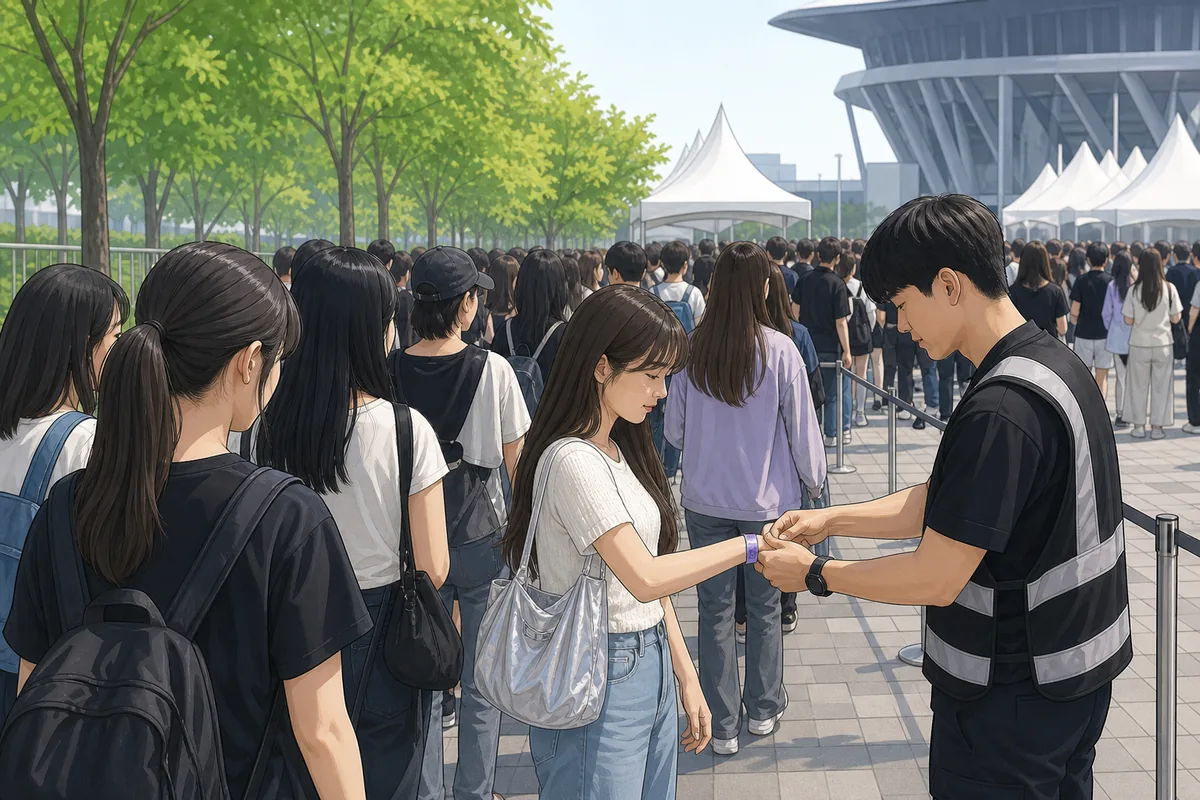
Standing zones are different because entry order affects your position inside the venue. Organizers often use queue numbers or wristbands. Queue numbers are usually given in arrival order at a specific time and place near the venue, and you may need to return when your number group is called.
Wristbands work similarly. Staff place the band on your wrist at distribution, and you must keep it visible for entry checks.
What Usually Happens if You Arrive Late
If you arrive after queue distribution ends, you may lose your place or enter with a later group. Some events allow late distribution for remaining numbers, but many do not. For standing zones, arriving late usually means a worse position near the back.
Reserved Seats, Standing Zones, and Fan Events
Reserved Seats
For reserved seating, follow the section and gate printed on your ticket. Going to the wrong gate can slow you down, especially when crowds are heavy. Ushers inside the venue will usually help you find your row once you are inside.
Standing Zones
Standing zones usually have stricter rules. Staff may enforce queue order, wristbands, or numbered entry groups. Do not cut the line or ignore your number range, because staff can remove people from the queue if they break the rules.
Fan Club Entry and Special Events
Fan club pre-sales, fan sign events, and hi-touch events often have additional verification steps. These events may require proof of membership or a separate ticketing process. The notice for the event should explain exactly what to bring and where to line up.
Common Situations and How to Handle Them
Name Mismatch
If the ticket name does not match your passport or ARC, go to the organizer’s help desk right away. Bring your ticket, your ID, and any booking confirmation or receipt you have. There is no guarantee the issue can be fixed on-site, but proof of purchase helps.
QR Code Will Not Scan
Increase your screen brightness, reopen the official app, and show the staff your booking details. If needed, ask whether manual verification is possible.
Wrong Line or Wrong Gate
Check your section and gate as early as possible. If you are in the wrong line, move before the crowd gets denser. Last-minute changes are stressful and can make you miss your entry window.
Late Arrival for Standing Entry
If you miss the main queue call, ask staff whether any later group or backup procedure exists. Some concerts allow it, but many do not. The official notice decides.
Useful Korean Phrases and Signs
Common Entry Phrases
Warnings and Things to Check
- Always read the official notice for your event.
- Bring the physical passport used for booking whenever possible.
- Do not assume a private ticket transfer is enough unless the platform confirms it.
- Standing zones may require very early arrival for queue numbers or wristbands.
- Rules can differ by artist, venue, and platform.
- Do not rely on a screenshot if the notice requires the official app.
Official Resource
Use the official ticketing platform and event notice for final instructions. Common platforms include Interpark Ticket, Melon Ticket, YES24 Ticket, and Global Interpark.
FAQ
Does a visitor need a visitor’s passport to enter a K-pop concert in Korea?
In most cases, yes. Foreign visitors are usually expected to bring the physical passport used for booking. Some residents may be able to use an ARC, but the event notice controls the final rule.
What if the ticket name is different from a visitor’s passport?
Go to the help desk near the venue entrance with your ID and proof of purchase. Entry is not guaranteed, but official documentation gives you the best chance of resolving the issue.
When should a visitor arrive?
Reserved-seat concerts often allow arrival around 60 to 90 minutes before doors open. Standing zones may require several hours of lead time if queue numbers are distributed early.
Can someone else use a visitor’s ticket?
Usually not unless the platform has an official transfer process completed before the deadline. The gate check is designed to catch mismatches.
What is the difference between reserved seating and standing zones?
Reserved seating gives you an assigned seat, while standing zones depend on entry order and queue procedures. Standing entry is usually stricter and starts earlier.
Summary
K-pop concert entry rules in Korea usually come down to three things: bring the correct ID, make sure the ticket name matches, and follow the organizer’s queue or gate instructions. Reserved seats are simpler, while standing zones and fan events often require earlier arrival and stricter checks. When in doubt, trust the official notice for your specific event.
Related and Official Resources
Sources & Verification
- Seoul Arts Center — www.sac.or.kr
Last checked: July 30, 2026