
This music show guide explains the basics for foreign visitors who want to attend a K-pop broadcast recording in Korea. If you are planning your first visit, the most important thing to know is that these shows are managed entry events, not walk-in concerts.
Music Show Guide: What You Need to Know
- What Is a Music Show Recording?
- Can Foreign Tourists Attend?
- How Audience Entry Usually Works
- Three Ways to Get In: Public, Fan Club, and Standby
- Documents and Items to Prepare
- When to Arrive and How Lining Up Works
- What Happens Inside the Studio
- Common Situations and How to Handle Them
- What Foreigners Often Get Wrong
- Useful Korean Phrases
- Warnings and Things to Check
- Frequently Asked Questions
- Summary
What Is a Music Show Recording?
Music show guide basics: Korean music shows, called eumak bangseong (음악방송), are weekly TV programs where K-pop artists perform in front of a controlled studio audience. The recording is broadcast on television the same day or within a few days. Common examples include Music Bank, Inkigayo, Show! Music Core, M Countdown, and The Show.
These are not concerts. The audience area is limited, the schedule is strict, and staff expect everyone to follow the production rules.
Can Foreign Tourists Attend?
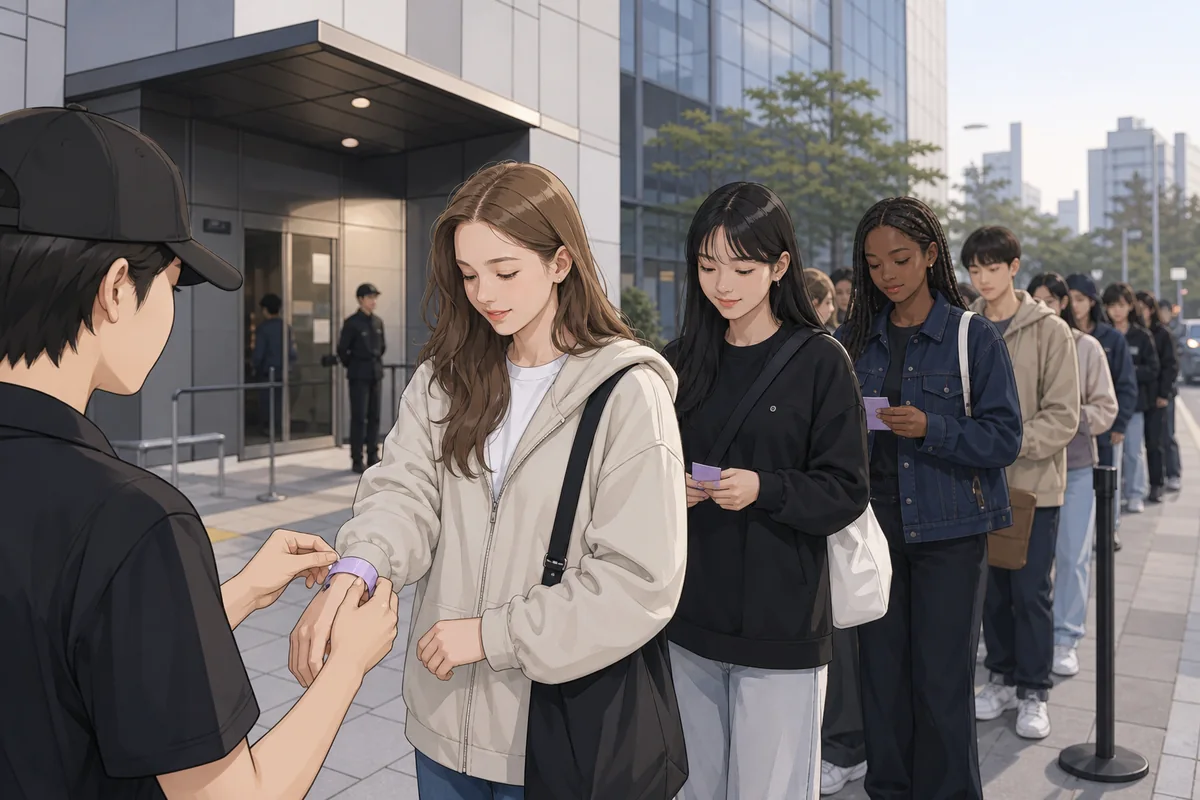
Yes, foreign visitors can attend many music show recordings. In most cases, however, there is no special tourist lane. You usually go through the same application or standby process as local fans, and your passport is the main ID document used at check-in.
Some shows use Korean-only application pages, while others provide simple online forms or partial English guidance. Check the current rules for the exact broadcaster and recording date before you plan your trip around it.
How Audience Entry Usually Works
Audience entry is tightly managed. A typical process looks like this:
- The broadcaster opens an application window before the recording date.
- Applicants submit details and receive a confirmation if selected.
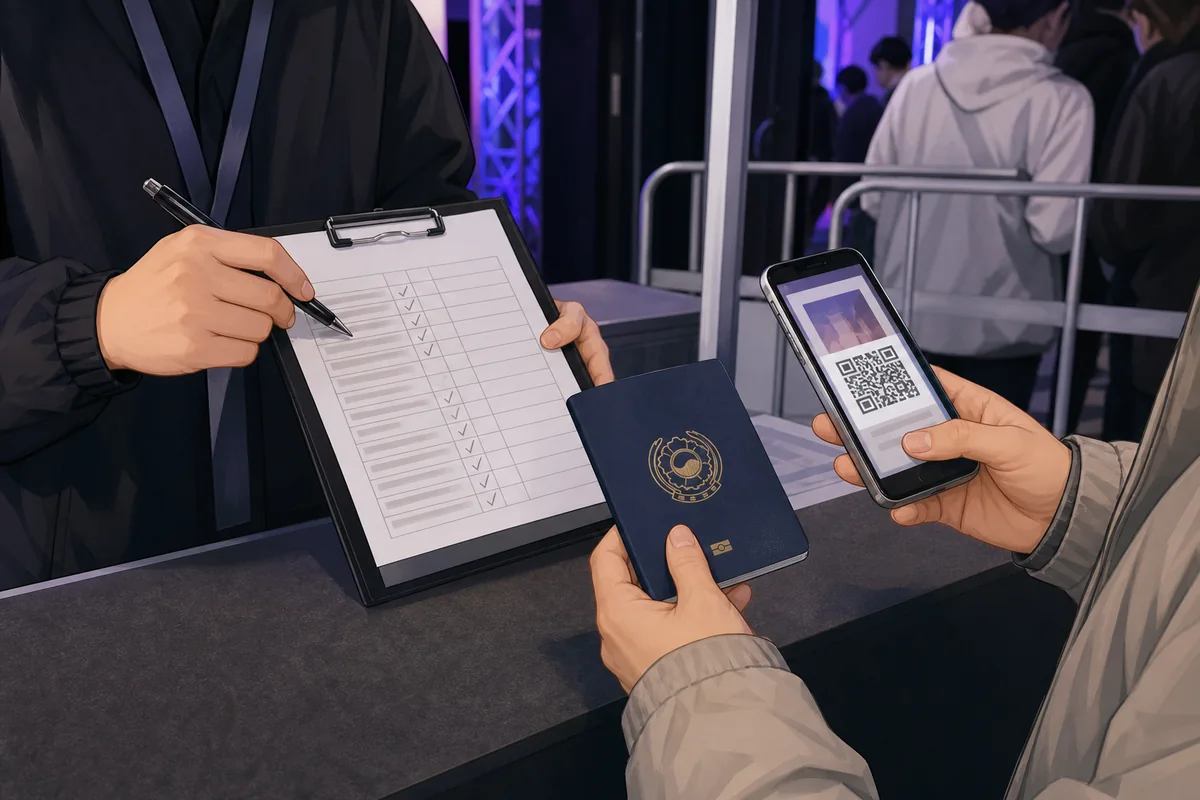
- On the recording day, confirmed guests arrive at the venue, line up in the order staff request, and show ID and confirmation at check-in.
- A small standby line may be admitted if seats remain open, but this is not guaranteed.
The exact process changes by show, artist, and week, so the official page is always the final authority.
Three Ways to Get In: Public, Fan Club, and Standby
1. Public Audience Application
Many shows offer a public application through the broadcaster or an official ticketing system. If selected, you receive a confirmation number or message. Keep it easy to show on your phone and, if possible, also print it.
2. Fan Club Reservations
Some seats are reserved for official fan club members. These are separate from public applications and may require membership verification at the gate. If you are already a member, check the artist’s official fan club notice.
3. Standby Line
Standby is a backup option for people without a confirmed spot. It can be very long, and entry depends on whether reserved attendees do not show up. Arriving early helps, but it still does not guarantee admission.
Documents and Items to Prepare
Bring the items below on the day of the recording. Missing documents can mean being turned away even if you have a reservation.
- Passport: Bring the original, not a copy.
- Reservation confirmation: Screenshot or printed copy with the confirmation number visible.
- Fan club proof: Only if the show requires it.
- Charged phone: Useful for translations and showing confirmations.
- Layered clothing: Studios can be cold.
- Small bag: Large bags and luggage are often restricted.
- Water and light snacks: Helpful during the wait outside.

When to Arrive and How Lining Up Works
For most recordings, arriving exactly on time is too late. Staff often organize the line well before entry starts, and late arrivals may lose their place or miss check-in altogether.
A practical rule is to arrive at least one to two hours before the scheduled recording time, and earlier for very popular lineups. Listen carefully to staff announcements and follow the queue order they set. Do not cut the line or save a spot for someone who is not there.
What Happens Inside the Studio
Inside the studio, staff will direct you to your seat or standing area. The room is usually smaller than it looks on TV, and the audience follows strict recording rules.
- Artists may perform the same song more than once for different camera angles.
- There are breaks between stages while cameras and sets are adjusted.
- Personal photography and video recording are usually prohibited.
- Cheering, clapping, and fan chants may be expected.
- The whole session can last several hours.
Common Situations and How to Handle Them
Your confirmation is not on the list
Stay calm and show your confirmation clearly. If needed, ask for a supervisor or a staff member who can help with foreign visitors. Keep your passport and reservation details easy to see.
You are in the standby line
Wait for announcements and do not assume you will get in. If staff say the standby line is full, leave politely and avoid blocking the entrance.
You do not understand the announcements
Watch what others are doing, use a translation app, and ask a nearby staff member politely if needed. Clear visual cues often matter more than perfect Korean.
Your phone battery dies
This is why a printed confirmation is a good backup. Do not rely on a dead phone to get you through check-in.
What Foreigners Often Get Wrong
Visitors usually make the same mistakes when they follow a music show guide for the first time.
- Assuming it is open entry: Most shows are not walk-in events.
- Arriving only on time: The line is usually formed before the recording starts.
- Leaving the passport behind: A photo of your passport is often not enough.
- Expecting English at the gate: Staff may communicate mainly in Korean.
- Bringing large bags or banned items: Check the prohibited items list first.
- Taking photos where it is not allowed: This can get you removed from the studio.
Useful Korean Phrases
Useful phrases for music show day
Warnings and Things to Check
- Verify the recording date and venue address close to your visit.
- Check whether there is an age limit for the audience.
- Confirm whether cancellation is required if your plans change.
- Prepare for outdoor waiting and weather changes.
- Confirm the exact broadcaster location before you travel.
- Check official Korean immigration sources if your visa status affects event attendance.
For official information, use broadcaster pages such as KBS audience application and the relevant official site for the specific show you want to attend. You can also check the Korea Tourism Organization for general visitor guidance.
Frequently Asked Questions
Do I need to speak Korean to attend a music show?
No, but a few basic phrases and a translation app will help a lot. Most announcements are in Korean.
How far in advance should a visitor apply?
Many shows open applications one to two weeks before the recording date. Popular lineups can fill very quickly.
Can a visitor attend more than one show during a visitor’s trip?
Yes, if you receive separate confirmations. Each broadcaster has its own process and schedule.
Is there a dress code?
Some shows give clothing guidance, especially for camera-friendly audience appearances. Check the notice for each event.
What if the lineup changes?
Lineups can change close to the recording date. If seeing a specific artist matters most, wait for the final notice before making firm plans.
Can a visitor take photos inside?
Usually no. Follow the specific venue rules, because filming restrictions are often strictly enforced.