K Pop Concert Etiquette: What You Need to Know
K Pop Concert Etiquette is explained below for visitors who need a clear, practical answer. Before attending any K-pop concert in Korea, check the specific venue’s rules and the artist’s official policy on filming. Most major idol concerts enforce strict no-filming rules during performances, and staff have the authority to ask you to stop at any time. Avoid blocking the view of people behind you, follow the crowd’s cheering rhythm rather than shouting over it, and stay in your assigned seat unless ushers direct otherwise. No single rule applies to every show — policies vary by artist, venue, ticket tier, and even the specific section you are sitting in.
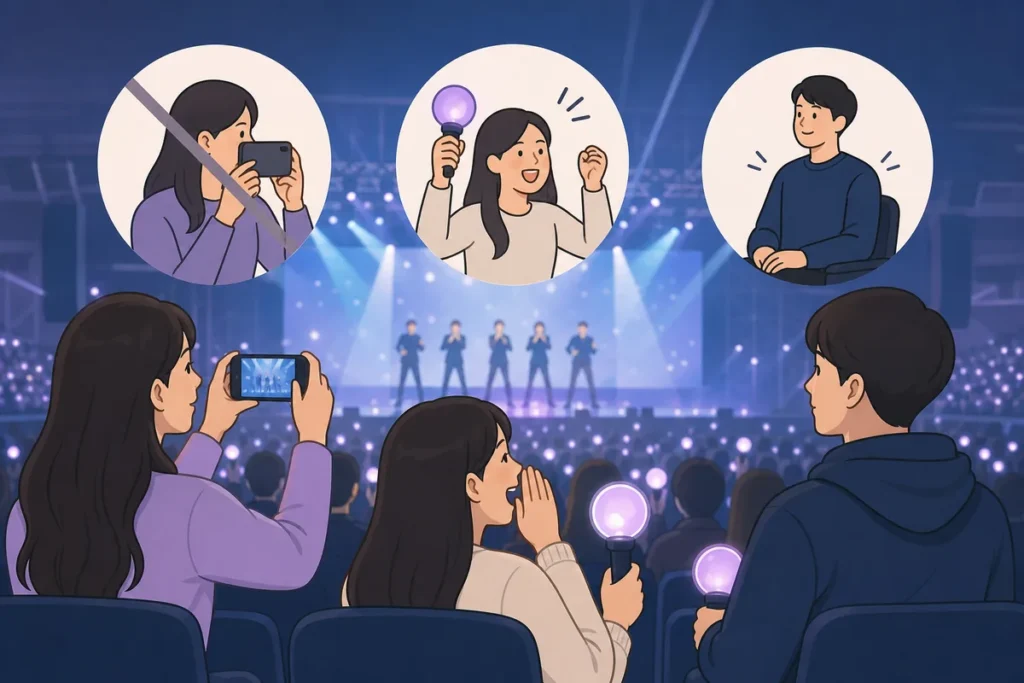
Table of Contents
- Introduction
- Filming and Phone Use
- Cheering and Fan Behavior
- Seat and Aisle Manners
- Common Situations
- What Foreigners Often Get Wrong
- Useful Korean Phrases
- Warnings and Things to Check
- FAQ
- Summary
Introduction
k pop concert etiquette in Korea is more specific and more strictly observed than many international visitors expect. If you have already been to a performance or two in Korea, you may have noticed that the crowd behaves very differently from rock or pop concerts in other countries — the cheering follows patterns, the lightsticks move in sync, and staff intervene quickly when someone breaks the rules. This guide is written for visitors who already have some concert experience in Korea and want to understand the reasoning behind the norms, handle tricky situations confidently, and avoid the most common mistakes that foreigners make.
Policies genuinely differ between artists, venues, and even ticket categories, so the goal here is not to give you a single rulebook but to help you read the situation correctly and respond appropriately wherever you end up.
Filming and Phone Use
The Default Rule: Assume No Filming
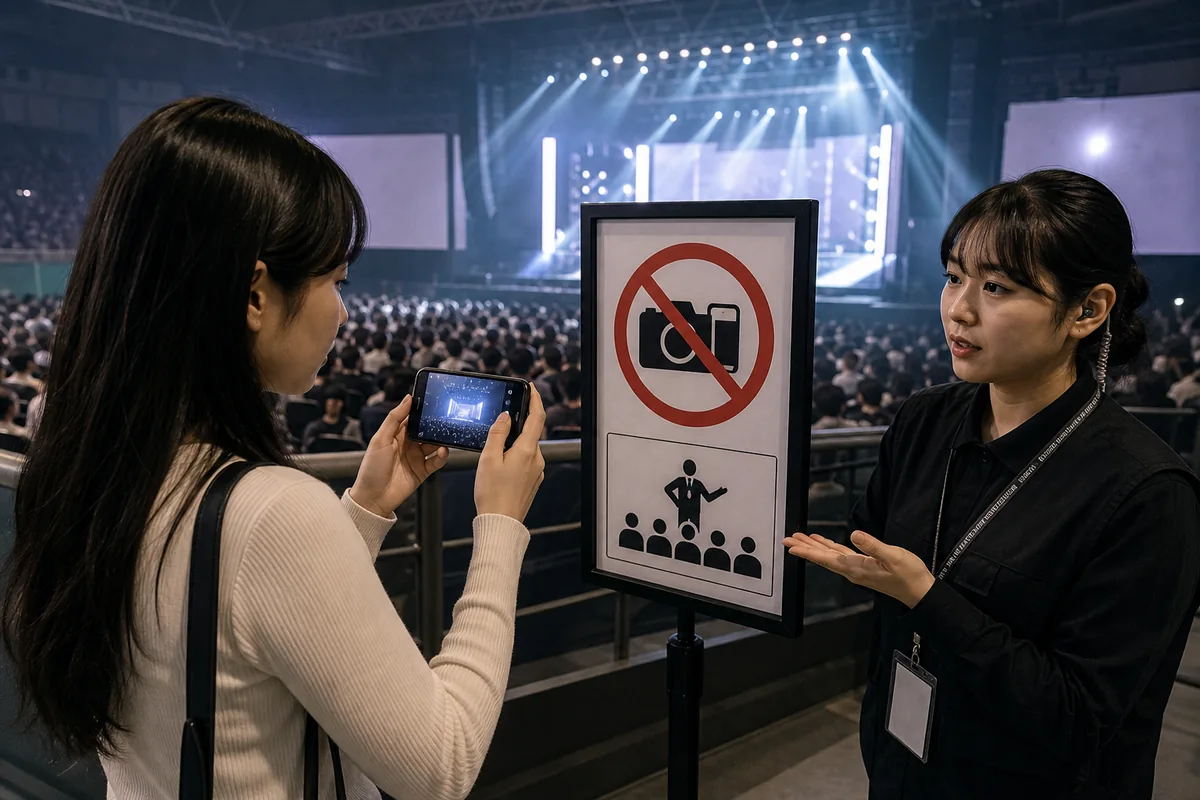
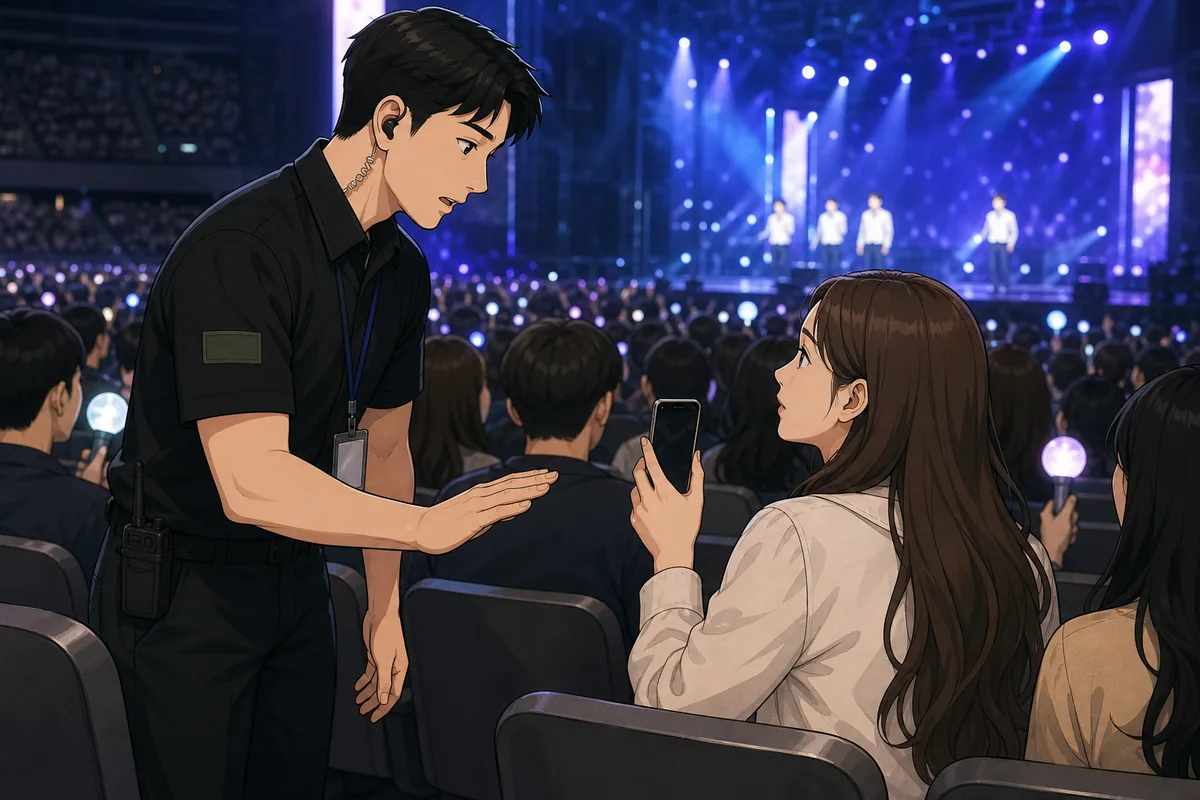
The safest starting assumption at any K-pop idol concert in Korea is that filming is not allowed. Many major acts — including groups under HYBE, SM Entertainment, JYP Entertainment, and YG Entertainment — prohibit recording during performances. This is usually stated on the ticket, in the venue’s pre-entry announcement, and on signs near the entrance. Staff actively monitor the audience and will approach you if they see a phone raised for an extended period.
Violation can result in a warning, deletion of footage on the spot, or in rare cases removal from the venue. Even if the person next to you is filming, that does not mean it is permitted — it may simply mean they have not been caught yet.
When Phones May Be Allowed
Some artists or events do designate specific moments when audience recording is permitted. This is typically announced by the MC or displayed on the LED screen before that segment begins. Common examples include:
- A dedicated fan-cam moment announced from the stage
- Encore segments where the artist explicitly invites filming
- Smaller showcase or fan meeting events with a more relaxed policy
- Outdoor festivals where the organiser’s rules are less strict than arena shows
Even in these moments, keep your phone at or below shoulder height so you do not block the view of people seated behind you. Holding a tablet or large device is almost universally frowned upon regardless of the filming policy.
If Staff Ask You to Stop
Lower your phone immediately and do not argue. Staff are following instructions from the artist’s management team, not acting on personal preference. A polite nod and putting your phone away is the correct response. If you believe the instruction was a misunderstanding — for example, you were checking a message, not filming — you can calmly clarify, but do so briefly and quietly.
Cheering and Fan Behavior
Chant Culture and Fan Guides
K-pop concerts often have structured fan chants — specific words or phrases shouted at precise moments during a song. These chants are usually published by fan communities before the concert and are widely practiced. As a visitor, you are not expected to know every chant perfectly, but being aware that this structure exists helps you avoid accidentally shouting over a quiet moment or cheering at the wrong time.
If you want to participate, look up the fan chant guide for the specific artist before you go. Many fan communities post these on platforms like Naver Café, fan wikis, or the artist’s international fan pages.
Volume and Timing
Screaming continuously throughout a ballad or a speech segment is considered disruptive. Korean audiences generally read the mood of the performance and adjust accordingly — loud and energetic during upbeat songs, quieter and more attentive during slower or emotional moments. Following this rhythm rather than cheering at maximum volume throughout the whole show is the most respectful approach.
Shouting the artist’s name or personal comments directly at the stage during a quiet moment is also something to avoid. It tends to interrupt the atmosphere that the rest of the audience is sharing.
Lightsticks
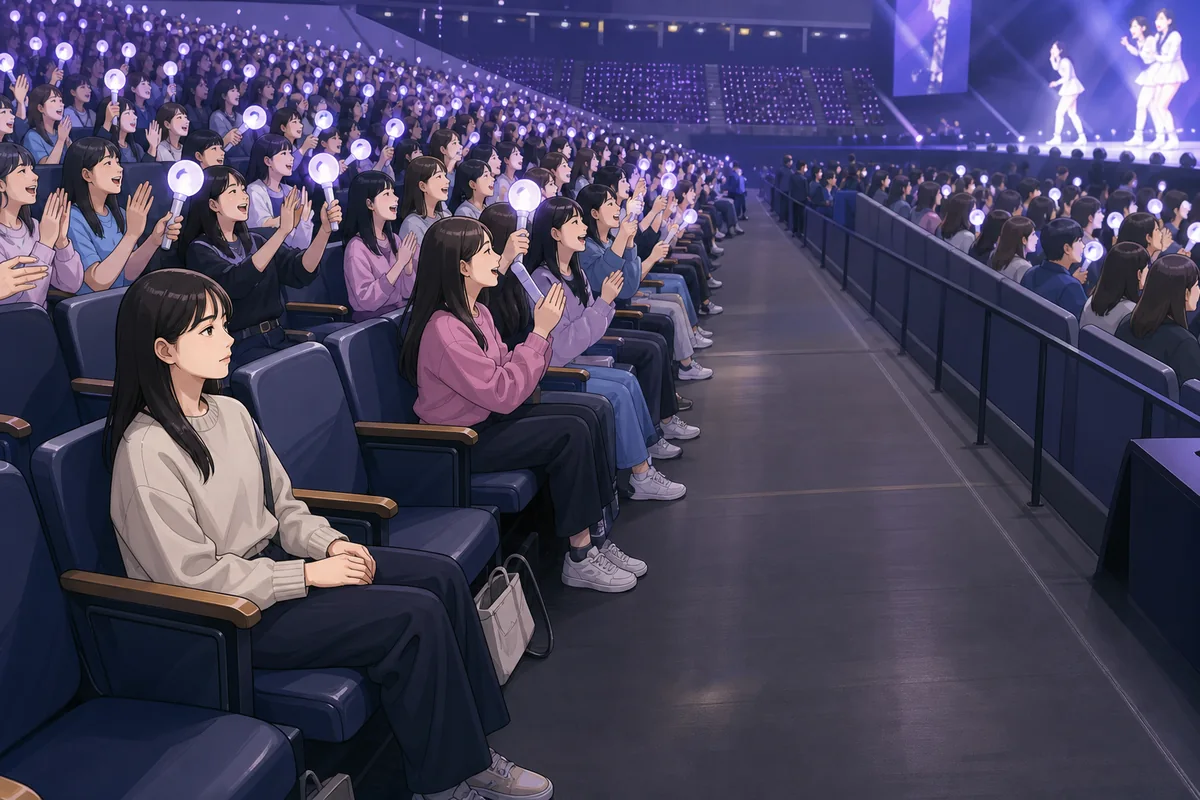
Official lightsticks (응원봉, eungwonbong) are a central part of K-pop concert culture. Many artists have a specific official lightstick that connects to the venue’s Bluetooth system and changes color or pattern in sync with the performance. If you bring an unofficial lightstick or a lightstick from a different artist, it will not sync and may display the wrong color, which is noticeable to those around you.
Waving your lightstick vigorously above your head for extended periods can obstruct the view of people seated behind you. Keep movements moderate unless the crowd is clearly doing the same.
Seat and Aisle Manners
Assigned Seating
Most arena and stadium K-pop concerts in Korea use assigned seating. Your ticket specifies your exact seat, and sitting in a different seat — even one that appears empty — can cause problems when the actual ticket holder arrives. Check your ticket carefully: Korean venue numbering can be confusing, with sections labeled in Korean (구역, guyeok) and seat numbers that do not always run left to right from the audience’s perspective.
If you are unsure of your seat, ask an usher rather than guessing. Ushers are stationed at section entrances and are generally helpful even if your Korean is limited — showing them your ticket is usually enough.
Standing During Seated Sections
Standing up in a seated section is one of the most common sources of friction at K-pop concerts. In general, if the majority of your section is seated, you should remain seated. If the crowd naturally rises during a high-energy song, it is usually fine to stand. If you want to stand and others around you are sitting, be aware that you are blocking their view and consider whether the moment genuinely calls for it.
Standing sections (스탠딩석, seutaending seok) have their own dynamics — movement and energy are expected there, and the rules are more relaxed about physical positioning.
Moving Through Rows
If you need to leave your seat during the show, wait for a natural break if possible — between songs, during an MC segment, or at intermission. Moving through a tightly packed row during a performance is disruptive. When you do need to pass, face the stage (not the seated people) as you move, and say 실례합니다 (sillyehamnida — excuse me) quietly.
Common Situations
Seated Arena Concerts
These are the most common format for major idol group tours at venues like KSPO Dome, KSPO Arena, or Jamsil Olympic Stadium. Rules are typically strict: assigned seats, no filming, structured fan chants. Ushers patrol actively. Arrive early to find your seat before the lights go down, as navigating in the dark is difficult and disruptive.
Standing Floor Areas
Standing pit or floor sections (pit, 피트) are high-energy zones where pushing and movement are common. Be aware of your physical space and the comfort of those around you. If someone near you appears distressed or asks for space, respond immediately. Venue staff are positioned at the front barrier — if you feel unwell or unsafe, make eye contact with staff and signal for help.
Encore Moments
Encores at K-pop concerts follow a specific ritual. After the main set ends, the audience chants the artist’s name rhythmically (e.g., “BTS! BTS!” or the fandom chant) to call them back. This is a shared moment and joining in is entirely welcome. When the artist returns, energy levels rise significantly — this is often when some filming restrictions are relaxed, but confirm by watching what staff do rather than assuming.
Fan Meetings and Smaller Events
Fan meetings (팬미팅, paenmiting) and showcase events tend to have a more conversational, interactive atmosphere. Filming rules vary more widely at these events. Some allow phones during specific Q&A or game segments. Listen carefully to announcements at the start and follow the lead of the Korean fans around you.
What Foreigners Often Get Wrong
Assuming Recording Is Allowed Because Others Are Doing It
Seeing a few people with phones raised does not mean recording is permitted. Some audience members break the rules and simply have not been caught yet. Always rely on the official policy stated on your ticket or announced at the venue, not on what you observe others doing.
Standing Up and Blocking Views
In seated sections, standing up when others are seated is one of the most common complaints from Korean concert-goers about international visitors. It is not about enthusiasm — it is about shared space. If you want to stand, check whether your section is standing collectively before you do.
Shouting Personal Comments at Inappropriate Moments
Calling out an artist’s name or shouting personal expressions of affection during a quiet ballad or a speech is disruptive to the shared atmosphere. Save loud individual expressions for high-energy moments where they blend naturally into the crowd.
Ignoring or Arguing with Staff
Security and usher staff at Korean venues are there to enforce the policies of the venue and the artist’s management. If a staff member approaches you, the correct response is to comply immediately and ask questions calmly afterward if needed. Arguing, ignoring the instruction, or continuing to film after a warning can escalate quickly and may result in you being asked to leave.
Not Checking Ticket Details Carefully
Korean venue seating maps can be counterintuitive for visitors. Section names, row numbers, and seat numbers are often in Korean and follow a different layout logic than venues in other countries. Sitting in the wrong seat — even one that looks empty — causes real problems when the rightful ticket holder arrives.
Useful Korean Phrases
Phrases for Concert Situations
Warnings and Things to Check
- Filming policies can change between tour dates. Even if a previous concert by the same artist allowed filming, the policy for your specific date may be different. Always check the official announcement for your event.
- Some artists enforce zero-tolerance filming rules. Management staff may be present in the audience in addition to venue security, and footage can be flagged even after the event.
- Security staff have the final say. No online guide, including this one, overrides what staff tell you inside the venue. If there is a conflict between what you read and what staff say, follow the staff.
- Ticket resale and seat category rules vary. If you purchased a resale ticket, confirm that the seat category (standing, seated, VIP floor) matches what you expect — category rules differ significantly.
- Venue rules differ from artist rules. The venue may have its own policies on top of the artist’s rules. Both apply simultaneously.
- This guide reflects general norms as of the time of writing. Concert industry practices in Korea evolve. Confirm current policies with the official ticketing platform (such as Melon Ticket, Interpark, or YES24) or the artist’s official fan club notices before your event.
FAQ
Can a visitor bring a camera to a K-pop concert in Korea?
Professional cameras with detachable lenses are almost always prohibited at K-pop idol concerts. Compact cameras and smartphones are more common, but filming rules still apply. Check the specific event’s entry policy — it is usually listed on the ticketing page or the artist’s official notice board. When in doubt, leave professional camera equipment at home or at your accommodation.
Is it rude to stand up during a K-pop concert?
It depends on the section and the moment. In a standing pit area, standing and moving is expected. In an assigned seated section, standing when the majority around you are seated will block others’ views and is generally considered inconsiderate. Follow the crowd in your section — if everyone rises naturally, it is fine to join them.
What should a visitor do if a visitor don’t know the fan chants?
You do not need to participate in fan chants to enjoy the concert. Listening and watching is perfectly acceptable. If you want to join in, look up the fan chant guide for that specific artist before the event — many are available in English on fan wikis and YouTube. Avoid making up your own chants or shouting randomly during structured chant moments.
What happens if a visitor accidentally sit in the wrong seat?
Move to your correct seat as soon as you realise the mistake. If the rightful ticket holder arrives, apologise briefly and move. If you are unsure which seat is yours, ask an usher — showing them your ticket is the quickest solution. Do not wait and hope the seat stays empty.
Are there English-speaking staff at major K-pop concert venues in Korea?
Major venues in Seoul — such as KSPO Dome, Jamsil Olympic Stadium, and COEX — sometimes have English-speaking staff, particularly for internationally marketed concerts. However, this is not guaranteed. Having your ticket visible on your phone, knowing your section number, and using simple Korean phrases will help you navigate even without a shared language.
Can a visitor bring food and drinks into the concert?
Policies vary by venue. Many Korean arenas restrict outside food and beverages. Check the venue’s entry guidelines before you arrive. Concession stands are usually available inside, and some venues allow sealed water bottles. Eating loudly or with strong-smelling food during a performance is generally considered inconsiderate regardless of whether it is technically permitted.
Summary
k pop concert etiquette in Korea rewards preparation and situational awareness. The core principles are straightforward: assume filming is not allowed unless clearly stated otherwise, follow the crowd’s energy in your section rather than imposing your own, stay in your assigned seat, and comply immediately if staff speak to you. Policies vary by artist, venue, ticket category, and even individual tour dates, so always verify the rules for your specific event through official channels before you arrive. With a little preparation — knowing your seat, understanding the filming policy, and having a few key Korean phrases ready — you will be able to focus on the performance itself rather than worrying about whether you are doing something wrong.
Related and Official Resources
Sources & Verification
- Seoul Arts Center — www.sac.or.kr
Last checked: July 30, 2026