baedal munge: What Korean Door Delivery Signs Mean
baedal munge are the Korean delivery signs people place on doors, gates, or intercom panels to tell couriers what to do with a package. If you live in Korea or plan to stay for a while, you will see these signs often. Understanding them can help you avoid missed deliveries, unwanted doorbell ringing, and packages left in the wrong place.
Korea has a very fast home-delivery system, and couriers usually rely on short written instructions. A clear sign helps the courier move quickly, and it helps the resident get the package handled the way they want. For foreigners learning daily life in Korea, this is one of the most practical signs to recognize.
Quick Answer
Korean delivery door signs, or baedal munge, are simple instructions that tell couriers where to leave a parcel, whether to ring the bell, or whether to take it to the security office. They are polite requests rather than legal rules, but couriers usually follow them. If you live in Korea, it is helpful to know the common signs and to write your own in Korean if needed.
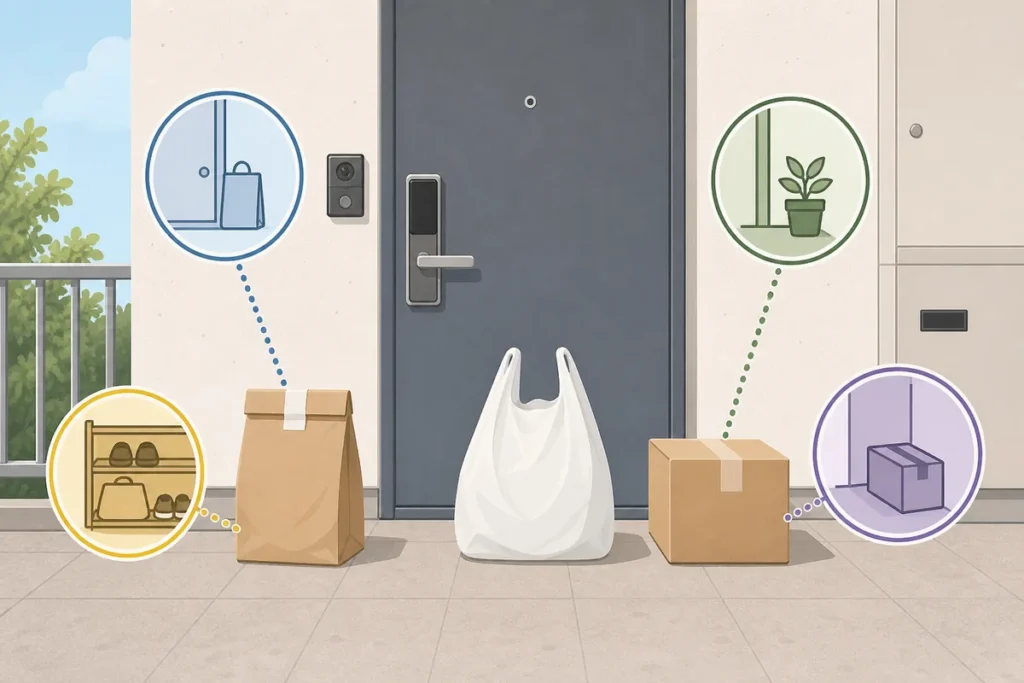
Table of Contents
- What Delivery Door Signs Are For
- Common baedal munge Signs and What They Mean
- Common Delivery Situations
- What Foreigners Often Get Wrong
- Useful Korean Phrases to Write Yourself
- Warnings and Things to Check
- FAQ
- Summary
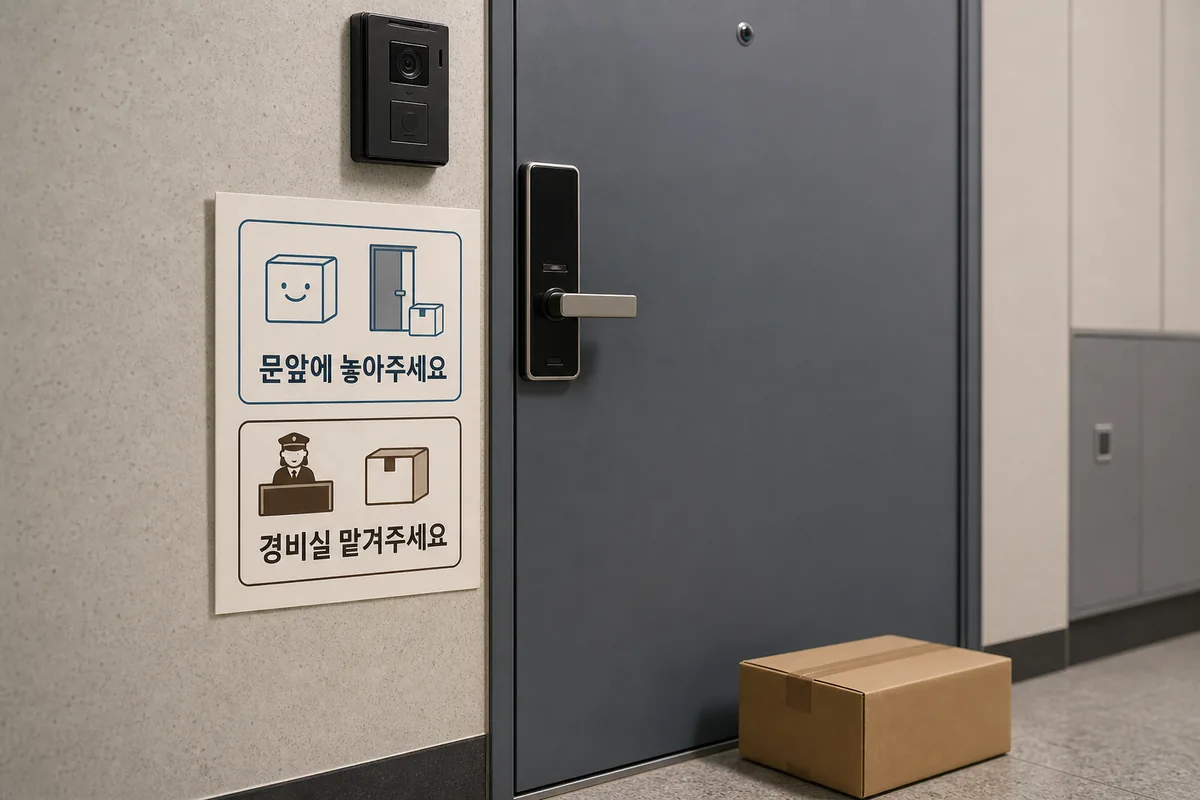
What Delivery Door Signs Are For in Korea
In Korea, many deliveries are completed with little or no direct contact. The courier arrives, checks the sign or app instructions, and follows them if possible. This works well because couriers are usually handling many deliveries in a short time.
Door signs are especially common in apartments, officetels, villas, and detached houses. They are useful when you want the package left in a specific place, when you do not want the bell to ring, or when you want the package to go to the security office or parcel locker.
You may see signs printed, handwritten, or bought as ready-made stickers. They are often taped near the doorbell, intercom, mailbox, or entrance gate.
Common baedal munge Signs and What They Mean
The table below shows the most common delivery door notices in Korea. It includes the Korean text, romanization, a literal meaning, and what the courier is generally expected to do.
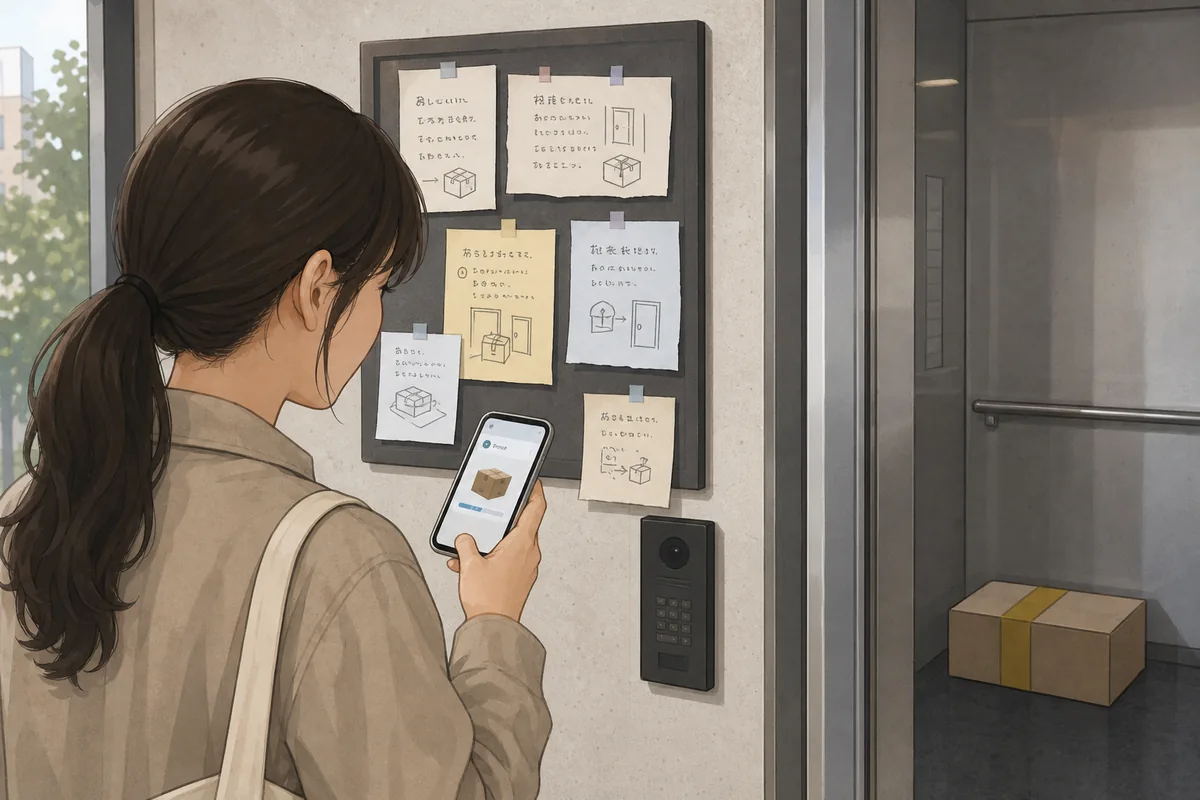
Common Delivery Situations in Korea
Apartment Buildings
Large apartment complexes often have a security office, called 경비실 (gyeongbisil). If your sign says to leave packages there, the guard will usually keep them until you pick them up. Many buildings also have parcel lockers in the lobby.
Officetels
Officetels may have a front desk or shared delivery area instead of a traditional guard office. Couriers may leave packages at the desk, in the lobby, or by your door depending on building rules.
Villas and Small Multi-Unit Houses
Smaller buildings often have no security office and no parcel locker. In these cases, a door sign is especially useful because the courier has fewer options.
Detached Houses
In a detached house, the courier may leave the package at the gate, inside the gate, or by the front door. A sign on the gate is helpful if the entrance is not obvious.
Rainy Day Deliveries
Rain can damage cardboard quickly, so some residents add a note asking for plastic covering or a sheltered placement. This request is often respected, but not every courier carries extra materials.
No-Contact Delivery
No-contact delivery is now very common in Korea. Couriers may take a photo of the package where it was left, and that photo may appear in the delivery app or message notification.
What Foreigners Often Get Wrong
Treating Signs as Hard Rules
Door signs are polite requests, not legal instructions. A courier may need to do something different if the building is locked, the security office is closed, or the package is too large.
Assuming the Courier Will Call
In Korea, couriers often move quickly and follow the sign or app note without calling first. If the sign is unclear, the package may be left in a default location.
Writing English Only
English-only signs may not be understood. It is better to write the Korean phrase, even if you also add English.
Ignoring Building Rules
Your personal sign does not override fire safety rules or building policies. Some buildings do not allow packages to be left in hallways.
Confusing 부재 시
부재 시 (bujae si) means “if absent.” It does not mean “never ring the bell.” It usually means the courier should ring first and leave the package only if nobody answers.
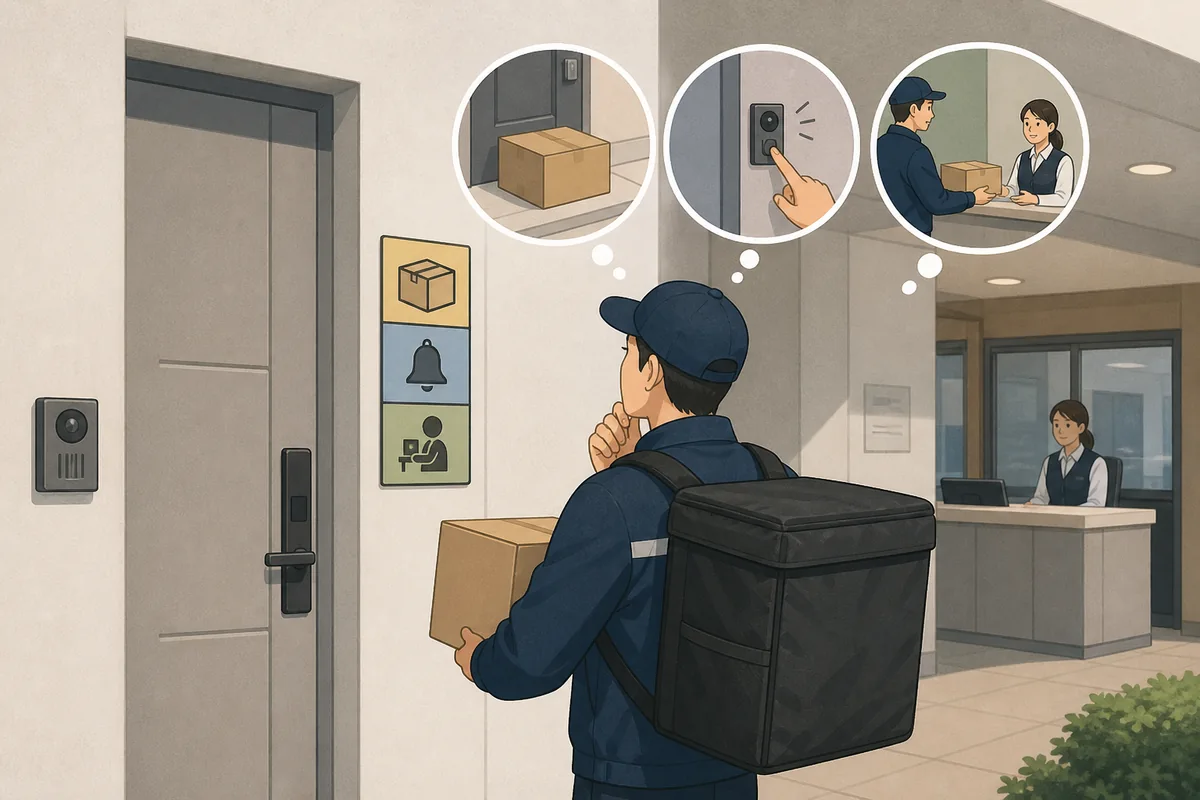
Useful Korean Phrases to Write on Your Own Door
Phrases You Can Copy for Your Door Sign
Warnings and Things to Check
- Theft risk: Leaving packages at the door is convenient, but it can create a small theft risk in open hallways.
- Building policy: Some apartments do not allow items in hallways for fire safety reasons.
- Wet weather: Rain can damage boxes quickly, especially at exposed entrances.
- Photo proof: If the courier leaves a photo in the app and the parcel is missing, keep the photo and report it quickly.
- Courier differences: Delivery habits can vary by company and by individual courier.
- Privacy: If you add a phone number, remember that it is visible near your door.
- Check current rules: Confirm building rules and parcel locker access with your management office if you are unsure.
FAQ
Who should use a delivery door sign in Korea?
Anyone who receives regular deliveries can benefit from one, especially if they are often away from home, sleep at unusual hours, or live in a building with shared entrances.
Are these signs official or legally required?
No. They are informal, voluntary notices. Couriers usually respect them, but they are not legal orders.
What should a visitor do if a delivery is missed or lost?
Check the app or SMS first, then contact the courier company using the tracking number. You can also ask the security office or building management.
Can a visitor write a visitor’s door sign in English?
You can add English, but Korean should be included too. Most couriers will understand the Korean version better.
What is the difference between 경비실 and 택배함?
경비실 is a staffed security office that can hold packages. 택배함 is an automated parcel locker where packages are stored until you retrieve them.
Do these signs work for food delivery too?
Often yes, but food delivery is usually more time-sensitive. For food, it is best to use the app instructions and keep your phone available.
Summary
baedal munge are the delivery notices Koreans use to guide couriers at home. The most common signs ask for packages to be left at the door, taken to the security office, or delivered quietly without ringing. They are practical, widely understood, and especially useful in apartments and officetels. If you live in Korea, learning these signs can make everyday delivery much easier.
Official Sources
Related and Official Resources
Sources & Verification
- 한국어기초사전 — krdict.korean.go.kr
- National Institute of Korean Language — www.korean.go.kr
Last checked: July 30, 2026