Manseok Meaning in Korea: What 만석/대기 Means on Signs
Manseok meaning is explained below for visitors who need a clear, practical answer. If you have ever walked up to a restaurant, hopped on a bus, or tried to enter a popular café in Korea, you may have seen the word 만석 on a sign or screen and wondered what it means. Understanding manseok meaning — and its common partner word 대기 — can save you a lot of confusion and wasted time. These two words appear on restaurant entrance signs, café counters, bus and subway displays, ticketing kiosks, and venue entrances all across Korea. They are short, simple, and extremely common, so knowing them will make your daily travel much smoother.
Quick Answer
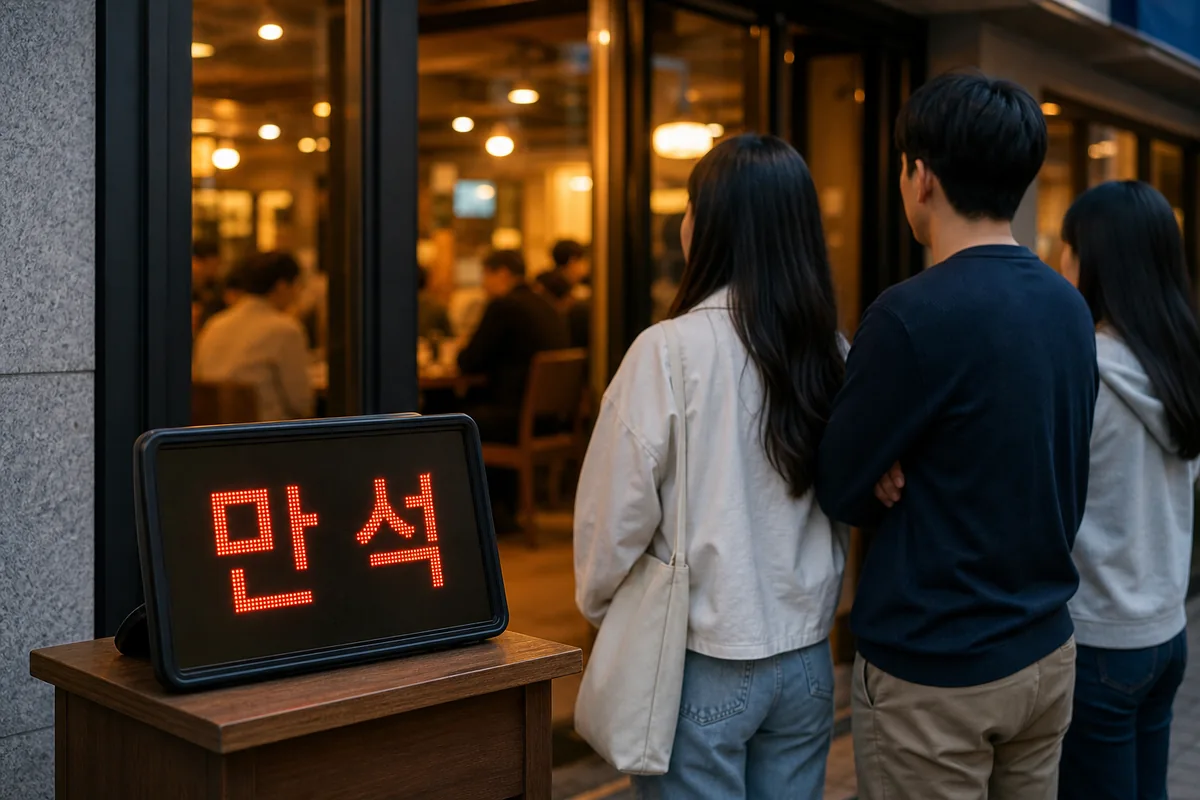
만석 (manseok) means fully occupied or no seats available right now, and 대기 (daegi) means waiting or on a waitlist.
Practical takeaway: If you see 만석, there is no open spot for you at this moment. If you see 대기, you can join a queue or waitlist and expect to be called when a spot opens up.
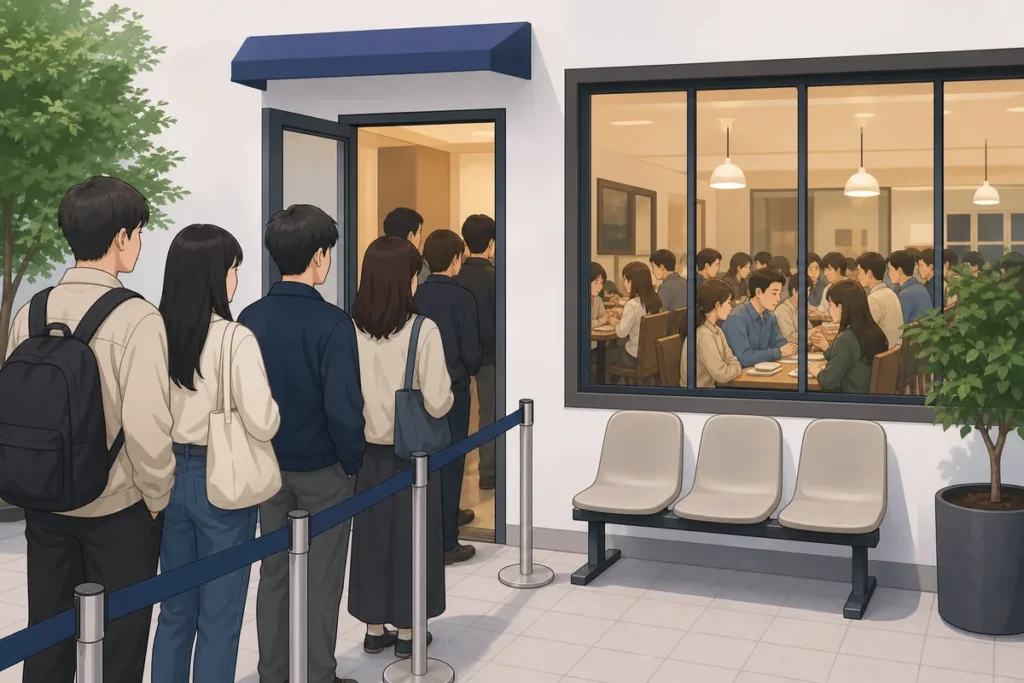
Table of Contents
- Main Explanation: 만석 and 대기
- Common Situations Where You Will See These Words
- What Foreigners Often Get Wrong
- Useful Korean Phrases
- Warnings / Things to Check
- FAQ
- Summary
Main Explanation: Understanding Manseok Meaning and 대기
Let’s break down each word clearly so you know exactly what to expect when you see them.
만석 (Manseok) — Fully Occupied
만석 is written with two Chinese-origin characters: 滿 (man, meaning full) and 席 (seok, meaning seat or place). Together they literally mean all seats filled. In everyday use, 만석 signals that there is no available space right now — whether that is a table at a restaurant, a seat on a bus, or a spot in a ticketed venue.
It does not mean the place is permanently closed. It simply means capacity has been reached at this moment. Spots may open up soon, or you may need to come back later.
대기 (Daegi) — Waiting / Waitlist
대기 comes from 待機 (daegi), meaning to stand by or to wait for one’s turn. When you see 대기 on a sign or screen, it means a waiting system is in place. You are not turned away — you are invited to wait. This could mean joining a physical queue, taking a number ticket, registering your name on a list, or waiting for an SMS notification.
How They Work Together
You will often see both words used together or in sequence. A restaurant might show 만석 on its door sign and 대기 on a separate kiosk screen, meaning: “We are full right now, but you can join the waitlist.” The exact meaning always depends on the context, so pay attention to where you see the words and what other signs or staff are nearby.
Common Situations Where You Will See These Words
Restaurants and Cafés
This is the most common place foreigners encounter 만석 and 대기. Many popular Korean restaurants — especially Korean BBQ spots, ramen shops, and trendy cafés — display a 만석 sign on the door or at the host stand when they are full. Some places use a digital kiosk just inside the entrance where you can register for 대기 (the waitlist).
When you approach a full restaurant, look for a tablet or kiosk near the entrance. It may ask for your name, phone number, or party size. After registering, you will receive a number or an SMS when your table is ready. Staff may also manage this with a handwritten list or a clipboard.
What to do: Do not walk away immediately. Check if there is a 대기 kiosk or ask a staff member. Simply say “대기 가능한가요?” (Can I join the waitlist?).
Public Transit — Buses and Trains
On intercity buses, KTX trains, and some subway lines, 만석 appears on digital seat-availability boards or ticket screens. It means the service or specific class of seat is fully booked for that departure time. 대기 may appear on standby ticket options for certain routes.
What to do: Check the next available departure time. At train stations, you can ask at the ticket counter or use the Korail official website to find available seats. For intercity buses, check the terminal’s digital board for the next open departure.
Events and Venue Entrances
At concerts, exhibitions, popular tourist attractions, and pop-up stores, 만석 or 대기 signs appear at the entrance gate. 만석 here means the venue has reached its maximum capacity. 대기 means there is a queue forming outside and people are being let in as others leave.
What to do: Join the 대기 line if one exists. Ask a staff member how long the estimated wait is. Some venues use a timed entry ticket system, so check whether you need to book in advance on the venue’s official website or app.
What Foreigners Often Get Wrong
Thinking 만석 Means the Place Is Closed
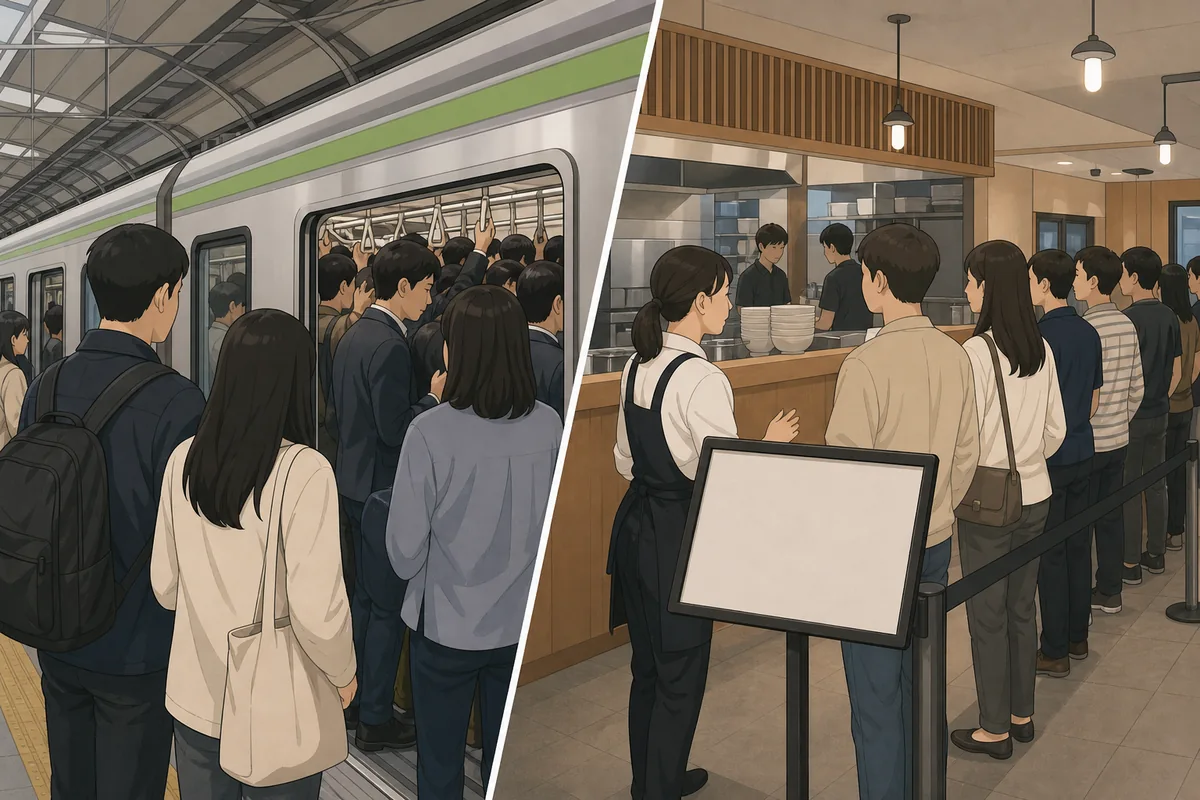
Many visitors see 만석 and assume the restaurant or venue is shut for the day. It is not. 만석 only means there are no open spots right now. The business is open and operating. You may only need to wait 15 to 30 minutes for a table to open up, especially at busy meal times.
Assuming 대기 Always Means a Very Long Queue
대기 does not automatically mean a one-hour wait. At some cafés, 대기 might mean five minutes. At a popular BBQ restaurant on a Friday evening, it could be 45 minutes. The word itself tells you nothing about the length — only that a wait exists. Always check the estimated time with staff or on the kiosk screen if it is shown.
Thinking 대기 Is the Same as a Reservation
대기 is a waitlist, not a reservation. A reservation (예약, yeyak) means you have a confirmed spot at a specific time. 대기 means you are in line and will be seated when space opens. Some restaurants do not take reservations at all and only operate on a 대기 basis, which is very common in Korea.
Ignoring the Kiosk or Number System
Some foreigners stand near the entrance waiting to be noticed by staff, not realising there is a self-registration kiosk. If you do not register, you will not be called. Always look for a tablet, number dispenser, or sign-in sheet near the entrance of a busy place.
Useful Korean Phrases for 만석 and 대기 Situations
Phrases to Use When You See 만석 or 대기
Warnings / Things to Check
Before You Wait, Confirm What You Are Waiting For
- Is the wait for a table, a seat, or boarding? The word 대기 is used in all these contexts. Make sure you understand what kind of spot you are waiting for before you commit to the queue.
- Check whether the system uses digital numbers, name lists, or SMS. If it uses SMS, you generally need a Korean phone number. If you are using a foreign SIM or roaming number, SMS notifications may not reach you. Ask staff if there is an alternative.
- Some kiosks are Korean-only. Newer kiosks at chain restaurants sometimes offer English, but many smaller restaurants use Korean-only systems. If you cannot navigate the kiosk, ask a staff member directly.
- Waiting times can change quickly. A 30-minute estimated wait can shorten or lengthen depending on group sizes leaving. Stay nearby and keep an eye on the display or listen for your number.
- Some venues require advance tickets even if 대기 is shown. For major events, concerts, or popular tourist sites, 대기 at the door may mean standby for last-minute cancellations — not a guarantee of entry. Always check the venue’s official website for ticketing rules before visiting.
- Information on specific venues, transit schedules, and waiting systems can change. Confirm current details with official sources or on-site staff.
FAQ
Does 만석 mean the restaurant or place is closed?
No. 만석 means the place is full right now, not that it is closed. The business is open and operating. You may be able to join a waitlist (대기) or return a little later when seats open up.
Is 대기 the same as making a reservation?
No. 대기 means you are on a waitlist and will be seated when a spot becomes available. A reservation (예약, yeyak) is a confirmed booking at a specific time. Many popular Korean restaurants do not take reservations and only use the 대기 system.
What should a visitor do if a visitor see 만석 on a bus or train ticket screen?
It means that departure or seat class is fully booked. Check the next available time or a different seat class. You can use the Korail official website for trains or ask at the ticket counter. Schedules and availability change, so always confirm with official sources.
Can a visitor use 대기 systems with a foreign phone number?
It depends on the system. Some SMS-based waitlist notifications may not work with foreign numbers. If you are unsure, tell the staff you have a foreign number and ask if they can call you, use a buzzer pager, or add you to a physical list instead.
How long does 대기 usually take at Korean restaurants?
It varies widely. At a casual café it might be just a few minutes. At a very popular Korean BBQ restaurant during peak hours, it could be 30 to 60 minutes or more. Always ask staff for an estimated wait time so you can decide whether to stay or come back.
Are there apps that help with the 대기 system in Korea?
Yes. Some restaurant chains and venues use apps like Naver or Kakao Maps, which allow you to join a remote waitlist before you even arrive. This is increasingly common at popular spots. Check the restaurant’s Naver or Kakao page before visiting to see if this option is available. App features and availability may change, so confirm with the venue directly.
Summary
Understanding manseok meaning is one of the most practical things you can learn as a visitor to Korea. To recap:
- 만석 (manseok) = fully occupied, no spots available right now — but the place is still open.
- 대기 (daegi) = waiting or waitlist — you can register and wait for a spot to open.
- You will see these words most often at restaurants, cafés, transit ticket screens, and venue entrances.
- Do not walk away when you see 만석 — check for a 대기 kiosk or ask a staff member first.
- 대기 is not a reservation and does not guarantee entry, but it does give you a place in line.
- Always confirm wait times, systems, and any ticket requirements with staff or official sources, as these details can change.
With just these two words, you will handle some of the most common real-world situations in Korea with much more confidence.
Related and Official Resources
Sources & Verification
- 한국어기초사전 — krdict.korean.go.kr
- National Institute of Korean Language — www.korean.go.kr
Last checked: July 30, 2026