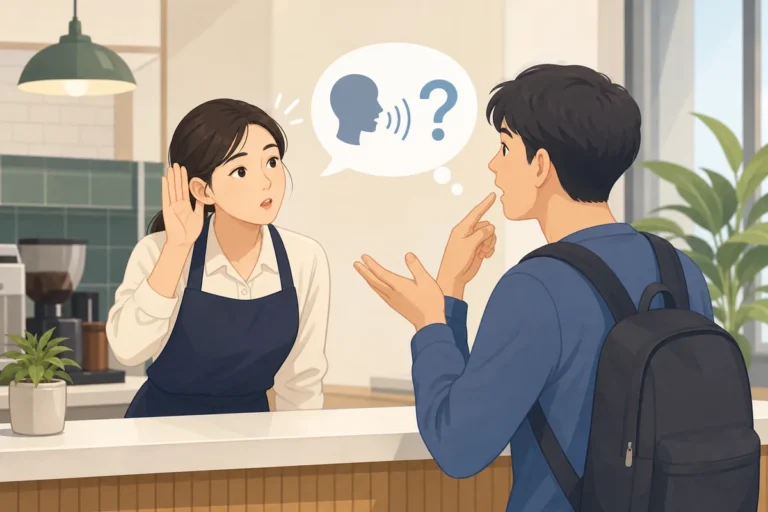
help me in korean: Useful Phrases to Ask for Help
Knowing how to say help me in korean can make a real difference when you are traveling in Korea for the first time. Most Koreans are genuinely willing to assist a visitor who looks lost or confused, but polite wording matters a lot in Korean culture. The good news is that you only need a handful of simple phrases to handle most everyday situations. This guide gives you those phrases in plain English, with easy romanization so you can say them right away.
Help Me In Korean: What You Need to Know
These are the most important phrases to remember before anything else:
- Jeogiyo — excuse me / hey there (to get someone’s attention)
- Dowajuseyo — please help me
- Jamsimanyo — just a moment / excuse me briefly
- Moreugesseoyo — I don’t know / I’m not sure
- Saram sallyeo! — Help! (urgent, emergency only)
- Yeongeo haseyo? — Do you speak English?
If you remember nothing else, Jeogiyo + Dowajuseyo will get you very far.
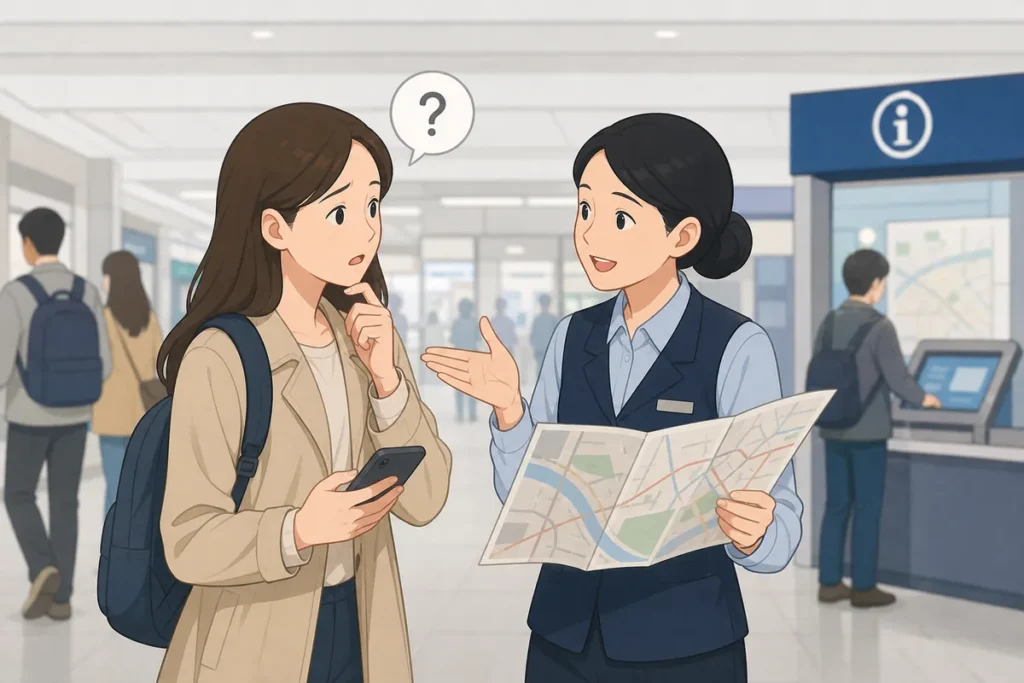
Table of Contents
- Why Polite Phrasing Matters in Korea
- Getting Someone’s Attention
- Asking If Someone Can Help You
- Describing Your Problem Simply
- Asking for Emergency Help
- Common Situations Step by Step
- What Foreigners Often Get Wrong
- Useful Korean Phrases
- Warnings / Things to Check
- FAQ
- Summary
Why Polite Phrasing Matters in Korea
Korean is a language where politeness levels are built into the words themselves. When you use a polite ending like -seyo or -juseyo, people immediately feel more comfortable responding to you. Strangers on the street, shop staff, and station workers all respond better to polite phrasing than to short, blunt requests. You do not need to be fluent. Even one or two polite Korean words at the start of your request signals respect, and that goes a long way.
You will also find that many younger Koreans in cities, especially in Seoul, Busan, and tourist areas, have some basic English. Staff at major subway stations, tourist information centers, and large convenience stores are often used to helping foreign visitors. Still, having a few Korean phrases ready, even just to open the conversation, makes the whole interaction smoother and friendlier.
Getting Someone’s Attention
Before you can ask for help, you need to get someone to stop and listen. In Korea, there is a right and wrong way to do this. Tapping someone on the shoulder or shouting is considered rude. Instead, use one of these phrases to open politely.
Attention Phrases
Asking If Someone Can Help You
Once you have someone’s attention, the next step is to ask if they are able to help. Keeping this short and polite is key. You do not need to explain your whole problem immediately, just ask first.
Asking for Help Phrases
Describing Your Problem Simply
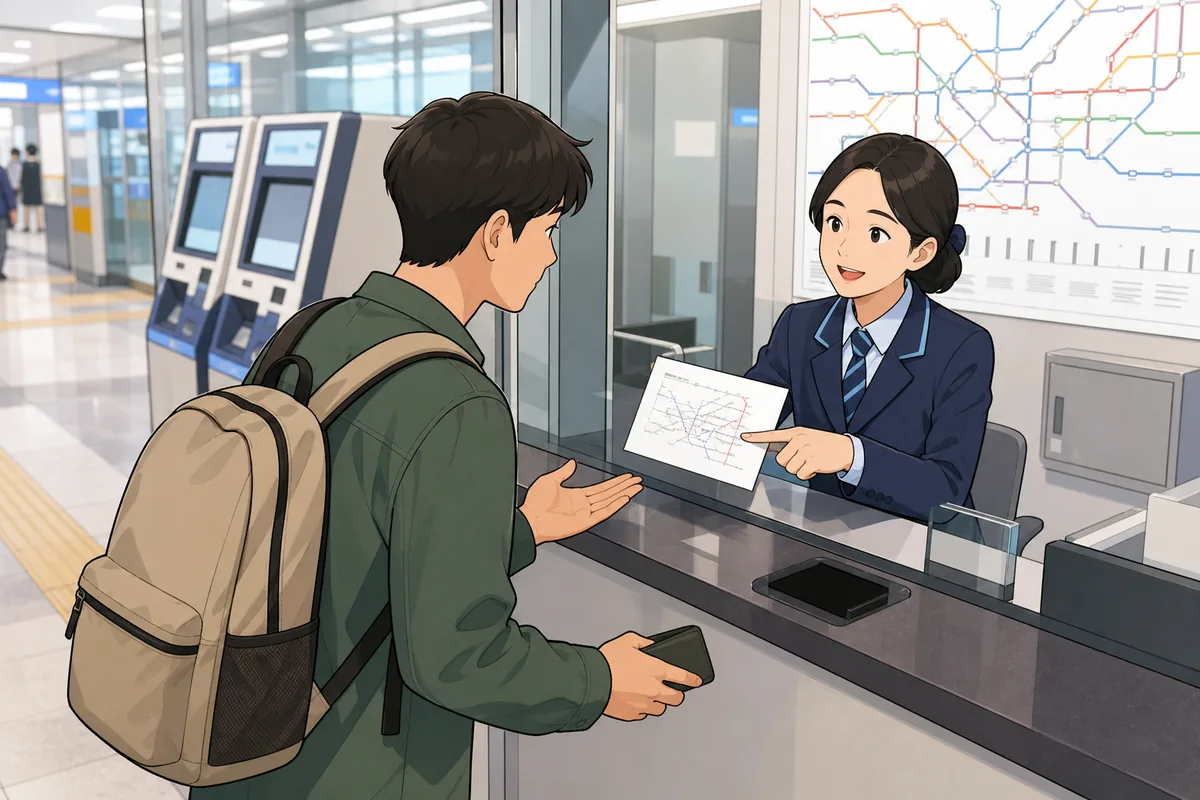
You do not need to explain everything in Korean. The best approach is to say one short phrase that names the problem, then show your phone screen, a map, or a printed address. Koreans are very used to helping visitors this way.
Problem Description Phrases
Asking for Emergency Help
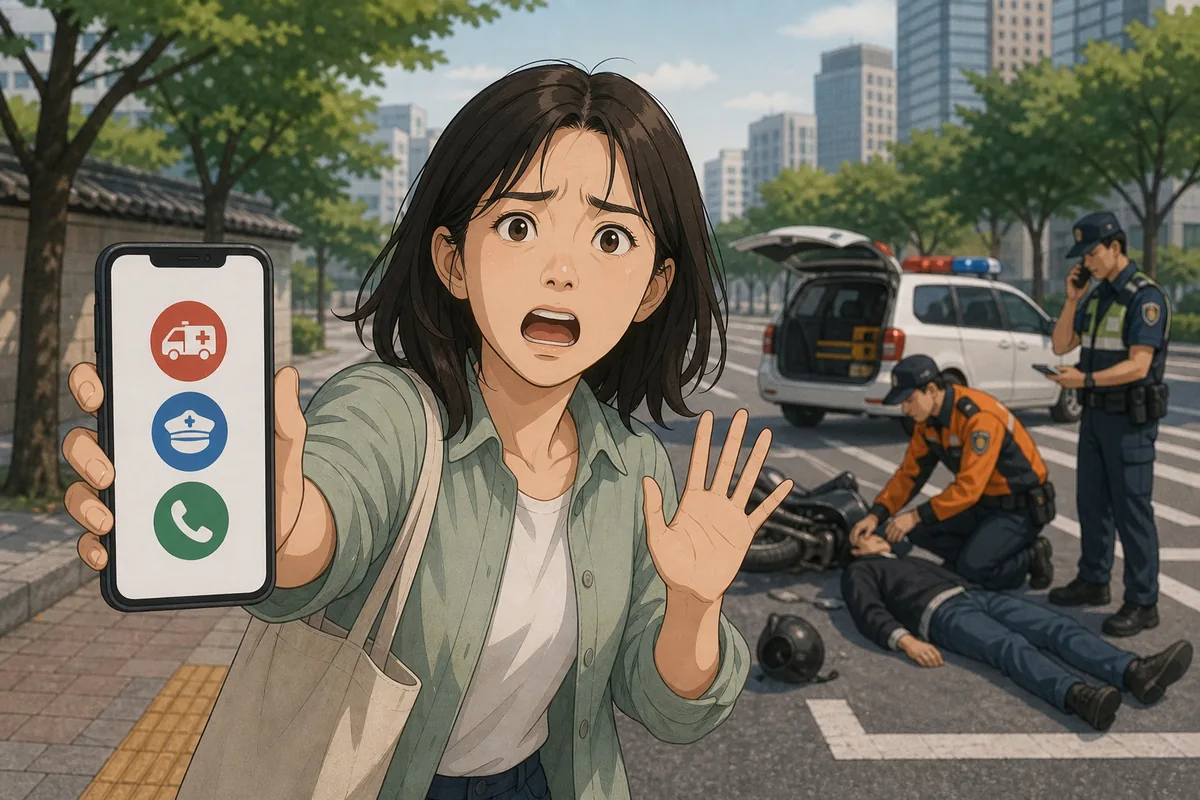
In a genuine emergency, a medical situation, a crime, a fire, or a serious accident, the phrases below are what you need. Stay as calm as you can, speak clearly, and call the official emergency numbers listed in the warnings section below.
Emergency Help Phrases
Common Situations Step by Step
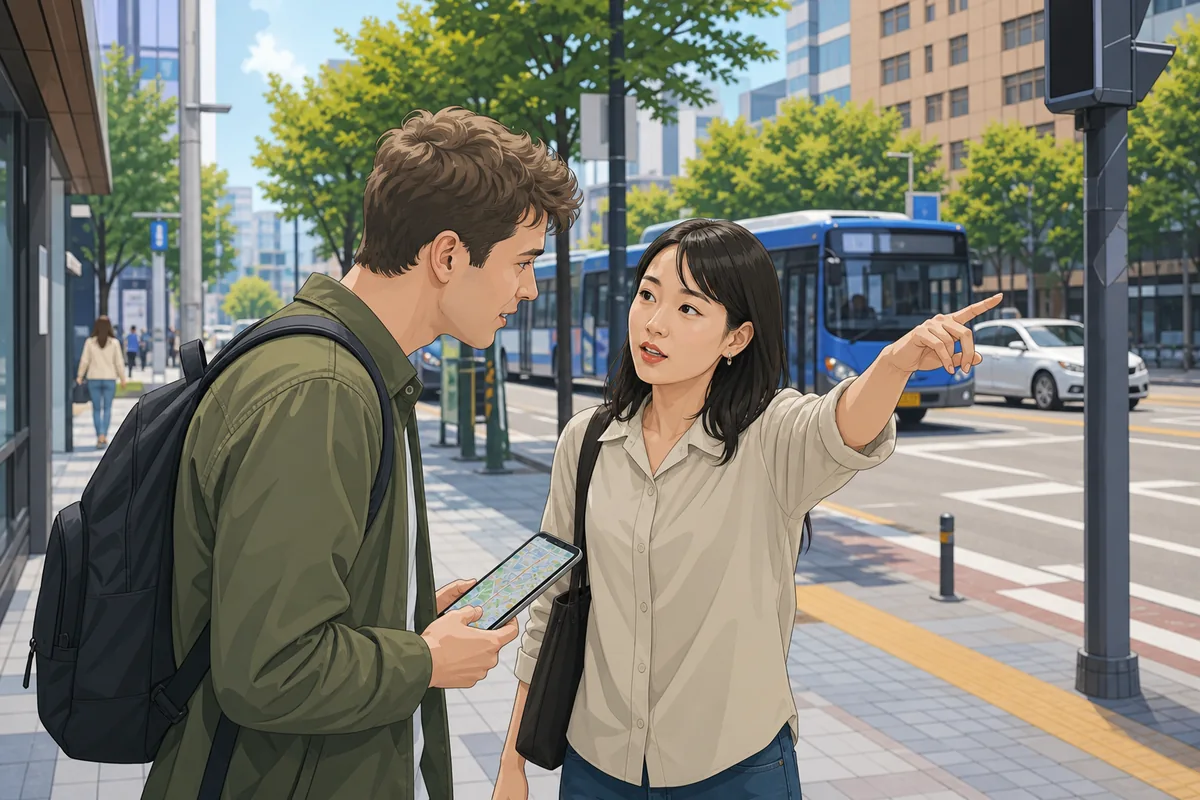
Being Lost on the Street
Stop someone walking at a normal pace, not someone rushing. Say Jeogiyo to get their attention, then show your destination on a map app and say Yeogi eodieyo? Most people will either point you in the right direction or type into their own phone to show you. If they cannot help, they will usually say so and you can try someone else.
Asking Staff in a Store or Station
In a convenience store, department store, or subway station, approach the counter and say Jeogiyo or simply make eye contact. Then say Igeot chajgo isseoyo while pointing at a photo or product name on your phone. Station staff at major subway lines are trained to help foreign visitors and many have basic English. You can also look for the blue i signs in subway stations.
Asking in a Restaurant
If you need help with the menu or have a dietary concern, say Jeogiyo to call the server, then show them a photo of what you want or point at the menu. If you have an allergy, write it down in Korean before your trip. That is safer than trying to explain it verbally in the moment.
Needing a Translation
If you are stuck in a situation where no one speaks English, try calling the 1330 Korea Tourism Hotline. This free service offers interpretation in English, Chinese, Japanese, and other languages. You can hand your phone to the Korean person and the interpreter will speak directly with them on your behalf.
Urgent Safety or Medical Situation
Call 119 for ambulance and fire, or 112 for police. Both lines have English-speaking operators available. Stay on the line, keep your location visible on your phone screen, and stay as calm as possible. If you are near a subway station, go to the station office, because staff are trained in basic emergency response.
What Foreigners Often Get Wrong
- Speaking too much at once. Long English explanations confuse people even if they know some English. Keep your first sentence short, one phrase, then show your phone.
- Using casual or blunt language. Saying just “help” or “where?” without polite endings can feel abrupt. Always add -juseyo or -yo endings when possible.
- Not showing your phone screen. A map pin, a product photo, or a screenshot of your booking is worth a hundred words. Always have it ready before you approach someone.
- Asking someone who is clearly in a hurry. Look for someone who is standing still, browsing, or moving slowly. A person rushing to catch a train is unlikely to stop.
- Assuming everyone speaks English. Younger people in cities often do, but older people and those outside major tourist areas may not. Have a backup plan, your phone translator app or the 1330 hotline.
- Forgetting to say thank you. After someone helps you, always say Gamsahamnida (thank you, formal) or Gomapseumnida (thank you, also formal). It closes the interaction warmly.
Useful Korean Phrases
High-Value Expressions for Getting Help in Korean
Warnings / Things to Check
- Emergency numbers: call 119 for ambulance or fire, and 112 for police.
- Tourist help: the 1330 Korea Tourism Hotline can help with interpretation and visitor questions.
- Keep your location visible: show a map pin, station name, or nearby landmark on your phone.
- Use short sentences: in an urgent situation, one clear phrase is better than a long explanation.
- Show the problem if you can: booking screens, photos, tickets, or a written address are often more useful than spoken English.
FAQ
Will people understand English if I ask for help?
Often, yes, especially in Seoul and tourist areas. But not always. It is best to start with a polite Korean phrase like Jeogiyo or Dowajuseyo, then switch to simple English or a phone screen if needed.
Is pointing at my phone rude?
No. In Korea, showing a map, screenshot, or product photo is normal and often helpful. It is usually seen as practical, not rude, as long as you start politely.
What should I do if I cannot speak Korean at all?
Use Jeogiyo, Dowajuseyo, and Yeongeo haseyo? Then show your phone screen or use the 1330 hotline or a translator app if the situation needs more detail.
What is the safest phrase for a real emergency?
Use Saram sallyeo! for immediate attention, then call 119 or ask someone nearby to call for you. If police are needed, use 112.
Summary
When you need help in Korea, start politely, keep your sentence short, and show your phone if possible. The most useful survival phrases are Jeogiyo, Dowajuseyo, Jamsimanyo, and Yeongeo haseyo?. For urgent situations, remember 119, 112, and 1330. With just these basics, you can ask for help clearly and calmly in most everyday situations.