Concert Venue Signs You Should Know in Korea
concert venue signs can be the fastest way to understand what to do at a K-pop show in Korea. From the entrance queue to your seat, many venues use a mix of Korean and English notices that tell you where to line up, what to bring, and what is not allowed.
Rules can change depending on the artist, promoter, and venue. Always check the official event notice on your ticketing platform before you go, and treat this guide as a practical reference rather than final policy.
Most Korean concert venues use a mix of Korean and English signage, but Korean-only signs are still common. Focus on a few key words: 입장 (entry), 출구 (exit), 좌석 (seat), 스탠딩 구역 (standing zone), 반입 금지 (prohibited items), and 비상구 (emergency exit). If you are unsure, show your ticket and ask staff for help.
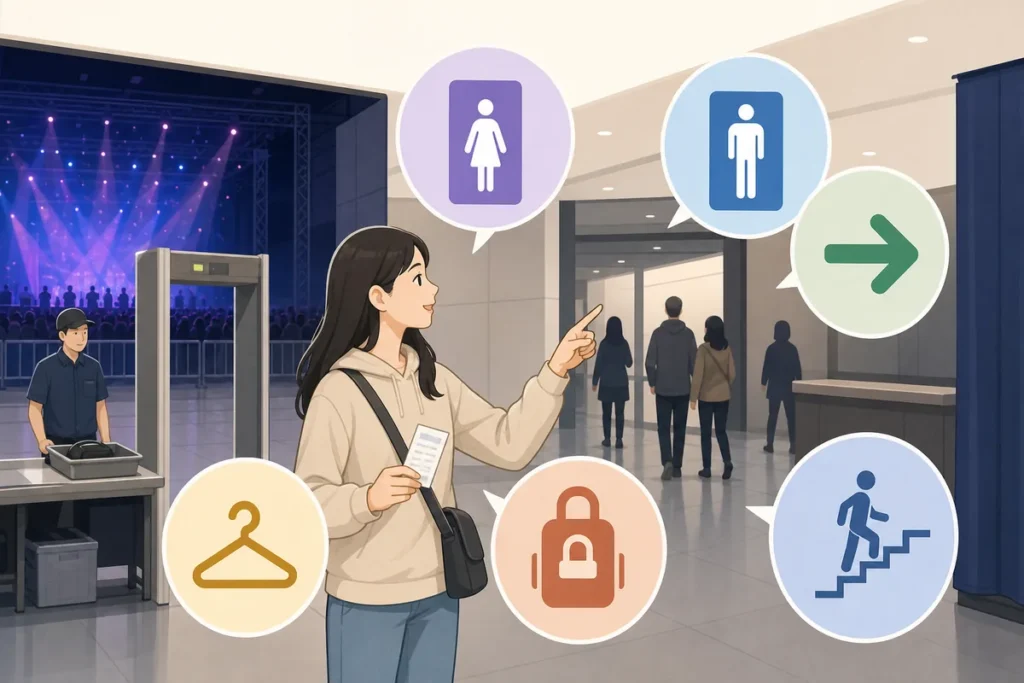
Table of Contents
- Entrance and Check-In Signs
- Ticket Validation Signs
- Seat, Section, and Row Labels
- Standing Zone Signs
- Gate Numbers
- Prohibited Items Signs
- No Photography and No Filming Signs
- No Food or Drinks Signs
- Emergency Exit Signs
- Restroom Direction Signs
- Accessibility Seating Signs
- Late Entry and Re-Entry Notices
- Common Situations
- What Foreigners Often Get Wrong
- Useful Korean Phrases
- Warnings / Things to Check
- FAQ
- Summary
concert venue signs: What You Need to Notice First
The most important concert venue signs usually appear before you even enter the building. They guide you to the right queue, ticket check point, and gate. Inside the venue, signs help you find your section, row, restroom, and exit without needing to ask every time.
Entrance and Check-In Signs
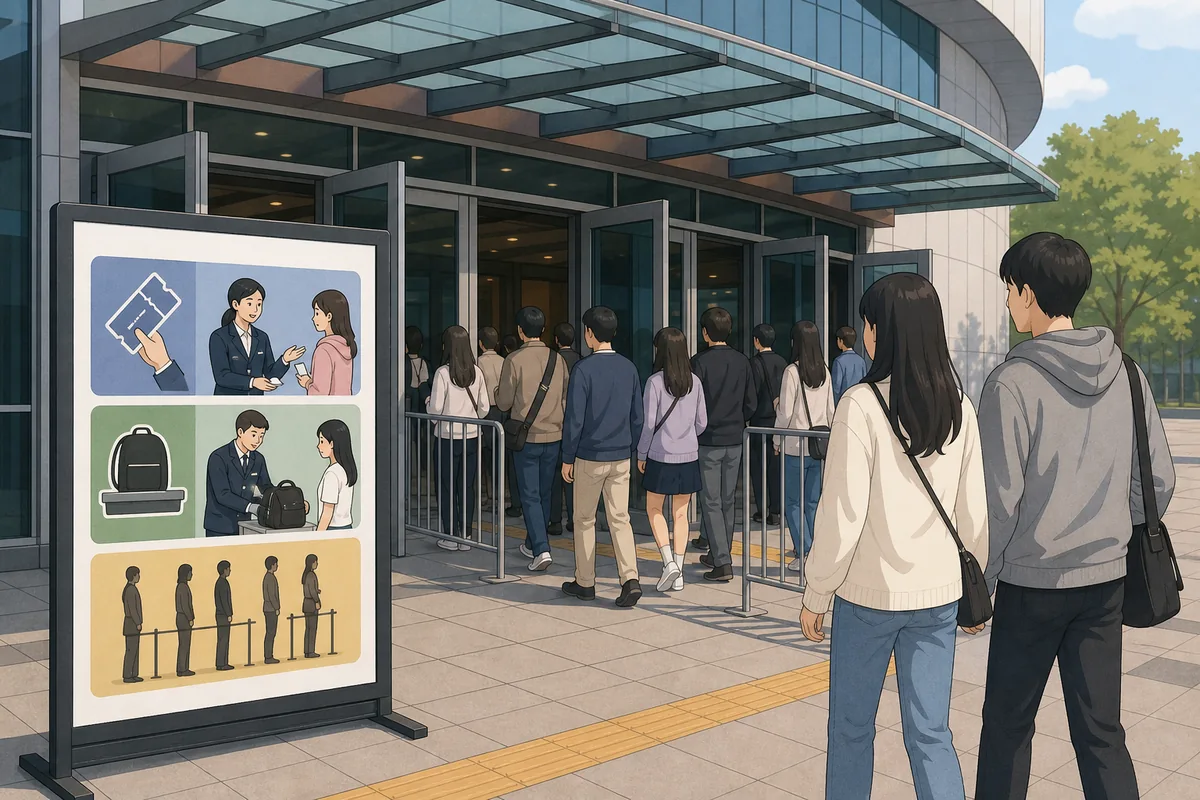
The entrance area is usually the busiest part of the venue. Signs here tell you which line to join, when entry starts, and whether ID or a ticket scan is required.
Do not assume every sign will be bilingual. Some venues use Korean-only notices for line order, item checks, or gate changes, especially during crowded entry times.
Ticket Validation Signs
Ticket scanning is usually done with a QR reader, handheld scanner, or a staff member checking your ticket at the gate. Signs near the scanner tell you whether to open the app, show a printed ticket, or go to on-site pickup.
Seat, Section, and Row Labels
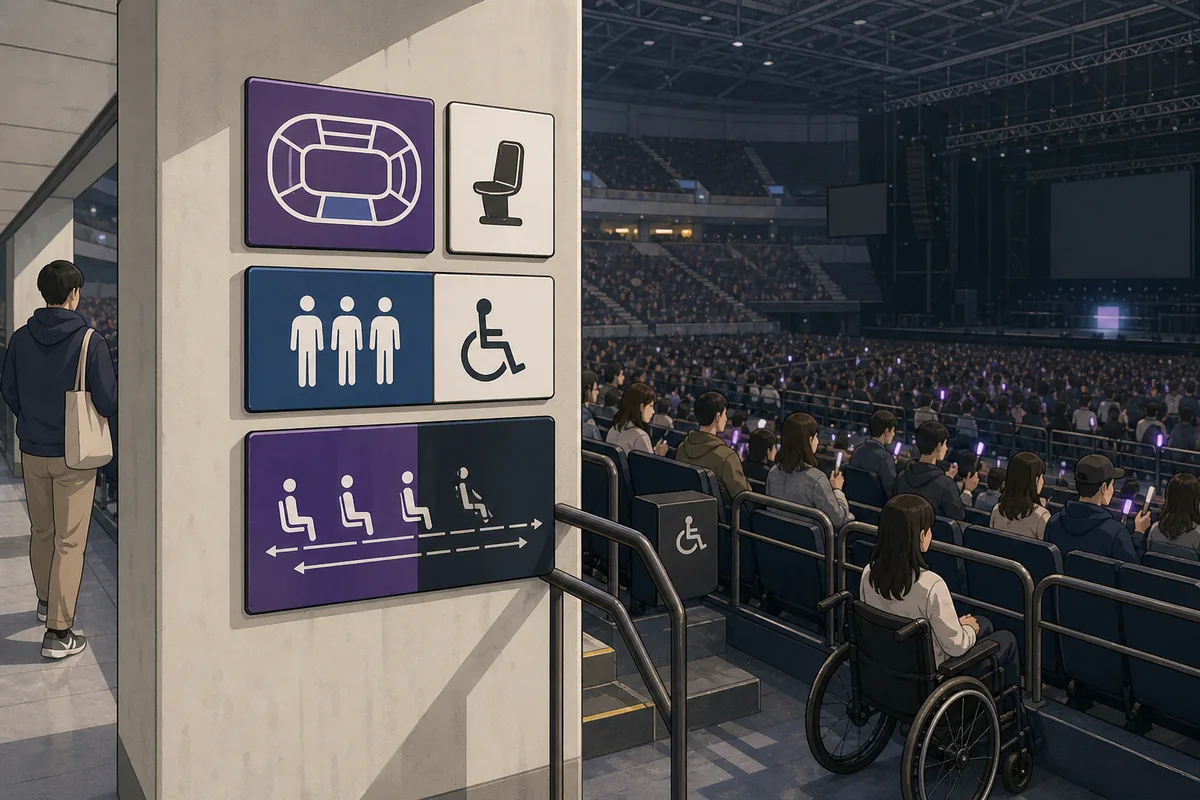
Seat signs are important because venue layouts in Korea can feel unfamiliar at first. Your ticket will usually show a section, row, and seat number, and the signs on pillars or aisle markers should match them exactly.
Standing Zone Signs
Standing zones are common at K-pop concerts and fan events. If your ticket says 스탠딩, you usually do not have a numbered seat and will stand for the show.
Gate Numbers
Large venues often divide entry points into numbered gates or compass-direction entrances. Using the wrong gate can send you to the end of the wrong line, so check your ticket and venue map carefully.
Prohibited Items Signs
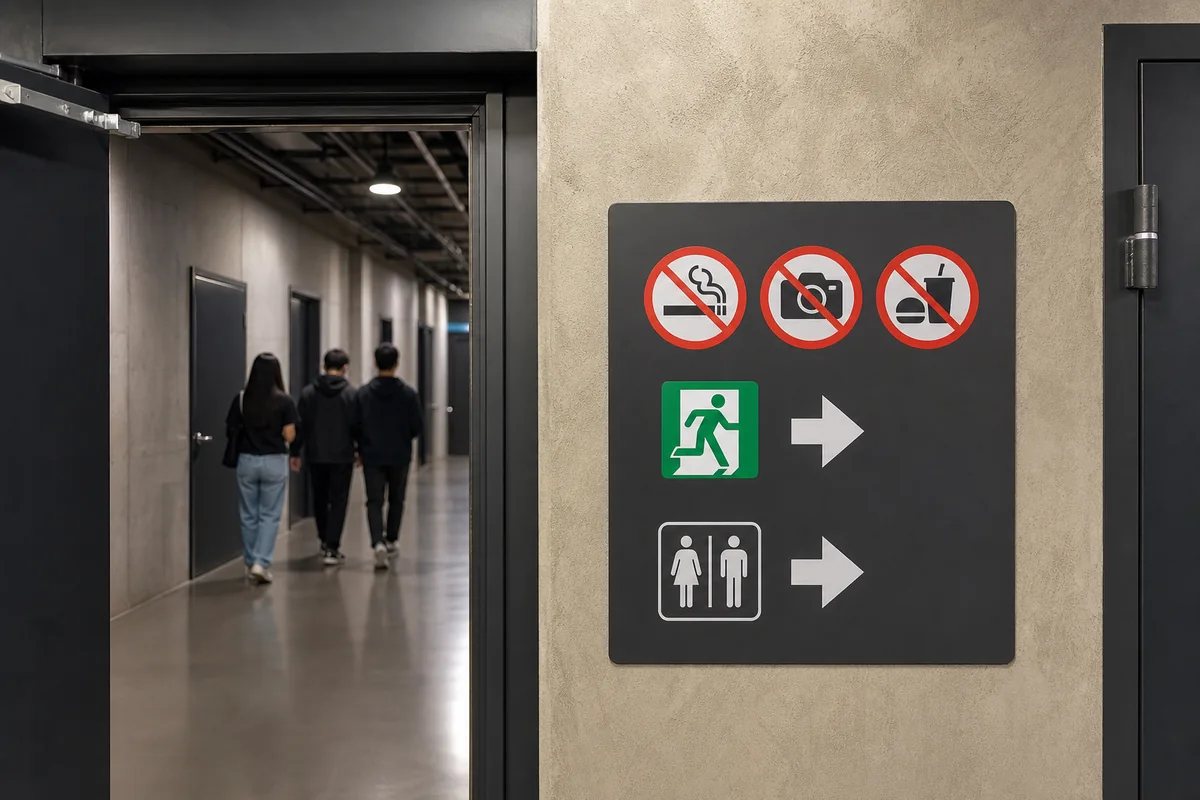
Prohibited items signs are among the most important concert venue signs to read before security screening. The exact list changes by event, but many venues restrict cameras, large bags, bottles, selfie sticks, and outside food or drinks.
No Photography and No Filming Signs
Photography rules vary by event. Some shows ban all recording, while others may allow photos only at certain times. Read both the text and the icons if the sign includes them.
No Food or Drinks Signs
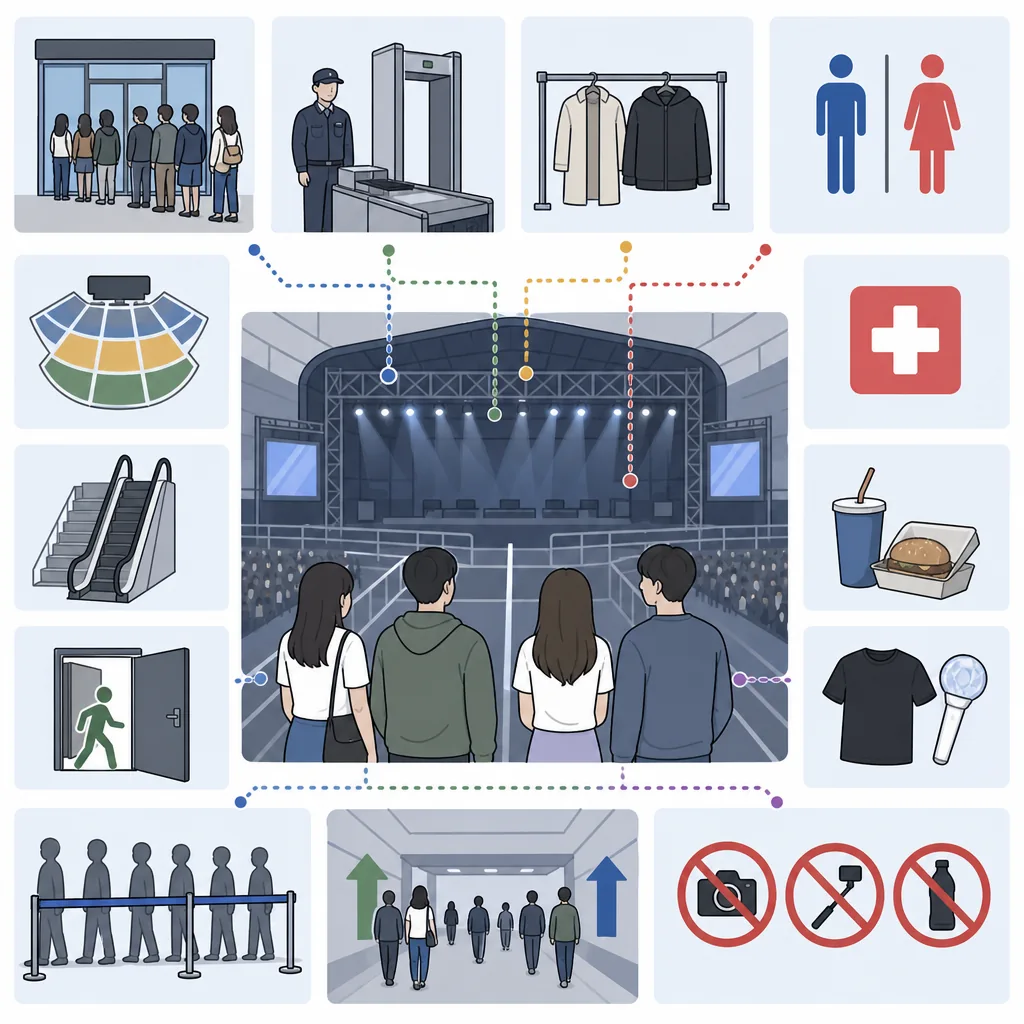
Some venues allow sealed water bottles only, while others do not allow outside food or drinks at all. Look for the exact wording and follow staff instructions if your bag is checked.
Emergency Exit Signs
Emergency signs matter because venues can become crowded quickly after the show. Keep an eye on these signs so you know where the nearest safe exit is if you need it.
Restroom Direction Signs
Restroom signs are usually easy to recognize because they often include icons. Still, it helps to know the Korean word in case the venue uses text-only arrows.
Accessibility Seating Signs
Accessibility areas are marked in different ways depending on the venue. If you need accessible seating, look for clearly labeled areas and ask staff before you move into a restricted section.
Late Entry and Re-Entry Notices
Late-entry and re-entry rules are easy to miss because they may appear on a small sign near the door or on the official event notice only. Some events do not allow re-entry once you leave, while others restrict it to a certain time window.
Never assume you can leave for food, a store, or a photo spot and come back freely. Re-entry restrictions are common at Korean venues, especially during high-demand K-pop events.
Common Situations
- You see only Korean text: look for the most recognizable words, arrows, and icons. Security and staff often stand nearby.
- Your ticket says standing zone: check whether numbers are distributed before entry and whether a specific gate is required.
- Your seat label does not match the sign: ask staff immediately instead of trying random rows.
- You are carrying an uncertain item: check the prohibited-items board before security screening.
What Foreigners Often Get Wrong
- Thinking standing zone means a floor seat: standing zones usually have no assigned chairs.
- Assuming all signs are bilingual: many are not, especially at smaller venues.
- Ignoring re-entry rules: leaving the venue may mean you cannot return.
- Confusing section and row labels: Korean seating systems can use letters, numbers, and Korean characters together.
- Bringing restricted items without checking: camera and bag rules vary by event.
Useful Korean Phrases
FAQ
Are all concert venue signs in English?
No. Some major venues use bilingual signs, but many notices are Korean-only, especially for security rules and seating directions.
What should I do if I cannot read a sign?
Look for arrows, icons, and gate numbers, then ask a staff member. Showing your ticket usually helps.
Can I use my phone for the ticket scan?
Usually yes, but you should open the live QR ticket screen before you reach the scanner. Some venues do not accept screenshots.
Do standing zones always mean first come, first served?
Not always. Some events use numbered entry order, wristbands, or separate check-in times. Check the official notice.
Summary
this topic in Korea are easier to handle once you know a few key words. Focus on entry, ticket check, seat labels, standing zone notices, prohibited items, and safety signs. If anything is unclear, staff, arrows, and the official event notice are your best guides.