Hwanseung in Korea: Free Transfer Rules for Public Transit
If you have ever seen the word 환승 on a sign inside a Korean subway station or bus stop and wondered what it means, you are not alone — understanding hwanseung meaning is one of the first practical steps to using Korea’s public transit system with confidence. Korea has one of the most efficient and affordable transit networks in the world, but the transfer rules can feel confusing when you are new. This guide breaks everything down in plain English so you can ride buses and subways without worrying about paying twice or missing a free connection.
Hwanseung Meaning: What You Need to Know
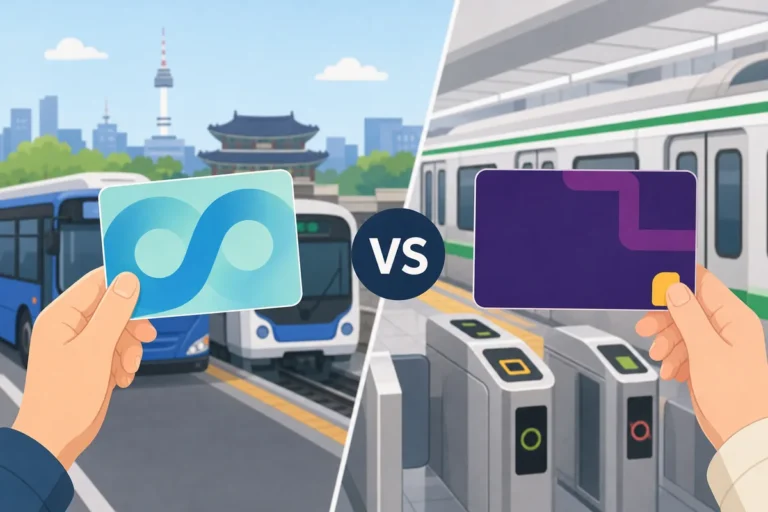
환승 (hwanseung) means transfer in Korean — changing from one transit line or vehicle to another. In most Korean cities, if you use a transit card like T-money and transfer within a set time window, your next ride is free or heavily discounted. You must tap your card correctly every time, and you must stay within the time limit. Cash payments do not qualify for free transfers.
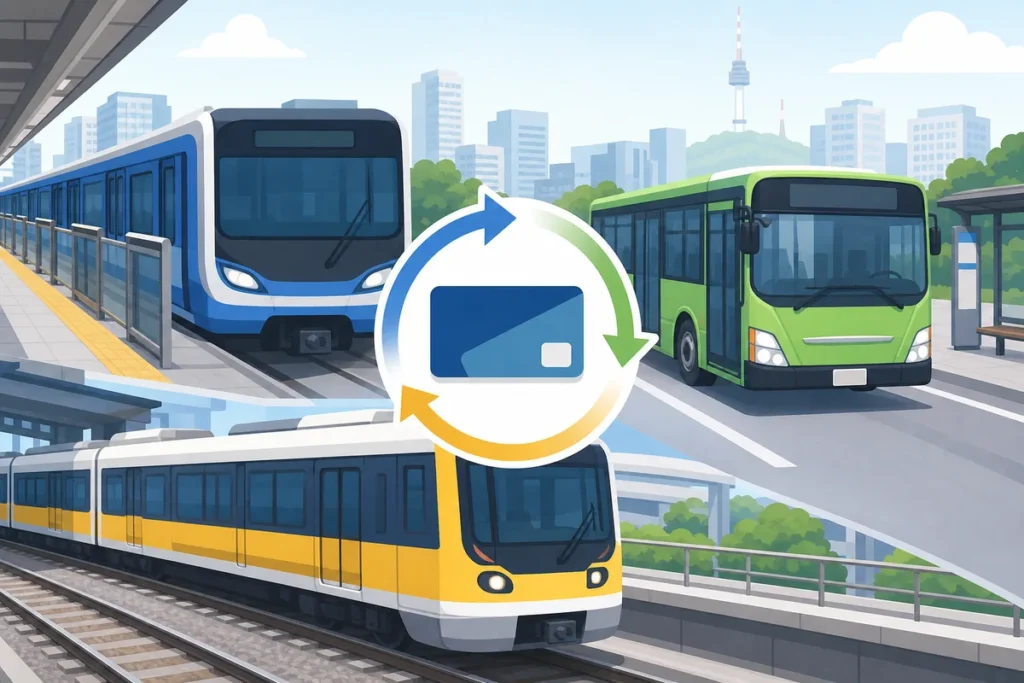
Table of Contents
- What Does Hwanseung Mean?
- How Free Transfers Work in Korea
- Common Transfer Situations
- What Foreigners Often Get Wrong
- Useful Korean Phrases for Transfers
- Warnings and Things to Check
- Frequently Asked Questions
- Summary
What Does Hwanseung Mean?
The Korean word 환승 (hwanseung) literally means transfer. It describes the act of switching from one train line, bus route, or transit mode to another as part of a single journey. You will see it printed on signs, announced over speakers, and displayed on screens throughout Korean transit systems.
It is important to understand that transfer and free transfer are two different things. Transfer simply means changing vehicles or lines. Free transfer is a fare rule — a system that allows you to continue your journey without paying a second full fare, as long as you meet certain conditions. Korea’s transit system is designed to encourage free transfers, but they do not happen automatically. You have to use the right payment method and follow the rules.
Two Ways the Word Is Used
- As a route instruction: “Take Line 2 and transfer at Hongik University station.” Here, hwanseung just means you need to change trains.
- As a fare rule: “Your transfer is free because you tapped your T-money card within 30 minutes.” Here, hwanseung refers to the discount system.
Knowing both meanings helps you read maps, follow directions, and avoid paying more than you need to.
How Free Transfers Work in Korea
Korea’s free transfer system is built around transit cards, especially T-money, which is the most widely accepted rechargeable card across Seoul and many other cities. When you tap in and tap out correctly, the system records your journey and checks whether your next ride qualifies as a free transfer.
The Basic Rules (Seoul as the Main Example)
| Rule | Detail |
|---|---|
| Payment method required | Transit card (T-money or compatible card). Cash does not qualify. |
| Transfer time window (daytime) | 30 minutes from the time you exit your first vehicle |
| Transfer time window (late night) | 60 minutes between 21:00 and the last service of the night |
| Maximum free transfers allowed | Up to 4 transfers per journey in Seoul |
| Distance limit | 10 km base fare included; extra distance charges may apply beyond that |
| Must tap out? | Yes — you must tap out when leaving a bus or subway, or the transfer will not register |
These figures apply to Seoul’s integrated fare system. Other cities have their own rules, and you should always confirm current details with official sources before your trip. The Seoul Metro official website publishes fare and transfer information in English.
What Counts as a Free Transfer?
- Subway to subway (changing lines at a transfer station)
- Bus to bus (getting off one bus and boarding another)
- Subway to bus (leaving the subway and catching a bus)
- Bus to subway (getting off a bus and entering the subway)
All of these combinations can qualify for a free or discounted transfer as long as you use a transit card, tap correctly, and stay within the time window.
Common Transfer Situations
Situation 1: Changing Subway Lines Inside a Station
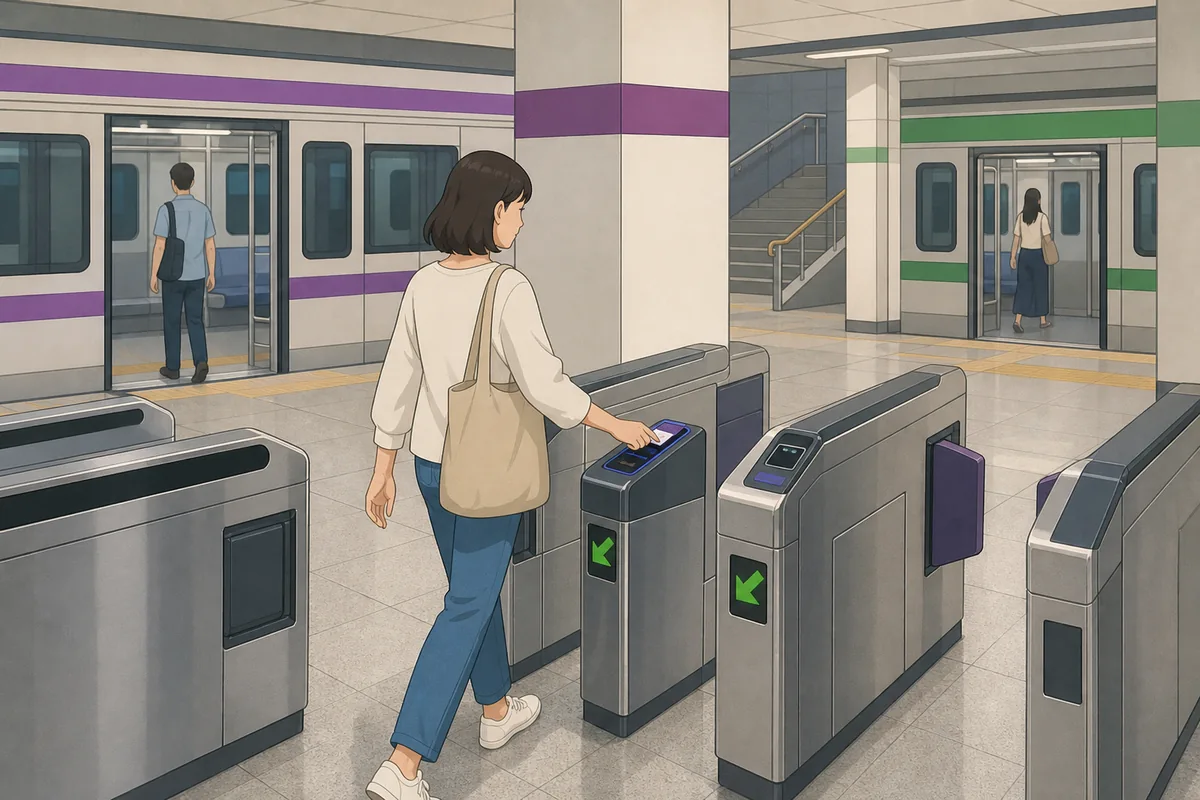
This is the most straightforward type of transfer. You enter a station, tap your card at the turnstile, walk to a different platform, and board a different line — all without leaving the paid zone. Because you never exit the station, you do not need to tap again in the middle. You only tap when you first enter and when you finally exit. The system automatically recognises this as a single journey.
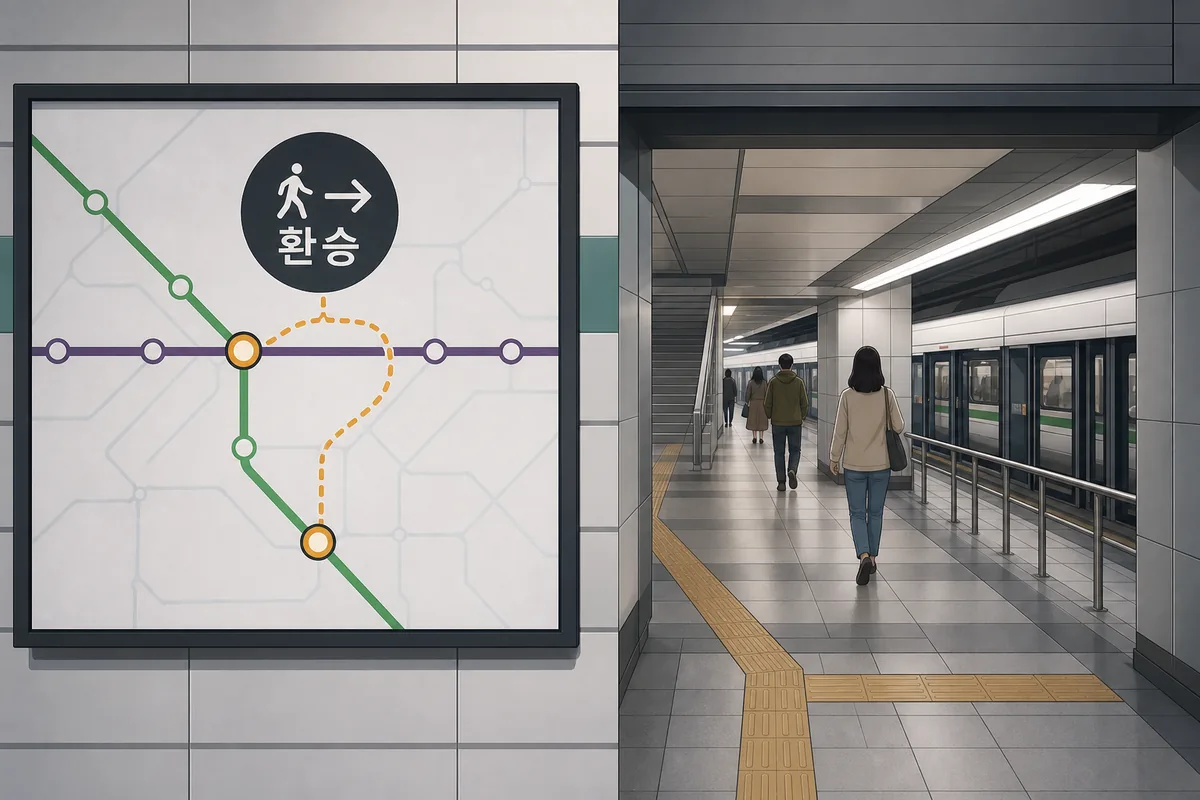
Look for 환승 signs (often with arrows and a line number or colour) on the walls and ceilings of the station. These signs guide you from one platform to another. Major transfer stations like Sindorim, Hongik University, and Express Bus Terminal have very clear signage in both Korean and English.
Situation 2: Getting Off a Bus and Boarding Another Bus
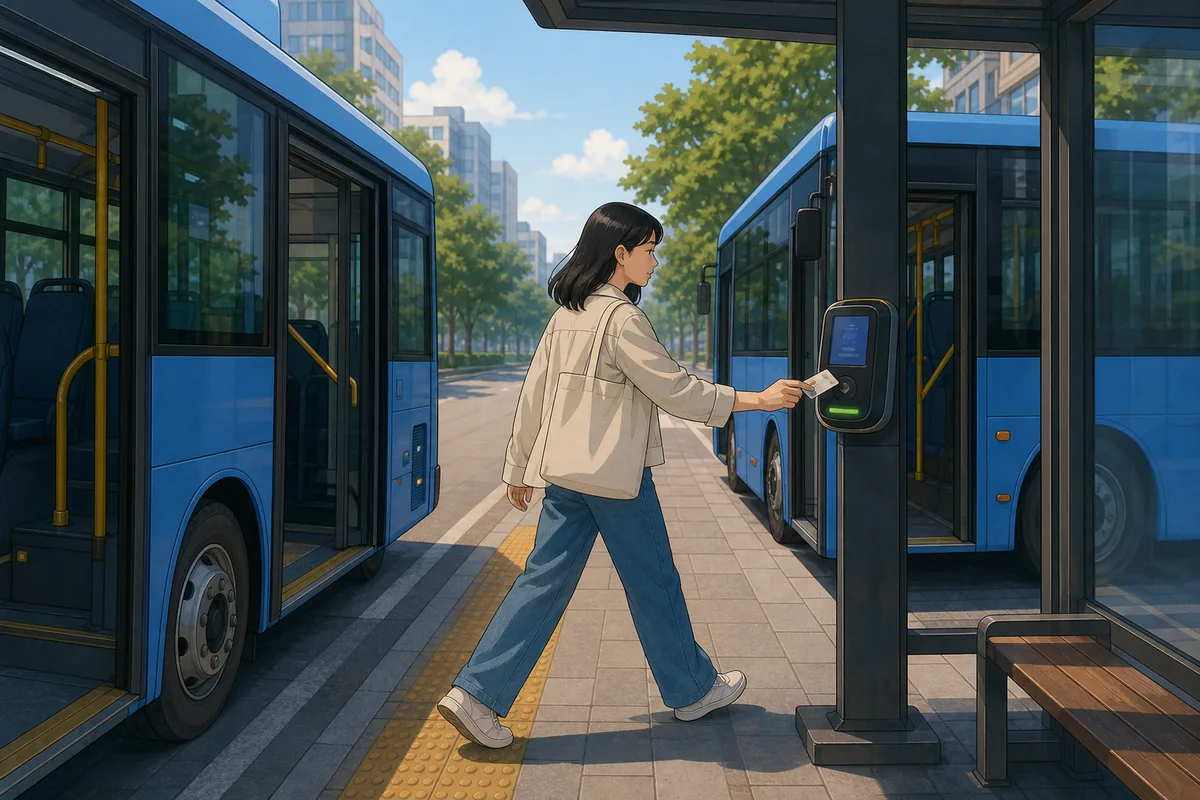
When you reach your bus stop, tap your T-money card on the reader as you exit the bus. This tap-out is essential — it tells the system you have finished the first part of your journey and starts your transfer clock. Then, at the same stop or a nearby stop, board your next bus and tap your card again. If you do this within 30 minutes (or 60 minutes at night in Seoul), you will not be charged a full second fare.
You will often see a small screen on the bus card reader that flashes a message when a transfer discount is applied. It may show the word 환승 or display a reduced charge amount.
Situation 3: Leaving the Subway and Catching a Bus
Exit the subway station by tapping your card at the turnstile. Then walk to the nearby bus stop — many subway stations have bus stops directly outside or within a short walking distance. Board your bus and tap your card. As long as you are within the transfer window, the fare will be discounted or free depending on the distance.
Some large transit hubs have a dedicated 환승센터 (hwanseung senteo), which is a transfer centre — a covered area where multiple bus routes stop right next to the subway exit. These make subway-to-bus transfers very convenient.
Situation 4: Taking a Bus and Then the Subway
Tap out when you exit the bus. Walk to the subway entrance and tap your card to enter. The system links the two rides as one journey. This combination works exactly like subway-to-bus, just in reverse.
What Foreigners Often Get Wrong
Forgetting to Tap Out of the Bus
On the subway, the turnstiles force you to tap out — you physically cannot leave without doing so. On buses, it is your responsibility to tap the card reader near the exit door as you get off. Many visitors forget this step. If you do not tap out, the system cannot calculate your journey distance or register your transfer. You may be charged a penalty fare on your next ride, and you will lose the free transfer.
Paying with Cash
If you pay cash on a bus, you pay the full single fare with no transfer benefit. Cash riders are not part of the integrated fare system. Always use a T-money card or a compatible bank card if you want free transfers.
Waiting Too Long Between Rides
If you stop for coffee, do some shopping, or take a long walk between your bus and your next ride, you may exceed the 30-minute transfer window. The clock starts when you tap out of your first vehicle, not when you arrive at the next stop.
Assuming Rules Are the Same Everywhere
Seoul’s rules are the most commonly described, but cities like Busan, Daegu, Incheon, and Daejeon each have their own transit systems with their own transfer policies. Time windows, distance limits, and card compatibility can differ. Always check the local transit authority’s website or app for the city you are visiting.
Using a Credit Card That Is Not Transit-Enabled
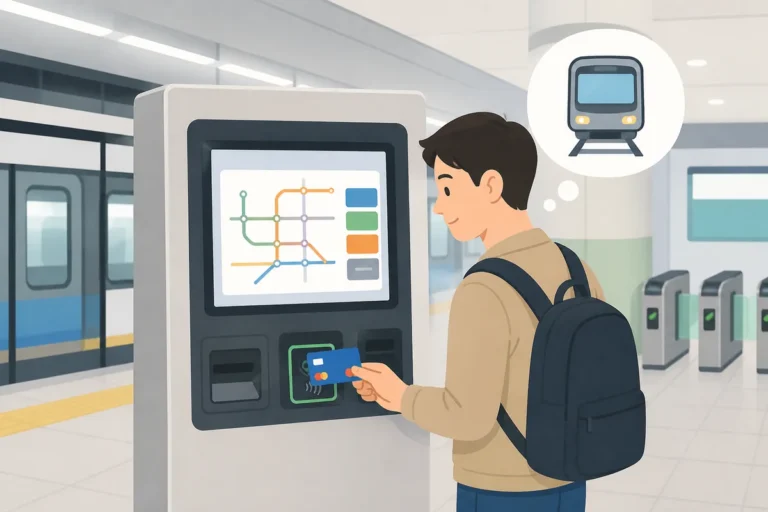
Some foreign bank cards and credit cards can be tapped on Korean transit readers, but not all of them qualify for the free transfer system. If you are unsure, buy a T-money card at any convenience store (GS25, CU, 7-Eleven) for a small fee and load it with cash. This is the safest and most reliable option for visitors.
Useful Korean Phrases for Transfers
Warnings and Things to Check
- Always tap out of buses. The exit card reader is usually near the back door. Missing this step breaks the transfer chain and may result in a penalty charge on your next ride.
- Do not use cash if you want free transfers. Cash fares are always full price with no transfer benefit, regardless of how quickly you board the next vehicle.
- Check the transfer time window for your city. Seoul’s 30-minute daytime rule is not universal. Busan, Daegu, and other cities may have different windows.
- T-money cards need to be loaded with enough balance. If your card balance is too low to cover the base fare, you may be denied boarding or charged incorrectly. Top up regularly at convenience stores or station kiosks.
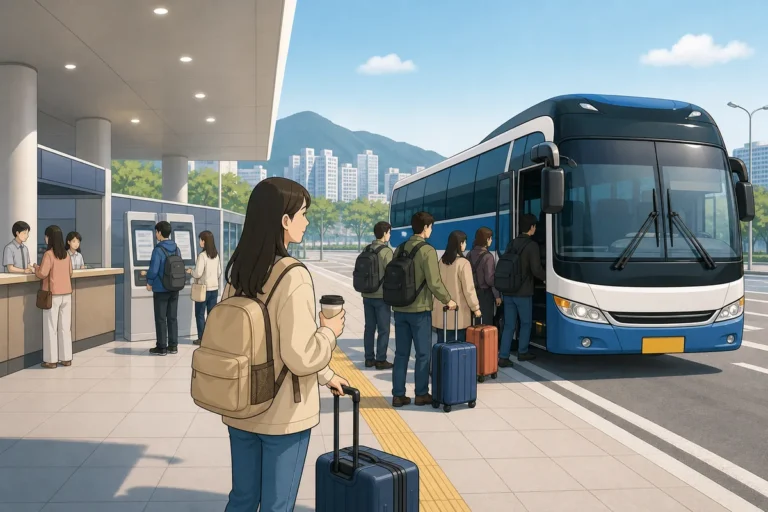
- Airport limousine buses and some express buses do not participate in the free transfer system. These are separate fare structures. Check before you board.
- Transfer rules can change. Fares and policies are updated periodically. Confirm current rules with the official transit authority for the city you are in before relying on any guide, including this one.
- Some card types may not qualify. Certain tourist cards or prepaid cards have limited transfer eligibility. Read the card’s documentation or ask at the point of purchase.
Frequently Asked Questions
What does hwanseung mean in English?
Hwanseung (환승) means transfer in English. It refers to the act of changing from one transit line or vehicle to another during a journey. In the context of Korean public transit, it is also closely associated with the free or discounted fare system that applies when you switch between buses and subways using a transit card.
Is the transfer always free in Korea?
No, not always. Free transfers depend on several conditions: you must use a transit card (not cash), you must tap in and out correctly, and you must board your next vehicle within the transfer time window (typically 30 minutes during the day in Seoul). If any of these conditions are not met, you will be charged a full fare. Some bus types, such as airport limousine buses, do not participate in the free transfer system at all.
Does a visitor need to tap a visitor’s card again when a visitor transfer?
It depends on the situation. If you are changing subway lines inside the same station without leaving the paid zone, you do not need to tap again — just walk to the other platform. But if you are getting off a bus, you must tap out when you exit, and then tap in again when you board your next bus or enter the subway. Skipping the tap-out is one of the most common and costly mistakes visitors make.
Does a subway-to-bus transfer count as free?
Yes, in most cases it does. Subway-to-bus and bus-to-subway transfers are included in Korea’s integrated fare system, as long as you use a transit card, tap correctly at each stage, and stay within the transfer time window. The system is designed to treat your entire journey — even if it involves multiple modes of transport — as one connected trip.
Are the transfer rules the same in every Korean city?
No. Seoul’s rules are the most widely documented, but cities like Busan, Daegu, Incheon, Gwangju, and Daejeon each operate their own transit systems with their own transfer policies, time windows, and card compatibility rules. Before travelling to a new city, check that city’s official transit website or use a local transit app to confirm the current rules.
Summary
Hwanseung meaning is simple: it means transfer — changing from one bus or subway line to another. Korea’s public transit system offers free or discounted transfers when you use a transit card like T-money, tap in and out at every stage, and complete your next boarding within the transfer time window. This applies to subway-to-subway, bus-to-bus, subway-to-bus, and bus-to-subway connections. The most common mistakes are forgetting to tap out of buses, paying with cash, and waiting too long between rides. Rules vary by city, so always check official sources for the city you are visiting. With a loaded T-money card and an understanding of how the system works, getting around Korea is affordable, efficient, and surprisingly easy.
Related and Official Resources
Sources & Verification
- 한국어기초사전 — krdict.korean.go.kr
- National Institute of Korean Language — www.korean.go.kr
Last checked: July 30, 2026