Seoul Subway Guide for First-Timers: How to Ride, Transfer, and Exit
Seoul subway guide is a practical walkthrough for anyone using the Seoul Metro for the first time. The system is efficient, but the signs, exits, and transfer corridors can feel confusing at first. This guide shows you the basics in simple steps so you can ride with confidence.
The Seoul subway system is one of the easiest ways to get around the city once you know a few rules. You do not need to read Korean fluently, and you do not need to be a transit expert. With a little preparation, the whole process is manageable.
Seoul Subway Guide: What You Need to Know
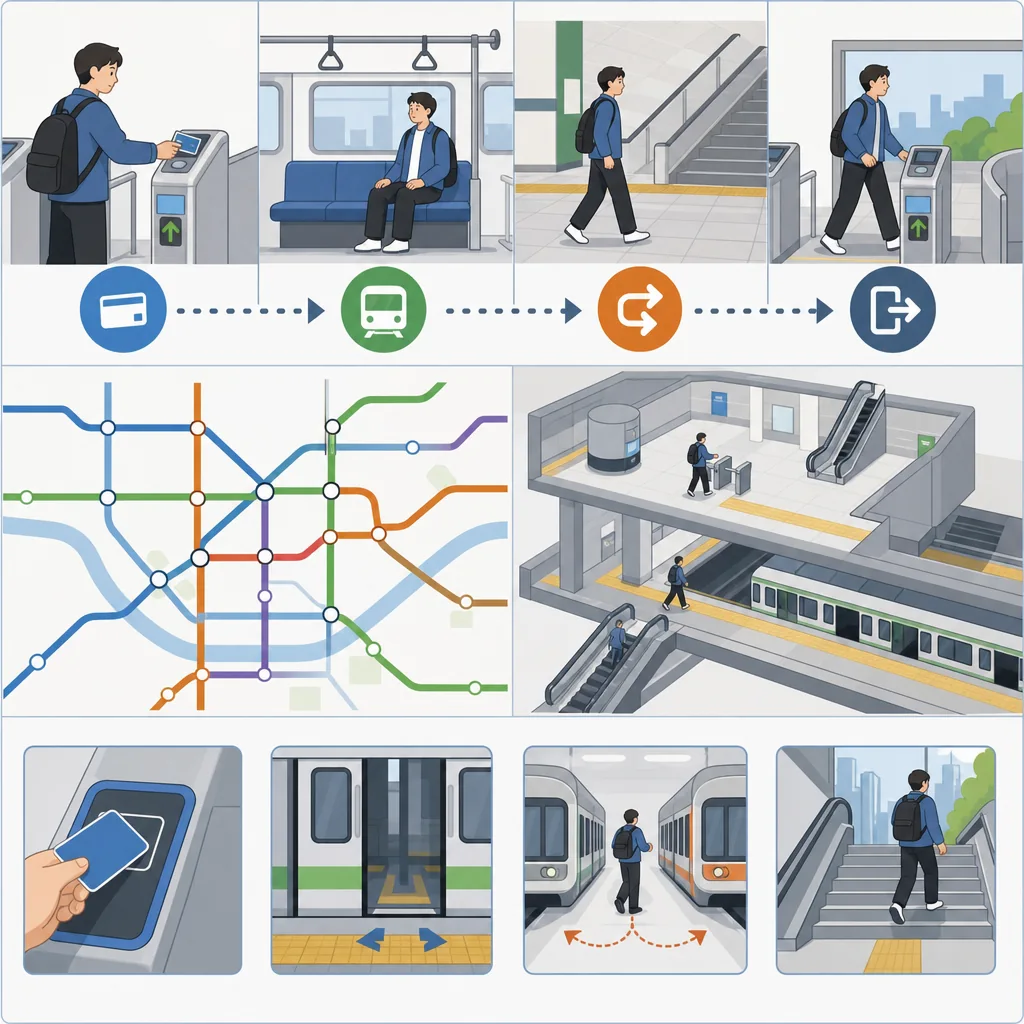
Buy a T-money card, load it with credit, tap in at the gate, follow the line color and direction signs to the correct platform, board the train, transfer only inside the paid zone if needed, and tap out when you leave. If you check your exit number before arriving, the Seoul subway becomes much easier to use.
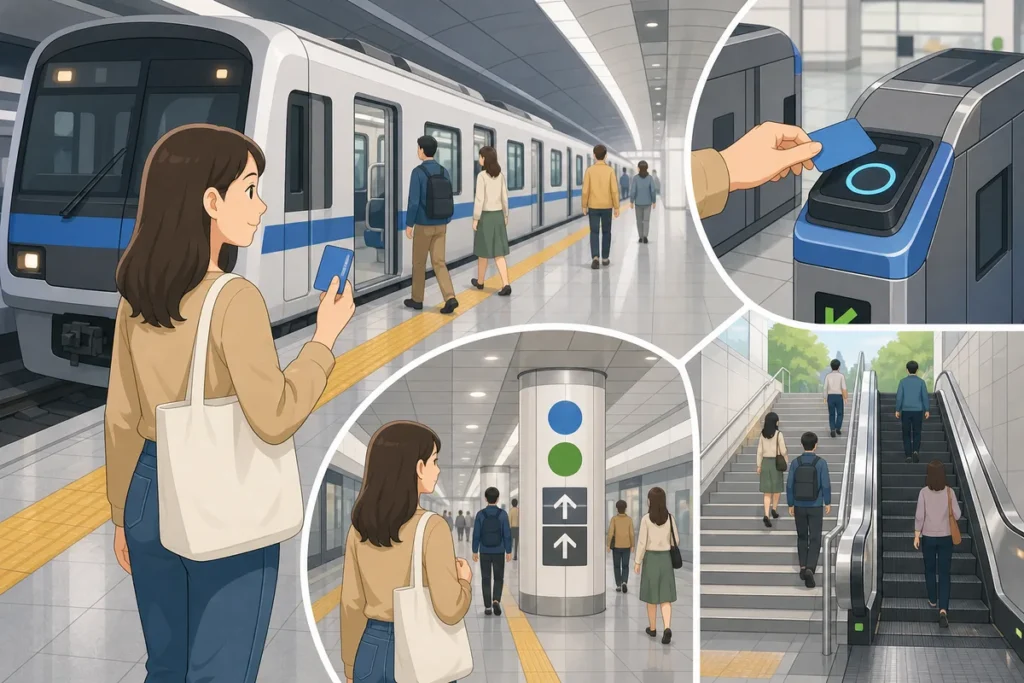
Table of Contents
- Cards and tickets
- Entering the station
- Finding the platform
- Boarding the train
- Transfers
- Exit numbers
- Basic etiquette
- Common situations
- Common mistakes
- Useful Korean phrases
- Warnings and checks
- FAQ
- Summary
Cards and tickets
The two main ways to pay are a reloadable T-money card and a single-journey ticket. For most visitors, the T-money card is simpler and more flexible.
T-money card
A T-money card is a reusable transit card for subways, buses, and some taxis in Korea. You can buy one at convenience stores near stations, then add credit as needed.
- Good for repeated travel
- Works on subway and bus
- Easy to reload at stations or convenience stores
- Usually the best option for short trips and day-to-day travel
Single-journey ticket
A single-journey ticket is useful if you only need one subway ride. It is less convenient than a T-money card because it is not as flexible for transfers and other transit.
Entering the station
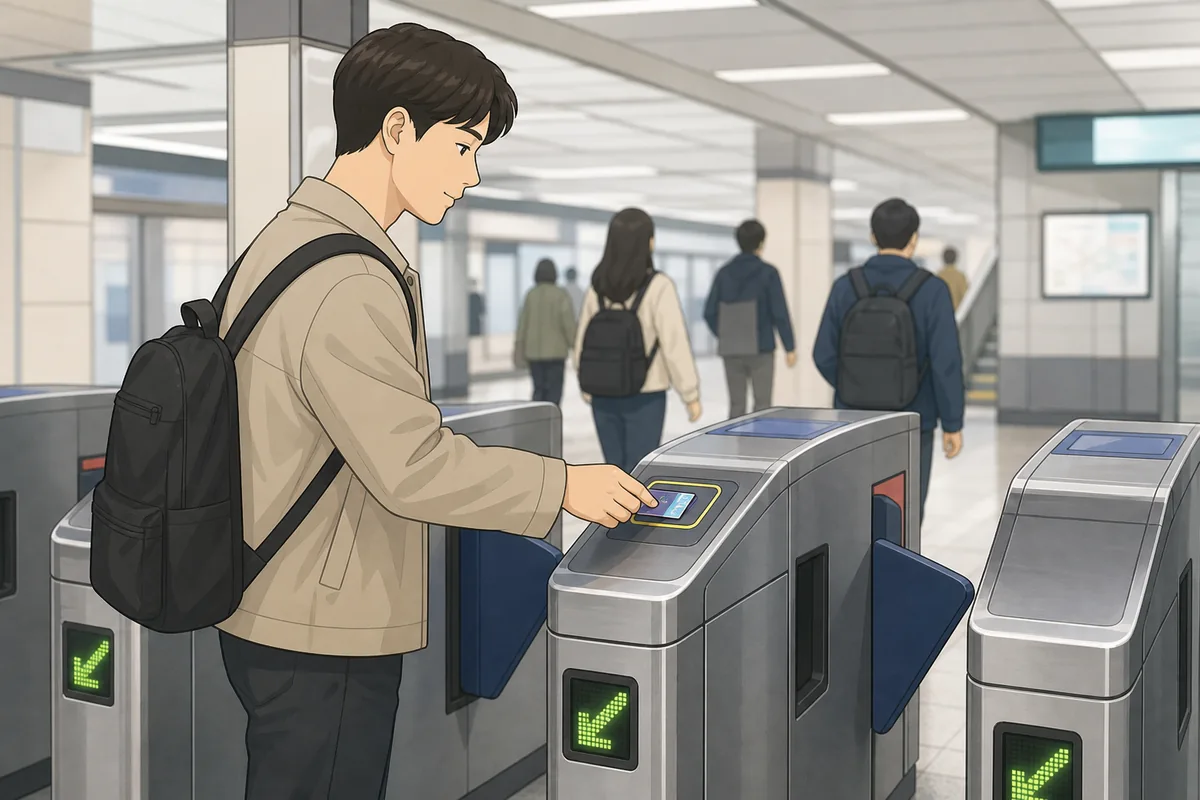
Once you find the station entrance, go to the fare gates and tap your card on the reader. Wait for the gate to open, then walk through. If the card does not work, the balance may be too low or the tap may not have registered properly.
Warning
Always tap in and tap out. If you forget to tap out, you may be charged incorrectly or pay a higher fare than expected.
Finding the platform
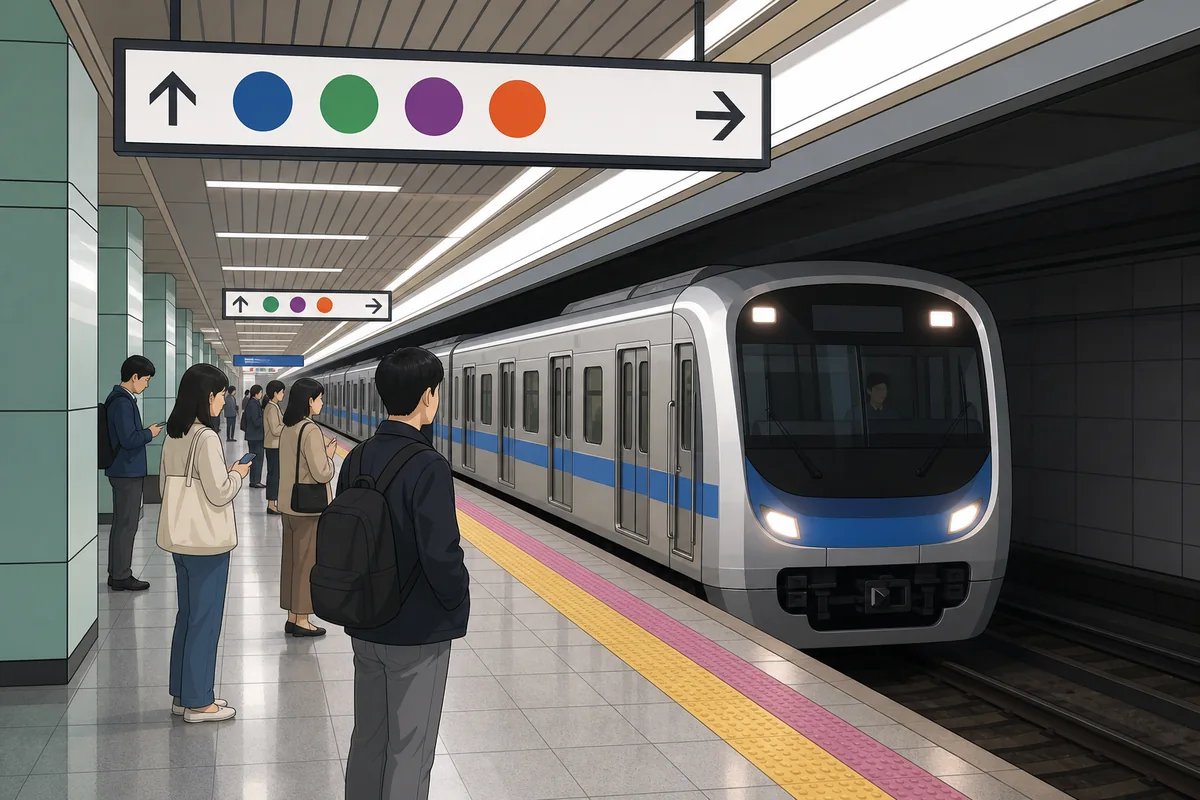
Seoul subway platforms are easier to understand when you focus on two things: the line color and the train direction. Platform signs usually show the terminal station name, so check whether the train is moving toward your destination before boarding.
- Match the line color to your route
- Check the direction shown on the platform sign
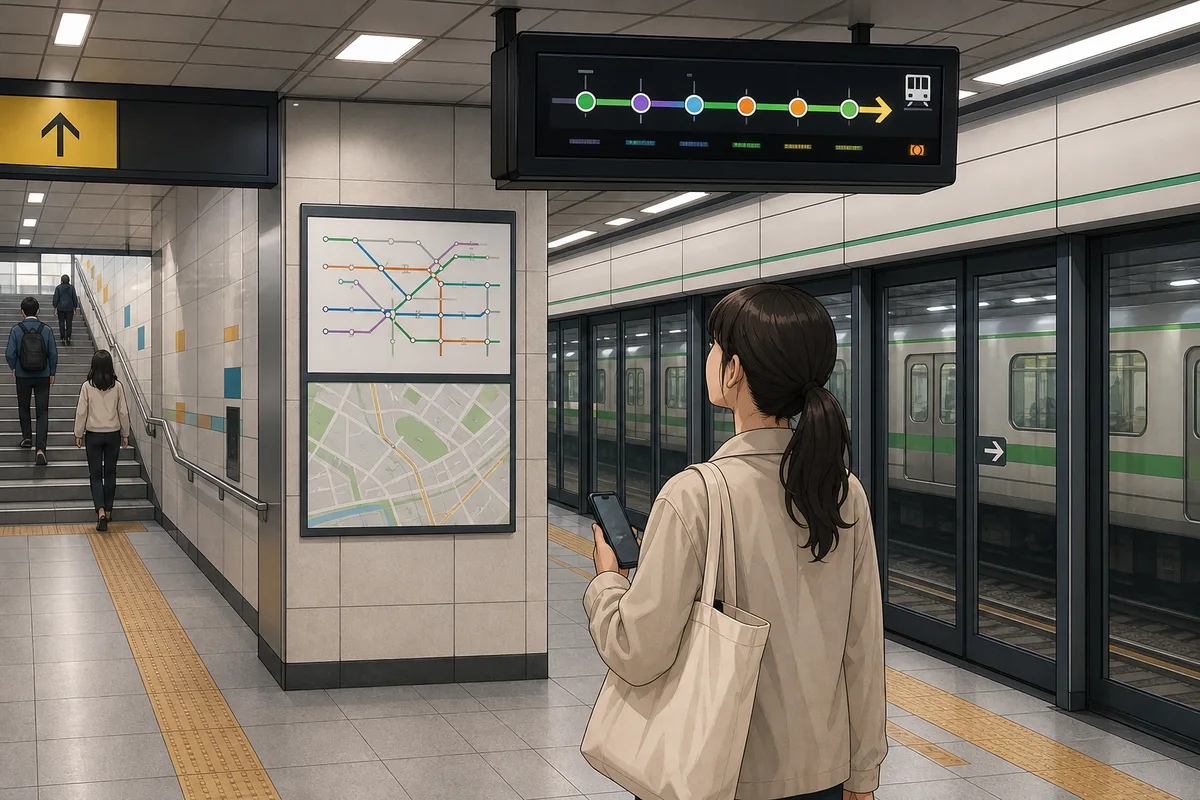
- Use map apps such as Kakao Map or Naver Map if you are unsure
- Look for English text on station signs and displays
How to know you are on the right train
Before the train arrives, confirm the terminal station on the platform display. If your destination is not in that direction, wait for the opposite side. It is usually easier to check before boarding than to fix the mistake later.
Boarding the train
When the train arrives, let passengers get off first. Then board calmly and move inward so others can enter. Keep your bag close during busy hours, and stand behind the safety line on the platform.
- Let people exit before you board
- Stand clear of the doors
- Move toward the center of the car when possible
- Use priority seats only if they are appropriate for your situation
Transfers
A transfer means changing from one line to another during the same trip. In many cases, you can transfer without paying a new fare if you stay inside the station network and follow the transfer signs.
Transfers in large stations can take longer than expected, so leave extra time if you have luggage or a tight schedule. Follow the line color, station number, and directional signs carefully.
Exit numbers
Exit numbers matter in Seoul because large stations often have many exits. The wrong exit can leave you far from your destination, even if you arrived at the correct station. Before you travel, check which exit is closest to your hotel, meeting point, or attraction.
- Look up the exit number in your map app
- Check station boards near the exits
- Follow the exit number signs inside the station
- Use the correct exit to save time above ground
Basic etiquette
Seoul subway etiquette is simple: let people exit first, keep your voice low, and avoid blocking doors. During busy hours, be considerate of space and move quickly when boarding or leaving.
- Stand aside for exiting passengers
- Keep phone calls quiet
- Avoid eating on the train
- Respect priority seating
Common situations
Airport arrival
If you are arriving from Incheon Airport, check whether the route uses the regular subway or a separate airport rail service. Some trains accept T-money, while express services may require a different ticket.
Rush hour
Weekday mornings and evenings can be crowded. If possible, avoid those times, especially if you are carrying luggage.
Getting off at the wrong stop
If you miss your stop, stay calm. Ride to the next station, cross to the other side if needed, and return in the correct direction. It is usually a minor delay, not a major problem.
Common mistakes
- Forgetting to tap out
- Boarding the train in the wrong direction
- Choosing the wrong exit
- Underestimating transfer walking time
- Assuming every line works exactly the same way
Useful Korean phrases
FAQ
Can foreigners use the Seoul subway easily?
Yes. Most signs include English, and the system is designed to be usable for visitors. A T-money card and a map app make it much easier.
Does a visitor need cash for the subway?
Not usually. A transit card is the simplest option, and many stations also have machines for tickets or reloading.
What if a visitor miss a visitor’s stop?
Get off at the next station and ride back in the correct direction. If you stay inside the paid zone, the fix is usually simple.
How do transfers work?
Follow transfer signs inside the station and avoid exiting through the fare gates unless you intend to leave the system.
Summary
The Seoul subway is easy once you learn the basics: tap in, follow the line color and direction, transfer carefully, and check your exit number before you leave. With a little planning, first-time riders can use the system confidently and efficiently.
For more help, see the Seoul Metro official website for current line and station information, and check T-money official site for card details and usage information.