north korea fired missiles is the key question for travelers today, and the practical answer is simple: most trips in South Korea continue normally unless your own flight, rail service, or DMZ tour has an official notice attached to it.
What Is Confirmed Right Now
North Korea has conducted missile launches many times over the past decade, and South Korea’s civilian transport and tourism network has not shut down during those events. The August 20, 2026 launch follows that same pattern so far. South Korean authorities handle the military response separately from airports, trains, buses, and tourist sites.
No official notice of flight suspensions, rail stoppages, or Seoul attraction closures has been issued in connection with this launch. That is the confirmed baseline. The right move is to check whether your specific flight, tour, or border-area plan has its own notice, because that is where real disruption would show up first.
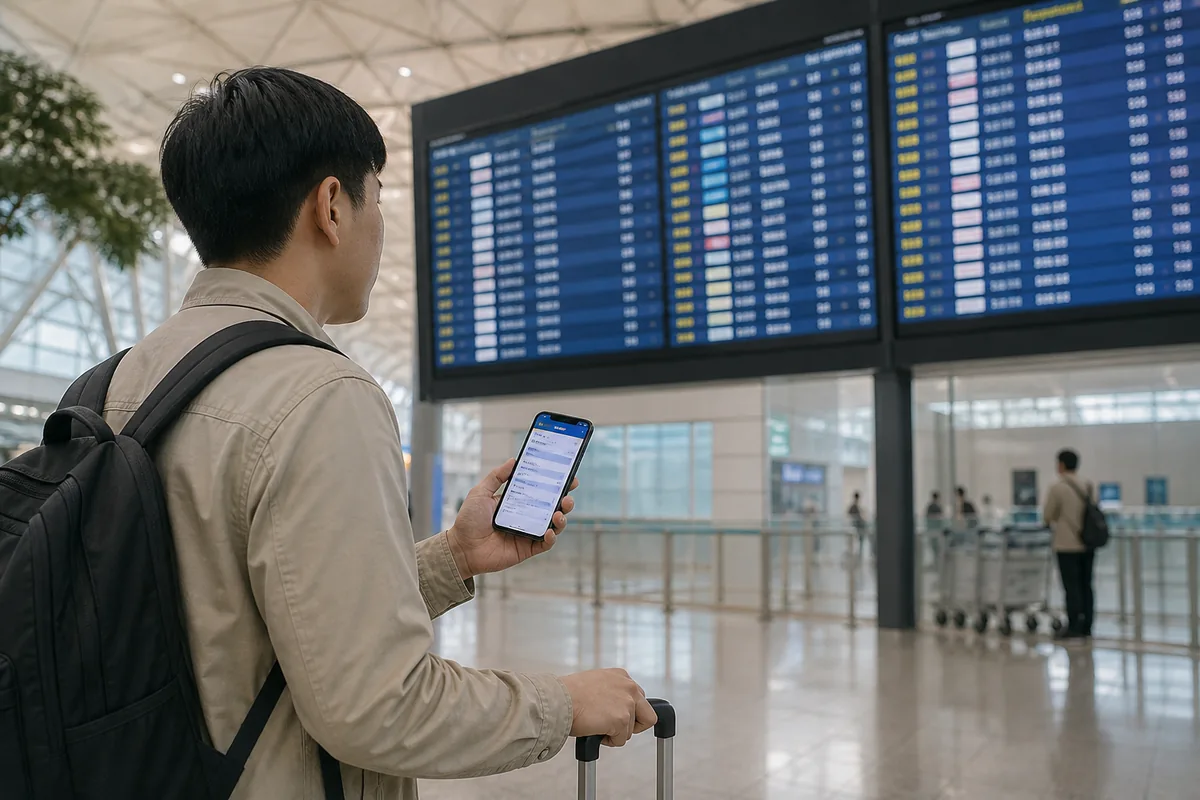
Flights: Incheon and Gimpo
Both Incheon International Airport and Gimpo International Airport are operating on normal schedules. Korean airspace management falls under the Ministry of Land, Infrastructure and Transport, and any airspace restriction would appear immediately on the airport flight board and through your airline’s app.
Check your airline app or website directly for your flight number. If no delay or cancellation notice is showing there, your flight is running. Airlines at Incheon and Gimpo update passengers before most public news pages do.
- Open your airline app and check your flight status by flight number
- Check the airport departure board online
- If your flight shows normal, proceed as planned
- If your flight shows delayed or canceled, contact your airline directly first

KTX, Subway, and Buses
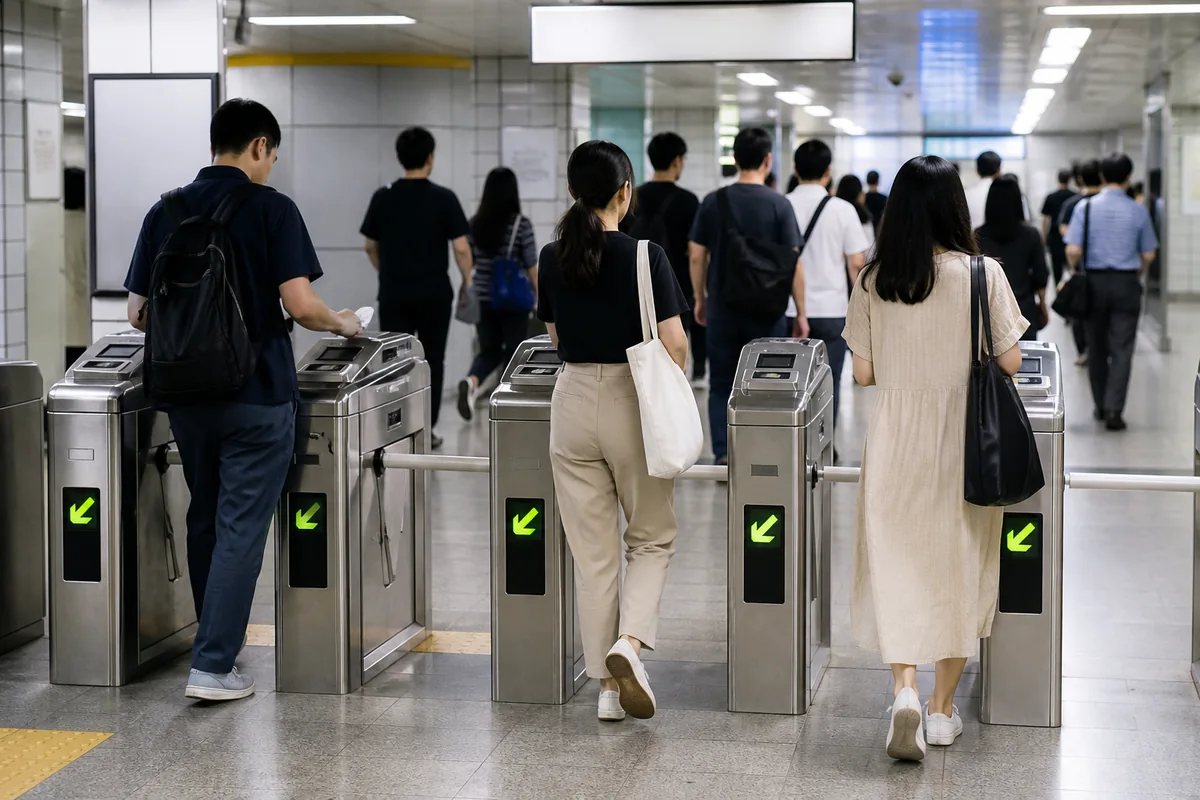
KTX is running. Seoul Metro lines are running. Intercity buses are running. Korail, which operates KTX and most long-distance rail, has not issued a service suspension notice related to the August 20 launch.
Seoul’s subway system operates independently of military alert levels. The lines most visitors use — Line 1 through 9, the Airport Railroad (AREX), and the Gyeongui–Jungang Line — are on normal schedules. You can confirm live status through the Korail app or the Seoul Metro app, both of which show real disruptions when they happen.
Intercity buses from Seoul Express Bus Terminal and Dong Seoul Terminal are also unaffected. Regional buses to cities like Busan, Gyeongju, or Jeonju are operating normally.
Seoul and Major Tourist Areas
Gyeongbokgung, Bukchon, Myeongdong, Hongdae, Insadong, and N Seoul Tower are open under normal hours. No closures have been announced at major Seoul attractions. The same applies to Busan’s Gamcheon Culture Village, Jeju Island, and other popular destinations outside the capital.
Street life in Seoul looks normal after missile launches. That is not a reassurance phrase — it is how the city usually functions. Daily life does not visibly stop unless there is a separate local incident or transport notice.
DMZ and Border-Area Tours
This is the one area where you need to verify before going.
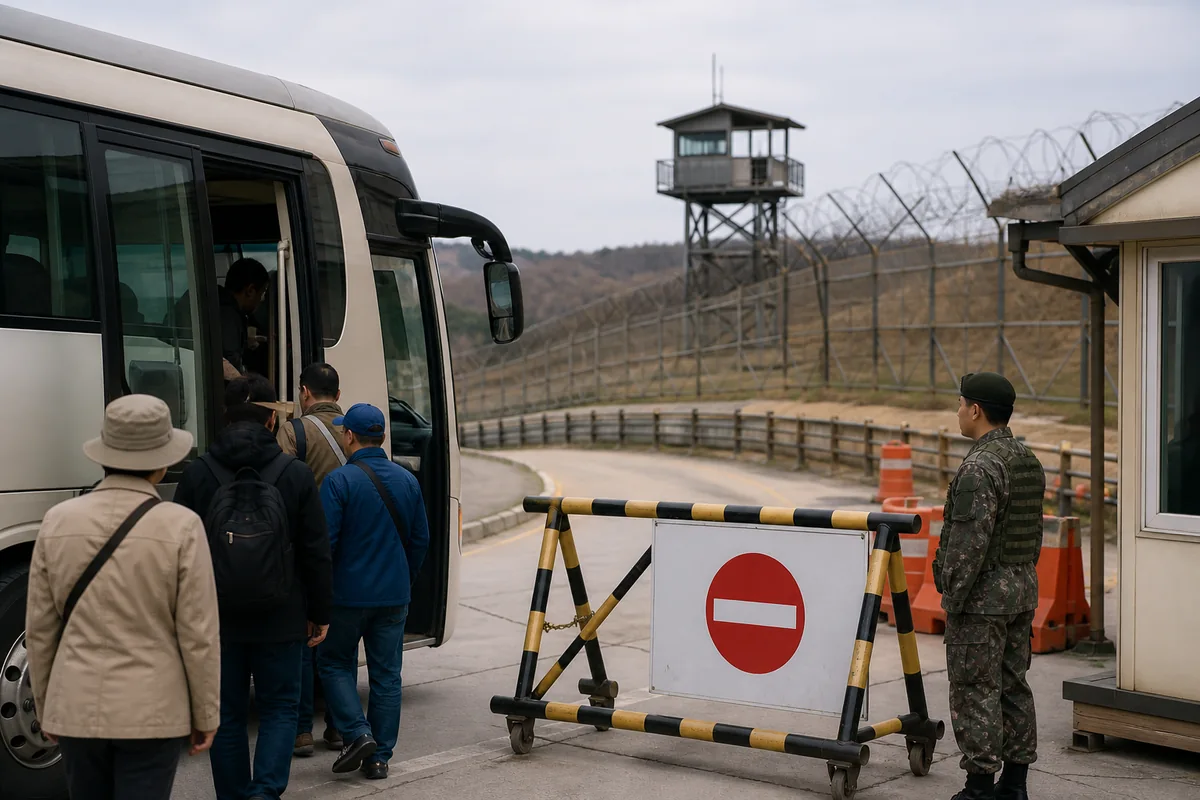
DMZ tours operate under permits coordinated with the South Korean military. After a missile launch, access to the Joint Security Area at Panmunjom or observation points close to the Military Demarcation Line can be suspended on short notice — sometimes for a day, sometimes longer. Tour operators running DMZ and JSA packages are the fastest source of accurate information here, because they receive clearance updates directly.
If you have a DMZ tour booked for August 20 or the days immediately after, contact your tour operator before heading to the departure point. Reputable operators usually send a cancellation or hold notice by email or KakaoTalk if access is restricted. Check that channel first.
Travel Advisories: What Countries Have Said
Travel advisories from major source countries — the United States, United Kingdom, Australia, Canada, Japan, and EU member states — are not automatically upgraded after every North Korean missile launch. These governments already include standing language about the Korean Peninsula in their advisories, so a single launch does not normally trigger a new level change.
That said, advisory levels can change, and you should check your own government’s official travel advisory page directly. The U.S. Department of State, the UK Foreign, Commonwealth & Development Office, and Australia’s DFAT all publish updates in real time. If your country raised its advisory level specifically in response to August 20, that matters more than a news summary of the event.
A text update that mentions a missile launch without changing the advisory level is informational, not a directive to leave or cancel.
Should You Cancel or Continue?
Continue your trip unless one of these specific things has happened:
- Your airline issued a cancellation or major delay notice for your specific flight
- Your DMZ or JSA tour operator confirmed access is suspended for your date
- Your home government raised its Korea travel advisory to its highest level
If none of those apply, your itinerary stands. Seoul sightseeing, domestic travel, and normal tourist activity are not affected by the launch based on current confirmation.
Changing flights or hotels based only on the headline can create real costs — cancellation fees, rebooking charges, and lost deposits — without fixing any actual travel problem. Make the decision from confirmed notices, not from the news cycle alone.
Korean Phrases to Show at the Airport or Station

Useful Korean Signs or Words
Where to Get Help
For flights, check the airport’s real-time flight information board and your airline app. Those are the fastest sources for your exact flight number.
For rail, use Korail for KTX status and the Seoul Metro app for subway service. Live disruptions show there before casual social posts do.
For DMZ and border-area access, contact your tour operator directly. That is the practical source for whether a tour is still running.
For travel advisories, check your home government’s official travel advisory page, not a news summary. If the advisory level or color code changed, that matters more than an article quoting the text.
Korea Tourism Organization’s 1330 helpline can help with general tourism questions and can connect you to support in Korea if you are already in the country.
Common Mistakes
- Canceling an entire trip when only a DMZ tour is affected
- Assuming a missile launch automatically means airport closures
- Relying on social media before checking the airline or operator notice
- Mixing up a text advisory update with a real advisory level change
- Going to a DMZ departure point without confirming access first
Are flights in South Korea delayed after the August 20 missile launch?
No official flight disruption has been announced for Incheon or Gimpo in connection with the August 20 launch. Check your airline’s app for your specific flight number. If no notice is showing there, your flight is on schedule.
Is it safe to travel to Seoul right now?
Seoul is operating normally. No closures, evacuations, or public safety alerts have been issued for the city because of this launch. Civilian travel and daily life continue as usual unless a separate local notice appears.
Are KTX and the subway still running normally?
Yes. Korail has not issued a service disruption notice for KTX, and Seoul Metro lines are running on normal schedules. You can verify live status in the operator apps.
Can I still visit the DMZ today?
Only if your operator confirms access is still open. DMZ and JSA access can change quickly after security incidents, and the operator will have the most current clearance update for your date.
Did my country change its Korea travel advisory?
Check your home government’s official travel advisory page directly. Major countries do not automatically raise advisory levels after a single missile launch. A text-only update is not the same as a level change.
Note: This guide is for travel navigation in Korea. It is not medical, legal, or emergency professional advice. For urgent situations, contact local emergency services, official staff, or your embassy/consulate as appropriate.
Visual note: This guide uses an explanatory illustration, not an official screen, sign, or document.