Hyumu Meaning in Korea: What 휴무 and 정기휴무 Mean
The hyumu meaning is something many visitors to Korea discover the hard way — by showing up at a café, restaurant, or salon only to find the door locked and a small sign posted in the window. If you have ever seen the word 휴무 and wondered whether the place was closed forever, taking a break, or just on holiday, this guide explains exactly what it means and what you should do about it.
Hyumu Meaning: What You Need to Know
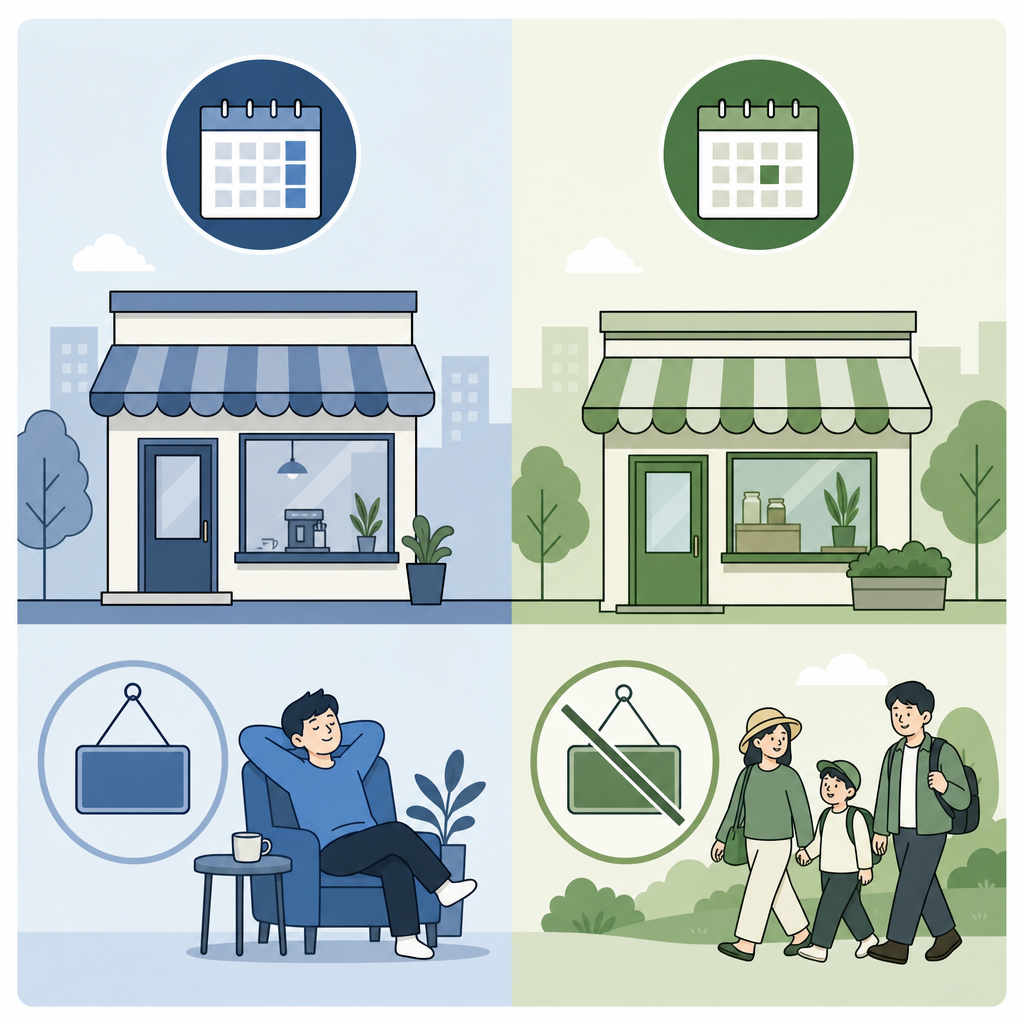
휴무 (hyumu) means a place is closed for that particular day. It is not permanently closed and it is not a lunch break. 정기휴무 (jeonggi hyumu) means a regular scheduled closing day — usually the same day every week or every month. When you see either word on a door, a website, or a map listing, the business is simply not open right now or on that recurring day.
Table of Contents
- What Hyumu Actually Means in Korean Daily Life
- Types of 휴무 You Will See in Korea
- Common Situations Foreigners Face
- What Foreigners Often Get Wrong
- Useful Korean Phrases to Know
- Warnings and Things to Check
- FAQ
- Summary
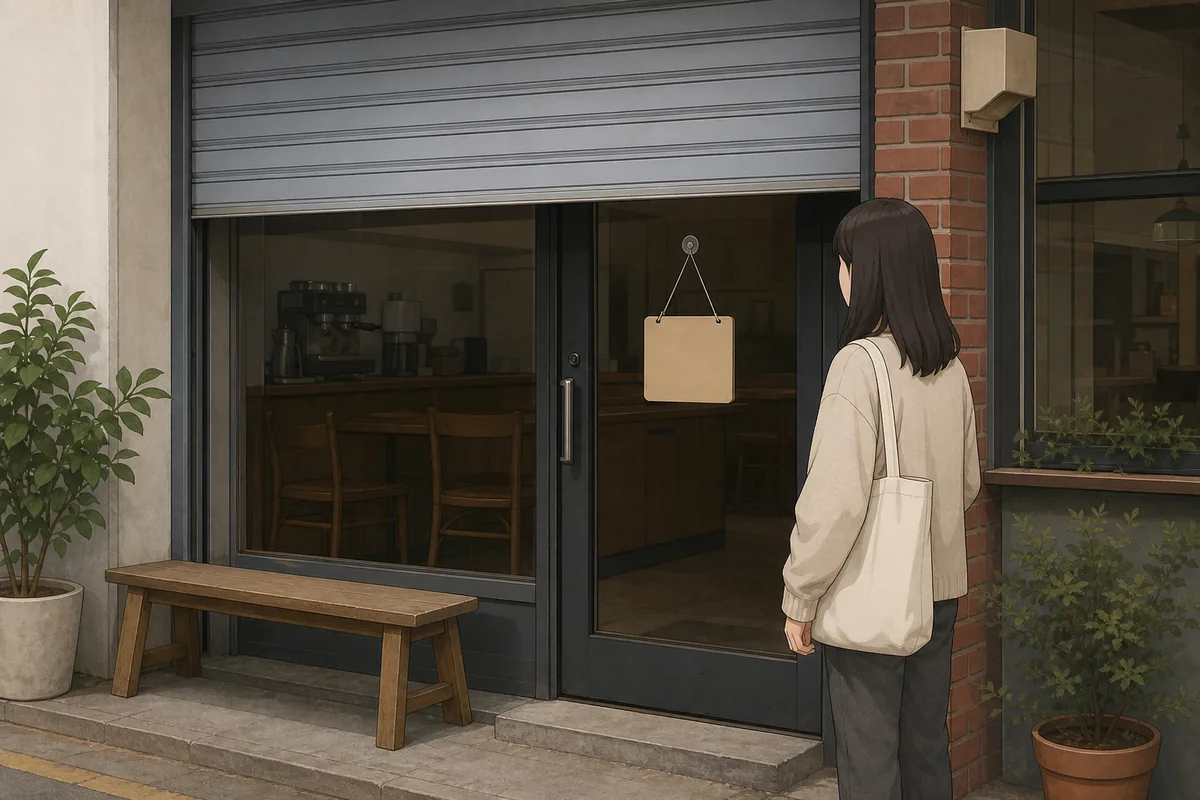
What Hyumu Actually Means in Korean Daily Life
The word 휴무 is made up of two Chinese-origin characters: 휴 (休), meaning rest, and 무 (務), meaning work or duty. Put them together and you get something close to “no work today” or “rest from duties.” In practice, it simply means closed for the day.
You will see 휴무 posted on the doors of small restaurants, neighbourhood cafés, hair salons, nail shops, local clinics, laundromats, and all kinds of small businesses across Korea. It is extremely common and completely normal. The business is not gone. It will almost certainly be open again the next day, or on whatever schedule it keeps.
Understanding the hyumu meaning is especially important in Korea because many small businesses — unlike large chain stores — do not follow a standard seven-day schedule. The owner decides which day to close, and that day can vary from shop to shop on the same street.
Types of 휴무 You Will See in Korea
Not all 휴무 signs mean the same thing. Korean businesses use a few different versions depending on why they are closed. The table below compares the most common types.
The most important distinction for a visitor is between 정기휴무 and 임시휴무. If a place has 정기휴무 every Monday, you can simply plan to visit on Tuesday. But 임시휴무 is unpredictable — the owner may have a personal emergency, a family event, or a sudden repair need, and the closure could last anywhere from one afternoon to several weeks.
Common Situations Foreigners Face
Arriving at a Café That Shows 휴무
You walk up to a café you found on Instagram. The lights are off and a handwritten note on the door says 오늘 휴무 (closed today). This is not unusual in Korea. Small, owner-run cafés often close on the owner’s chosen rest day without advance notice on social media. Your best move is to check the café’s Instagram or KakaoTalk channel before travelling far, or to use Naver Map to see if their hours are listed.
Seeing 정기휴무 on a Restaurant’s Schedule
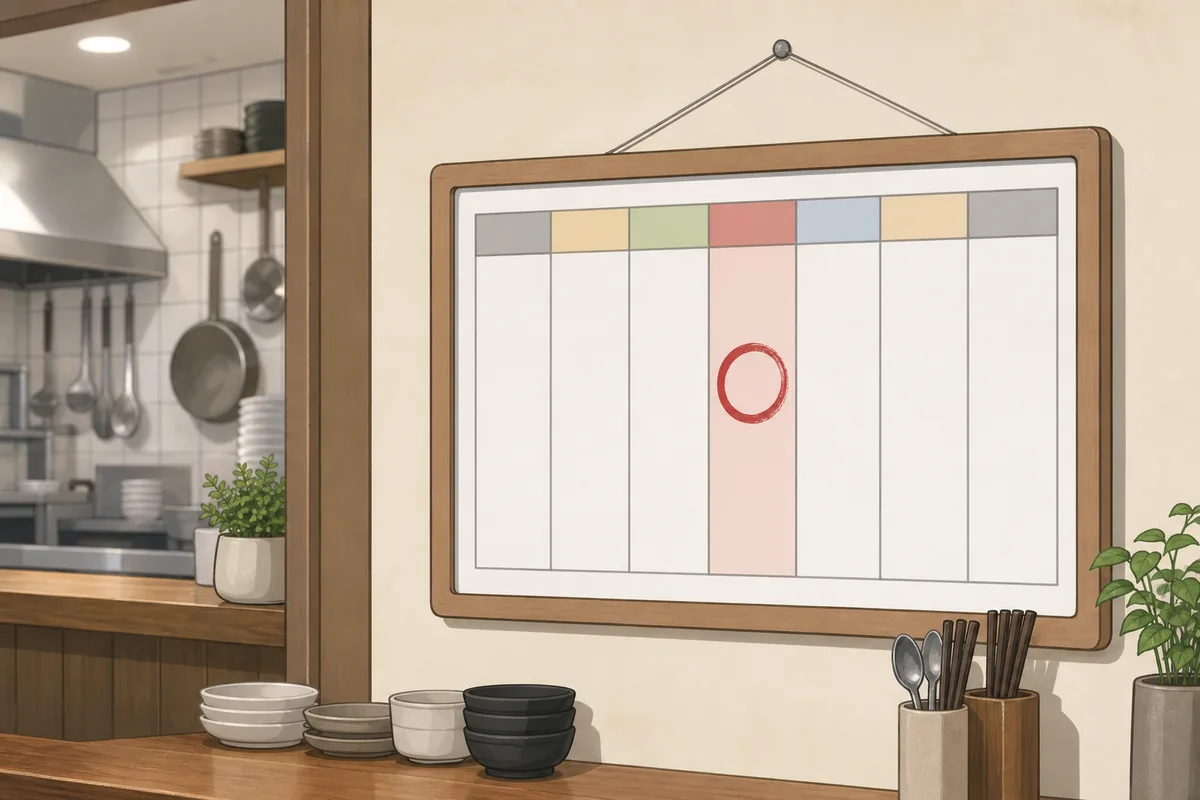
A restaurant’s door or website might say 매주 월요일 정기휴무, which means “regular closing day every Monday.” This is their permanent weekly schedule. Many Korean restaurants — particularly family-run ones — choose one weekday to rest. If you visit on that day, they will not open for you. Plan around it.
Checking Map Apps Before You Visit
Both Naver Map and Kakao Map often list a business’s regular hours and their 정기휴무 day. Look for the section labelled 영업시간 (business hours) on the listing. If it says 휴무 in red next to today’s day of the week, the place is closed right now. This is one of the most reliable ways to check before making a trip. Keep in mind that smaller businesses do not always keep their map listings updated, so calling ahead is still the safest option for important visits.
Visiting a Clinic or Salon
Local clinics (피부과, 한의원, etc.) and beauty salons commonly take one weekday off, often Wednesday or Thursday. If you are planning a specific appointment, always confirm the 정기휴무 day when you first contact them, or check their Naver Place page. Do not assume that because a clinic is open on weekdays it is open every weekday.
What Foreigners Often Get Wrong
Thinking 휴무 Means Permanently Closed
This is the most common misunderstanding. Seeing a dark shop with a sign in the window feels alarming if you do not read Korean. But 휴무 is a completely routine word. It does not mean the business has shut down or gone bankrupt. It just means today is their day off. Come back tomorrow, or check their schedule.
Confusing 휴무 with a Lunch Break
A lunch break is different. Some restaurants close between roughly 3 pm and 5 pm for what is called 브레이크 타임 (break time). This is not 휴무. If you arrive during break time, the restaurant will reopen later the same day. 휴무 means the entire day is a rest day — they will not reopen that evening.
Mixing Up 임시휴무 with 정기휴무
Visitors sometimes see 임시휴무 and assume it is the regular weekly rest day, so they plan to come back next week on the same day. But 임시휴무 is an irregular, temporary closure. The business might reopen tomorrow, or it might be closed for two weeks. Always check the notice carefully for a return date, or contact the business directly.
Assuming Chains and Large Stores Follow the Same Rules
Large chain stores, department stores, and convenience stores (편의점) generally do not post 휴무 signs the way small businesses do. Convenience stores like GS25, CU, and 7-Eleven are usually open 24 hours. However, even some large supermarkets in Korea are required by law to close on certain Sundays each month — so do not assume a big store is always open either.
Useful Korean Phrases to Know
Signs and Words You Will See on Doors and Listings
Warnings and Things to Check
Always Confirm Before Making a Special Trip
- Map apps are not always up to date. Naver Map and Kakao Map are helpful, but small business owners do not always update their listings promptly. An unexpected 임시휴무 will not always appear on the app in time.
- Public holidays change things. Even a business with no regular 정기휴무 may close on major Korean public holidays such as Chuseok (추석) or Lunar New Year (설날). These multi-day national holidays can close entire neighbourhoods of small businesses simultaneously.
- Instagram and KakaoTalk channels are often the most current source. Many small Korean businesses post same-day 휴무 notices on their Instagram stories or KakaoTalk Plus Friend channel rather than updating their map listing. Follow the business if you plan to visit regularly.
- Calling is still the most reliable method. If your visit is important — a reservation, a medical appointment, or a long journey — call the business directly to confirm they are open that day. A simple 오늘 영업하세요? (Are you open today?) is enough.
- Large discount supermarkets have mandatory rest days. Under Korean law, large supermarkets (대형마트) such as E-Mart, Homeplus, and Lotte Mart are required to close on two Sundays per month. The specific Sundays vary by location. Check the store’s official website or the Korea Fair Trade Commission (공정거래위원회) for consumer information, or call the store directly to confirm their schedule.
FAQ
Is 휴무 the same as permanently closed?
No. 휴무 means the business is closed for that day only. Permanently closed businesses in Korea are more likely to display signs like 폐업 (closed down) or simply remove all signage and empty the premises. If you see 휴무, the business is almost certainly coming back.
What is the difference between 정기휴무 and 임시휴무?
정기휴무 is a regular, predictable closing day — for example, every Monday. 임시휴무 is a temporary, often unplanned closure that does not follow a fixed schedule. If you see 임시휴무, look for a note on the door or check the business’s social media for a reopening date.
How does a visitor find out a restaurant’s 정기휴무 day before visiting?
Check the restaurant’s Naver Map or Kakao Map listing under 영업시간 (business hours). Many listings include the regular closing day. You can also check their Instagram page or call them directly. For popular restaurants, their website or reservation platform may also list it.
Do convenience stores in Korea have 휴무 days?
Most convenience stores (편의점) like CU, GS25, 7-Eleven, and Emart24 operate 24 hours a day, 365 days a year and display 연중무휴. However, a very small number of independently managed locations in rural areas may have limited hours. This is rare in cities.
What should a visitor do if a visitor arrive at a place and it is 휴무?
Check the door notice for a return date or the next open day. Open Naver Map or Kakao Map to look for nearby alternatives. Follow the business on Instagram to catch future 휴무 announcements. If the visit was important, make a note of the 정기휴무 day so you can plan your next trip better.
Can 휴무 appear on a clinic or hospital notice?
Yes. Local clinics, dental offices, oriental medicine clinics (한의원), and skin care clinics (피부과) commonly post 정기휴무 notices. Many take Wednesday afternoons or Saturdays off. Always confirm clinic hours before visiting, especially if you are travelling specifically for a medical appointment. This article does not provide medical advice — please contact the clinic directly for scheduling.
Is the hyumu meaning the same across all types of businesses?
The core hyumu meaning — a day of rest or closure — is consistent across all business types. The difference lies in whether it is regular (정기휴무), temporary (임시휴무), or a one-off notice (오늘 휴무). The word itself always signals that the place is not operating that day.
Summary
What to Remember About Hyumu in Korea
- The hyumu meaning is simple: the business is closed for that day. It is not permanent and it is not a lunch break.
- 정기휴무 is a regular, recurring closing day — usually the same day every week.
- 임시휴무 means a temporary closure, so always check the reopening date if one is posted.
- Use Naver Map, Kakao Map, Instagram, or a phone call to confirm hours before making a special trip.
- If you see 휴무, the best response is usually simple: check the next open day and come back later.
Related and Official Resources
Sources & Verification
- 한국어기초사전 — krdict.korean.go.kr
- National Institute of Korean Language — www.korean.go.kr
Last checked: July 30, 2026