Korea plug type is usually the first thing to check before you pack: Korea uses 220V / 60Hz power and round two-pin outlets (Type C / Type F). If your charger or device label says 100–240V, you usually only need a plug adapter. If it says 110V or 120V only, you need a voltage converter too.
Korea plug type is round two-pin, so most travelers only need a plug adapter if their charger says 100–240V; the real check is voltage, not just whether the plug fits the wall. Check VISITKOREA – Imagine Your Korea for the current details.
When This Guide Helps
This is the fast answer for anyone packing a phone charger, laptop charger, camera battery charger, hair dryer, curling iron, or shaver for Korea. If you want to know whether to buy a simple adapter or a heavier converter, start with the label on the device.
What to Do First
Look at the small print on your charger or device. Find the line that says Input. If it says 100–240V, you can use it in Korea with only a plug adapter. If it says 110V or 120V only, do not assume it is safe in Korea.
Most modern phone and laptop chargers are dual-voltage, so they usually work with a plug adapter only. Hair dryers and styling tools are the common exception.
What Korea’s Outlets Look Like
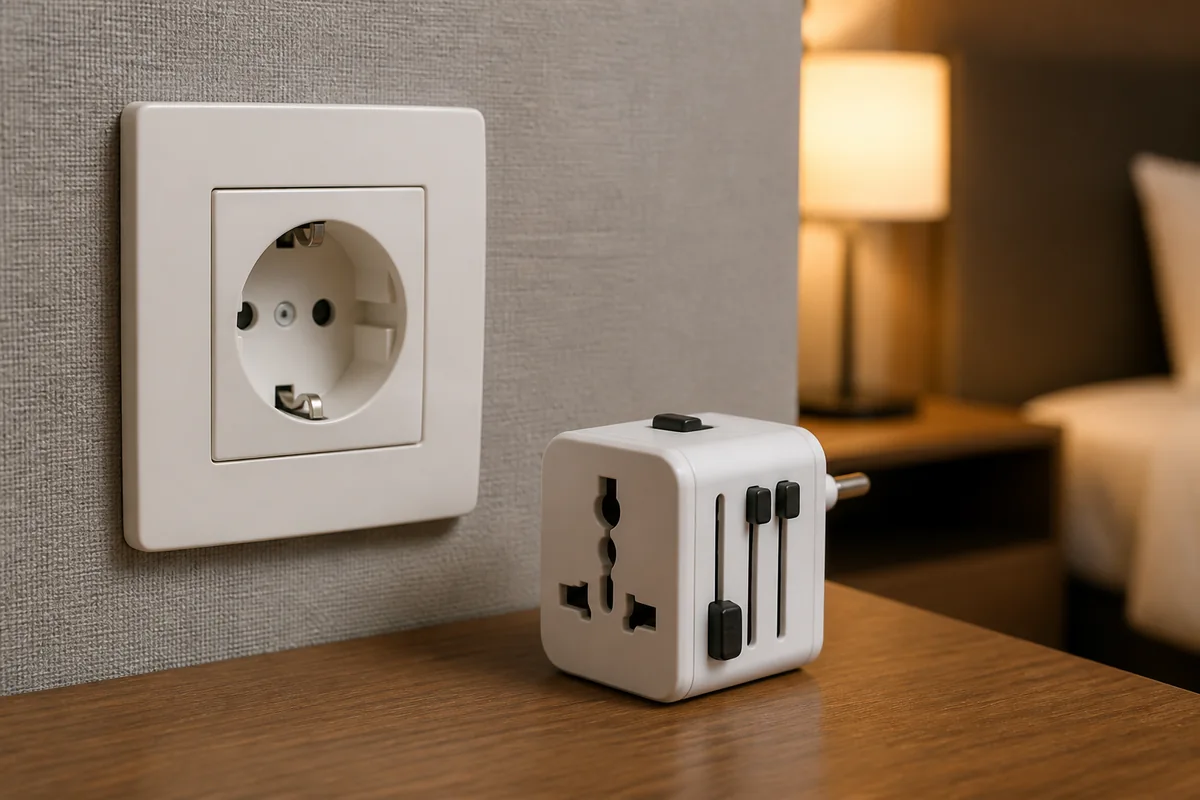
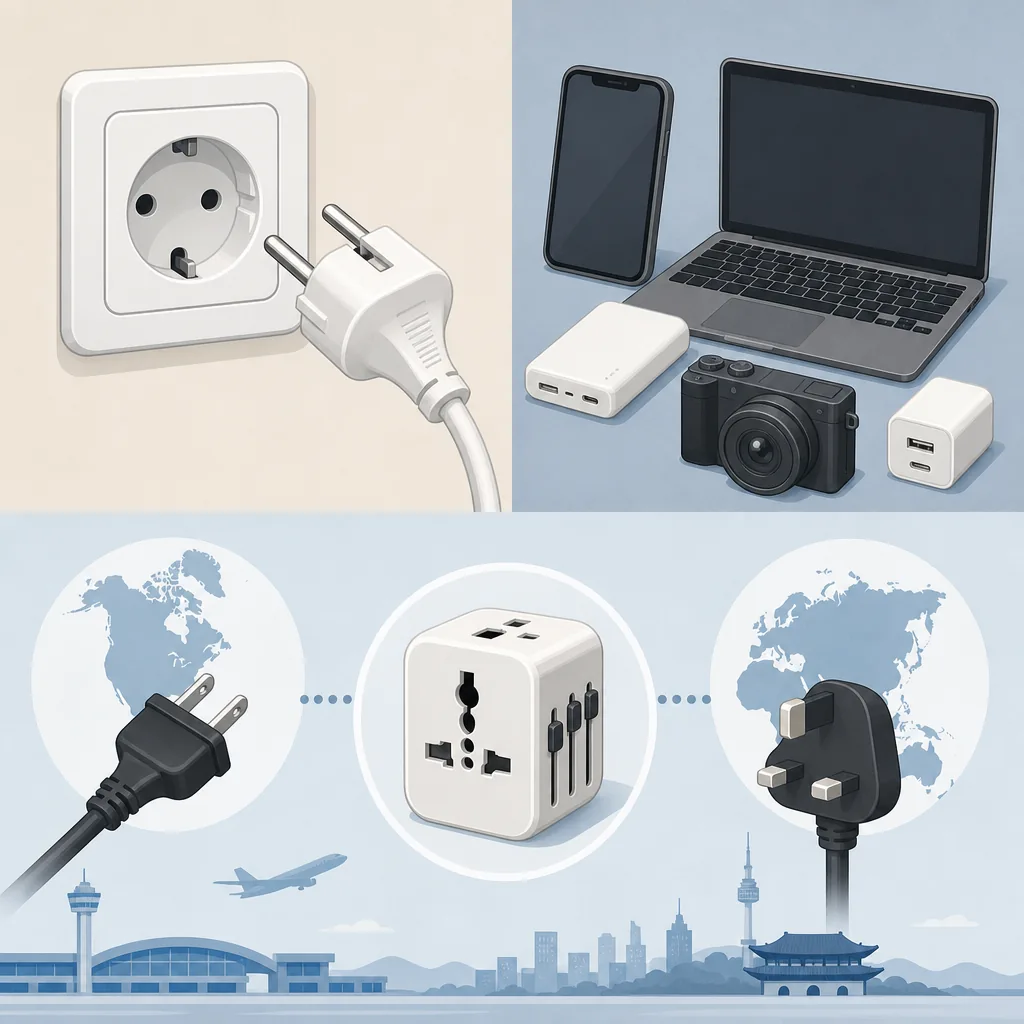
Korean outlets have two round holes side by side. The plug shape is the European-style two-round-pin format, commonly called Type C or Type F. Flat US-style blades, UK three-pin plugs, and Australian angled plugs do not fit without an adapter.
Some hotels have universal outlets near the desk or bed, but not every room does. A small adapter is still worth packing.
You can buy a basic adapter at Incheon Airport, at large convenience stores like CU or GS25, at Daiso, or at electronics shops in major shopping areas. Buying it before departure is still easier than searching after a long flight.
220V and 60Hz: What That Means for Your Devices
Korea runs on 220 volts. The 60Hz frequency is fine for most travelers and is not the main issue. Voltage is what matters. A device made for 110V or 120V can be damaged if you plug it straight into a Korean outlet.
For a quick check, find the label on the charger brick, the back of the device, or the underside of the appliance. Look for a range like 100–240V. That means the device handles different voltages automatically.
When a Simple Plug Adapter Is Enough
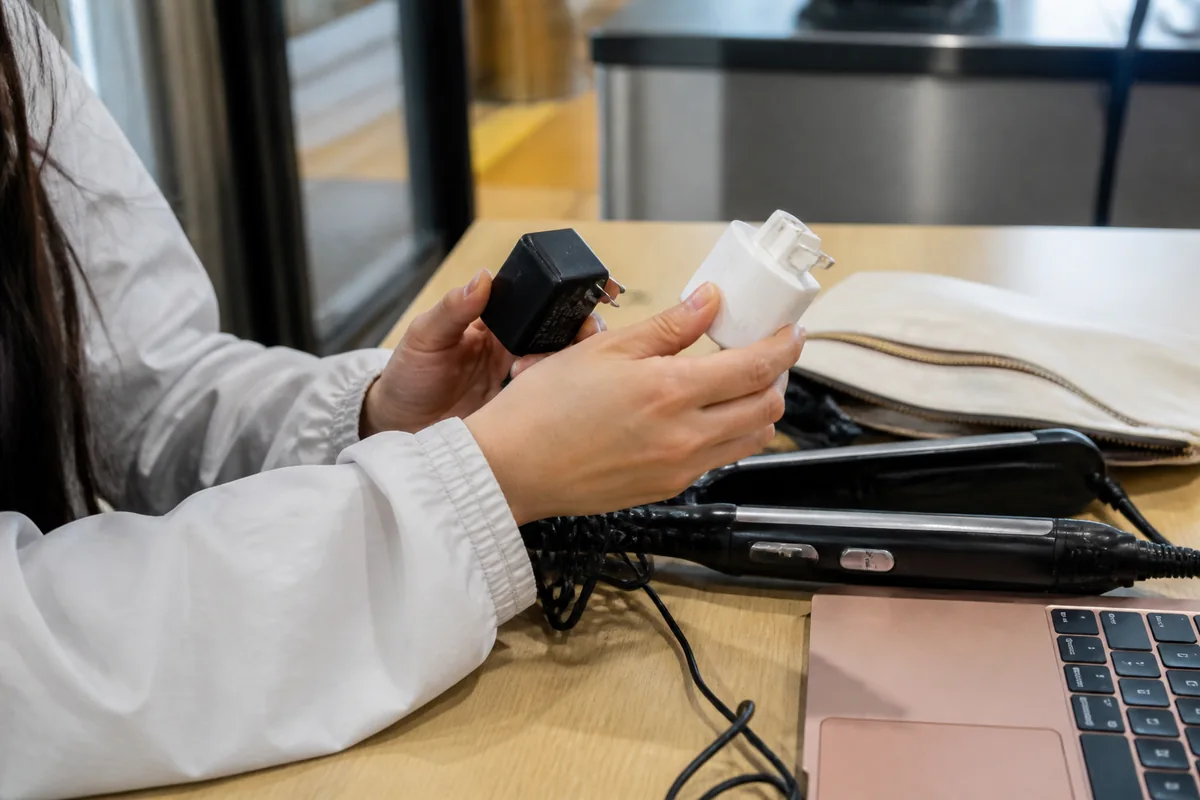
These items usually need only a plug adapter if the label shows 100–240V:
- Smartphone chargers
- Laptop chargers
- Tablet chargers
- Camera battery chargers
- Most modern electric shavers
If the device is dual-voltage, the adapter changes the plug shape and that is enough.
When You Must Check Voltage Before Plugging In
Hair dryers and curling irons are the most common problem. Many are single-voltage and built for 110V or 120V only. Those devices need a proper voltage converter in Korea, or they should be left at home in favor of a travel-rated dual-voltage model.
Other items worth checking include older corded shavers, heated blankets, travel heating pads, and small appliances for long-stay apartments.
Adapter vs. Converter: The Simple Difference
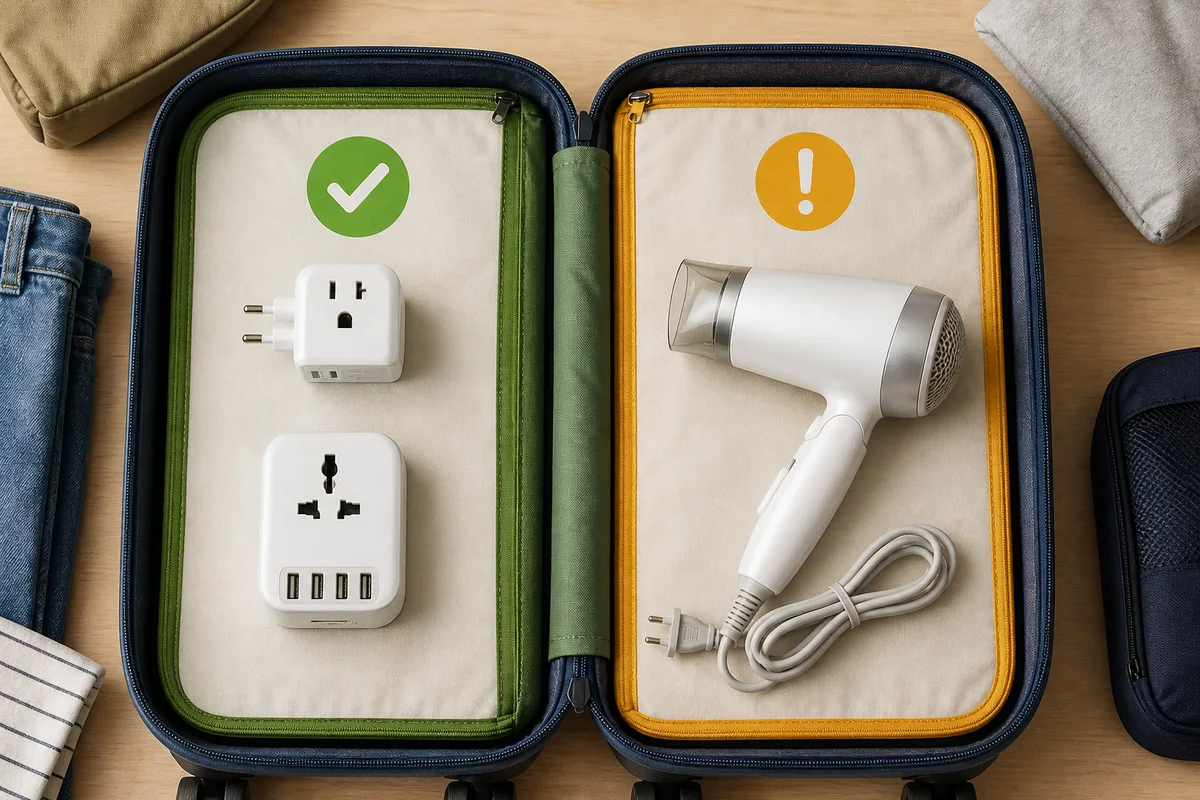
An adapter lets the plug fit the outlet. A converter changes the voltage. They do different jobs, and that is the part many travelers mix up.
If your device supports 100–240V, you usually need only an adapter. If it is single-voltage, you need a converter or a different device built for Korean power.
What to Check on Your Charger Label
- Find the small print on the charger, power brick, or device
- Look for Input and a voltage range
- If it says 100–240V, pack a plug adapter
- If it says 110V or 120V only, bring a converter or another device
- For hair dryers and styling tools, look for a voltage switch
Common Traveler Mistakes
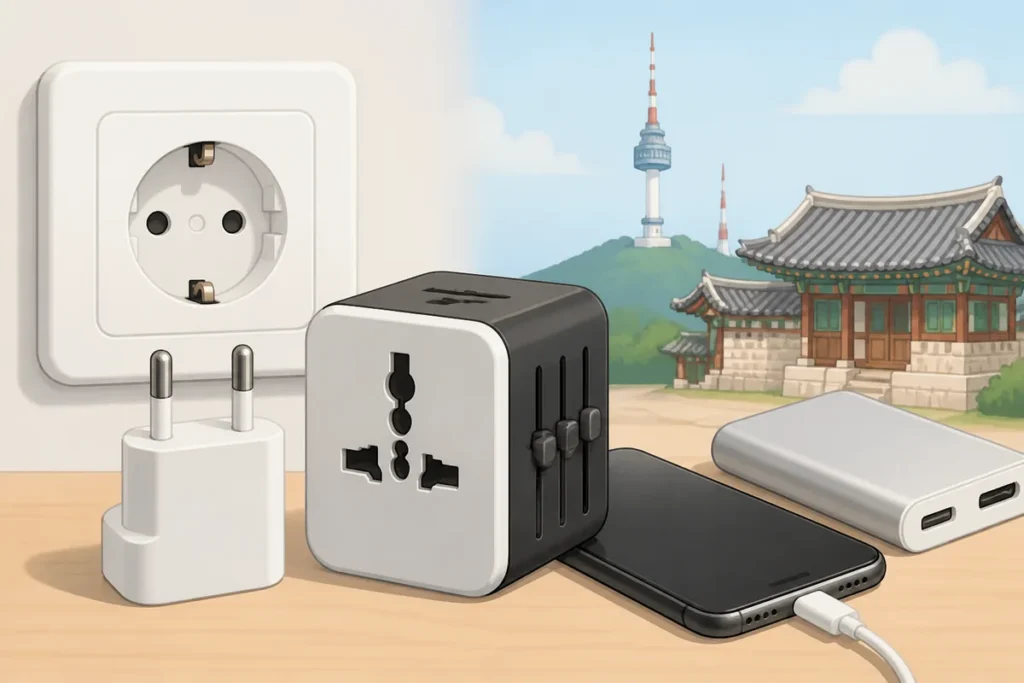
Assuming the plug fit means the device is safe. A plug adapter only changes the shape. It does not protect a 120V appliance from 220V power.
Skipping the label because the charger looks modern. Many modern chargers are dual-voltage, but not all. The label is the only quick way to know.
Relying on a hotel outlet without packing an adapter. Some rooms have universal outlets, but many do not. Bring your own adapter and avoid a last-minute search.
Korean Phrases You Can Show
Useful Korean Signs or Words
Look for 전자제품 when searching for electronics stores, and 다이소 for a cheap basic adapter. 콘센트 means outlet, and 어댑터 means adapter.
Where to Get Help
If you are already in Korea and need a replacement, ask at the hotel front desk, a convenience store, Daiso, or an electronics shop. Staff usually understand simple words like adapter and converter, and showing the device label helps a lot.
Official Resource
For the standard electrical setup, check official Korean tourism information and the manufacturer specifications for your own device. The device label is the part that decides whether you need only an adapter or also a converter.
Related Korea Guides
Pack the same way you would for other basics: a charger, a power bank, and the right plug shape. If you are staying in Korea longer, check your hotel room setup before you buy extra gear.
Do I need a travel adapter for Korea?
Yes, unless your plug already matches Korea’s round two-pin outlet. Most US, UK, and Australian plugs need an adapter. If your charger is dual-voltage, the adapter is usually all you need.
What plug type does Korea use?
Korea uses two round pins, commonly referred to as Type C or Type F. The outlet holes are round, not flat.
Is Korea 220V or 110V?
Korea uses 220V / 60Hz power. If your device is only rated for 110V or 120V, check it carefully before use.
Can I use my US charger in Korea?
If the charger says 100–240V input, yes, with a plug adapter. If it says 120V only, you need a converter or another charger.
Do hair dryers need a voltage converter in Korea?
Many do. Hair dryers and curling irons are often single-voltage, so check the label before packing them for Korea.
Note: This guide is for travel navigation in Korea. It is not medical, legal, or emergency professional advice. For urgent situations, contact local emergency services, official staff, or your embassy/consulate as appropriate.
Sources & Verification
- VISITKOREA – Imagine Your Korea — english.visitkorea.or.kr
Last checked: August 14, 2026