Quick Restaurant Rule
- Look for 국 (guk) or 탕 (tang) on the menu — most are mild broths.
- Order 백반 (baekban) for a safe, balanced set meal with rice and side dishes.
- Choose 죽 (juk) if you want something very gentle and easy on the stomach.
- Avoid dishes with 고추장, 고추가루, or 매운 in the name — those signal chili.
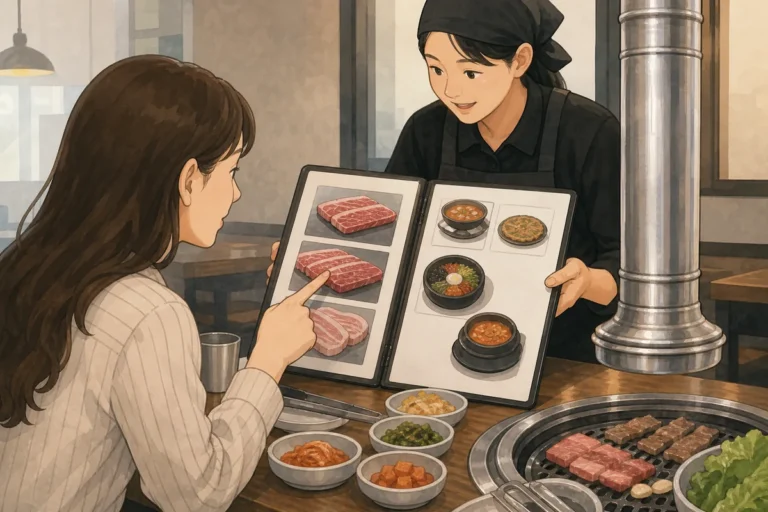
- At grilled meat restaurants, the meat itself is almost never spicy — watch the dipping sauces.
- Ask 안 맵게 해주세요 (an maepge haejuseyo) to request a less spicy version.
- Side dishes vary — taste before assuming; not every red dish is hot.
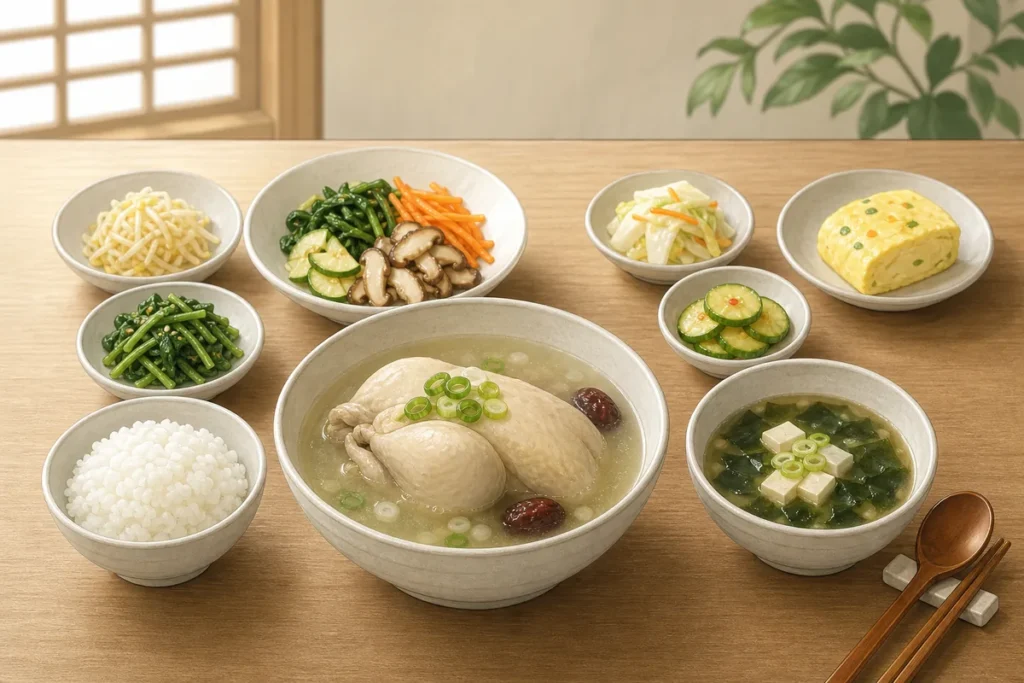
Korean food not always spicy is the simplest rule to remember. If you avoid chili, you can still eat like a local with dishes such as soup, baekban, porridge, noodles, and grilled meats. In fact, many everyday Korean meals are mild, warm, and family-friendly. The spicy-food reputation comes from a handful of famous dishes, not from the full picture of what Koreans actually eat day to day.
Why People Think Korean Food Is Always Spicy
The dishes that travel most are the ones that make an impression. Kimchi, tteokbokki, buldak noodles, and spicy army stew are genuinely hot, and they photograph well and appear constantly in food content about Korea. That creates a skewed picture.
Chili only became a staple Korean ingredient around the 17th century, and even now it is used heavily in some dishes and not at all in others. The everyday Korean diet is built around rice, broth, vegetables, eggs, tofu, and grilled protein — none of which require chili to taste good.
Tourists also tend to visit popular street-food stalls and trendy restaurants, both of which lean toward bold flavors. Sit-down neighborhood restaurants and home-style lunch spots tell a very different story.
Everyday Non-Spicy Korean Foods Locals Actually Eat
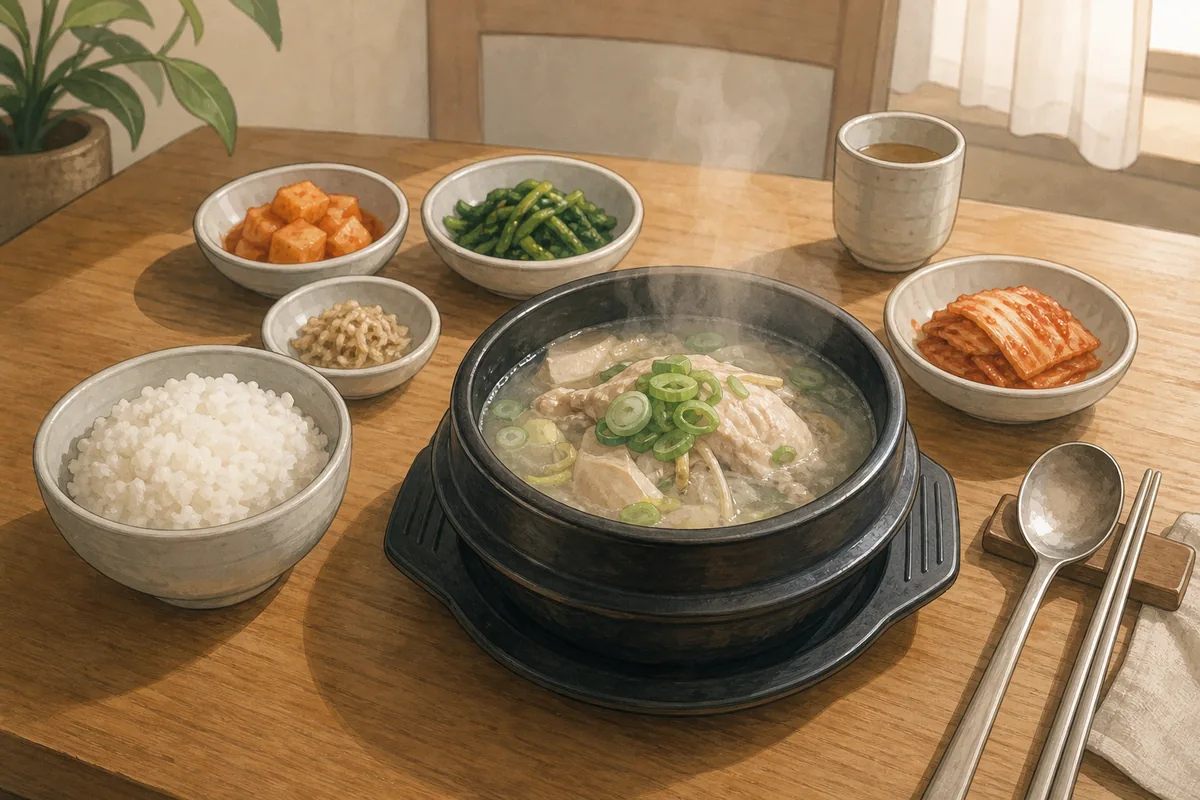
Korean food not always spicy is easiest to see in the meals locals eat on a normal day. Walk into any Korean neighborhood at lunchtime and you will find workers eating calm, filling meals: a bowl of doenjang jjigae (fermented soybean paste stew), a plate of grilled pork belly with plain rice, or a simple set tray with soup and several small side dishes. None of those are spicy by default.
The categories below cover the meals you will see most often in everyday restaurants, cafeterias, and family-style eateries.
Soup Dishes: Mild Meals Korean People Eat Often
Soup is central to Korean eating. Almost every meal comes with some kind of broth, and the majority of soups are not spicy at all. The two most common types you will see on menus are 국 (guk) — a lighter, everyday soup — and 탕 (tang), which tends to be a heartier, slow-cooked broth.
Doenjang jjigae (된장찌개) is one of the most common soups in Korea. It is made from fermented soybean paste, tofu, zucchini, and mushrooms. It has a deep, savory flavor but no chili heat. Miyeok guk (미역국), seaweed soup, is another staple — mild, clean, and often served at birthday meals. Sundubu jjigae (순두부찌개) has a spicy version, but the plain tofu version is gentle and widely available.
Gomtang (곰탕) and seolleongtang (설렁탕) are bone broth soups that are completely plain — white, rich, and served with salt and green onion on the side so you season it yourself. These are among the mildest things you can order in a Korean restaurant.
Baekban: The Most Common Everyday Set Meal
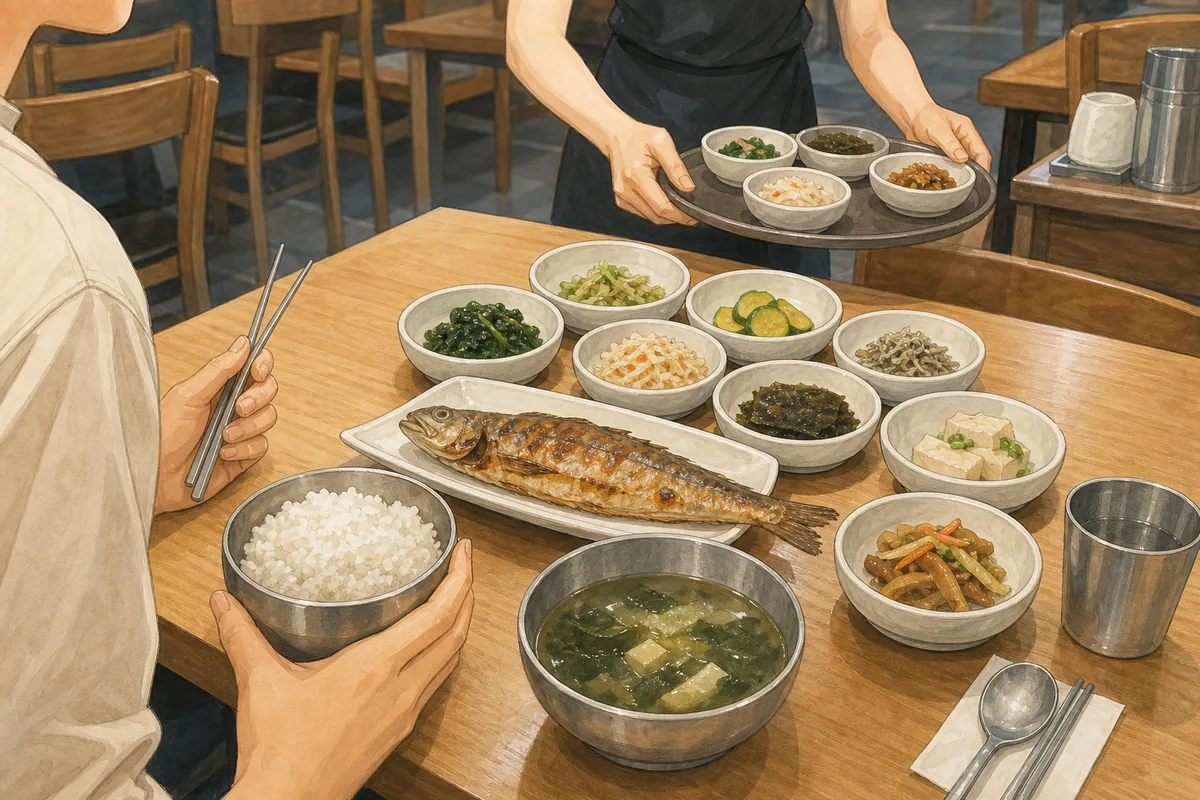
백반 (baekban) is the closest thing Korea has to a standard everyday lunch. The word means “white rice meal,” and it refers to a set tray that comes with a bowl of rice, a soup, and several small side dishes called banchan. The price is usually low — often between 8,000 and 12,000 won — and it is what office workers, students, and families eat on a regular weekday.
The soup in a baekban set is almost always mild: doenjang jjigae, egg soup, or a simple vegetable broth. The banchan varies by restaurant and season, but common items include seasoned spinach, braised potatoes, steamed egg, dried seaweed, and pickled radish. Some banchan may have a little chili, but the overall meal is balanced and not designed to be hot.
If you see 백반 or 한식 (hansik, meaning Korean food) on a sign outside a small restaurant, you are looking at a baekban-style place. These are among the safest and most satisfying options for anyone nervous about spice.
Porridge and Noodles for Simple, Gentle Eating
죽 (juk) is Korean rice porridge. It is soft, smooth, and very easy to eat. You will find dedicated juk restaurants in most neighborhoods, and the menu usually covers plain rice porridge, abalone porridge (전복죽, jeonbok juk), pumpkin porridge (단호박죽), and mushroom or vegetable versions. None of these are spicy. Juk is often eaten when someone is unwell, but locals also eat it as a light breakfast or a gentle lunch. It is one of the most reliably mild things you can order in Korea.
For noodles, the safest choices are kalguksu (칼국수), a knife-cut wheat noodle soup with a clear or mild broth, and janchi guksu (잔치국수), thin vermicelli noodles in a light anchovy broth. Mul naengmyeon (물냉면) is cold buckwheat noodles in a cold beef broth — it has a slightly tangy flavor but is not spicy unless you add the chili paste yourself. Bibim naengmyeon (비빔냉면) is the spicy mixed version, so skip that one if you are avoiding heat.
Ramyeon (라면) sold at convenience stores and restaurants is usually spicy, so check the packaging. Look for 순한맛 (sunhan mat), which means mild flavor.
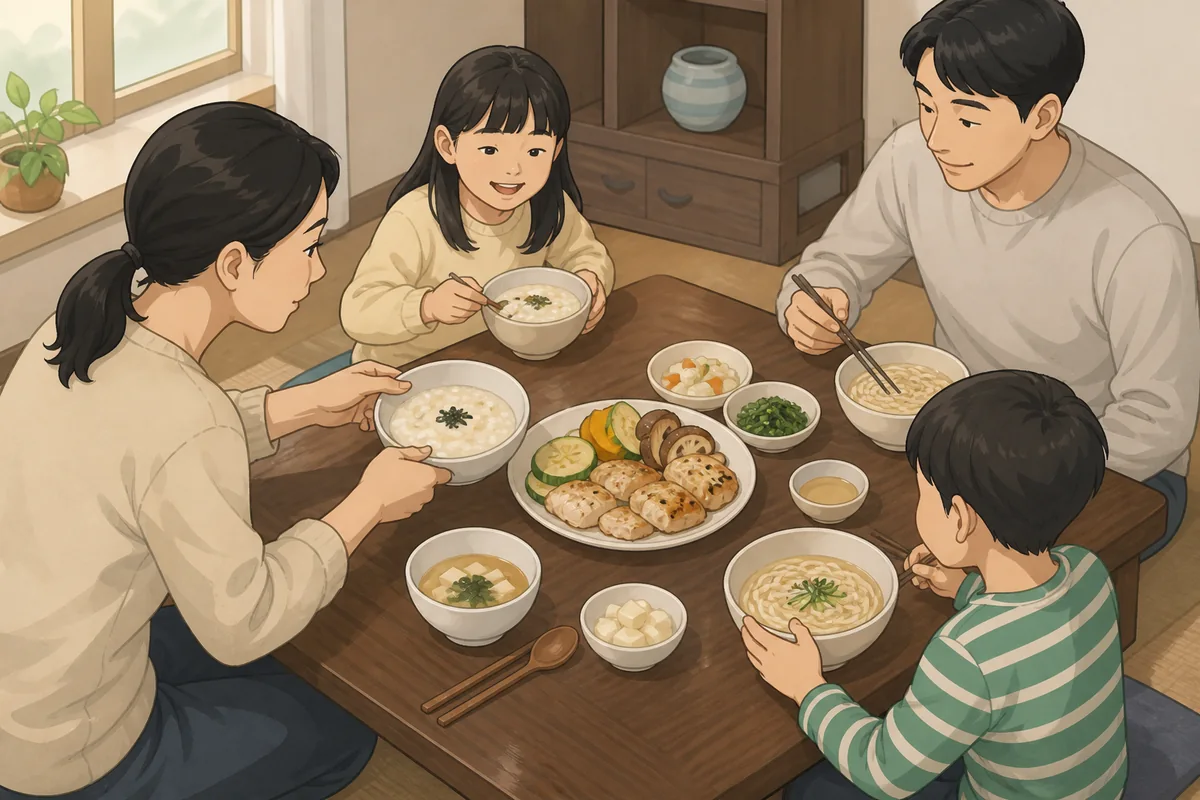
Grilled Dishes and Family-Friendly Meals
Korean barbecue — the style where you grill meat at the table — is one of the most foreigner-friendly meals in Korea. The meat itself is almost always plain or lightly marinated. Samgyeopsal (삼겹살), thick pork belly, is unseasoned. Chadolbaegi (차돌박이), thinly sliced beef brisket, is the same. You grill them yourself and wrap them in lettuce with garlic, green onion, and a small amount of ssamjang (a savory paste). The paste has some heat, but you control how much you use — or skip it entirely.
Dak galbi (닭갈비) is a spicy stir-fried chicken dish, so avoid that one. But plain grilled chicken (닭구이, dak gui) and grilled fish (생선구이, saengseon gui) are mild and common in everyday restaurants.
Family-style Korean restaurants and school cafeterias lean heavily toward mild food because they serve children and older adults. If a restaurant looks like a neighborhood spot with a handwritten menu and plastic chairs, it is almost certainly serving home-style food — which means balanced, not aggressive.
Korean Food Not Always Spicy: How to Spot Spicy Ingredients on a Menu
A few Korean words reliably signal chili heat. Once you recognize them, scanning a menu becomes much easier.
Spicy Menu Words to Watch For
Red color alone does not always mean spicy. Doenjang jjigae can look dark and rich without any chili. Conversely, some clear-looking soups have chili oil added. When in doubt, ask — pointing to the dish and saying 매워요? (mae-woyo?) means “Is it spicy?”
What to Order If You Want Korean Food Without Heat
Here is a practical shortlist of dishes that are almost always mild. These are real, common menu items you will find in ordinary Korean restaurants — not tourist adaptations.
- Seolleongtang (설렁탕) — plain ox bone soup, white broth, season yourself
- Doenjang jjigae (된장찌개) — soybean paste stew with tofu and vegetables, savory not spicy
- Miyeok guk (미역국) — seaweed soup, light and clean
- Jeonbok juk (전복죽) — abalone rice porridge, very mild
- Kalguksu (칼국수) — knife-cut noodle soup, usually in a mild anchovy or chicken broth
- Samgyeopsal (삼겹살) — grilled pork belly, unseasoned
- Dak gui (닭구이) — plain grilled chicken
- Saengseon gui (생선구이) — grilled fish, salted and broiled
- Baekban (백반) — rice set with mild soup and banchan
- Gyeran jjim (계란찜) — steamed egg custard, soft and savory
What Korean food is not spicy?
Many everyday Korean dishes are mild: seolleongtang (ox bone soup), doenjang jjigae (soybean paste stew), miyeok guk (seaweed soup), kalguksu (knife-cut noodle soup), juk (rice porridge), samgyeopsal (grilled pork belly), and baekban set meals. These are all standard menu items in ordinary Korean restaurants, not special tourist options.
Is baekban usually spicy?
No. Baekban is a standard everyday rice set meal with soup and side dishes, and it is generally mild. The soup is usually doenjang jjigae or a simple broth. Some of the banchan side dishes may contain a little chili, but the overall meal is balanced and not designed to be hot. It is one of the safest options for visitors who avoid spice.
What does 죽 mean on a Korean menu?
죽 (juk) means rice porridge. It is soft, smooth, and almost always mild. Common versions include plain rice porridge, abalone porridge (전복죽), pumpkin porridge (단호박죽), and mushroom porridge. Dedicated juk restaurants exist throughout Korea, and the dishes are gentle enough that they are often eaten when someone is sick or wants a light meal.
Can a visitor eat Korean food if a visitor do not like chili?
Absolutely. Korean food is not always spicy, and there is a wide range of delicious meals that contain no chili at all. Soups, grilled meats, rice porridge, plain noodle soups, and baekban sets are all reliably mild. Learning a few key words — like 매운 (spicy), 순한맛 (mild), and 안 맵게 해주세요 (please make it not spicy) — gives you enough to navigate most restaurant menus with confidence.
Note: This guide is for travel navigation in Korea. It is not medical, legal, or emergency professional advice. For urgent situations, contact local emergency services, official staff, or your embassy/consulate as appropriate.
Sources & Verification
- VISITKOREA – Imagine Your Korea — english.visitkorea.or.kr
Last checked: July 30, 2026