Quick Answer
If you are in Korea during the 2026 heatwave, change your outdoor plans early, avoid walking outside between 12 pm and 4 pm, and move into air-conditioned places as often as possible. Keep a bottle of water with you at all times, check official heat alerts from the Korea Meteorological Administration, and know where to go if someone in your group starts feeling unwell in the heat.
What to Do First
- Move indoors or into shade before 12 pm and stay there until at least 4 pm
- Carry at least 500 ml of water and refill at convenience stores frequently
- Check the KMA heat alert level for your area before heading out each morning
- Locate the nearest subway station, department store, or library as your backup cool spot
- Know the emergency number: 119 for medical emergencies, 120 for general city help
- If traveling with children or older adults, plan indoor stops every 30–40 minutes
- Save a Korean phrase on your phone to ask for a cool place or water if needed
When This Guide Helps
This guide is for first-time visitors to Korea who are caught in the record August 2026 heatwave and need to make quick decisions about where to go, what to watch for, and how to ask for help. It is especially useful if you do not read Korean signs well, are traveling with children or older family members, or have outdoor sightseeing plans that need to change fast.
It covers practical movement: how to reroute your day, which places to enter, what signs to look for, and which numbers to call. It does not give medical advice or diagnose anything.
Changing Your Plans for the Heat
The 2026 heatwave has pushed daytime temperatures well above the historical average for August, with heat index values making it feel significantly hotter than the actual air temperature. The Korea Meteorological Administration (기상청, KMA) issues official heat alerts in two main levels: Heat Advisory (폭염주의보) and the stronger Heat Warning (폭염경보). When a Heat Warning is active in your area, outdoor activity should be kept very short.
Rearrange your sightseeing so that outdoor spots — palaces, markets, parks, coastal walks — happen before 11 am or after 5 pm. Use the middle of the day for indoor attractions: museums, shopping centers, galleries, or simply sitting in an air-conditioned cafe. This is not overcautious; it is how many locals are managing their own schedules right now.
If you have a full-day tour booked, contact the operator. Many Korean tour companies are already offering midday indoor substitutions or schedule adjustments during active heat warnings.
Carrying Water and Staying Hydrated
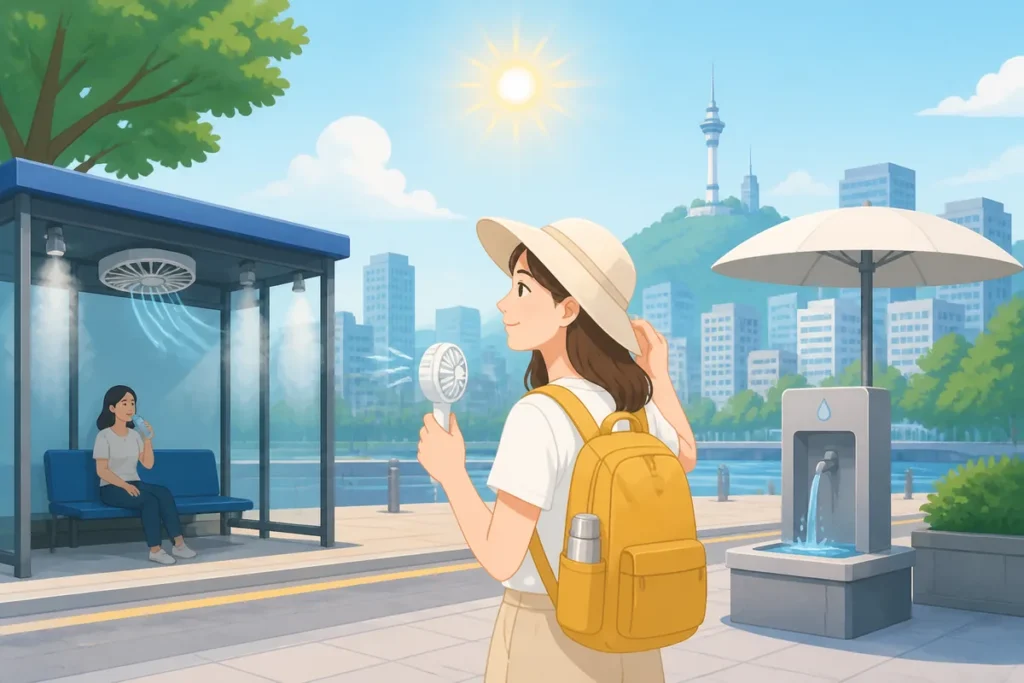
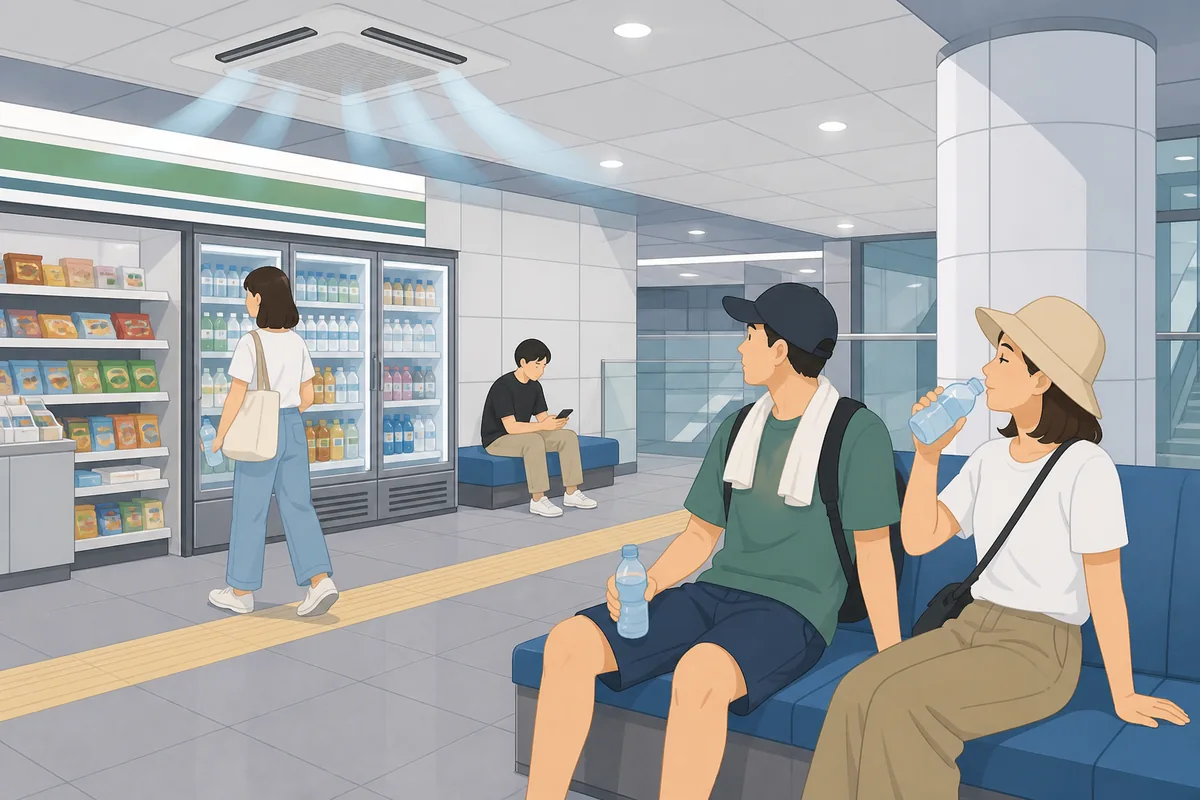
Convenience stores (편의점) are everywhere in Korean cities — GS25, CU, 7-Eleven, and Emart24 are the most common. They are open 24 hours and sell cold water, sports drinks, and cold teas at low prices. Refill or buy a new bottle every time you pass one. Do not wait until you feel thirsty, especially in direct sun.
Subway stations have water fountains in some locations, usually near the exits or on the platform level. Staff offices inside stations can also direct you to water if you ask.
Korean Phrases You Can Show
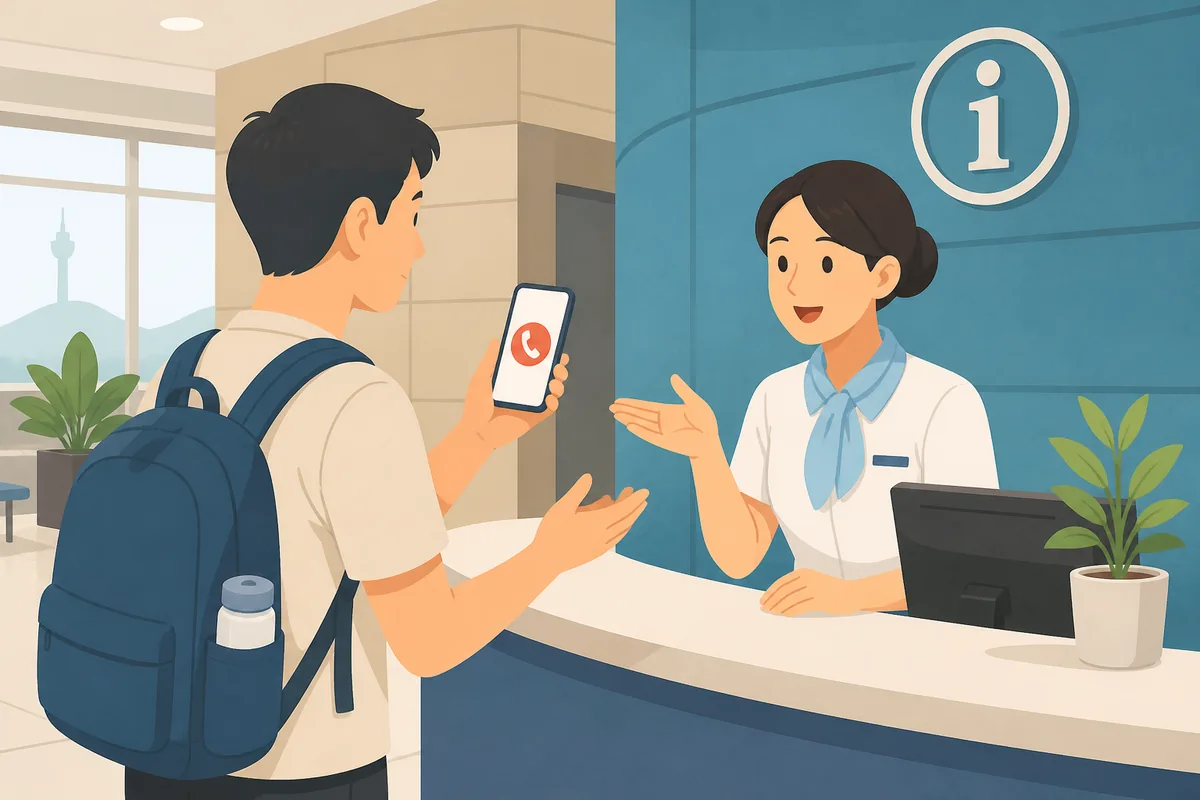
You do not need to speak Korean. Save these on your phone and show the screen to any staff member, convenience store worker, or passerby.
Useful Korean Signs or Words
These are words and signs you will actually see in Korea during a heat emergency. Recognizing them helps you navigate without needing to ask anyone.
Where to Get Help and Cool Down
During the 2026 heatwave, the most reliable air-conditioned refuges for tourists are places that are already part of a normal city day. You do not need a special pass or registration for most of them.
Subway Stations
Every major city subway station in Korea — Seoul, Busan, Daegu, Incheon, Daejeon, Gwangju — has a fully air-conditioned concourse. You can enter the paid zone with a transit card or T-money, or simply stay in the free public areas near the entrance. Station staff offices (역무실) are staffed and can call for help if needed.
Convenience Stores
GS25, CU, 7-Eleven, and Emart24 stores are air-conditioned and have seating in many locations. Staff are generally used to people stepping in to cool down. Buy a cold drink and rest — no one will rush you out.
Department Stores and Shopping Malls
Lotte, Shinsegae, Hyundai, and E-Mart locations are large, heavily air-conditioned, and have food courts, restrooms, and seating areas. They are open from around 10:30 am and are a practical midday base for families.
Public Libraries and Community Centers
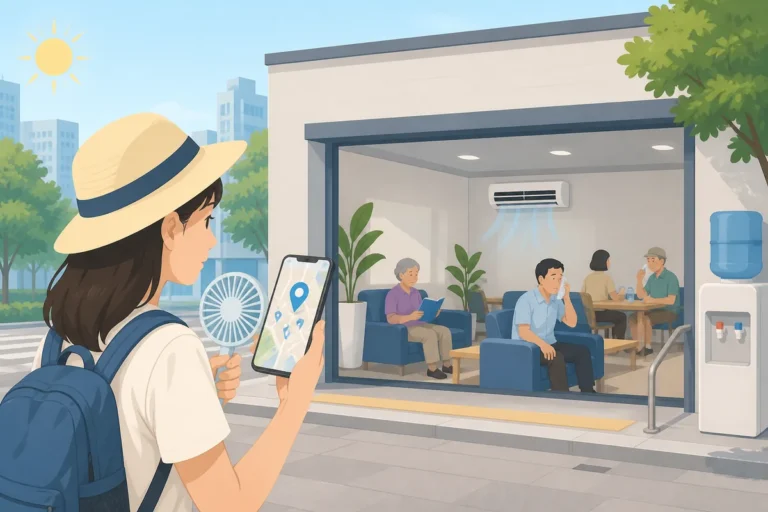
During active heat warnings, local governments designate certain public libraries (도서관) and community centers (주민센터) as official cooling shelters (냉방 쉼터). These are free to enter. Availability varies by district — look for the 냉방 쉼터 sign on the building, or ask at the front desk.
Museums and Galleries
National and city museums are air-conditioned and often free or low-cost. The National Museum of Korea in Seoul, for example, has large indoor spaces that are well-suited for a long midday visit. Check opening hours before you go, as some close on Mondays.
Hotels and Guesthouses
Your own accommodation lobby is always an option. If you are out and feeling the heat badly, returning to your hotel for a few hours is a sensible call, not a wasted day.
Official Cooling Shelters
During Heat Warnings, Seoul and other major cities activate a network of designated cooling shelters across neighborhoods. These are typically community halls, senior centers, and public buildings marked with the 냉방 쉼터 sign. The number and location of these shelters can change each year. For the current list in your area, ask at your hotel, check local government notice boards, or call 120 (Seoul’s general city information line, available in some languages).
Heat Warning Signs — When to Seek Help
This is not a medical diagnosis. If someone in your group shows signs of serious distress from the heat — such as stopping sweating despite the heat, confusion, inability to stand, or loss of responsiveness — move them to a cool, shaded place immediately and call 119. Do not wait to see if they improve on their own. Show the phrase card above to anyone nearby to get help fast.
General signs that someone needs to rest and cool down (not an emergency on their own, but worth taking seriously): heavy sweating, dizziness, headache, nausea, or feeling very weak after time in the sun. Move indoors, drink water, and rest. If these feelings do not ease after resting in a cool place, seek staffed help.
Children and Older Travelers
Children and older adults feel the effects of extreme heat more quickly than healthy adults. During the 2026 heatwave, plan indoor stops every 30 to 40 minutes if you are traveling with either group. Do not assume that a child is fine just because they are not complaining — children often do not recognize or report heat discomfort clearly.
For older travelers, the midday hours are genuinely risky during a Heat Warning. Prioritize morning and evening outings, keep the middle of the day entirely indoors, and make sure everyone in the group has water at all times. If an older traveler says they feel dizzy or unwell, treat it as a priority and find a cool, staffed place immediately.
Checking Official Heat Alerts
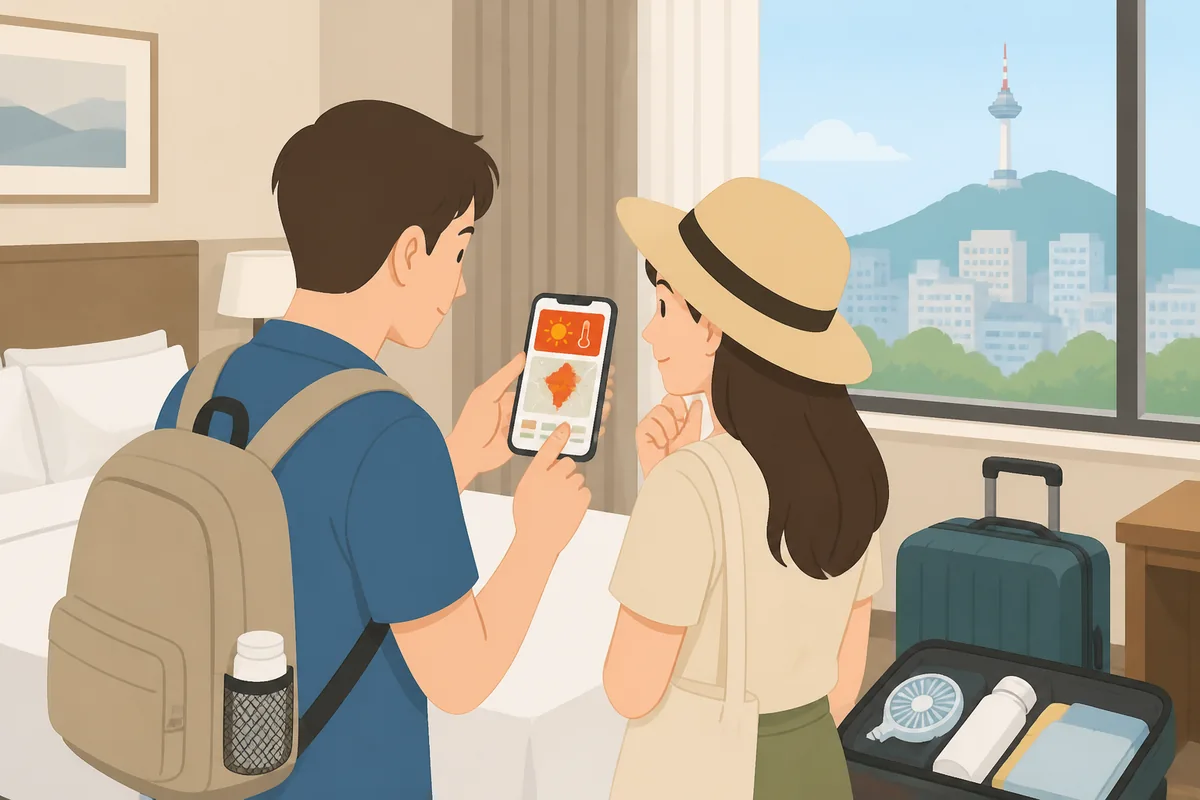
The Korea Meteorological Administration (KMA / 기상청) is the official source for heat alerts. Search “기상청” or “KMA Korea weather” to find their official site. The alert level for your specific region is updated daily and sometimes changes during the day. Many weather apps used in Korea — Naver Weather and Kakao Weather are the most common — display KMA alert levels directly on their home screen.
Subway digital signboards and outdoor LED displays in major cities also show active heat alert levels in Korean. Now that you know 폭염경보 and 폭염주의보, you can read those displays without translation.
Common Mistakes
- Pushing through midday heat to keep a sightseeing schedule. Outdoor palaces, markets, and hillside trails are genuinely dangerous between 12 pm and 4 pm during a Heat Warning. Reschedule without guilt.
- Assuming bottled water is always nearby. In some outdoor areas — hiking trails, quieter neighborhoods, riverside parks — convenience stores are not close. Fill up before you leave a commercial area.
- Not knowing where the nearest subway station is. Before heading out each morning, note the name and rough direction of the nearest station. It is your fastest route to guaranteed air conditioning.
- Ignoring the alert level because the morning felt manageable. Temperatures and heat index values peak in the afternoon. A comfortable 10 am can turn into a dangerous 2 pm very quickly during a heatwave.
- Waiting too long to act if someone feels unwell. Heat-related distress can move quickly. Move indoors and call 119 if there is any serious concern — do not wait to be sure.
- Assuming all cooling shelters are open without checking. Shelter availability varies by district and is confirmed by local government notices. Ask at your accommodation or call 120 to confirm locations near you.
Official Resource
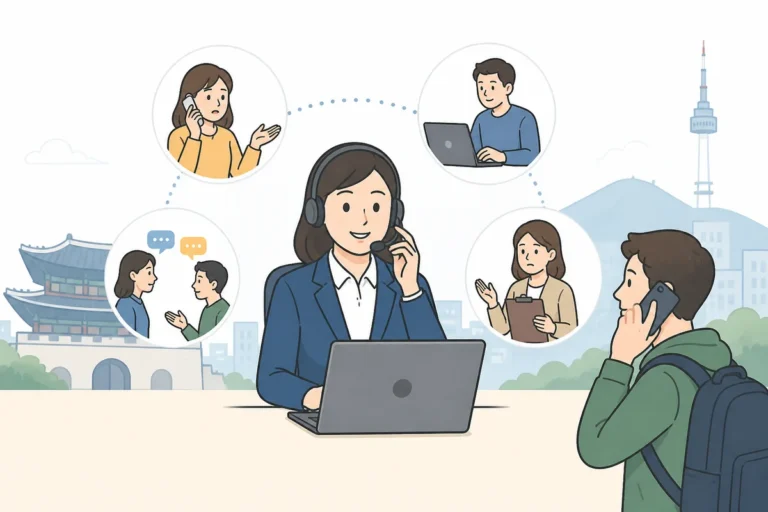
The Korea Meteorological Administration (기상청 / KMA) publishes daily heat alert levels by region. Search “KMA Korea weather” or “기상청” to reach their official site. For city-level cooling shelter information, contact your local district office or call 120 (Seoul city information line). For medical emergencies, call 119. For general tourist assistance in English, call the Korea Tourism Organization helpline at 1330, which operates around the clock.
Related Korea Guides
If this guide was useful, you may also want to read about using the Korean subway system for the first time, navigating convenience stores in Korea, understanding Korean weather seasons, and getting around Seoul without a data plan. These topics cover the everyday movement skills that make navigating a heatwave much easier.
FAQ
What should tourists do during a heatwave in Korea?
Stay indoors between 12 pm and 4 pm, carry water at all times, and use air-conditioned places like subway stations, convenience stores, and shopping centers as rest stops. Check the KMA heat alert level each morning and adjust your plans based on whether a Heat Advisory or Heat Warning is active in your area.
Where can I find cooling shelters in Korea?
During active heat warnings, local governments open designated cooling shelters (냉방 쉼터) in public buildings such as community centers and libraries. Look for the 냉방 쉼터 sign on buildings, ask at your hotel, or call 120 for location information in Seoul. Availability varies by district and changes each season.
What are the warning signs of heat illness in Korea?
This guide does not provide medical diagnosis. In general terms, if someone in your group feels dizzy, very weak, or confused after time in the heat, move them to a cool place and give them water. If they stop sweating despite the heat, become unresponsive, or cannot stand, call 119 immediately. Do not try to assess severity yourself — get staffed help.
What emergency number should tourists call in Korea?
Call 119 for medical emergencies and fire. Call 112 for police. Call 120 for general city information in Seoul (some language support available). Call 1330 for the Korea Tourism Organization tourist helpline, which operates 24 hours and offers English assistance.
How do I check Korea weather heat alerts?
Search “KMA Korea weather” or “기상청” to reach the Korea Meteorological Administration’s official site. Weather apps used in Korea also show the daily alert level, and major city displays often list 폭염주의보 or 폭염경보 directly.
Summary
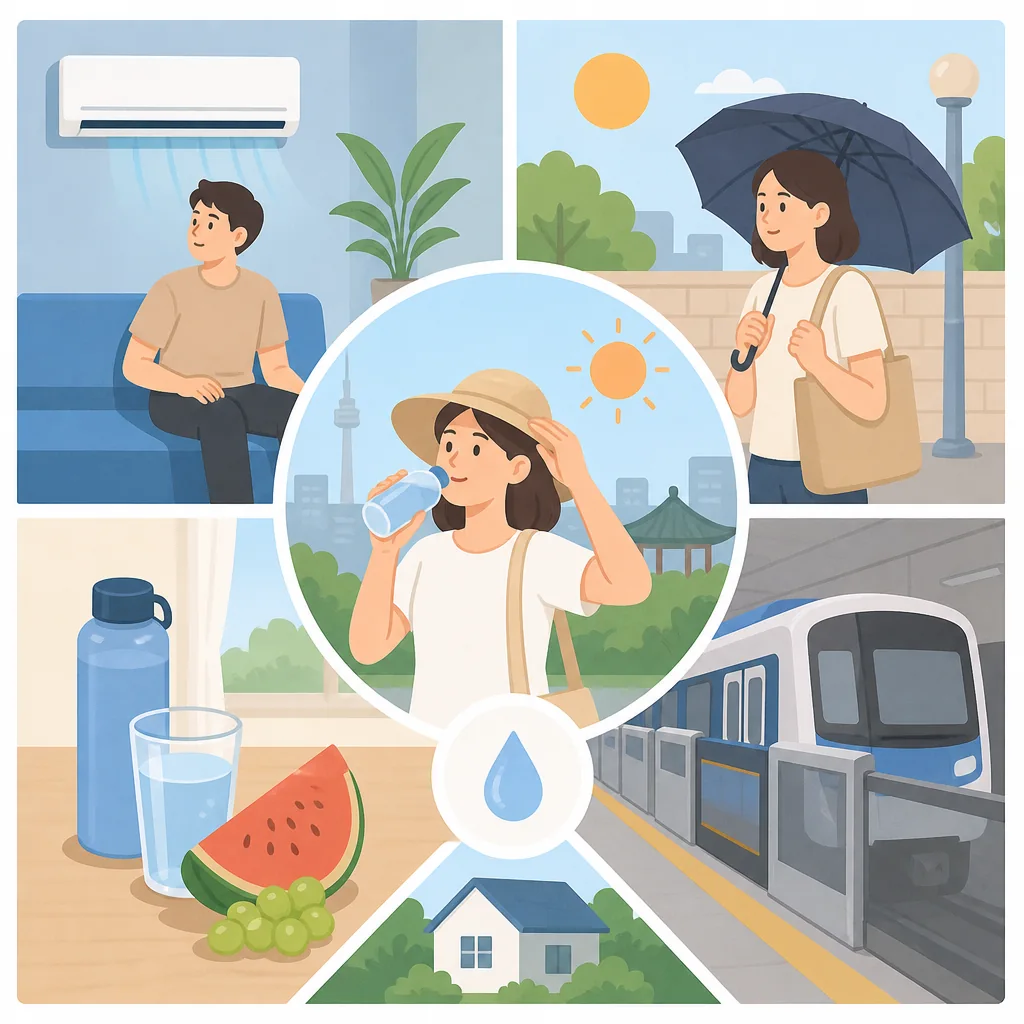
The safest way to travel in Korea during the 2026 heatwave is to treat midday as indoor time, use cooling shelters and air-conditioned public spaces, keep water close, and check official heat alerts every day. If someone in your group seems seriously affected by the heat, move to a staffed cool place and call 119.
Visual note: This guide uses an explanatory illustration, not an official screen, sign, or document.