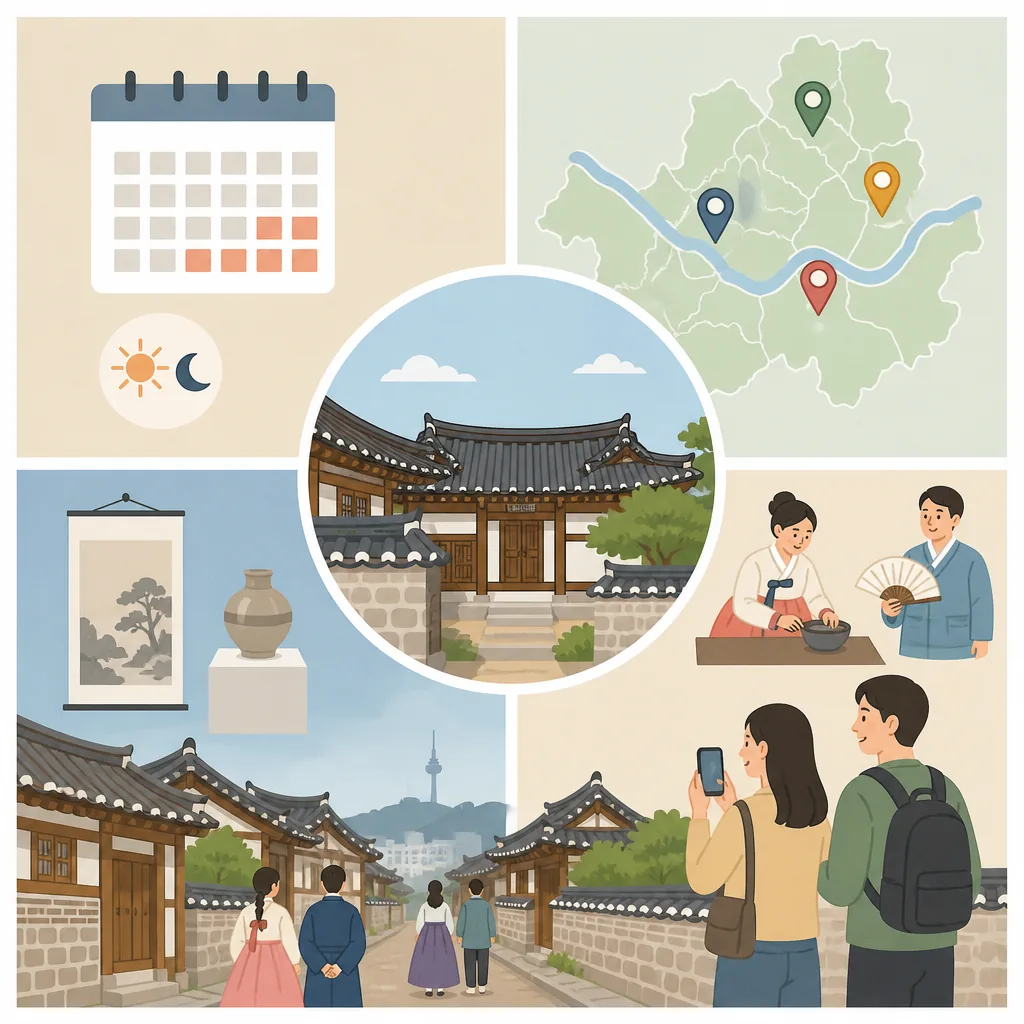
Seoul Hanok Week 2026 runs October 2–11, and it is worth planning around if you want open hanok areas, exhibitions, and hands-on programs in Seoul. The key question is not what hanok means, but which neighborhoods and events are actually open to visitors, whether you need a reservation, and which programs are worth your time.
What Seoul Hanok Week Actually Is for Visitors
Seoul Hanok Week is a city-organized cultural event where hanok buildings — traditional Korean wooden houses with tiled roofs — are opened to the public in ways they normally are not. Private residences, restored guesthouses, and heritage sites that are usually closed or only partially accessible open their gates for the 10-day period. Alongside that, the city and participating cultural organizations run exhibitions, talks, craft workshops, and architectural tours.
For a foreign visitor, the practical value is access. You can walk into courtyards, see traditional interiors, and join programs that are not available the rest of the year. The event is not a festival with a single venue — it is spread across multiple neighborhoods, so you need to decide where to go and in what order.
The Seoul Metropolitan Government organizes the event. Program details and registration for Seoul Hanok Week are published through the official Seoul Hanok Week website and the Seoul official tourism channels, though full 2026 program listings are typically released closer to the event date.
Dates and Opening Days
The event runs October 2 through October 11, 2026. That is 10 consecutive days including two full weekends — the weekend of October 3–4 and October 10–11. October 3 is also a national public holiday in Korea (National Foundation Day), which means larger crowds but also more programs running.
Not every venue is open every day. Exhibitions at major sites like Namsangol Hanok Village tend to run the full 10 days. Hands-on workshops and guided tours are usually scheduled on specific days, often concentrated on weekends. Walk-in open houses at private or semi-private hanok may only be available on certain afternoons.
Check the program schedule once it is published — typically in September — and map out your days before you arrive in Seoul.
The Neighborhoods Worth Your Time
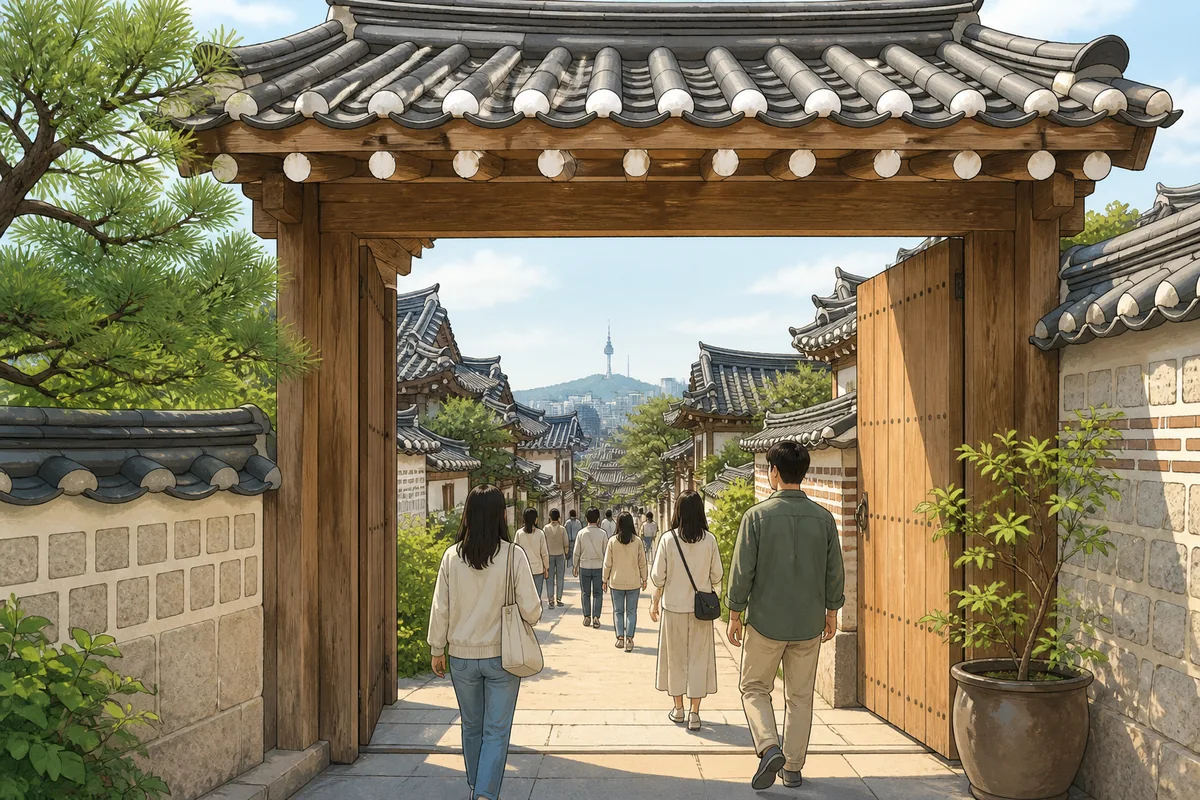
Three areas carry most of the event’s weight. They are not far from each other, but each has a different character and a different type of experience.
Bukchon Hanok Village
Bukchon is the most photographed hanok area in Seoul, sitting between Gyeongbokgung and Changdeokgung palaces in Jongno-gu. During Hanok Week, some of the private residences along the upper alleys open for visits, which is genuinely unusual — these gates are closed the rest of the year. The neighborhood also has small galleries and cultural spaces that run exhibitions during the event.
Bukchon is steep and the lanes are narrow. It gets crowded on weekends, especially around the main photo spots on Gahoe-ro 11-gil. If you want to walk the residential alleys without being squeezed, go on a weekday morning. The open-house visits are the main draw here during Hanok Week, not a specific exhibition.
Ikseon-dong
Ikseon-dong sits just south of Bukchon, a compact grid of low hanok buildings that now house cafes, restaurants, and small shops. It is walkable in under an hour. During Hanok Week, some of the commercial hanok spaces participate with pop-up exhibitions or design installations.
This neighborhood is the most foreigner-friendly in terms of navigation — the streets are flat, signage is easier to follow, and the density of cafes means you can take a break without hunting for one. It is a good starting point if you want to ease into the event before heading to more program-heavy sites.
Namsangol Hanok Village
Namsangol is a reconstructed hanok village at the northern foot of Namsan, near Chungmuro station. It is a public cultural space managed by the Seoul Metropolitan Government, and it consistently hosts the largest formal exhibitions and stage programs during Hanok Week. Entry to the grounds is free.
This is the most organized venue for first-time visitors. Signage tends to be bilingual, staff are present, and the layout is open enough that you can explore without a guide. If you only go to one place during Seoul Hanok Week, Namsangol is the most reliable choice for a complete experience.
Gyeongbokgung Palace Area and Unhyeongung
The palace precincts and Unhyeongung (a smaller royal residence in Jongno) sometimes participate with special programs during Hanok Week, including nighttime access or architectural talks. These are worth checking when the 2026 schedule is released, but they are not guaranteed to run every year in the same format.
Exhibitions and Open Houses: What to Prioritize
Seoul Hanok Week typically organizes its content into a few categories, and knowing the difference helps you decide what to book and what to just show up for.
Open-house visits are the most time-sensitive. A private or semi-private hanok opens its gates for a few hours on specific days, and visitor numbers are limited. These fill up fast — sometimes within hours of registration opening. If the 2026 schedule includes open-house slots, register as soon as the booking system goes live.
Exhibitions at established venues like Namsangol or the Bukchon Cultural Center are usually walk-in and run the full event period. No reservation needed. The content varies by year — past events have included architectural photography, traditional craft displays, and contemporary interpretations of hanok design. These are low-pressure and easy to fit into any itinerary.
Architectural and neighborhood tours are guided walks, sometimes in English, that take you through hanok areas with commentary on the buildings and their history. Availability in English is not guaranteed for every tour, so check the language option before booking. These are usually capped at 10–20 people and require advance registration.
Hands-On Programs Foreigners Can Join
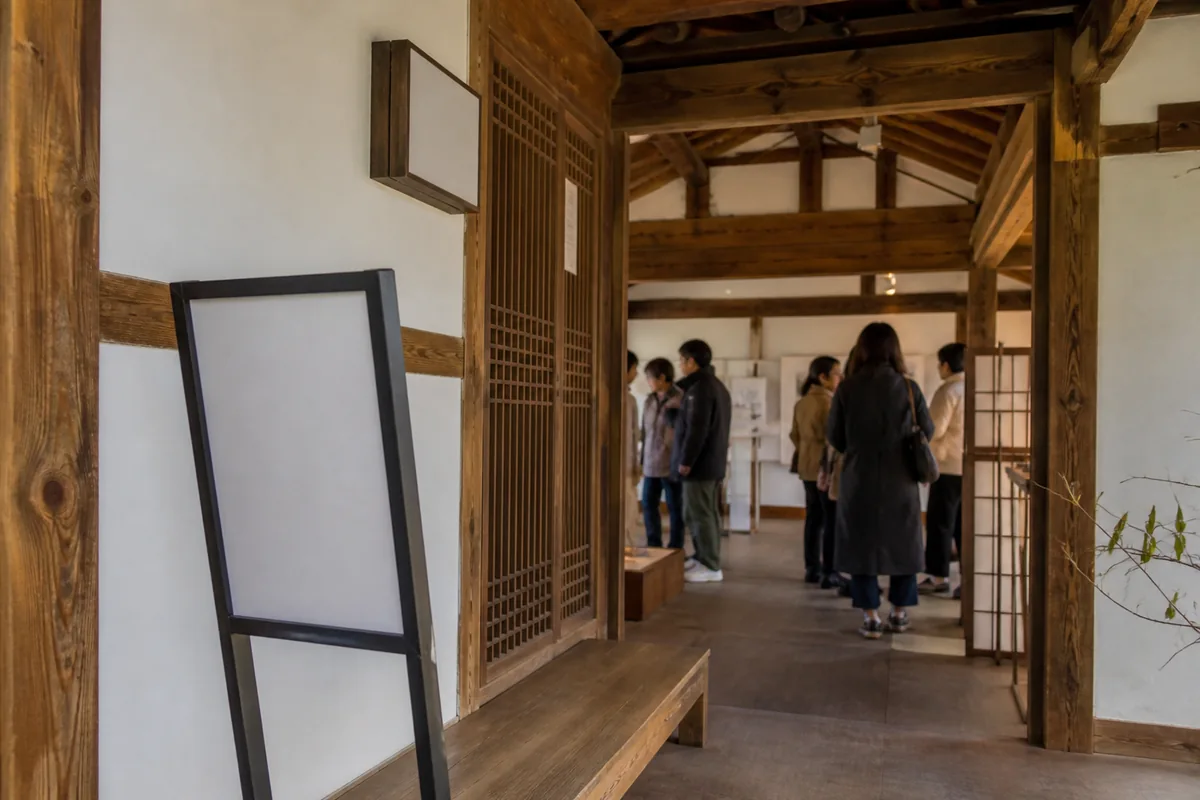
The hands-on programs are where Seoul Hanok Week gets genuinely interesting for visitors who want more than walking and looking. Past editions have included hanji (traditional Korean paper) craft workshops, natural dyeing, traditional tile-making demonstrations, and tea ceremony experiences held inside hanok spaces.
Language is the main variable. Some workshops are demonstration-based, meaning you watch and follow along visually — these work fine without Korean. Others involve verbal instruction, and whether an English-speaking facilitator is present depends on the specific program. The official event page lists language availability for each program when registration opens, so check that detail before booking.
Workshops for children are also part of the program, and some family-oriented sessions are simpler in format, which can make them easier to follow for adults who are not fluent in Korean either.
Registration for hands-on programs is almost always required. Walk-in spots exist at some workshops, but they are not guaranteed, especially on weekends.
Reservation Rules and Walk-In Access
The split between what needs a booking and what does not is the most important practical detail for planning your visit.
Walk-in, no reservation needed: Namsangol Hanok Village grounds, most main exhibitions at established cultural venues, general access to Bukchon and Ikseon-dong streets.
Reservation required: Open-house visits to private hanok, guided tours, hands-on workshops, and any program with a stated participant limit.
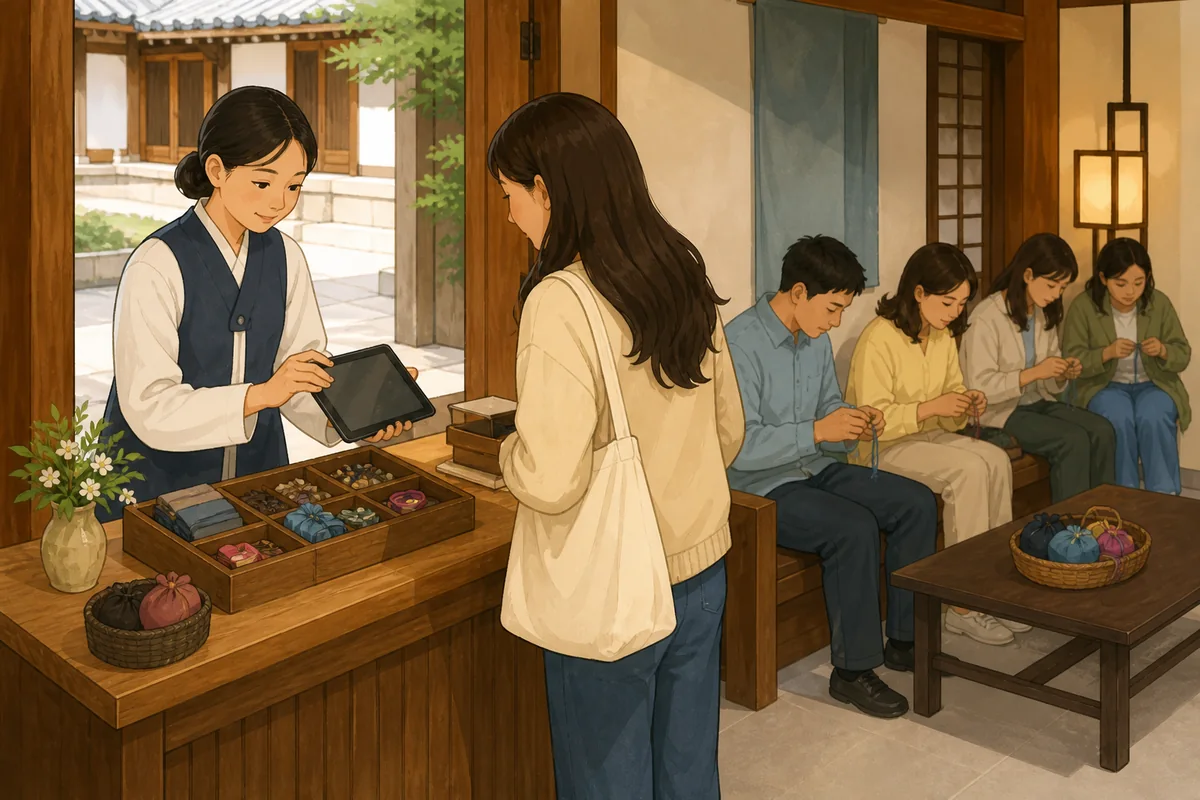
Reservations for Seoul Hanok Week programs are handled through the official Seoul Hanok Week registration system, which is announced on the event website. In past years, registration has opened roughly two to three weeks before the event starts. The system is in Korean, but the layout is manageable with a browser translation tool — Chrome’s built-in page translation works well enough to complete a booking.
If you miss the registration window for a specific workshop, check back closer to the event date. Cancellations do happen, and some programs release additional spots in the final week before the event.
A Suggested One-Day Route for First-Time Visitors
If you have one day and want to cover the most ground without overcomplicating it, this order works well.
Morning — Bukchon: Start at Anguk station (Line 3) by 9:30 AM. Walk up through the Gahoe-ro alleys before the crowds build. If you have an open-house reservation in Bukchon, this is the time slot to use it. The walk from Anguk to the top of the main lane and back takes about 45 minutes at a relaxed pace.
Late morning — Ikseon-dong: Head south from Bukchon into Ikseon-dong (a 10-minute walk). Browse the pop-up exhibitions, pick up coffee, and spend 30–45 minutes here. It is compact, so you will not get lost.
Afternoon — Namsangol: Take the subway from Jongno 3-ga (Lines 1, 3, 5) two stops to Chungmuro (Lines 3, 4), then walk five minutes to Namsangol Hanok Village. Arrive by 1:30 PM to give yourself two to three hours. This is where the main exhibitions are, and if you have a workshop reservation, afternoon slots are common. The grounds close in the early evening.
That route covers three distinct hanok areas in one day without backtracking. If you have a second day, add Unhyeongung or join a guided architectural tour in a different part of the city.
Useful Korean for Getting Around the Event
Phrases for Seoul Hanok Week
Do I need a reservation for Seoul Hanok Week 2026?
It depends on the program type. General exhibitions and the Namsangol Hanok Village grounds are walk-in. Open-house visits to private hanok, guided tours, and hands-on workshops require advance registration. Book those as soon as the registration system opens, typically in September.
Which Seoul hanok neighborhood is best for first-time visitors?
Namsangol Hanok Village is the most organized and accessible, with bilingual signage and free entry to the grounds. Bukchon is more atmospheric but more crowded. If you only have a few hours, start at Namsangol and add Ikseon-dong if time allows.
Are the exhibitions and programs free?
Most exhibitions are free. Some hands-on workshops charge a small materials fee, typically in the range of a few thousand won. Open-house visits to private hanok have generally been free in past editions, but this can vary. Check each program listing when the 2026 schedule is released.
Can I visit if I do not read Korean?
Yes. Major venues like Namsangol have English signage and sometimes English-speaking staff during Hanok Week. For booking, a browser translation tool handles the registration system well enough. Bring your booking confirmation as a screenshot — showing it on your phone is faster than explaining in Korean.
What is the best program to choose if I only have one day?
Prioritize an open-house visit (book early) and a hands-on workshop in the afternoon. Fill the gaps with a walk through Bukchon in the morning and the Namsangol exhibitions after your workshop. That combination gives you the three main types of experience — private access, craft participation, and a formal exhibition — in a single day.
- Check the Seoul Hanok Week official website in September for the 2026 program schedule
- Identify which programs need reservation and register as soon as booking opens
- Confirm whether your chosen workshop or tour has English-language support
- Save your booking confirmation as a screenshot on your phone
- Plan your neighborhood order: Bukchon in the morning, Namsangol in the afternoon
- Wear comfortable shoes — Bukchon’s alleys are steep and paved with uneven stone
Note: This guide is for travel navigation in Korea. It is not medical, legal, or emergency professional advice. For urgent situations, contact local emergency services, official staff, or your embassy/consulate as appropriate.