Quick Answer
Korea Q-Code is not a blanket requirement for every traveler in 2026. It is mainly used when current KDCA rules apply to your route or departure area, especially for travelers coming from stricter quarantine inspection areas. If it applies to your trip, submit it before departure and show the QR code at arrival if asked. Q-Code is separate from the e-Arrival Card, so completing one does not replace the other.
What to Do First
- Check the current KDCA rule for your departure country or region
- Confirm whether Q-Code is required, optional, or not needed for your flight
- Complete the e-Arrival Card separately if it applies to your entry
- Submit Q-Code in the official pre-departure window if your trip needs it
- Save a screenshot of the QR code on your phone
- At the airport, follow 검역 signs if you are directed to a health check counter

When This Guide Helps
Korea Q-Code matters if you are trying to figure out whether you still need a health QR code before flying to Korea, especially because older blog posts and airport advice can conflict. This guide is useful if you are comparing Q-Code with the e-Arrival Card, checking whether a paper health declaration is still used, or trying to understand why one airline mentions Q-Code while another does not.
The normal answer is simple: if KDCA does not currently require it for your route, you do not need to submit Q-Code. If your departure point is on a stricter quarantine inspection list, you should complete it before travel and be ready to show it on arrival.
What Korea Q-Code Actually Does
Korea Q-Code is a health and quarantine pre-registration system used by Korea’s disease control authority. Travelers enter health and travel information online, then receive a QR code that can be scanned at the airport. When it is active for your trip, it helps speed up the health screening step after landing.
Q-Code is not the same as immigration paperwork. It does not replace the e-Arrival Card, and it does not handle passport control. Think of it as a health screening step before immigration, not the full arrival process.
Q-Code vs e-Arrival Card
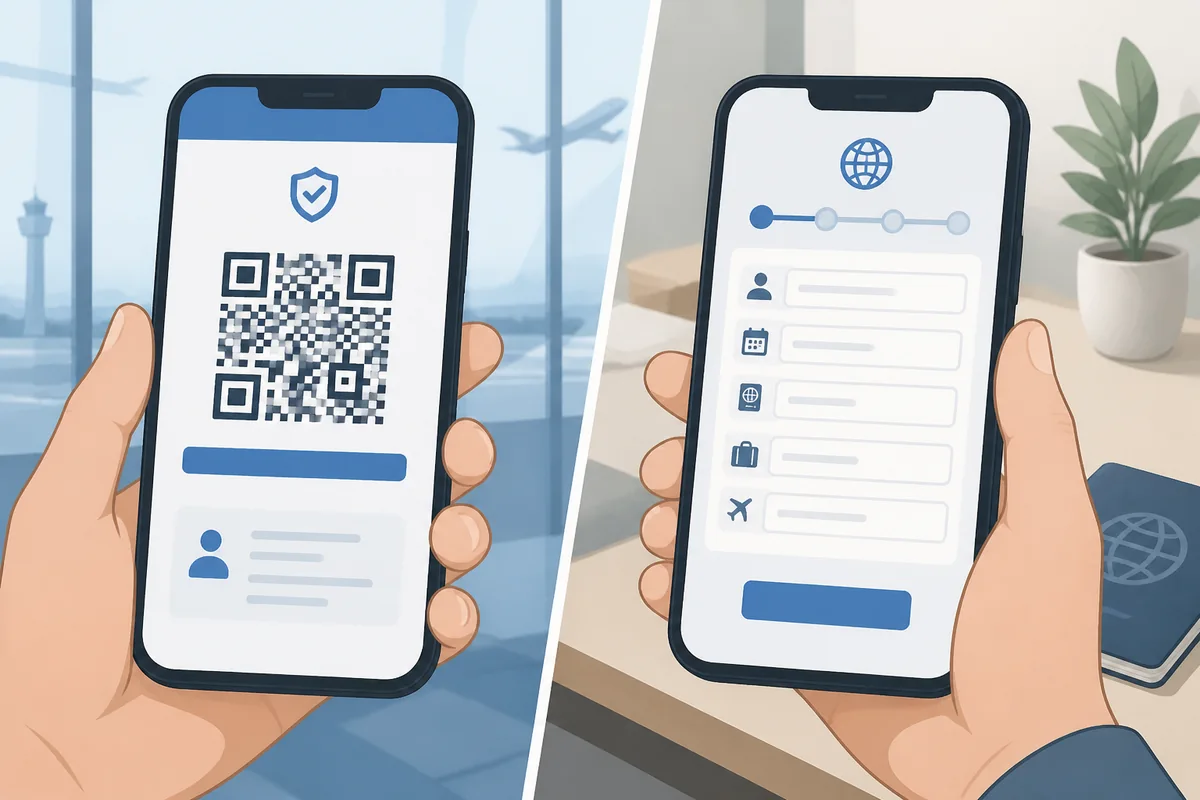
Many visitors assume Q-Code and the e-Arrival Card are two names for the same form. They are not.
- Q-Code is for health and quarantine screening.
- e-Arrival Card is for arrival and immigration processing.
- Paper health declaration is the backup form if Q-Code is not used or is not available in your situation.
If both systems apply to your trip, you need to handle both separately. That is the main point travelers miss.
When Q-Code Is Required and When It Is Optional
Korea Q-Code is usually required only for travelers coming from areas KDCA has marked for stricter quarantine inspection. Those lists can change, so the key question is not what was true last month, but what KDCA says for your departure date.
For travelers from places not on a special inspection list, Q-Code is often optional. In that case, some travelers still use it because it can make the airport health check faster and reduce paperwork at arrival.
If your airline mentions Q-Code during check-in or in a pre-departure notice, treat that as a sign to verify the latest rule immediately. Airline reminders are useful, but KDCA remains the official source.

Submission Timing
If your trip requires Korea Q-Code, submit it before your flight and within the official pre-departure window shown by KDCA. A saved QR code screenshot is the safest way to keep it ready at the airport.
Do not leave it until after landing. Q-Code is designed as a pre-arrival health declaration, so it should be completed before you travel if it applies to your route.
How the QR Code Is Used on Arrival
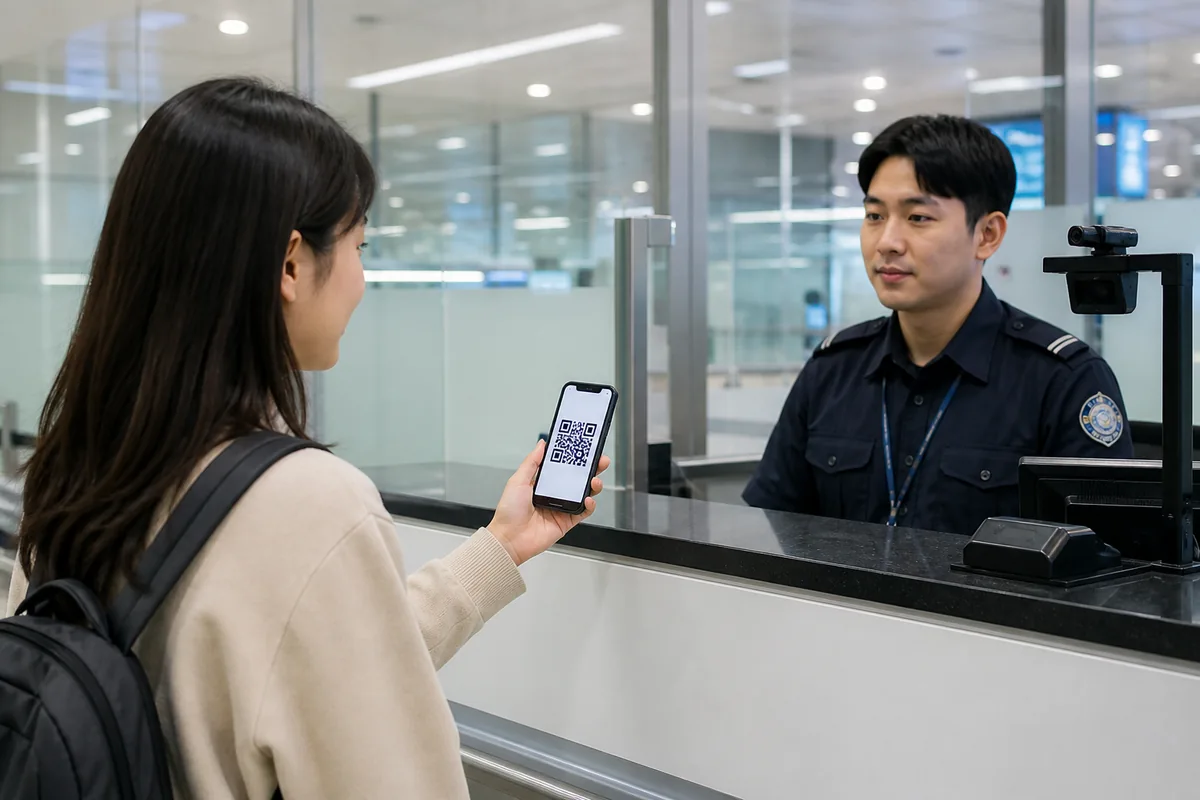
After you land, follow the arrival signs toward the health screening or 검역 area if one is set up for your flight. If Q-Code applies, an officer can scan the QR code from your phone and clear you to continue through the arrival process.
If Q-Code was required and you do not have it, airport staff may direct you to a paper form or a separate counter. That slows things down, but the process is still handled at the airport.
After health screening, you move on to immigration, where the e-Arrival Card is used if required.
Korean Phrases You Can Show
Useful Korean Signs or Words
Where to Get Help
If you are unsure whether Korea Q-Code applies to your trip, check the KDCA guidance first. Your airline is the next best place to confirm because it can tell you whether Q-Code is being checked for boarding on your route.
- KDCA for the current Q-Code rule and any restricted inspection list
- Your airline for boarding reminders and route-specific checks
- Airport quarantine staff if you arrive and are unsure where to go
- Korean embassy or consulate if you need broader entry guidance
Common Mistakes
- Assuming Q-Code and e-Arrival Card are the same form
- Thinking Q-Code is gone forever instead of checking current KDCA rules
- Submitting the form too early and using outdated information
- Forgetting to save the QR code offline before landing
- Skipping Q-Code because a forum post from last year said it was optional
Official Resource
For the current Korea Q-Code rule, use the Korean Disease Control and Prevention Agency (KDCA) official guidance. If you want a secondary check, use your airline’s Korea-bound travel notice, but KDCA is the authority that sets the health-screening rule.
Related Korea Guides
Korea e-Arrival Card guide, Incheon Airport arrival process, Korea immigration forms explained, Korea customs declaration basics, and Korea entry checklist before you fly.
FAQ
Is Korea Q-Code required in 2026?
Not for every traveler. In 2026, Korea Q-Code is mainly required when current KDCA rules apply to your departure area or route. If your trip is not on a special inspection list, it is usually optional.
What is the difference between Q-Code and e-Arrival Card?
Q-Code is a health and quarantine declaration. The e-Arrival Card is an immigration arrival form. They are separate systems and one does not replace the other.
When should I submit Q-Code before my flight?
Submit it before departure, within the official time window shown by KDCA. Save the QR code on your phone so you can show it quickly at the airport.
Can I use a paper health declaration instead of Q-Code?
Yes, a paper form can be used in some situations as a backup at arrival, but Q-Code is the faster option when it is available and applicable to your trip.
Where should I check the latest Korea Q-Code rules?
Check the KDCA official guidance first. Your airline is a useful second check because boarding instructions can reflect the latest entry process for your route.
Note: This guide is for travel navigation in Korea. It is not medical, legal, or emergency professional advice. For urgent situations, contact local emergency services, official staff, or your embassy/consulate as appropriate.