Korean Underground Shopping Streets Explained: What You Need to Know
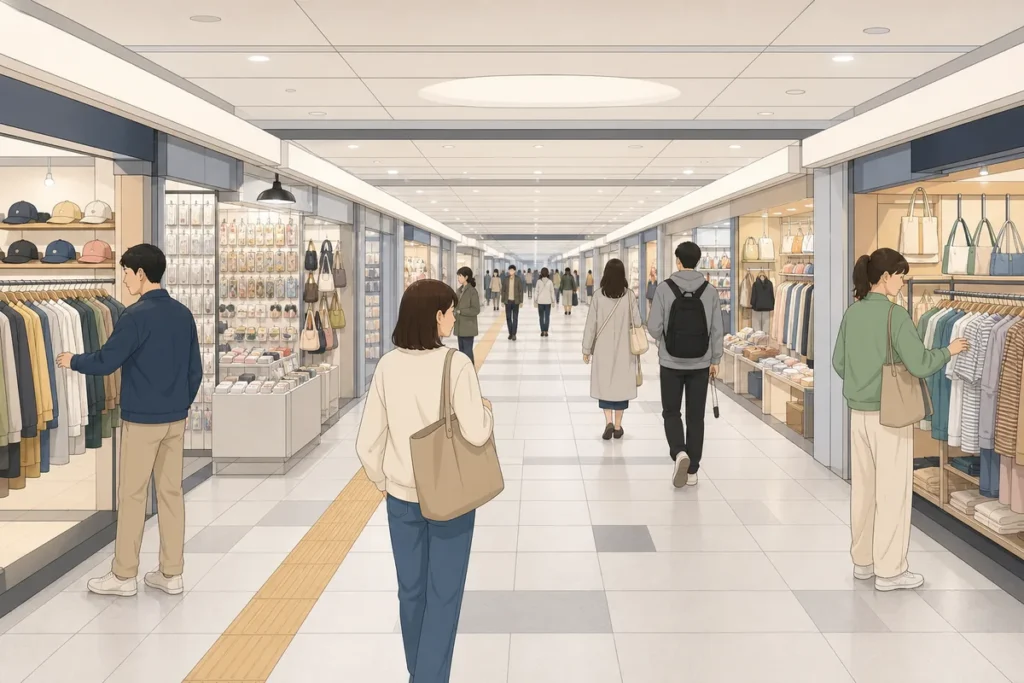
Korean underground shopping streets are long indoor corridors built beneath city streets and connected directly to subway stations. They combine a walking route with rows of small shops selling clothing, accessories, and daily goods — so you can shop, stay dry, and move between exits all at once. Look for the sign 지하상가 (ji-ha-sang-ga) to know you have entered one.
What to Do First
- Find the 지하상가 sign near a subway exit or underground passage entrance.
- Pick up a paper map at the information desk (안내) near the main entrance if available.
- Note the exit number (출구) you arrived from so you can return to it later.
- Look for corridor signs that list station names or exit numbers to orient yourself.
- Identify a landmark store or corner near your entry point before walking deeper inside.
- If lost, walk toward the nearest subway station signs — staff there can help you.
- Check your phone’s offline map before going in; mobile signal can be weak in some sections.
When This Guide Helps
This guide is for you if you have just spotted a 지하상가 sign near a subway exit and are not sure what is inside or how to move through it. It is also useful if you have walked into an underground passage expecting a simple path to the next exit and suddenly found yourself surrounded by hundreds of small shops with no obvious way out. That is a very normal first reaction — these places are genuinely large and can feel disorienting.
You do not need to speak Korean to use underground shopping streets, but knowing a few signs and the basic layout logic makes the experience much smoother. This guide covers what these places are, why they exist, what you will find inside, and how to navigate without getting stuck.
What Underground Shopping Streets Actually Are
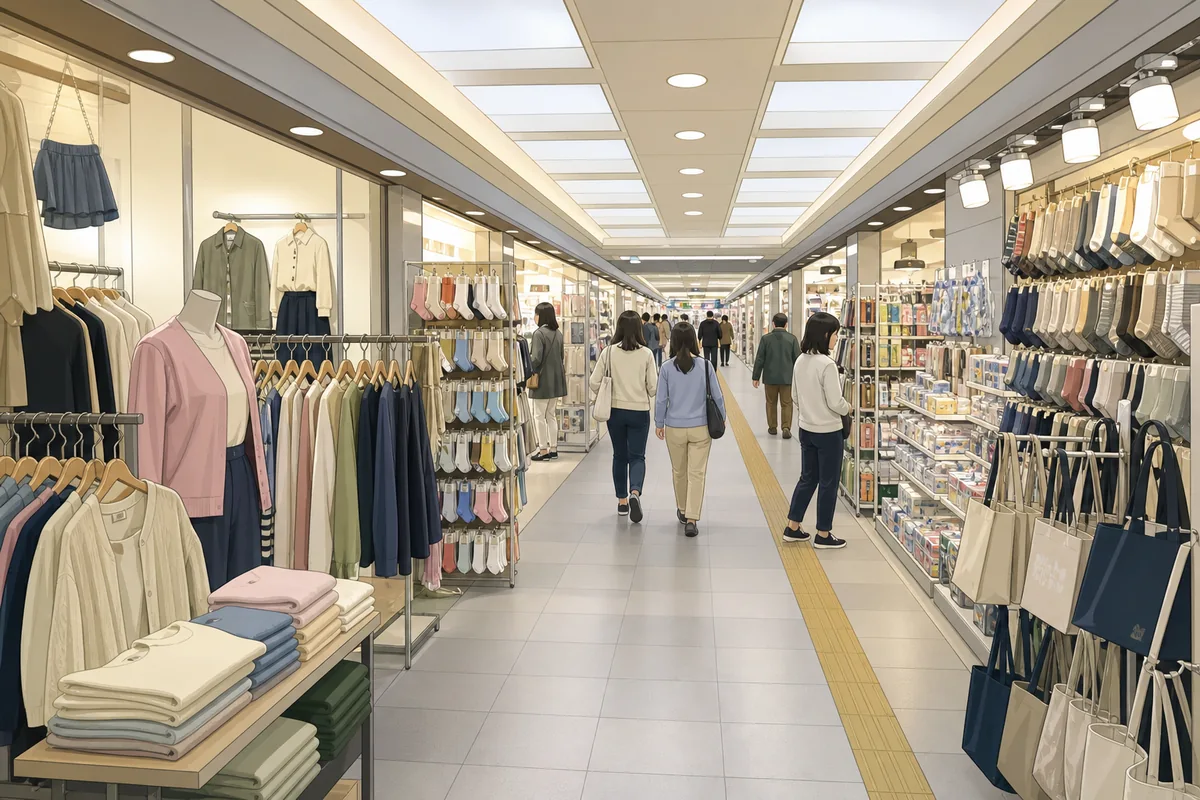
A 지하상가 is an underground commercial corridor — essentially a long pedestrian walkway lined with small independent shops on both sides. The corridor itself is the street, just moved below ground. Some are a single straight passage a few hundred meters long. Others branch into grids, connect multiple subway stations, and stretch for over a kilometer with thousands of individual stalls.
They are not department stores or malls in the Western sense. There is no central atrium, no anchor store, and often no clear front or back. Instead, think of a covered market street that happens to be underground and attached to the transit system.
Why They Were Built
Korean cities built underground shopping streets for practical reasons. Urban land above ground was expensive and crowded, so using the space beneath major intersections and transit hubs made sense. The corridors also gave commuters a weather-protected route between subway exits — useful in Seoul’s hot summers and cold winters. Once the passages existed, small-scale retail naturally followed, and the shopping streets grew from there. Many of the largest ones in Seoul date from the 1970s and 1980s, when the subway network was expanding rapidly.
How They Connect to Subway Stations
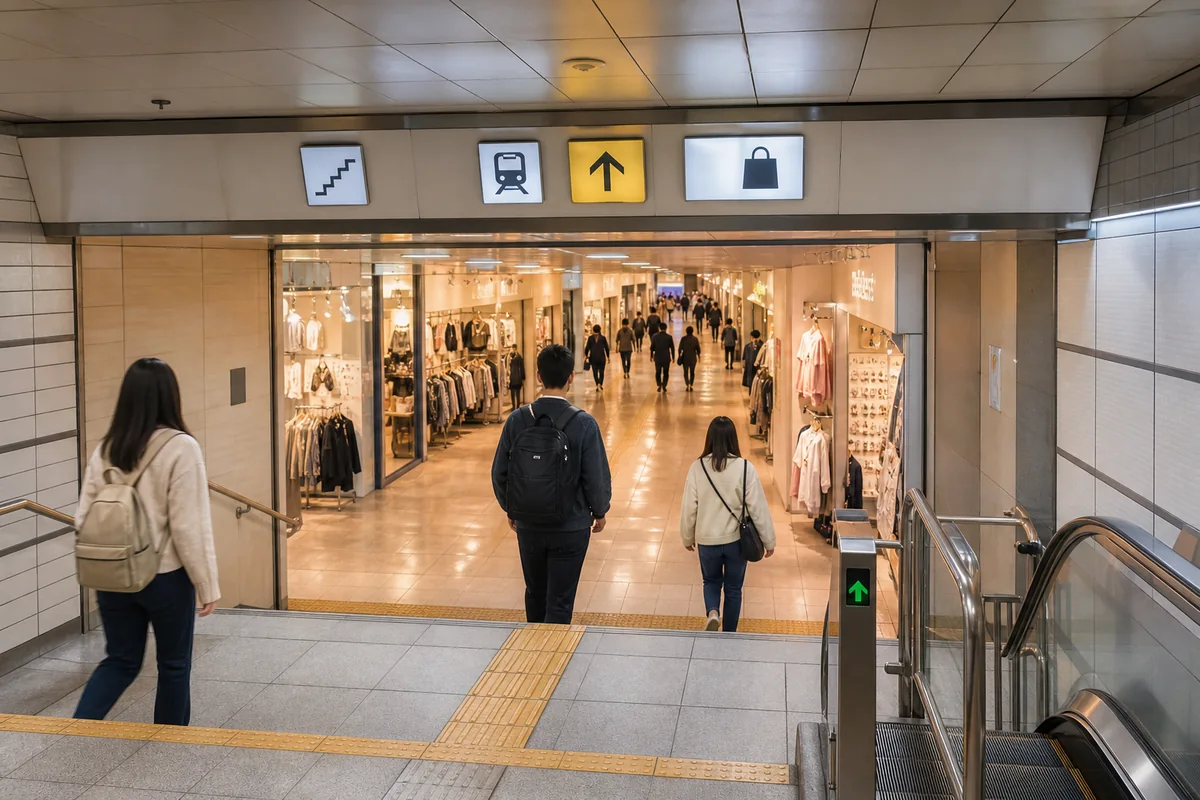
Most underground shopping streets run between two or more subway exits. When you descend into a station and follow signs toward a numbered exit, you may pass through — or directly into — a 지하상가. In some cases the shopping corridor is the only pedestrian route between certain exits. In others, there is a plain transit corridor alongside a separate shopping section.
Large underground shopping areas like those near Gangnam Station or Euljiro in Seoul connect exits that are physically far apart above ground. Walking through the underground street can be faster than going up to street level, crossing, and descending again — especially in rain or summer heat.
What You Will Find Inside
The mix of shops varies by location, but clothing dominates most underground shopping streets. Expect small booths selling casual wear, streetwear, shoes, bags, and accessories at prices that are generally lower than department stores. Many stalls specialize in one category — one booth sells only socks, the next sells only belts, the one after that sells only phone cases.
Beyond fashion, you will often find:
- Hair accessories and jewelry
- Cosmetics and skincare
- Stationery and small gifts
- Alterations and tailoring shops
- Small snack counters or kimbap stalls
- Eyeglass and contact lens shops
- Phone repair and accessories
Some Korean underground shopping streets in older neighborhoods lean more toward everyday household goods, fabric, and tools. Others near university areas skew young and trend-focused. The character of the street reflects the neighborhood above it.
How to Navigate the Layout
The most important thing to understand is that Korean underground shopping streets use a numbered or lettered zone system. Sections of the corridor are labeled — sometimes by block number, sometimes by a combination of letters and numbers like A-3 or 나-5. These zone markers appear on signs hanging from the ceiling or posted on pillars. They are your main reference point when you are deep inside and need to tell someone where you are.
Exit signs (출구) appear regularly and always show a number. That number matches the numbered exit on the street above. If you entered from Exit 5, follow signs back to 출구 5 to return to the same spot. This is the single most useful navigation habit you can build.
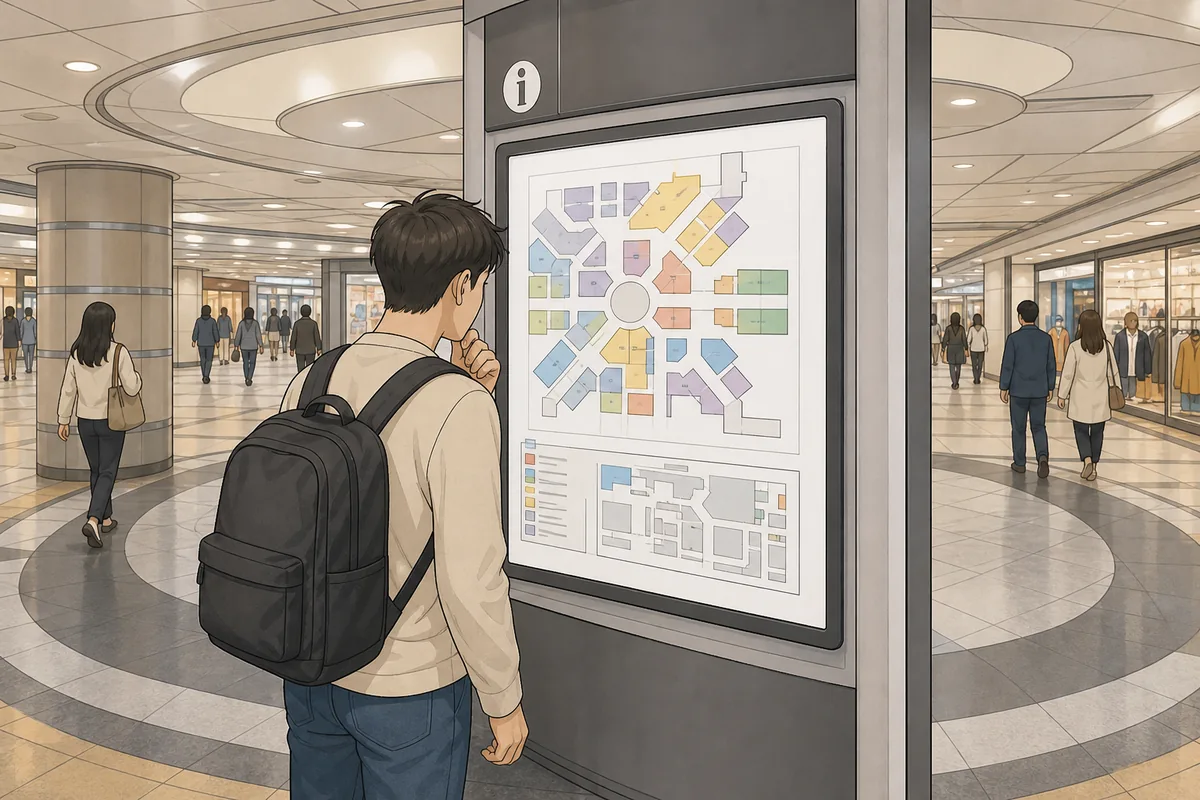
Floor directories (안내도) are posted near main entrances and at key intersections inside. They show the full map of the corridor, which exits connect where, and sometimes which zone sells what category of goods. Take a photo of the directory when you see one — it saves a lot of backtracking.
When It Feels Like a Maze
Very large Korean underground shopping streets — particularly in central Seoul — genuinely are maze-like. The corridors branch, merge, and sometimes change names as they cross under different streets. If you feel turned around, the fastest fix is to walk toward any subway station sign (지하철 or a line-colored circle with a number). Station platforms have staff who can point you toward the right exit.
Mobile maps work inside many underground passages, but signal drops in some sections. Download an offline map of the area before you go in, or screenshot the floor directory.
Regional Differences
Seoul has the largest and most complex underground shopping streets. The areas around City Hall, Euljiro, Jongno, and Gangnam each have distinct underground networks with their own character. Euljiro leans toward electronics and hardware. Jongno has older fabric and accessory markets. Gangnam’s underground passages are cleaner and more fashion-oriented.
Busan has underground shopping near Seomyeon and Nampo-dong stations — smaller than Seoul’s biggest networks but still substantial. Daegu’s Dongseongno area has a well-known underground street popular with younger shoppers. In smaller cities, the underground passage near the main station is often just a short corridor rather than a full shopping district.
The general rule: the bigger the city and the older the subway system, the more developed the underground shopping network tends to be.
Korean Phrases You Can Show
Useful Korean Signs or Words
Where to Get Help
The most reliable help inside an underground shopping street is the information desk, marked with an 안내 sign. Larger networks like those in central Seoul have staffed desks near main entrances. Staff there are used to confused visitors and can point you toward the right exit or section.
If there is no information desk nearby, walk toward the nearest subway station signs. Station staff at the ticket gate area (역무원) can help with directions and will often have a paper map of the surrounding underground area. They speak limited English in many stations, but showing a written phrase or a map screenshot works well.
Convenience stores inside underground shopping streets — look for GS25, CU, or 7-Eleven signs — are also useful landmarks. Staff there are used to giving quick directions and the stores are easy to find again if you need a reference point.
Common Mistakes
- Not noting your entry exit number. Entering from Exit 3 and then wandering for twenty minutes means you may surface at Exit 9 with no idea where you are. Check the exit number the moment you enter.
- Assuming the corridor is short. Some underground shopping streets look like a simple passage from the entrance but extend much further than expected. Give yourself more time than you think you need.
- Relying entirely on mobile maps. Signal drops in parts of many underground corridors. Screenshot the floor directory or carry a paper map from the information desk.
- Confusing the transit corridor with the shopping section. Some stations have a plain walking passage alongside a separate shopping area. The shopping section usually has brighter lighting, more signage, and visible storefronts.
- Thinking all underground shopping streets are the same. The one near a university area is completely different from the one near a wholesale market or a central business district. Adjust your expectations by neighborhood.
- Ignoring zone markers. The lettered or numbered zone signs on the ceiling are your best tool for telling someone where you are. Pay attention to them from the start.
The Short Version
Korean underground shopping streets are indoor pedestrian corridors connected to subway exits, filled with small shops selling clothing, accessories, and everyday goods. Note your entry exit number (출구), photograph the floor directory (안내도) when you see one, and walk toward subway signs if you get turned around. The larger the city, the more complex the network — but the navigation logic is the same everywhere.
Korean Underground Shopping Streets Explained becomes easier to handle when you recognize the situation and follow the practical steps above.
Korean Underground Shopping Streets Explained becomes easier to handle when you recognize the situation and follow the practical steps above.
FAQ
What is 지하상가 in Korea?
지하상가 (ji-ha-sang-ga) is an underground shopping street — a covered pedestrian corridor built beneath city streets and connected to subway stations. It combines a walking route with rows of small shops on both sides. The term literally means “underground commercial street,” and you will see it on signs near subway exits across Korean cities.
Why are underground shopping streets built in Korea?
They were built to make use of the space beneath busy urban intersections and transit hubs, where above-ground land was scarce and expensive. The corridors also give commuters a weather-protected walking route between subway exits, which is practical in Korea’s hot summers and cold winters. Small-scale retail grew naturally alongside the transit passages as cities expanded their subway networks from the 1970s onward.
What do underground shopping streets usually sell?
Clothing is the most common category — casual wear, shoes, bags, and accessories sold from small independent booths. You will also find cosmetics, phone accessories, stationery, eyewear, snack counters, and tailoring shops. The exact mix depends on the neighborhood: areas near universities lean young and trend-focused, while older districts may have more fabric, hardware, or household goods.
How does a visitor find a visitor’s way in a Korean underground shopping street?
Note the exit number (출구) you entered from — that is your anchor for getting back. Look for floor directory boards (안내도) near entrances and photograph them. Pay attention to zone markers on the ceiling, which label sections with letters or numbers. If you get lost, follow signs toward the nearest subway station (지하철), where staff can help you find the right exit.
Note: This guide is for travel navigation in Korea. It is not medical, legal, or emergency professional advice. For urgent situations, contact local emergency services, official staff, or your embassy/consulate as appropriate.
Sources & Verification
- VISITKOREA – Imagine Your Korea — english.visitkorea.or.kr
Last checked: July 30, 2026