Quick Answer
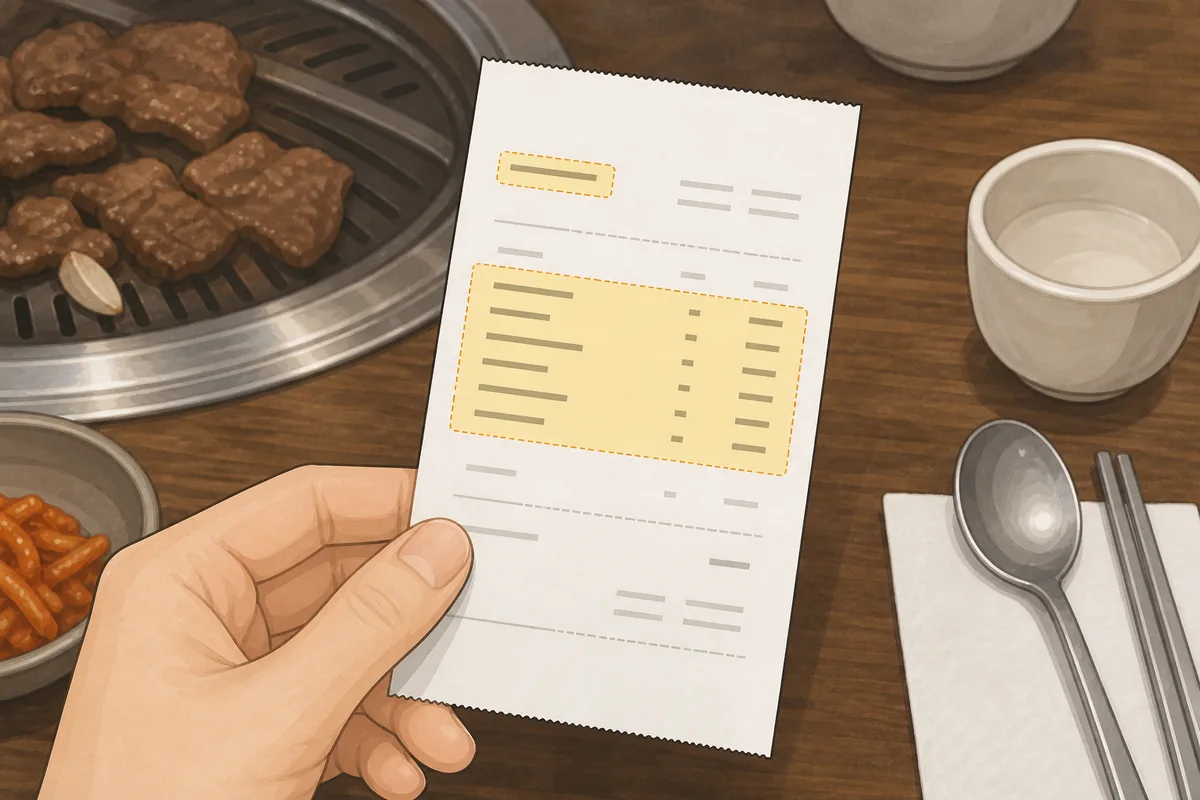
Korean restaurant receipts are usually easy to read once you know the layout: the top shows the restaurant and table number, the middle lists each item and quantity, and the bottom shows the subtotal, VAT, and final total. If the amount looks wrong, compare the item lines first, then check the final total against the card approval slip before you leave the counter.
What to Do First
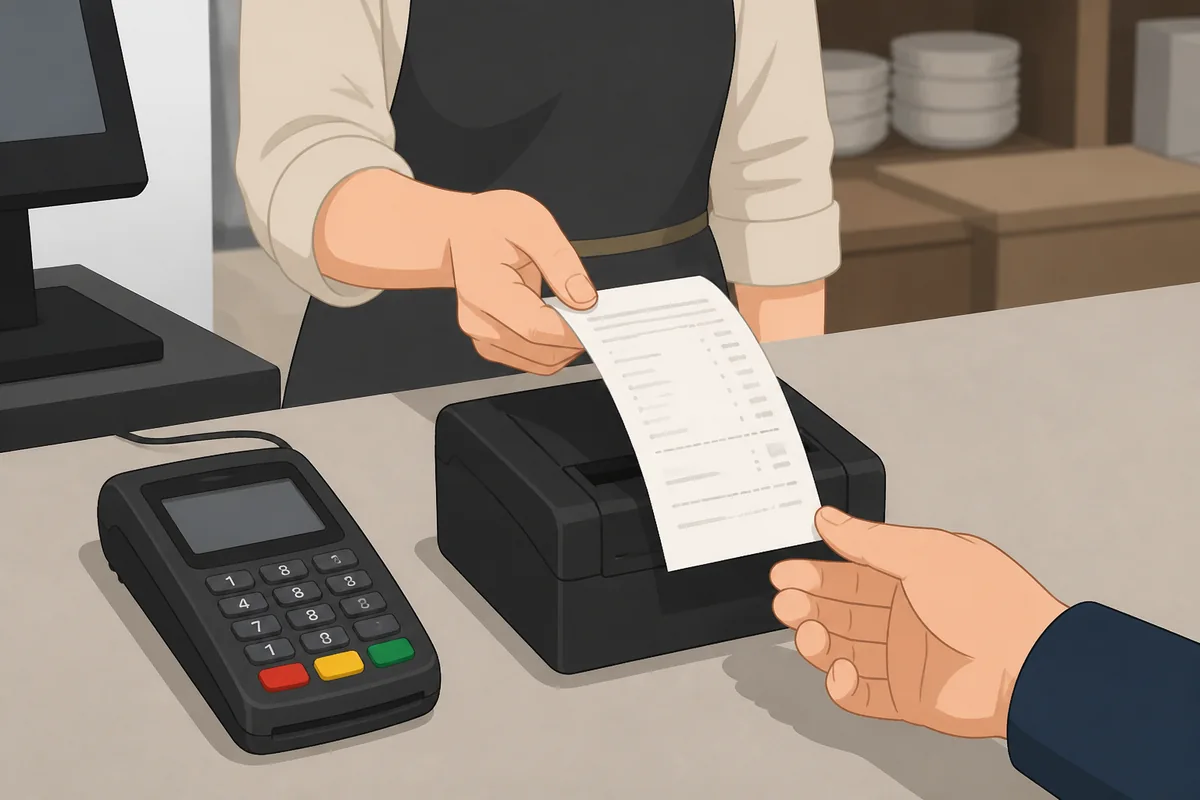
- Pick up the printed receipt and any card slip before you walk away.
- Find the table number near the top and confirm it matches your table.
- Check the item list and quantity column line by line.
- Look for 부가세 (VAT), 합계 (total), or 결제금액 (amount paid) near the bottom.
- Match the final total to the approved amount on the card slip.
- If something looks off, ask the cashier to recheck the bill right away.
When This Guide Helps
Korean restaurant receipts are most useful when you have already paid and want to understand what each line means. This guide helps if you see table numbers, quantities, VAT, or card approval details that are hard to read. It also helps when the amount seems different from what you expected and you want to check the bill quickly at the counter. Check VISITKOREA – Imagine Your Korea for the current details.
What to Do First
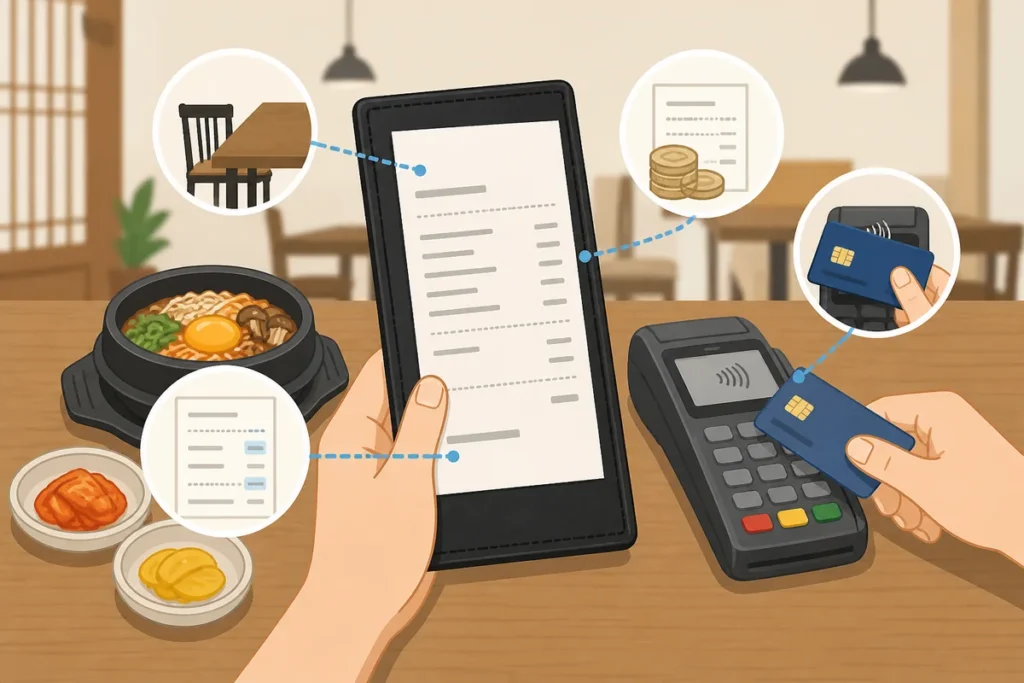
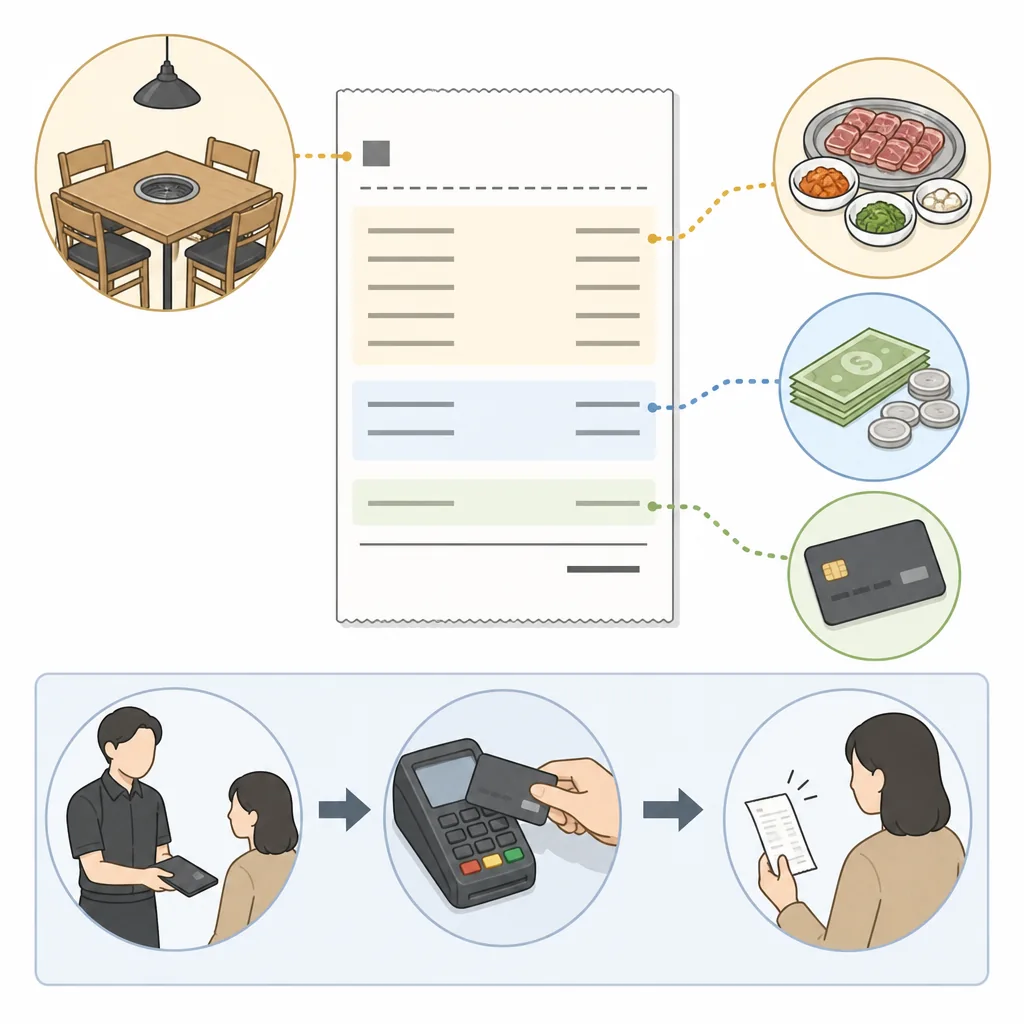
Start at the top and work down. The top section usually shows the restaurant name, date and time, and a table number such as 테이블 번호. That number tells the staff which table the bill belongs to, so it is the fastest way to confirm the receipt is yours.
The middle section is the item list. Each line usually shows the item name, 수량 for quantity, 단가 for unit price, and 금액 for the line total. If you ordered two of the same dish, the quantity should show 2. If you see an item you did not order, this is the place to notice it first.
The bottom section shows the money breakdown. You may see 공급가액, which is the pre-tax amount, then 부가세, which is VAT, and finally 합계 or 결제금액, which is the amount paid. On many restaurant menus in Korea, VAT is already included in the displayed price, so the receipt is just breaking it out for clarity.
If you paid by card, the slip or terminal receipt usually shows 승인금액 (approved amount), 승인번호 (approval number), and sometimes the card type or last digits of the card number. The approved amount should match the final total on the restaurant receipt.
Reading Korean Restaurant Receipts: Key Fields at a Glance
Receipt Words You Will See
Korean Restaurant Receipts: How to Check the Bill
Check the item list first, not the tax line. Most mistakes show up as a missing item, an extra item, or the wrong quantity. If a dish appears twice, the quantity column is usually the reason.
Then compare the bottom numbers. The receipt may show a subtotal, VAT, and a final total, but the number to watch is 합계 or 결제금액. That is the amount that should match the card slip.
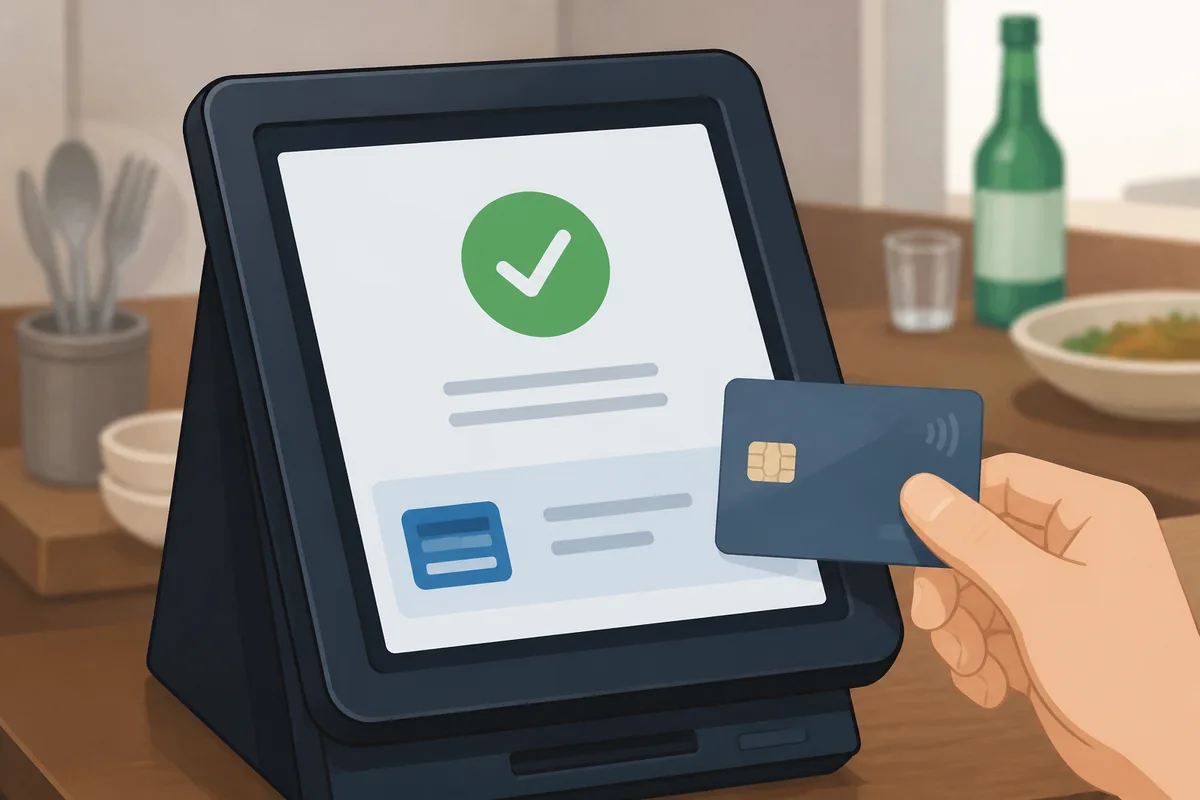
If you paid by card, the approval slip should show the same final amount. A different number on the card slip is the first thing to ask staff to check. In busy restaurants, this is usually a quick register fix.
Korean Phrases You Can Show
Simple Lines for the Counter
Useful Korean Signs or Words
Labels on the Receipt or Card Slip
Where to Get Help
If the receipt amount still looks wrong after a quick recheck, ask the cashier to look again at the item list and the card approval slip. This is the fastest place to resolve a simple mismatch. Keep the printed receipt until you are sure the charge matches.
If you already left and later notice a different amount in your card app, contact your card issuer using the number on the back of the card. Keep the restaurant receipt and card slip together so you can compare the approved amount and approval number.
For language help in Korea, the Korea Tourism Organization’s 1330 helpline can assist travelers in multiple languages.
Common Mistakes
- Checking the VAT line before the item list. The item lines and quantities usually explain the problem faster.
- Thinking VAT is extra on top of the menu price. In many restaurants, VAT is already built into the menu price and only shown separately on the receipt.
- Ignoring the quantity column. A wrong quantity is a common reason the total looks too high.
- Throwing away the card slip immediately. The approval number and approved amount are useful if the charge needs a later check.
- Confusing the subtotal with the final amount. The amount paid is usually shown as 합계 or 결제금액.
- Assuming two printed slips mean two payments. One copy is usually for you and one is for the restaurant.
Official Resource
The Korea Tourism Organization runs the 1330 Travel Helpline for travelers who need language help or basic support at restaurants and other businesses in Korea.
FAQ
What does table number mean on a Korean restaurant receipt?
The table number identifies which table the order came from. It is usually printed near the top of the receipt and helps the staff match the bill to your table.
What does VAT mean on a Korean receipt?
VAT means value-added tax. On many restaurant receipts it appears as 부가세. In Korea, it is commonly already included in the menu price and shown separately on the receipt.
What is the approved amount on a Korean card receipt?
The approved amount is the exact amount charged to your card. It should match the final total on the restaurant receipt.
What should I check if the receipt amount looks wrong?
Check the item list, quantity, discounts, VAT line, and final total. Then compare the final total with the approved amount on the card slip. If they do not match, ask the cashier to check the bill again.
Do Korean restaurants always print a receipt?
No. Some places print one automatically, while others only do it if you ask. If you want a receipt, say 영수증 주세요.
Short Version
Korean restaurant receipts are usually simple once you know where to look: table number at the top, item list and quantity in the middle, and VAT plus final total at the bottom. If you paid by card, the approved amount on the slip should match the receipt total. When the number looks wrong, check the quantity column first and ask staff to recheck before you leave.
Note: This guide is for travel navigation in Korea. It is not medical, legal, or emergency professional advice. For urgent situations, contact local emergency services, official staff, or your embassy/consulate as appropriate.
Sources & Verification
- VISITKOREA – Imagine Your Korea — english.visitkorea.or.kr
Last checked: August 7, 2026