Korean Traditional Markets Explained: What You Need to Know
Korean traditional markets mix food stalls, banchan counters, clothing, fresh produce, and household goods in one place. Prices are usually shown on handwritten boards, many vendors accept cards, but smaller stalls still prefer cash. You usually do not need to bargain — just point, confirm the price, and pay.
Quick Market Rule
- Bring cash as a backup — some small stalls do not take cards or have a minimum spend
- Look for the handwritten price board before asking the price
- Point at what you want rather than picking up loose food items
- Stay to one side in narrow aisles so other shoppers can pass
- Ask before photographing a vendor or their stall
- Greet vendors with a short 안녕하세요 (annyeonghaseyo) — it goes a long way
- Do not expect flea-market bargaining — negotiate only for bulk or clothing purchases
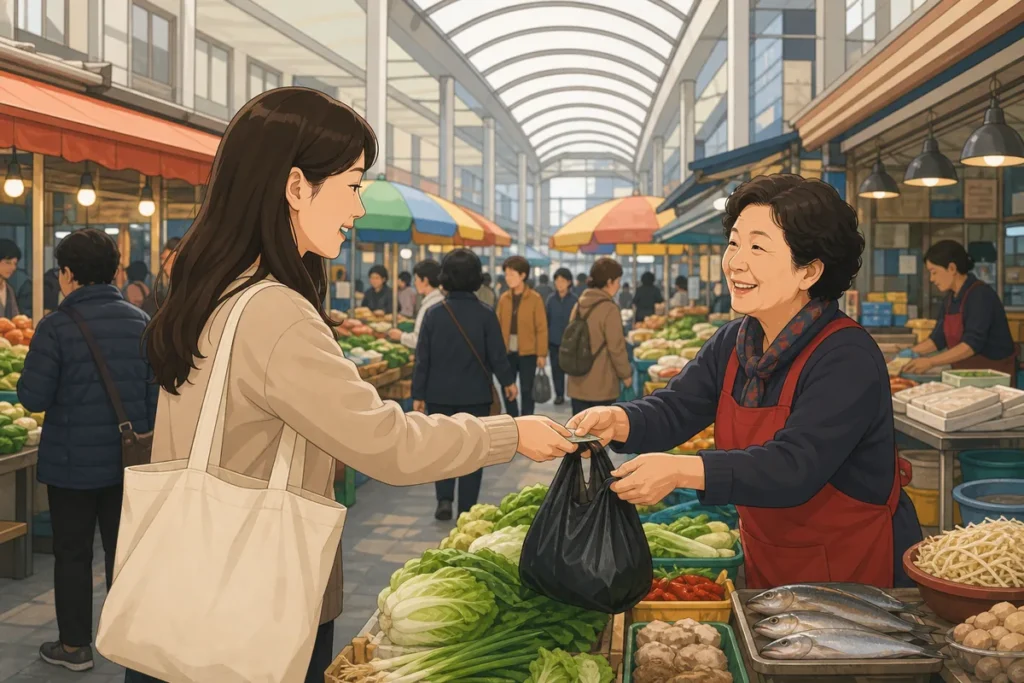
If you walk into korean traditional markets, the confusing part is not just the crowds — it is figuring out what each stall sells, whether prices are fixed, and if you can pay by card. Most markets mix food, clothing, side dishes, and daily goods, and the way they work is simpler once you know the common signs and etiquette.
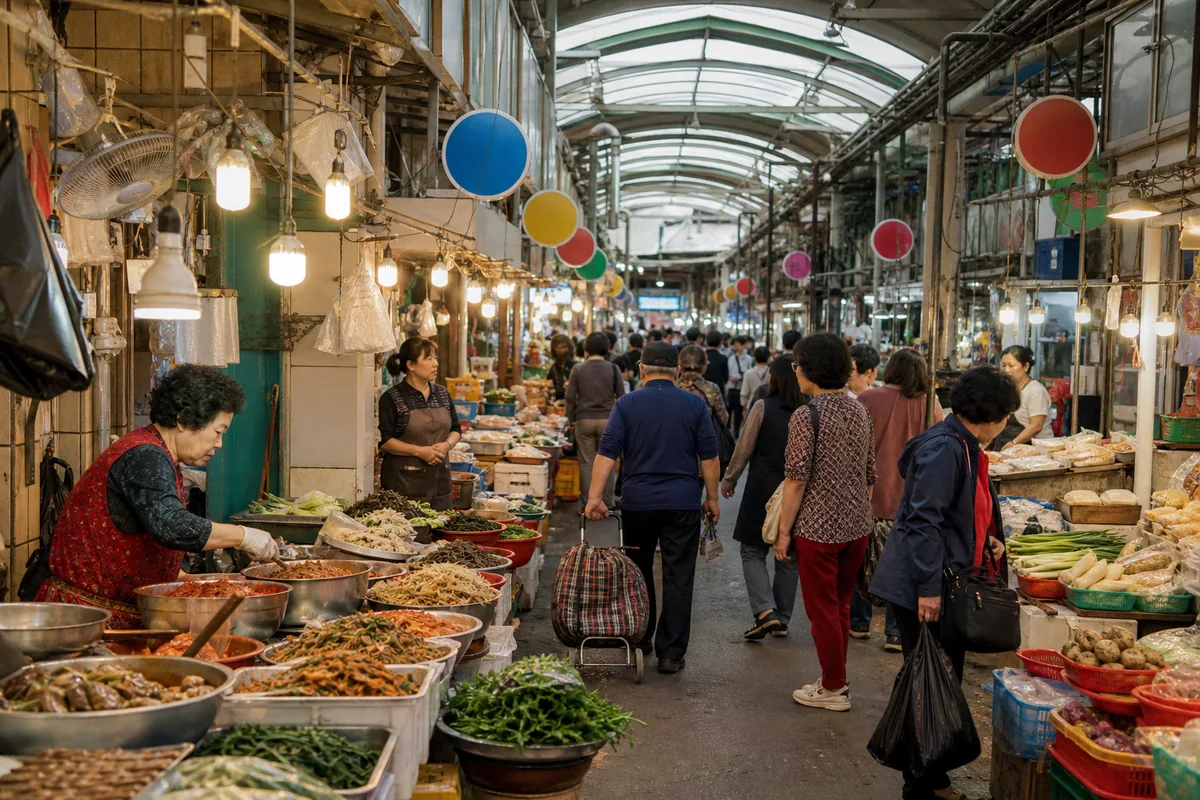
How Korean Traditional Markets Are Organized
Korean traditional markets are not one uniform shopping format. Think of them as a loose collection of independent vendors sharing a covered or semi-covered space, usually grouped by category but not always in an obvious way to a first-time visitor.
Larger markets like Gwangjang in Seoul or Gukje in Busan are divided into rough zones. One corridor handles fresh produce and seafood, another is packed with banchan stalls, a third sells fabric and clothing, and a fourth has kitchenware or dry goods. Smaller neighborhood markets — called 동네시장 (dongne sijang) — are more compact and tend to focus on daily groceries and prepared food.
Tourist-facing markets and local daily-use markets feel quite different. Tourist markets have more snack stalls, photo-friendly displays, and vendors used to dealing with non-Korean speakers. Neighborhood markets are faster-paced and aimed at residents doing their weekly shopping. Both are worth visiting, but your experience will be different.
The main entrance usually has a map or directory sign. It is in Korean, but the layout is visual enough to give you a general sense of which zone is where. If there is no map, just walk the full length of the main aisle first before stopping to buy anything — you will get a much better picture of what is available.
What Different Stalls Sell in Korean Traditional Markets
The variety inside a single market can be genuinely surprising. Here is what you will typically encounter:
- Banchan stalls — rows of small metal trays or plastic containers holding prepared side dishes: kimchi, seasoned spinach, pickled radish, stir-fried anchovies, and dozens more. You buy by weight or by container size.
- Fresh produce — seasonal fruit and vegetables, often sold in pre-packed bags or loose by the kilo. Strawberries, pears, sweet potatoes, and garlic are common.
- Seafood — live or fresh fish, shellfish, dried squid, salted fish. Larger markets have tanks of live fish. The smell is strong; that is normal.
- Cooked food stalls — tteokbokki (spicy rice cakes), bindaetteok (mung bean pancakes), gimbap rolls, noodle soups, and sundae (Korean sausage). These are often eaten standing at a small counter.
- Clothing and socks — basic everyday wear: socks in bulk packs, underwear, thermal layers, simple sweaters, and work clothes. Prices are low and quality is functional.
- Kitchenware and household goods — pots, cutting boards, ladles, storage containers, and cleaning supplies.
- Dry goods and spices — dried chili flakes (gochugaru), sesame seeds, dried mushrooms, and various grains sold by weight.
- Snacks and sweets — honey-filled hotteok, roasted chestnuts in winter, and market-specific treats that vary by region.
One thing that surprises many visitors: banchan stalls often let you taste before you buy. A vendor may offer a small sample on a toothpick. It is fine to try it — just do not take multiple samples without buying anything.
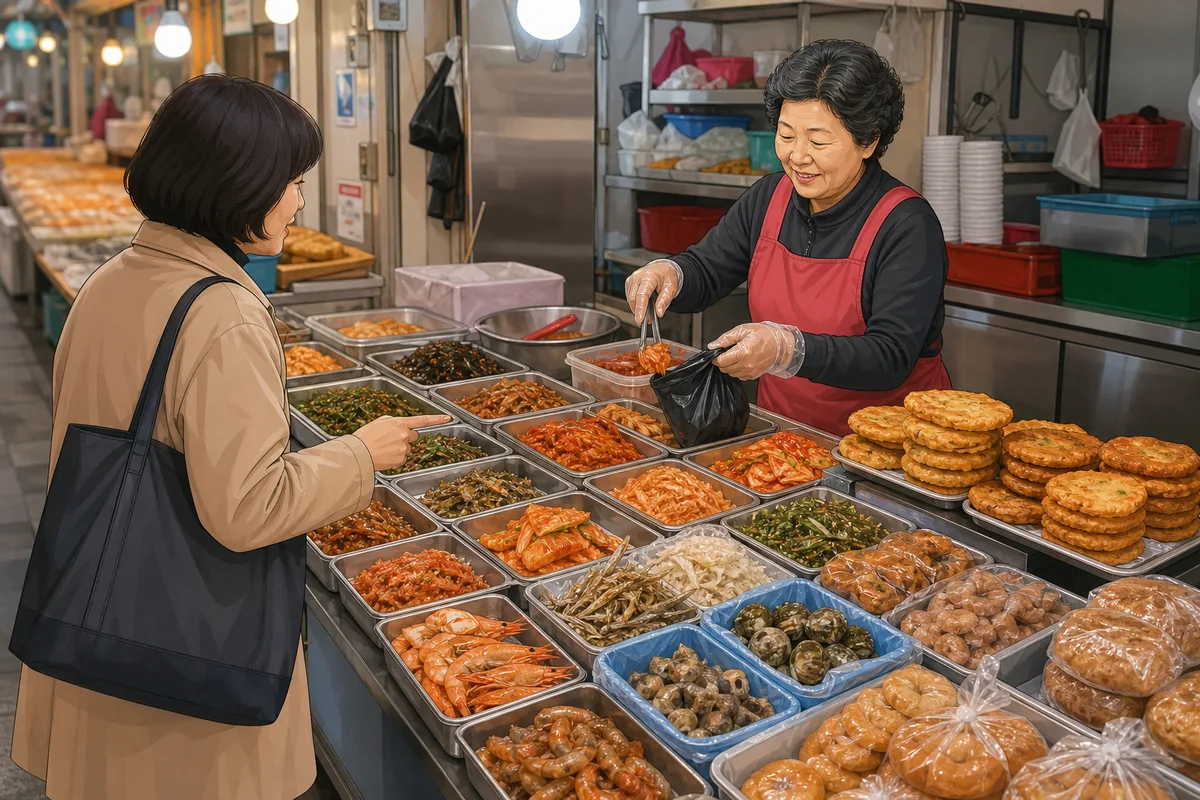
How to Read Price Tags and Stall Signs
Most stalls use handwritten signs on cardboard or small chalkboards. The price is usually written in Korean numerals, which follow the same Arabic numeral system (1, 2, 3…), so the number itself is readable. What can confuse visitors is the unit.
Common Price Sign Words
If there is no price sign at all, it is fine to ask. Point at the item and say 얼마예요? (eolmayeyo?) — “How much is this?” Most vendors will show you the number on a calculator or hold up fingers.
Hanging signs above a stall usually show the stall’s name or specialty, not individual prices. The actual price board is at counter level, near the goods. Look down, not up, when trying to find a price.
Cash, Card, and Payment Expectations
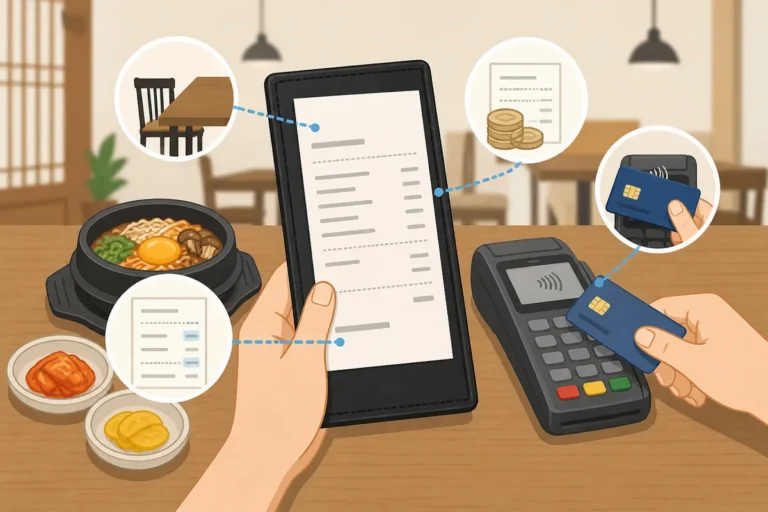
The payment situation in korean traditional markets has changed a lot in recent years. Many vendors — especially those in tourist-facing markets or larger stalls — now accept credit and debit cards, including foreign Visa and Mastercard. Some even have QR code payment setups.
That said, smaller stalls, elderly vendors, and fresh produce sellers often still prefer cash. Some stalls have a minimum card spend, typically around 10,000 won. It is not rude to ask — just show your card and the vendor will tell you whether it works.
The safest approach is to carry at least 30,000–50,000 won in cash when visiting a market. That covers a few banchan containers, a snack or two, and a small clothing purchase without any payment friction.
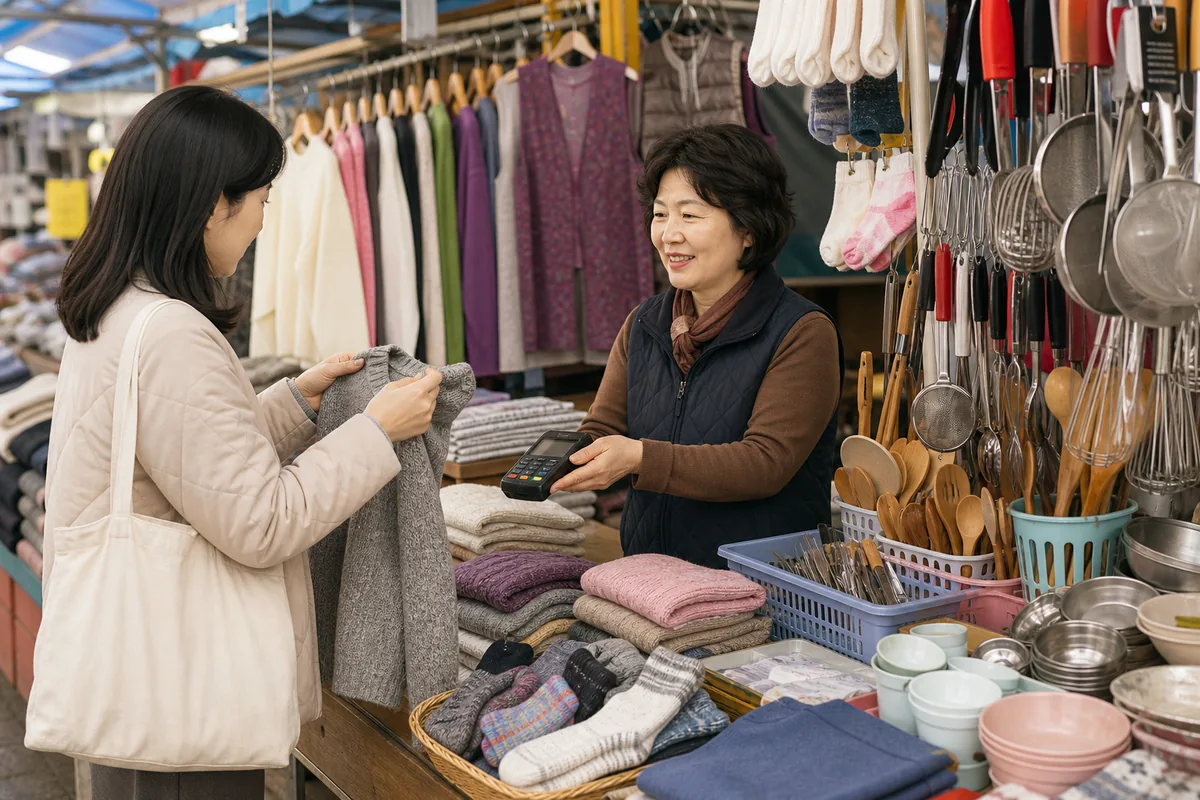
Can You Bargain in a Market?
This is one of the most common questions — and the honest answer is: sometimes, but not in the way many visitors expect.
Korean traditional markets are not flea markets. Most vendors set their prices based on the day’s wholesale cost and do not expect to negotiate on single items. Asking for a lower price on one bunch of spinach or one pair of socks will likely just create awkwardness.
Where light negotiation does happen naturally:
- Buying in bulk — if you are buying several items from the same vendor, asking “조금 깎아주세요” (jogeum kkakka juseyo — “please give a small discount”) is reasonable and sometimes works
- Clothing stalls — vendors selling socks, underwear, or basic clothing in bulk packs are more open to a small reduction if you are buying multiple packs
- End of day — produce vendors near closing time sometimes offer lower prices on remaining stock, but this is their choice to offer, not something to push for
The general rule: if the price is written on a board, treat it as fixed. If there is no board and you are buying several things at once, a polite ask is fine. Never be aggressive or persistent — vendors will simply stop engaging.
Market Etiquette for Foreign Visitors
Markets are working spaces, not tourist attractions, even when they attract a lot of tourists. The vendors are running small businesses with tight margins and fast turnover. A few simple habits make the experience better for everyone.
- Do not block the aisle. Narrow corridors fill up fast. If you want to look at something, step to the side of the stall, not the middle of the walkway.
- Do not handle loose food. Pointing is fine. Picking up individual pieces of fruit, loose banchan, or open-tray snacks to inspect them is not — use your eyes and ask the vendor to show you.
- Ask before photographing. Some vendors are happy to be photographed, others are not. A quick gesture toward your camera and a questioning look is enough. If they wave you off, respect that.
- Keep greetings short and polite. A simple 안녕하세요 (annyeonghaseyo) when you approach a stall is appreciated. You do not need to make extended small talk — vendors are busy.
- Do not leave food waste at the stall. If you eat a snack at a stall counter, dispose of your container in the bin provided, not back on the counter.
- Move with the flow. Most markets have a natural direction of foot traffic. Going against it in a crowded aisle is frustrating for everyone.
Useful Phrases at the Market
Common Mistakes First-Time Visitors Make
- Going card-only. Assuming every stall takes cards leads to awkward moments at the register. Always have cash on hand.
- Arriving too late in the day. Many fresh produce and banchan stalls start packing up in the late afternoon. Aim to arrive before 3pm for the best selection.
- Picking up food without asking. This is the most common etiquette mistake. Point, do not grab.
- Expecting English menus or signs. Tourist-facing markets sometimes have English labels, but most stalls do not. Screenshots of the Korean names of things you want to buy are genuinely useful.
- Standing in the middle of the aisle to check your phone. Step to the side. Aisles are narrow and foot traffic is constant.
- Trying to bargain on single small items. It creates friction and rarely works. Save any price discussion for bulk purchases.
- Skipping the full walk-through first. Buying from the first stall you see means you miss the better option two corridors over. Walk the whole market once before you spend anything.
Quick Checklist Before You Go
- Carry cash — at least 30,000–50,000 won in mixed bills
- Screenshot or write down Korean names of things you want to find
- Wear comfortable shoes — floors can be uneven or wet near seafood areas
- Bring a reusable bag — vendors sell bags but not always, and plastic bags are sometimes charged
- Check the market’s opening hours before visiting — many close one day a week or have reduced hours on public holidays
- Arrive before 3pm for the freshest produce and banchan selection
- Do one full walk of the market before buying anything
Frequently Asked Questions
Do Korean traditional markets take card payments?
Many stalls now accept credit and debit cards, including foreign Visa and Mastercard. However, smaller vendors, elderly stallholders, and fresh produce sellers often still prefer cash. Some stalls have a minimum card spend of around 10,000 won. Carry cash as a backup and you will not run into problems.
What do traditional market stalls usually sell?
A typical Korean traditional market covers banchan (prepared side dishes), fresh fruit and vegetables, seafood, cooked street food, basic clothing and socks, kitchenware, dry goods and spices, and household supplies. Larger markets have distinct zones for each category; smaller neighborhood markets tend to focus on food and daily groceries.
Are prices fixed in Korean markets?
For the most part, yes. If a price is written on a board, treat it as fixed. Light negotiation is acceptable when buying multiple items at once — particularly at clothing stalls or when buying bulk produce — but pushing for discounts on single small purchases is not the norm and can create awkwardness.
What should a visitor know about market etiquette in Korea?
Do not handle loose food items — point instead of picking up. Stay to the side of the aisle rather than blocking the middle. Ask before photographing vendors. Greet stall owners with a brief 안녕하세요 (annyeonghaseyo) and say 감사합니다 (gamsahamnida) after buying. These small gestures make a noticeable difference in how vendors respond to you.
The Short Version
Korean traditional markets are organized collections of independent vendors selling everything from banchan and fresh seafood to socks and spices. Prices are marked on handwritten boards and are generally fixed — light negotiation only works when buying in bulk. Card payment is increasingly common but not universal, so carry cash. Keep to the side of the aisle, point rather than grab, and ask before taking photos. Walk the whole market once before you buy anything, and you will navigate it like a regular.
Korean Traditional Markets Explained becomes easier to handle when you recognize the situation and follow the practical steps above.
Korean Traditional Markets Explained becomes easier to handle when you recognize the situation and follow the practical steps above.
Note: This guide is for travel navigation in Korea. It is not medical, legal, or emergency professional advice. For urgent situations, contact local emergency services, official staff, or your embassy/consulate as appropriate.
Sources & Verification
- VISITKOREA – Imagine Your Korea — english.visitkorea.or.kr
Last checked: July 30, 2026