Quick Answer
Korean train stations often feel like mini cities because you can eat, shop, transfer, and sometimes even walk into an underground mall without leaving the station area. The big difference is that KTX hubs are built as large regional complexes, while smaller local stations are usually much simpler and more functional.
Quick Decision Guide
- Check whether your station is a KTX hub or a local stop before you arrive — the size difference is dramatic.
- At a major station, allow extra time: finding your platform through the shopping and food floors takes longer than expected.
- Follow the rail/KTX signs in blue or orange, not the shopping directory signs, when you need your platform fast.
- Look for underground passage entrances near the main exit — they often connect directly to the subway or nearby shops.
- If you need to transfer to the subway, follow the transfer signs rather than exiting the building first.
- Convenience stores, cafes, and sit-down restaurants are almost always inside large stations — no need to go outside to eat before a train.
- At small local stations, expect a single waiting room, a ticket window, and little else.
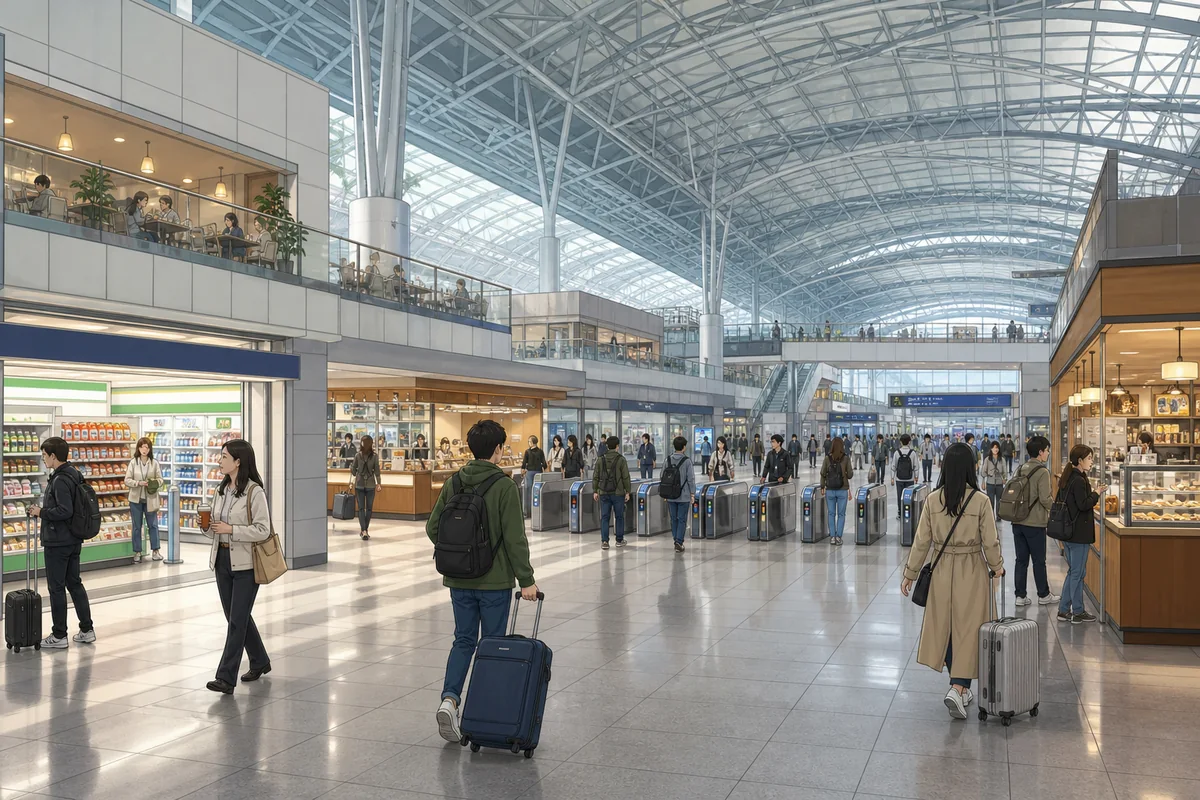
Why Korean train stations feel like mini cities
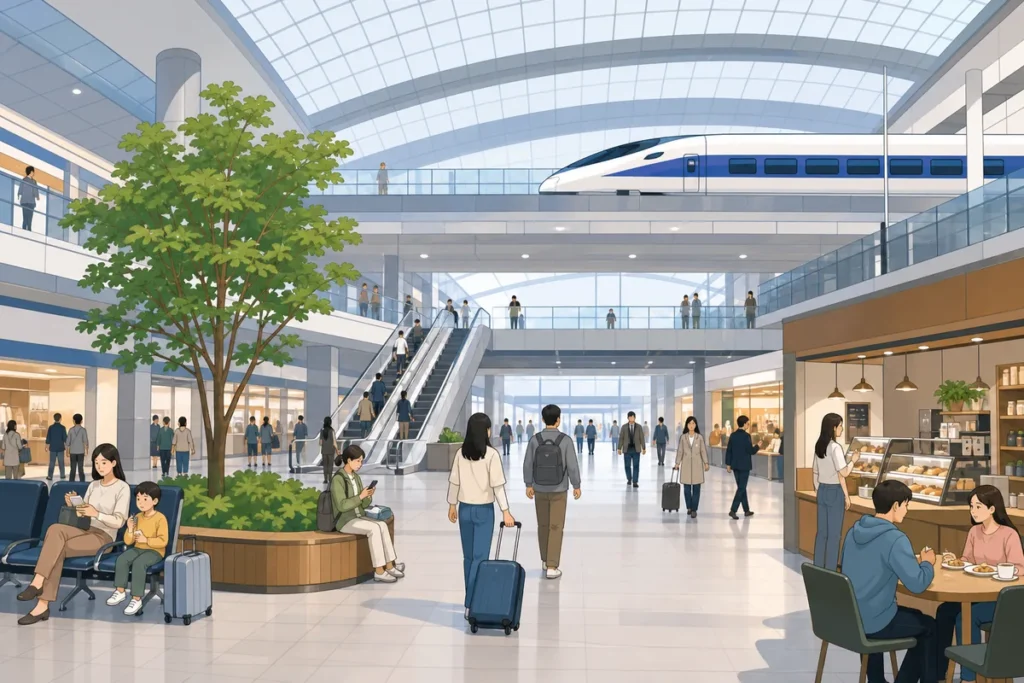
korean train stations feel like mini cities because major hubs combine transit, retail, food, and transfers in one building. If you arrive at a KTX station, you can usually eat, buy essentials, switch to the subway, and even enter an underground shopping street without stepping far outside. Smaller local stations are the opposite: they are mostly simple boarding points with basic waiting space and far fewer services.
The biggest reason is planning. Large stations were built as regional anchors, not just train platforms. That turned them into places where commuters, shoppers, office workers, and travelers all pass through the same space. Over time, the station became more than a stop on the map — it became part of the neighborhood itself.
At a major station, the building often works on several levels at once. The basement may hold subway transfers and underground retail. The main hall handles tickets, arrivals, and luggage flow. Upper floors can include food courts, cafes, or direct links to nearby malls. It feels busy because it is busy all day, not only when trains arrive.
What you can usually find inside a major station
Walk into a major station like Seoul Station, Busan Station, or Daejeon Station and you will usually see a similar mix of facilities.
- Ticketing and waiting areas — kiosks, staffed counters, and large departure boards.
- Convenience stores — quick snacks, drinks, chargers, and basic travel items.
- Cafes — common chains and takeaway coffee for travelers on the move.
- Food courts and restaurants — fast meals, noodle shops, bakeries, and larger sit-down options.
- Subway transfer corridors — signed paths that connect rail and metro without going outside.
- Luggage storage — lockers near the main concourse at many large hubs.
- Tourist information desks — more common at major stations than at local stops.
The mix changes by city and station size. Some stations are connected to department stores or office towers; others have a strong food floor and not much retail beyond that. The key point is that large stations are designed to keep people moving and spending time inside the complex.
KTX stations vs normal local stations
This is where the comparison becomes clearest. A KTX station is usually a large multi-floor hub built for long-distance travel and transfers. A normal local station is usually smaller, quieter, and much more limited in what it offers.
| Feature | Major KTX hub | Small local station |
|---|---|---|
| Building size | Large multi-floor complex | Small building or simple platform area |
| Food options | Food court, cafes, restaurants | Very limited or none |
| Shopping | Retail stores, sometimes a mall | Usually none |
| Subway connection | Often direct or underground | Usually not connected |
| Luggage storage | Common | Limited |
| Tourist information | More likely to have staff and maps | Usually absent |
| Transfer time needed | Allow extra walking time | Usually quick and simple |
That difference matters in real travel. If you are transiting through a KTX hub, build in extra time because the station itself can take several minutes to navigate. If you are using a smaller local station, expect a simpler flow and fewer places to buy food or wait indoors.
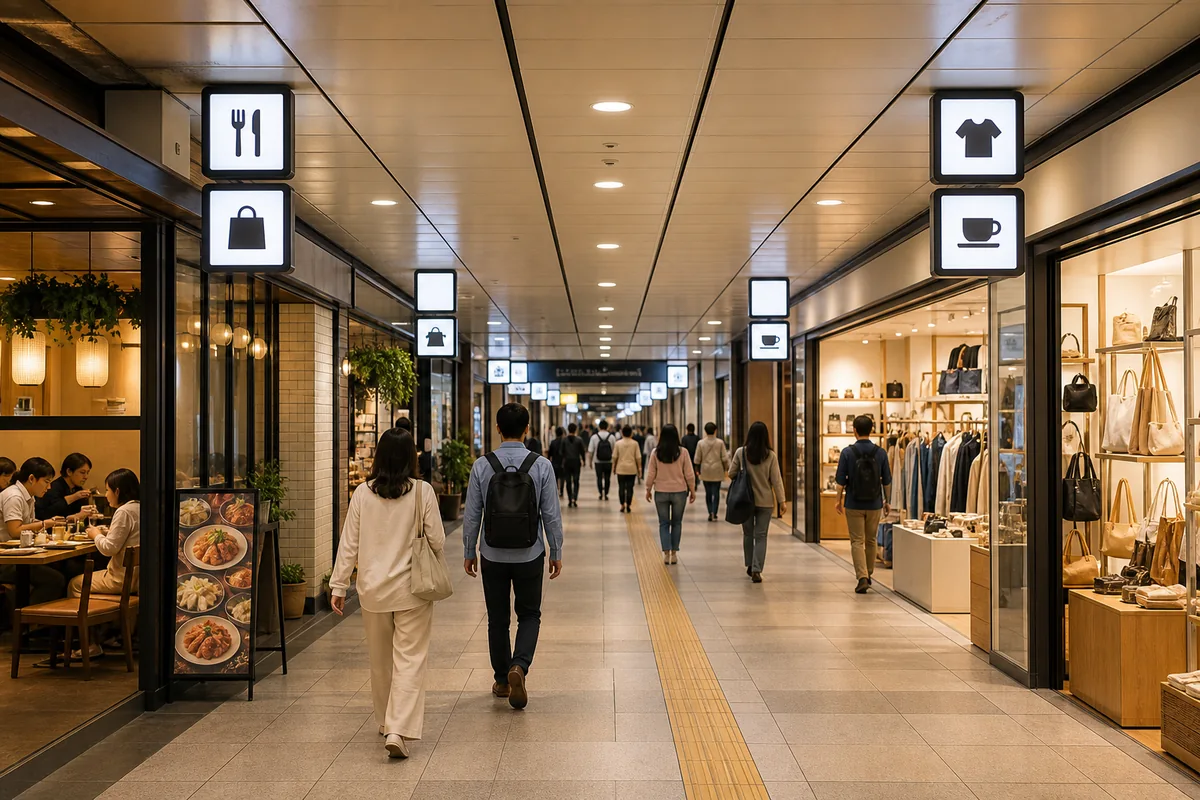
Why underground shopping streets are often connected to stations
Underground shopping streets are a big part of the station experience in Korea. Major stations often connect directly to them because the foot traffic is already there. If thousands of people are moving through a station every day, an underground retail corridor becomes a natural extension of the station instead of a separate place.
These passages are useful in bad weather and practical when you need food, pharmacy items, or a quick transfer. You can move between platforms, subway lines, and shops without going outside, which makes the whole station area feel even larger than it looks from the street.
Signs to know underground
How station-area development changes nearby neighborhoods
Station-area development shapes what happens around a major hub. In Korea, the area around a station often becomes a dense commercial zone with hotels, restaurants, offices, and apartment buildings. This is why the neighborhood near a big station can feel much more built-up than the streets farther away.
For travelers, that means convenience. The area around a large station usually has plenty of places to eat, stay, and transfer. The station becomes the easiest place in the district to find signs, transport, and late-night services.
Once you move away from the station, the neighborhood often becomes quieter and more local. That contrast is one reason Korean train stations feel so central: they really are central to how the surrounding area is organized.
What first-time visitors should expect when arriving at a big station
Arriving at a major station with luggage can feel overwhelming at first. The signs are clear, but there are many of them, and they point in different directions for exits, subway transfers, taxis, and bus stops. The good news is that the layout is designed for movement, so once you identify your target, the path is usually straightforward.
If you are connecting to the subway, follow the transfer signs instead of leaving the station and trying to re-enter from street level. If you are heading out into the city, choose the exit number that matches your destination. The station exit maps are there for a reason: each exit leads to a different street, block, or landmark.
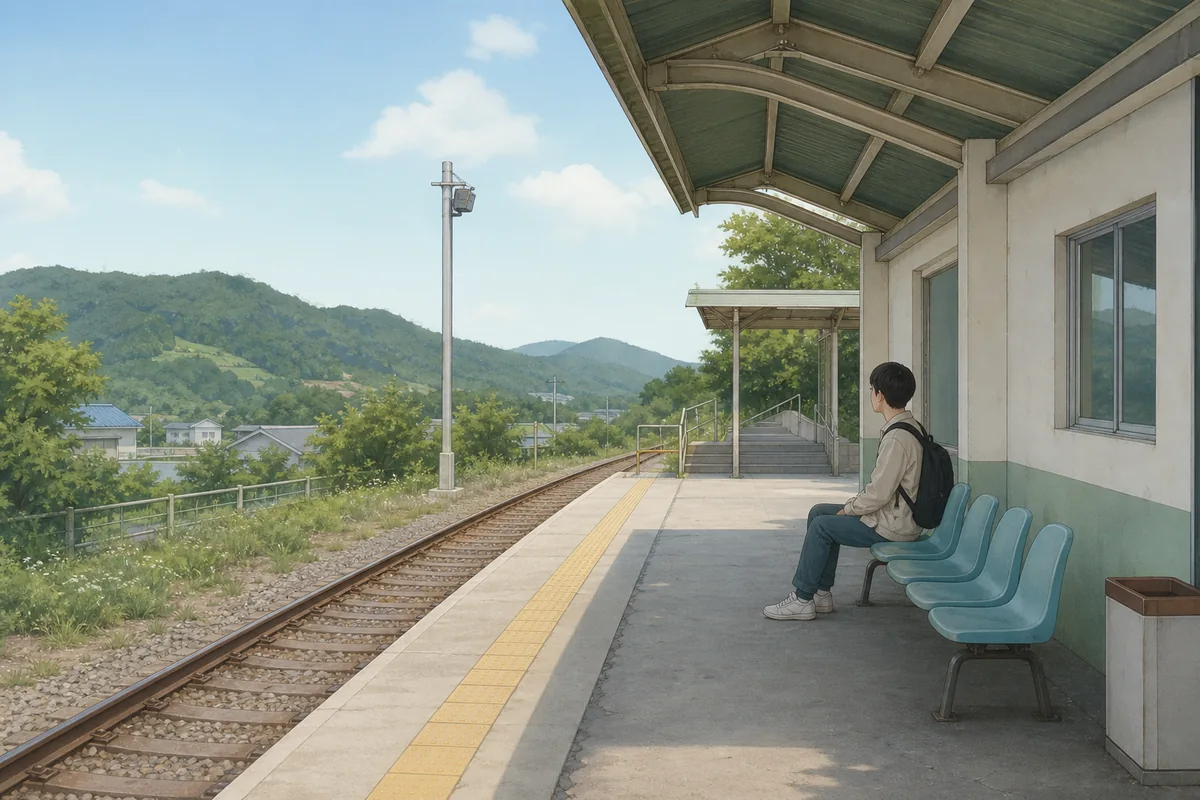
When a station is just a station: smaller local examples
Smaller local stations are much simpler. They usually have a waiting room, a ticket counter or kiosk, a platform, and a taxi stand outside. Some have a convenience store or vending machine, but that is about it.
That does not make them less useful. It just means the station is serving a different role. Local stations are often built for basic boarding and arrival, while major hubs are built to absorb large flows of passengers and commercial activity.
If you are heading to a smaller city, plan ahead before you get off the train. Buy food before boarding, have your destination written in Korean, and expect to continue your trip by taxi or bus after arrival.
Useful phrases at smaller stations
Quick tips for navigating large stations
- Use a map app before you arrive so you know which exit or transfer path you need.
- Follow the rail and subway color coding instead of the shopping signs when you are in a hurry.
- Look for lockers near the main concourse if you need to store bags for a few hours.
- If you cannot find food on the main floor, check one level up or down.
- Use numbered exits to match your destination street, hotel, or landmark.
- At smaller stations, expect much fewer services and plan your food and transport in advance.
The Bottom Line
korean train stations feel like small cities because the biggest ones were designed as mixed-use hubs with food, shopping, transfers, and underground links all in one place. KTX stations are the most dramatic examples, while local stations stay simple and functional. Once you know which type you are entering, the whole experience becomes much easier to read.
Note: This guide is for travel navigation in Korea. It is not medical, legal, or emergency professional advice. For urgent situations, contact local emergency services, official staff, or your embassy/consulate as appropriate.
Sources & Verification
- AREX 공항철도 — www.arex.or.kr
- Home – Korea Meteorological Administration — www.weather.go.kr
- 국민안전24 — www.safekorea.go.kr
Last checked: July 30, 2026