Quick Answer
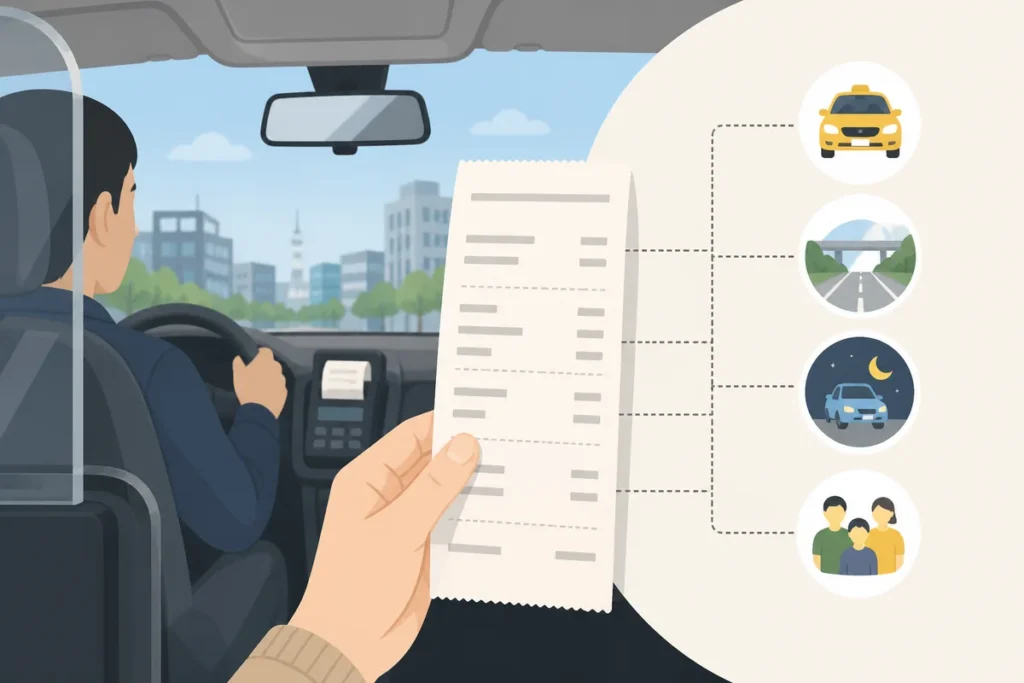
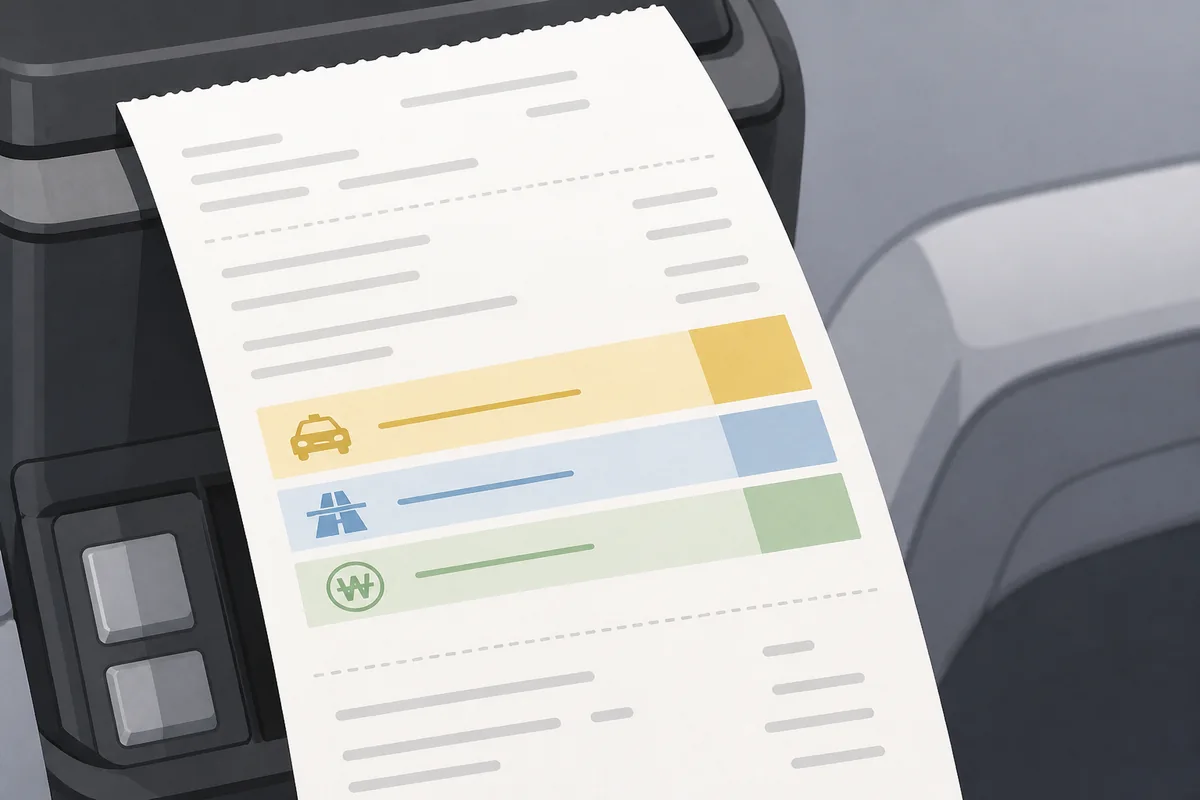
A Korean taxi receipt usually shows the trip fare, any tolls, and any surcharge as separate lines, so you can quickly check whether the total makes sense. The most useful details to keep are the taxi company name, vehicle number, date and time, pickup and drop-off points, and payment method.
What to Do First
- Take the receipt before you leave the taxi or close the app.
- Check that the total matches the card charge or the meter total.
- Note the taxi company name and vehicle number.
- Confirm the date, time, and general route.
- Look for extra lines beyond the main fare, especially toll and surcharge.
- Keep the receipt if anything looks off.
- Use the receipt details when asking a taxi company or tourist help desk about the charge.
When This Guide Helps
This guide helps when you have a Korean taxi receipt and want to know what each line means. It is useful if the total looks higher than expected, if you see a Korean label such as 통행료 or 할증, or if you paid by card and want to compare the slip with your bank charge.
It also helps with taxi-overcharge follow-up because the receipt shows the exact details that matter most: company, vehicle number, time, route, and payment method.
What Each Taxi Receipt Field Means
Receipt layouts vary by taxi company, region, and payment terminal. Some are fully Korean, some mix Korean and English, and some combine several charges into one line. The core information is usually the same.
Korean taxi receipts: fare line
The fare is the main ride charge. It covers the base fare and the distance-and-time charge from the meter. On some receipts, this appears as one combined line. On others, the base fare and metered portion are split. Either format is normal.
Do not compare one city’s receipt with another city’s fare rules. Taxi rates can differ by city, and official fare tables change over time.
Toll line
If the taxi used a paid road, tunnel, bridge, or expressway, the toll appears as a separate line. This is a pass-through road fee, not a driver fee. The amount should match the road’s posted toll.
Surcharge line
A surcharge is an extra charge applied under a specific rule, such as late-night hours or a designated service type. The wording can vary, but the charge should match the trip conditions shown by the time, route, or vehicle type.
Card payment line
If you paid by card, the receipt usually shows the payment method and the final charged amount. Some taxis print a separate card slip; others combine the payment and fare information on one paper. Keep both slips if you receive two.
Company name and vehicle number
These are the most useful fields if you need to ask about the ride later. The company name tells you who to contact, and the vehicle number identifies the exact taxi.
Date, time, and route details
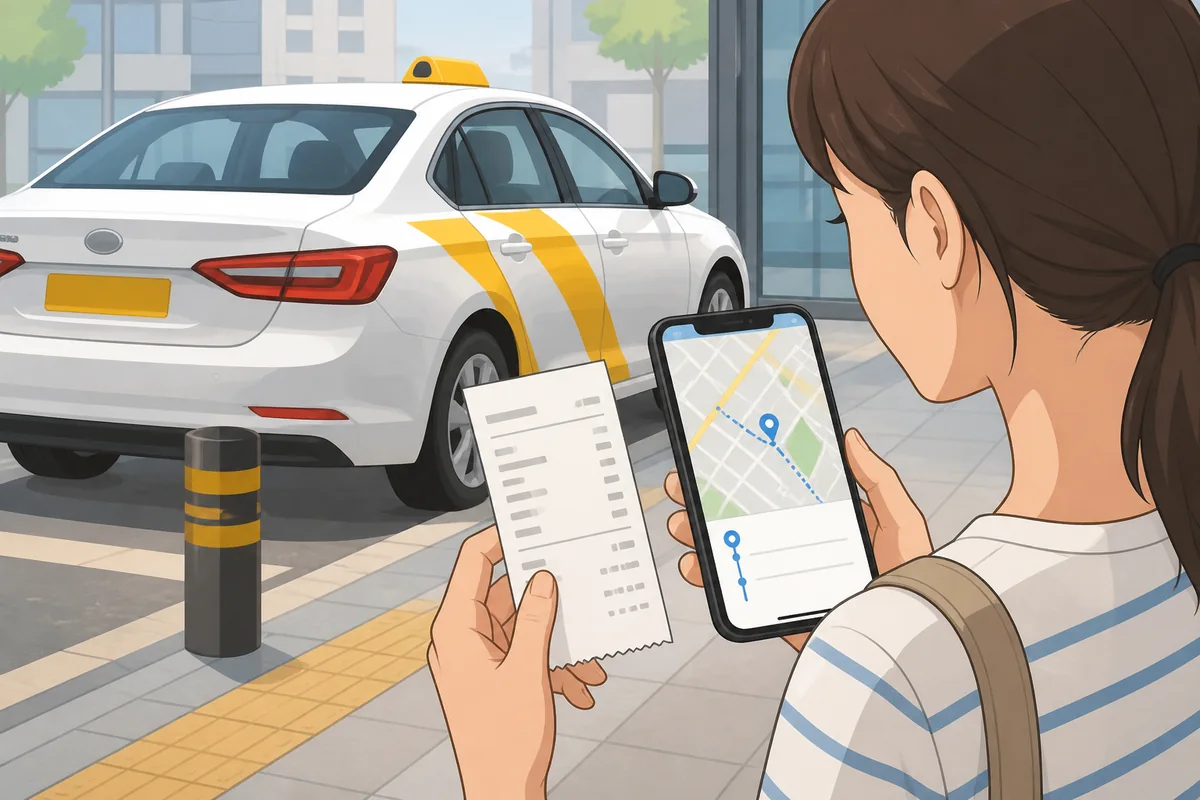
Most receipts show at least the trip time. Some also show pickup and drop-off information. Even partial route details help when matching the receipt with a card charge or asking a help desk to identify the trip.
If the total looks wrong, keep the receipt and match it with the card slip or bank charge before asking for help. The company name, vehicle number, date, time, and pickup and drop-off points are the key details to save.
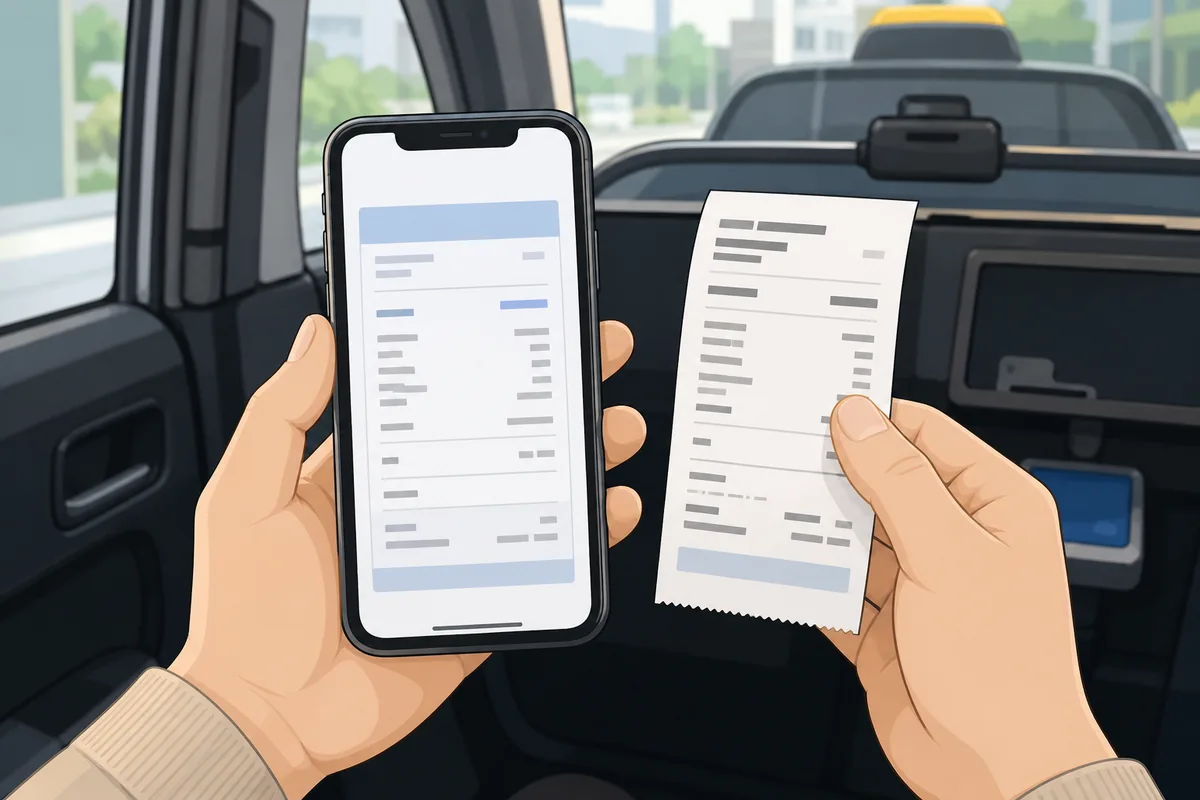
Fare, Toll, Surcharges, and What to Check
When you read the slip, check the order like this: main fare first, toll second, surcharge third, then the total. That makes it easier to spot what changed the final amount. A high total does not always mean a mistake. Late-night rides, airport routes, and roads with tolls often add real extra cost.
For card payments, the final amount on the receipt should match the card charge. If it does not, the company name, vehicle number, and timestamp are the details most helpful when you ask a taxi company or tourist help desk to look up the trip.
Korean Phrases You Can Show
Useful Korean Signs or Words
Where to Get Help
If the receipt still does not make sense, these are the most practical places to ask for help.
Tourist information center
Tourist information centers in major areas can help explain the receipt and point you to the right contact. This is often the easiest option for a visitor.
Taxi company
The company name and vehicle number on the receipt help the company find the ride in its records. If you need to ask about the charge, those details are usually enough to start.
1330 Korea Travel Hotline
The 1330 hotline supports foreign visitors and is commonly used for taxi-related questions. It is a practical place to ask when you need English help.
120 Dasan Call Center
In Seoul, 120 can help with city service questions and sometimes route you to the right office for taxi-related concerns.
Summary
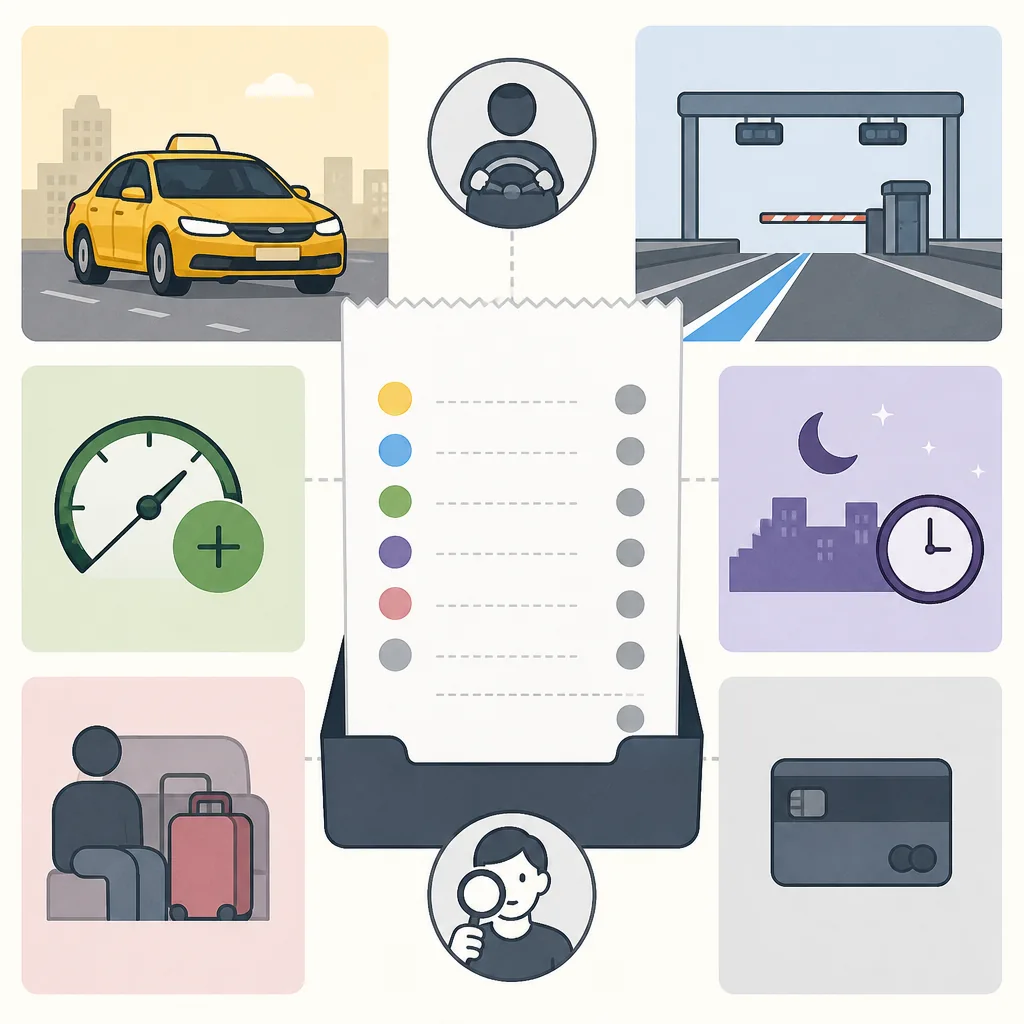
A Korean taxi receipt is usually easy to read once you know the main fields: fare, toll, surcharge, total, and payment method. If a charge looks wrong, save the receipt and note the company name, vehicle number, date, time, and route details. Those are the details that matter most when asking a taxi company or tourist help desk to check the ride.
FAQ
What does fare mean on a Korean taxi receipt?
Fare is the main ride charge shown on the receipt. It usually covers the base fare plus the distance and time charged by the meter.
What does toll mean on a taxi receipt in Korea?
Toll means a road fee for using a paid expressway, tunnel, or bridge. It is added separately from the ride fare.
Why is there a surcharge on my taxi receipt?
A surcharge is an extra charge applied under a rule such as late-night service or a specific taxi type. The exact reason should match the time, vehicle, or route.
What details should I keep if I want to ask about a taxi charge?
Keep the receipt, taxi company name, vehicle number, date and time, pickup and drop-off points, and payment method. These details make it easier to identify the ride.
Is a card slip enough to check a taxi charge?
A card slip helps, but it is better to keep the taxi receipt too. Together they give you the amount, time, company, and vehicle details needed to compare the charge.
Note: This guide is for travel navigation in Korea. It is not medical, legal, or emergency professional advice. For urgent situations, contact local emergency services, official staff, or your embassy/consulate as appropriate.