If you see 비상벨, 소화기, 대피로, or 안전문 in a subway station, these are the core subway safety signs to recognize right away. This guide shows what each sign means, where you are likely to see it, and which one to look for first if you need staff help or an exit route.
Korean Safety Signs Subway Stations: What You Need to Know
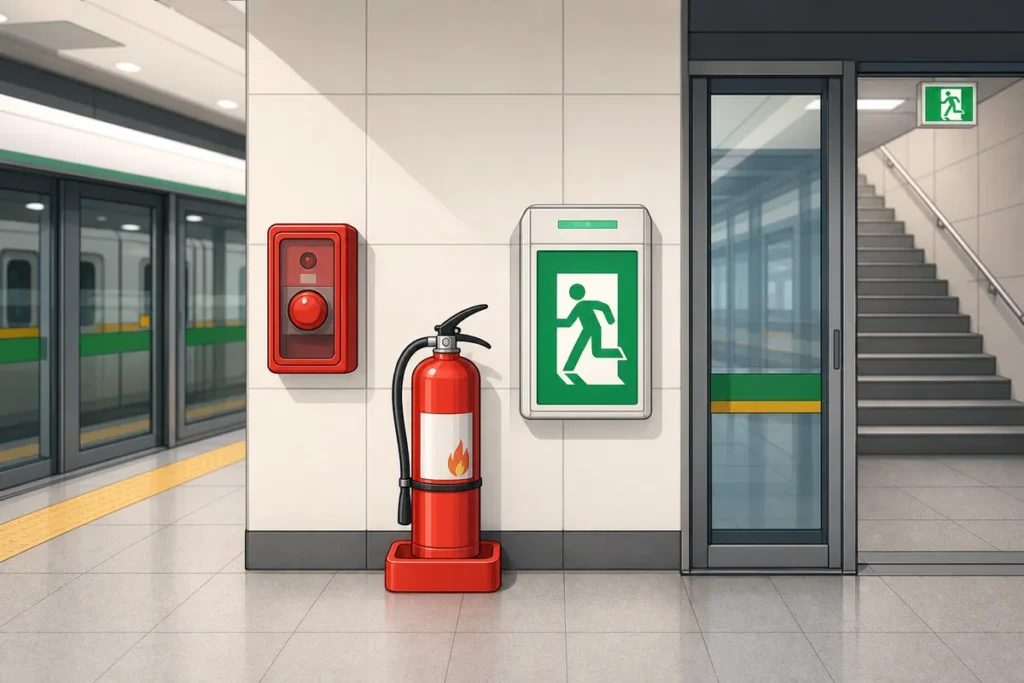
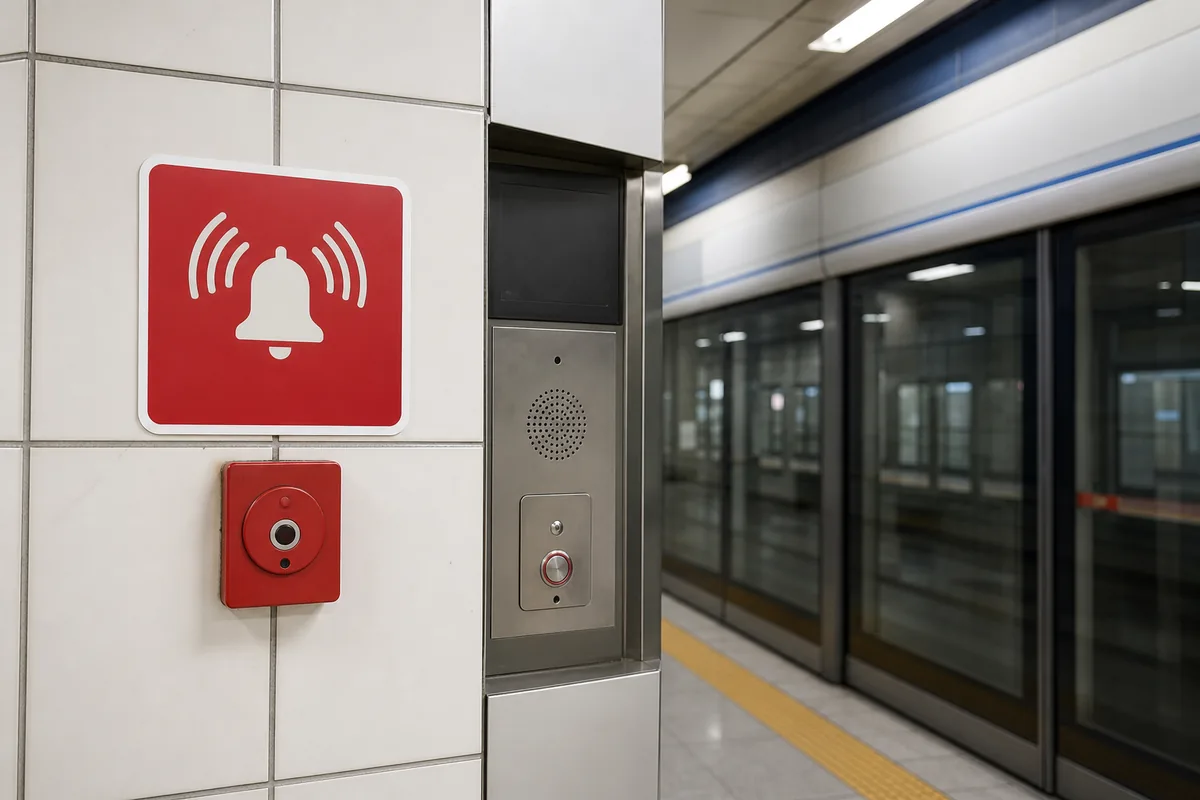
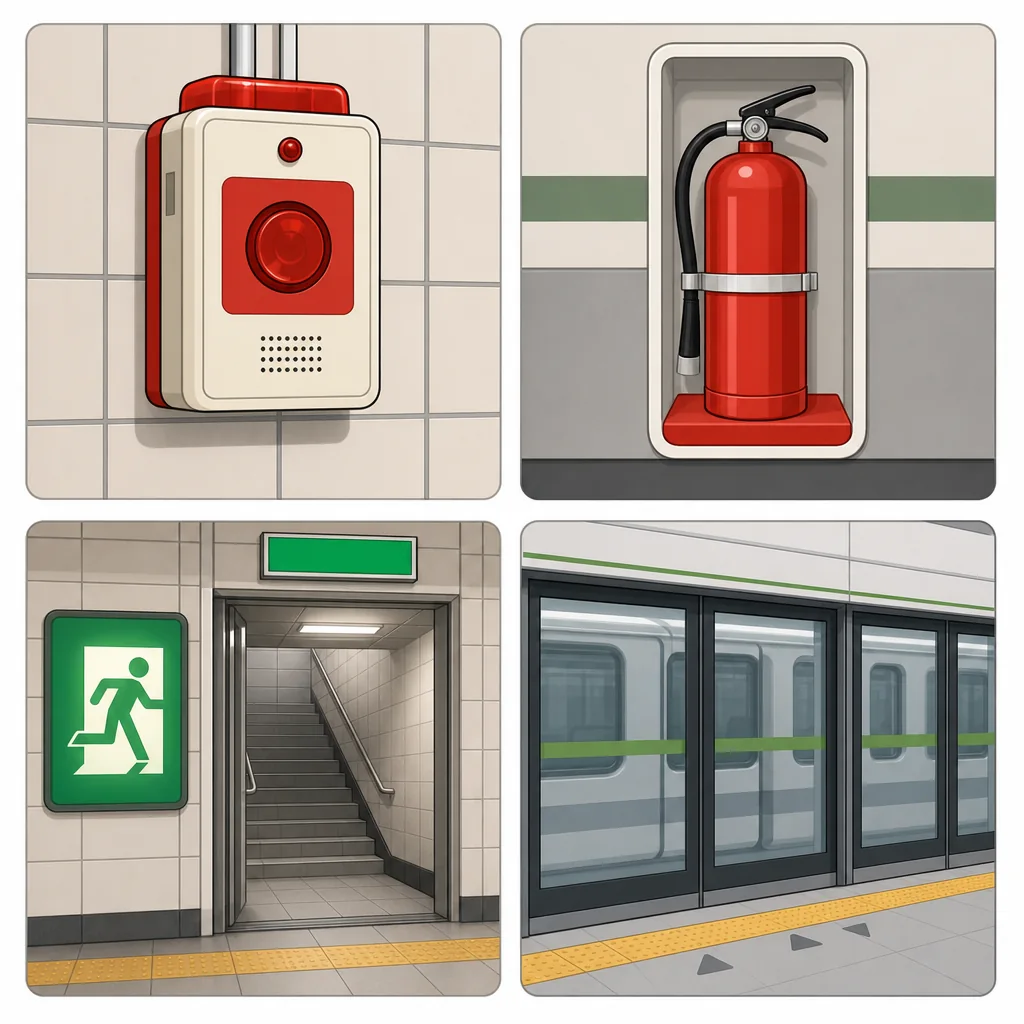
- 비상벨 — Emergency bell button: press to alert station staff
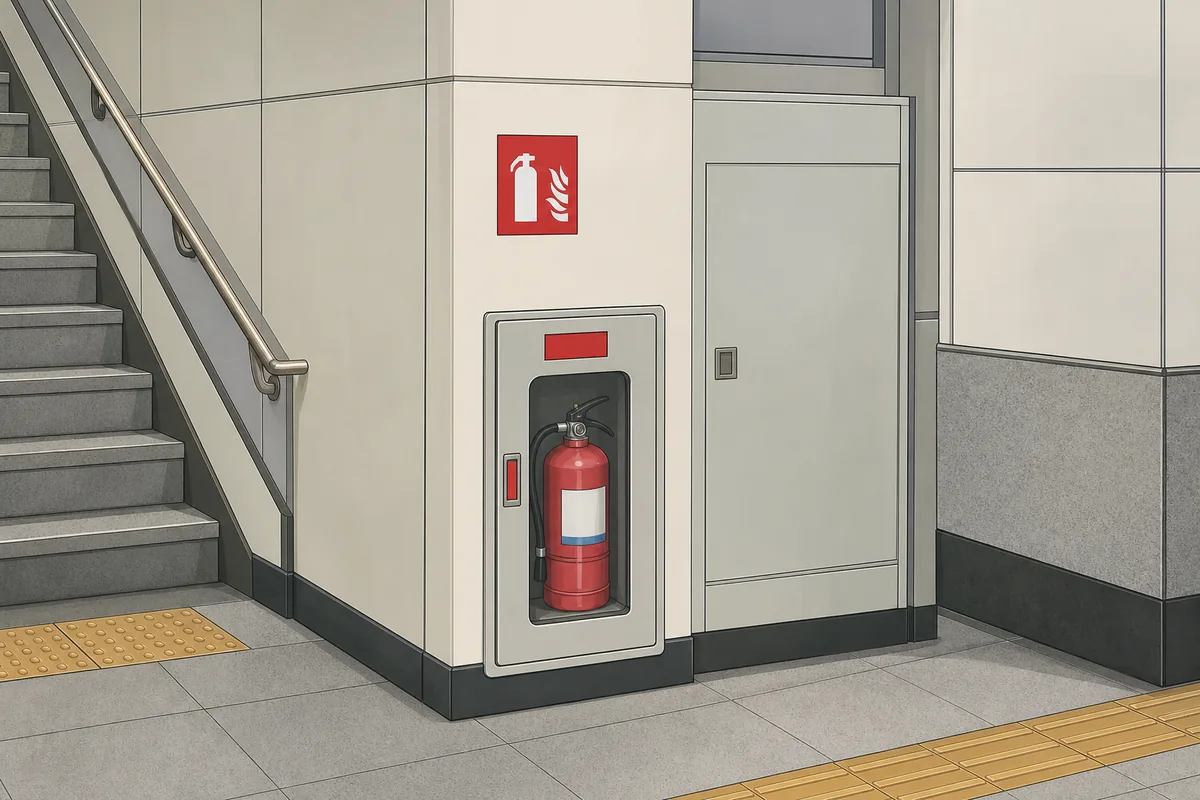
- 소화기 — Fire extinguisher: red cylinder mounted on walls or pillars
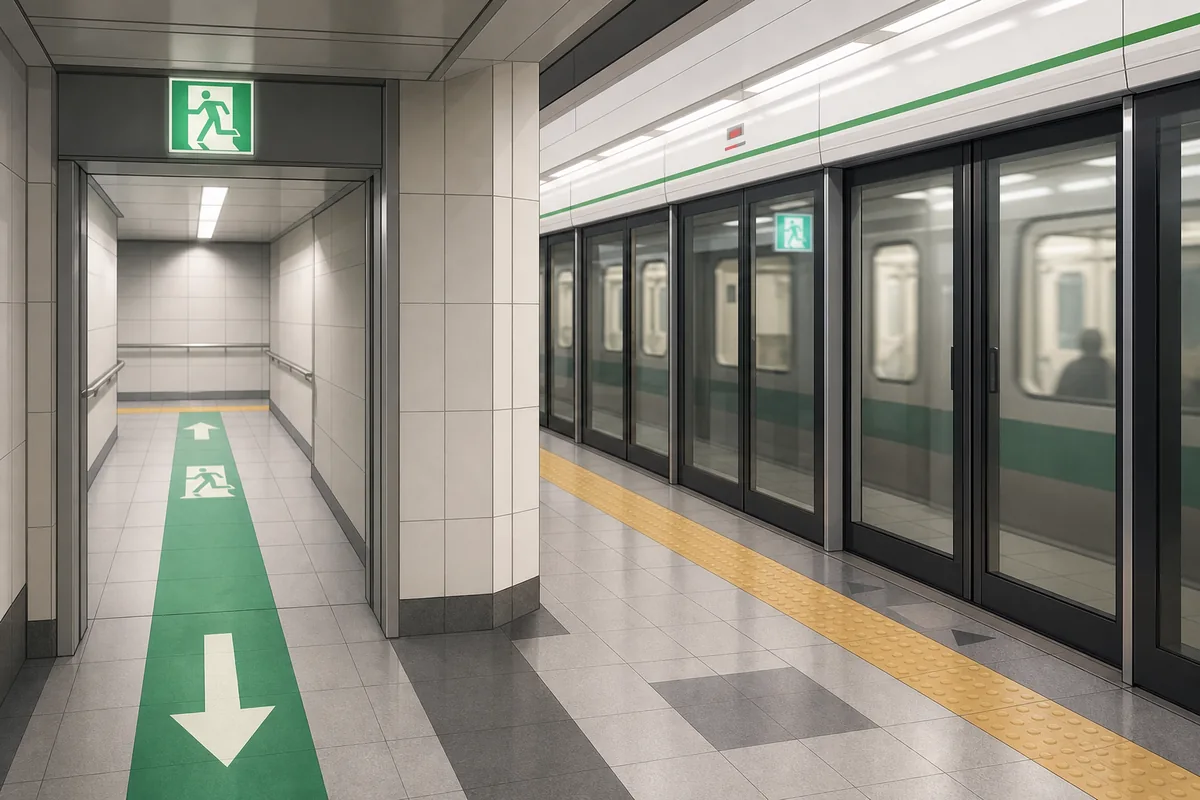
- 대피로 — Evacuation route: follow arrows toward exits and street level
- 안전문 — Platform screen door (safety door): the glass barrier between you and the tracks
In any stressful moment, look first for a staffed booth (안내소 or 역무실), follow 대피로 arrows toward daylight, and press 비상벨 only if you need to alert staff immediately.
What to Do First
- Scan the nearest pillar or wall for red or green safety signs as soon as you enter
- Locate the 안전문 glass doors on the platform edge — never lean or push against them
- Note where 대피로 arrows point before you need them
- Find the orange or yellow 비상벨 box on the platform wall so you know where it is
- Spot the red 소화기 cylinder near stairwells or columns
- Identify the staffed 역무실 booth near the ticket gates
- Save or screenshot this guide’s phrase cards so you can show them without Wi-Fi
When This Guide Helps
This guide is for first-time visitors who are not yet confident reading Korean text in a busy station. You do not need to be in an emergency for this to be useful — recognising these four signs before anything happens means you will move calmly and correctly if the situation ever calls for it. It is also helpful if you are travelling with children, elderly companions, or anyone who may need a clear exit route quickly.
This is a sign-decoding and navigation guide. It does not replace official station instructions, posted emergency procedures, or the directions of station staff.
Understanding Each Subway Safety Sign
비상벨 — The Emergency Alert Button
비상벨 (bi-sang-bel) literally means “emergency bell.” You will usually see it printed on a yellow or orange box mounted on platform walls or inside train carriages. The box contains a large button or handle. Pressing it connects you directly to station staff or a control room so they can respond. It is not a door-open button and not a general help button for lost tourists — it is specifically for alerting staff to a safety situation on the platform or train.
Look for the word 비상벨 or the phrase 비상 통화 (emergency call) printed clearly on the box. Many boxes also have a small speaker grille so staff can talk back to you.
소화기 — The Fire Extinguisher
소화기 (so-hwa-gi) means “fire extinguisher.” These are the red cylinders you will see mounted in brackets on pillars, near stairwells, and at the ends of platforms. The sign above or beside them is usually red with white text. You do not need to know how to use one — simply knowing where it is and what the sign says helps you orient yourself and helps you point station staff in the right direction if needed. Do not move or handle a 소화기 unless station staff direct you to.
대피로 — The Evacuation Route
대피로 (dae-pi-ro) means “evacuation route” or “escape route.” This is one of the most important subway safety signs for a newcomer to recognise. You will see it on green-and-white signs with arrows, similar in style to fire-exit signs in other countries. The arrows point toward stairwells, corridors, and ultimately street-level exits. In Seoul’s deep stations especially, following 대피로 signs consistently is the fastest way to reach the surface. If you ever hear an alarm or see people moving urgently, follow these green arrows and keep moving upward.
안전문 — The Platform Screen Door
안전문 (an-jeon-mun) means “safety door.” This is the full-height or half-height glass barrier that lines the platform edge and separates passengers from the tracks. The doors open automatically when a train arrives and align with the train doors. Do not lean against 안전문 panels, do not try to force them open, and do not stand directly in front of the gap between panels. If an item falls onto the tracks through a gap, do not attempt to retrieve it yourself — go immediately to the 비상벨 or the staffed booth and alert staff.
안전문 is sometimes also written as 스크린도어 (screen door) on older signage, but both terms refer to the same barrier.
Korean Phrases You Can Show
Screenshot or save these phrases. You can show them on your phone screen to station staff without needing to speak Korean.
Useful Korean Signs or Words
These are the words and labels you are most likely to see posted in a Korean subway station. Recognising them helps you navigate without reading full sentences.
Where to Get Help
The most reliable place to get help in any Seoul or Korean subway station is the 역무실 (station staff office). It is almost always located next to or behind the ticket gate area, and it is staffed during all operating hours. Look for a window or booth with a staff member inside. You can show your phone screen with the phrase cards above.
On the platform itself, the 비상벨 box connects you directly to staff or a control room. This is the right tool to use if you are already on the platform and cannot easily walk back to the ticket gate.
If you need police assistance, look for the word 경찰 (gyeong-chal) or a uniformed officer. Some larger stations have a small police post inside. The national emergency number in Korea is 112 for police and 119 for fire and ambulance. These numbers work from Korean SIM cards and most roaming plans. Confirm with your carrier before travel that these numbers are accessible on your plan.
For non-urgent transit questions in English, Seoul Metro operates an English-language helpline. Check the official Seoul Metro website or posted station notices for the current number, as contact details can change.
Common Mistakes
- Pressing 비상벨 out of curiosity. The button alerts staff immediately. Press it only when you genuinely need to contact them for a safety reason.
- Confusing 비상구 (emergency exit) with 출구 (regular exit). Both lead out of the station, but 비상구 doors may trigger alarms if opened when there is no emergency. Use numbered 출구 exits for normal departure.
- Leaning on 안전문 panels. The glass panels are not designed to bear body weight. Stand behind the yellow safety line on the platform floor.
- Assuming 대피로 signs only matter during a fire. They also guide you out during power cuts, crowd surges, or any situation where you need to exit quickly. Knowing the route in advance is always worthwhile.
- Trying to retrieve dropped items from the track side of 안전문. Always alert staff via 비상벨 or the 역무실 instead. Staff have tools and procedures for this.
- Ignoring posted instructions because they are in Korean. Most stations also display icons and internationally recognised symbols alongside Korean text. The green running figure, red fire symbol, and directional arrows are the same worldwide.
Important Note for Visitors
This guide is a sign-recognition and navigation aid for travellers. It does not replace the official safety instructions posted in each station, the directions of station staff, or emergency service guidance. If you are unsure what to do in a stressful situation, locate a staff member or follow the posted 대피로 arrows toward the exit. Always confirm current emergency contact numbers with official Korean transit sources before your trip, as details can change.
Summary
Recognising the four core subway safety signs — 비상벨, 소화기, 대피로, and 안전문 — gives you a confident starting point in any Korean subway station. 비상벨 alerts staff, 소화기 marks fire equipment, 대피로 points to your exit route, and 안전문 is the glass platform barrier. When in doubt, find the 역무실 staff booth near the ticket gates and show the phrase cards in this guide on your phone screen. You do not need to read fluent Korean to navigate safely — you just need to know these four words and where to look.
Korean Safety Signs Subway Stations becomes easier to handle when you recognize the situation and follow the practical steps above.
Korean Safety Signs Subway Stations becomes easier to handle when you recognize the situation and follow the practical steps above.
FAQ
What does 비상벨 mean in a subway station?
비상벨 means “emergency bell.” It refers to the alert button or handle mounted in a yellow or orange box on subway platforms and inside train carriages. Pressing it connects you to station staff or a control room so they can respond to a safety situation. It is not a general help or information button — use it when you need to alert staff to something urgent on the platform or train.
What does 안전문 mean on the subway platform?
안전문 means “safety door” and refers to the glass platform screen doors that line the edge of the platform and separate passengers from the tracks. They open automatically when a train arrives and align with the train doors. Do not lean against them or attempt to force them open. If they fail to open after a train arrives, alert station staff via the 비상벨 or the 역무실 booth.
What does 대피로 mean in Korean subway signs?
대피로 means “evacuation route.” These are the green-and-white directional signs with arrows that guide passengers toward stairwells and exits. Following 대피로 signs consistently will lead you upward toward street level. It is a good habit to note where these arrows point when you first arrive on a platform, before you need them.
What does 소화기 mean in Korea?
소화기 means “fire extinguisher.” You will see red cylinders labelled 소화기 mounted on pillars, near stairwells, and at the ends of platforms throughout Korean subway stations. The sign is typically red with white text. You do not need to handle one unless station staff direct you to — simply knowing where it is and what the label says helps you orient yourself and assist staff if needed.
Note: This guide is for travel navigation in Korea. It is not medical, legal, or emergency professional advice. For urgent situations, contact local emergency services, official staff, or your embassy/consulate as appropriate.
Sources & Verification
- 1330 Travel Helpline & Complaint Center- VISITKOREA — english.visitkorea.or.kr
- 한국어기초사전 — krdict.korean.go.kr
- National Institute of Korean Language — www.korean.go.kr
Last checked: July 30, 2026