If you are lost, separated from your group, or need help after losing something in Korea, a Korean police box is often the fastest place to walk into. You can ask for directions, report a missing item, or get guidance to the right office without needing perfect Korean.
Use Korean Police Boxes As Tourist: What You Need to Know
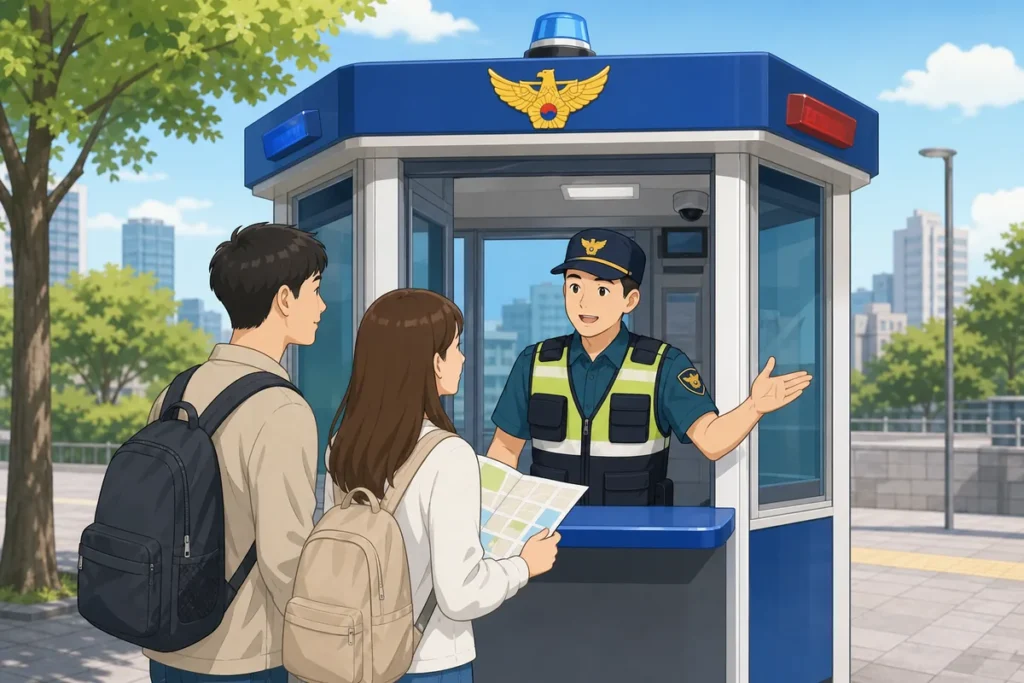
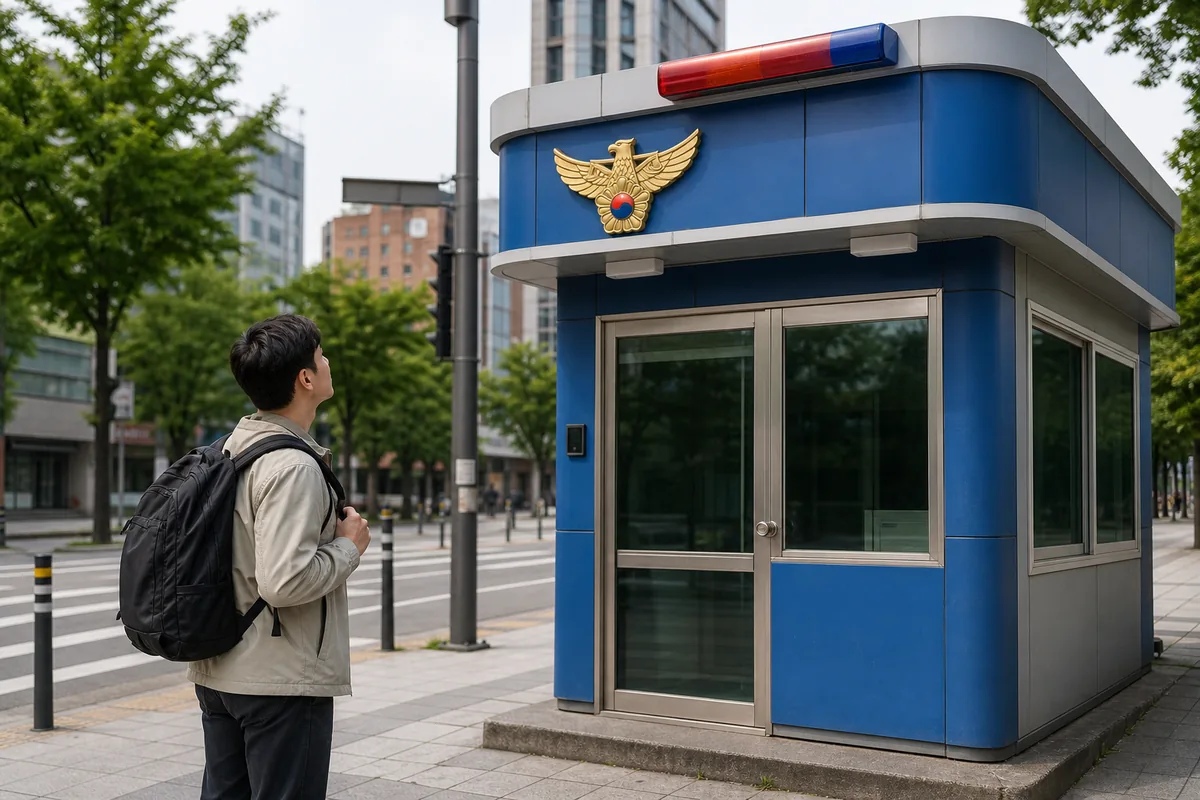
A Korean police box — called a jigudae (지구대) or pachulso (파출소) — is a small, staffed police post found in most neighborhoods. Look for a blue sign with the word 경찰 (gyeongchal, meaning “police”). Walk in, show your phone or a written phrase, and an officer will help you or point you to the right place. You do not need to speak Korean to get basic help.
What to Do First
- Stay calm and look for a blue 경찰 sign nearby or ask any shopkeeper to point you toward the nearest police box.
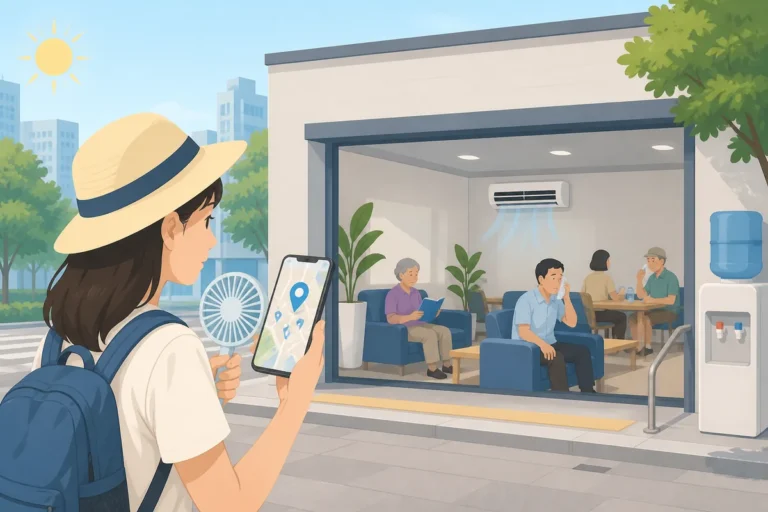
- Open Google Maps or Naver Maps and search 파출소 or 지구대 to find the closest one on foot.
- Walk in through the front door — police boxes are open to the public at all hours.
- Show your phone screen with a translated phrase or use the Papago app to type your situation.
- Have your passport or a photo of it ready if you are reporting a lost item.
- If the officer cannot fully help you there, ask them to direct you to the main 경찰서 (gyeongchalseo, police station).
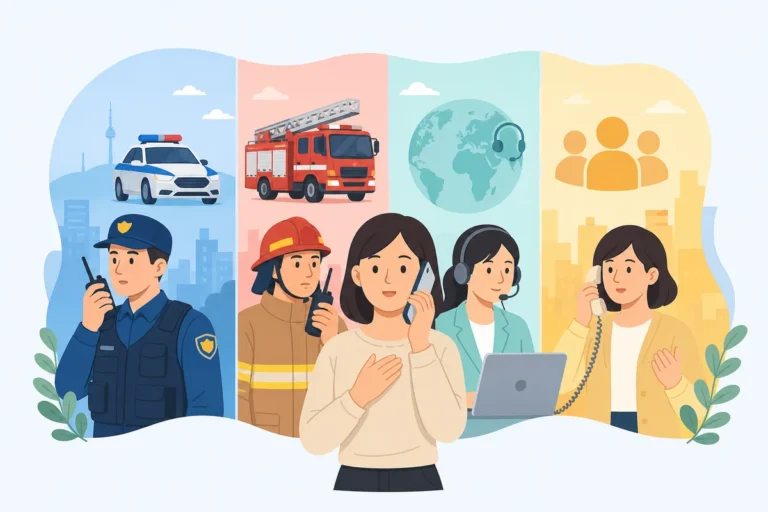
- Call 112 if you feel unsafe and cannot reach a police box on foot.
When This Guide Helps
This guide is for everyday travel situations where you need quick, local official help. It is not a guide for medical emergencies, legal disputes, or confrontations. Use it when you are:
- Lost and cannot read street signs or find your hotel address.
- Separated from your travel group in an unfamiliar area.
- Missing a wallet, bag, phone, or passport.
- Unsure which office to go to for a particular problem.
- Looking for a safe, staffed building to step into while you figure out your next move.
A police box is a staffed public help point, not a tourist information center. Officers can give you immediate local guidance, but for complex matters they will usually direct you to a larger office or a dedicated service.
Korean Police Box vs. Police Station: What Is the Difference?
First-time visitors often do not know which place to enter. Here is a simple way to think about it.
A jigudae (지구대) is the most common type of neighborhood police post. It covers a wider local area, is staffed around the clock, and handles routine calls and walk-in visitors. A pachulso (파출소) is a smaller sub-post, often covering a single neighborhood or village. Both look similar from the outside and both are useful for the same basic traveler needs. If you walk into either one, you are in the right place.
A gyeongchalseo (경찰서) is a full police station, larger and less common on a typical street. It handles official reports, formal investigations, and matters that go beyond what a neighborhood post can process. If you need an official document — for example, a lost-passport report to give your embassy — the officer at the police box may send you to the gyeongchalseo.
What to Do When You Walk In
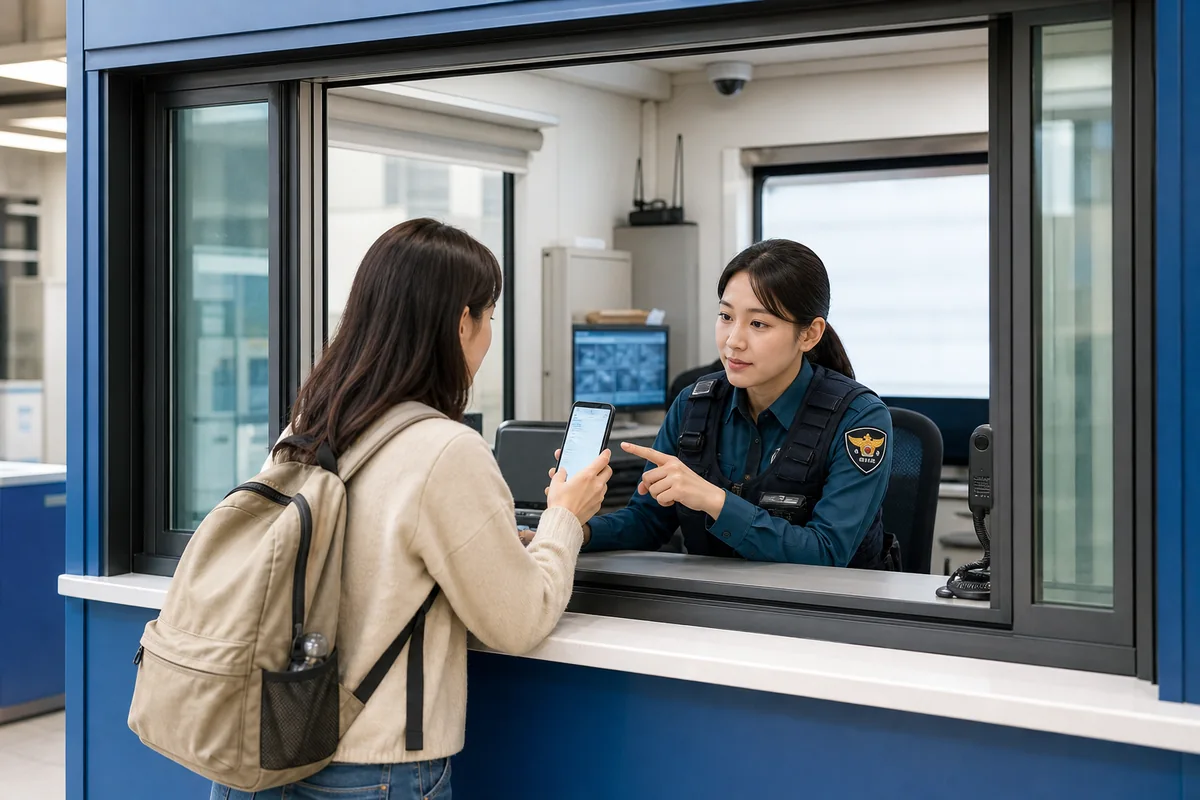
Walk up to the front desk and make eye contact with the officer. You do not need to wait to be called. A simple wave or the word “excuse me” is enough to get attention. Officers in busy tourist areas sometimes speak basic English, but do not count on it everywhere.
Use your phone to show a translated phrase, a map pin, or a photo of the item you lost. The Papago app (by Naver) and Google Translate both work well for this. Type your situation in English, switch the output to Korean, and turn the screen toward the officer. Most officers will respond by pointing, writing, or typing back.
If you are reporting a lost item, the officer may ask for your name, contact number, and a description. Have a photo of the item on your phone if possible. Keep any reference number or paper the officer gives you — you may need it later.
Korean Phrases You Can Show
Screenshot these or copy them into a notes app before you go out. Turn your screen toward the officer and point.
Useful Korean Signs or Words
These are the words you will see on signs, doors, and map apps. Recognizing them helps you find the right building quickly.
Where to Get Help
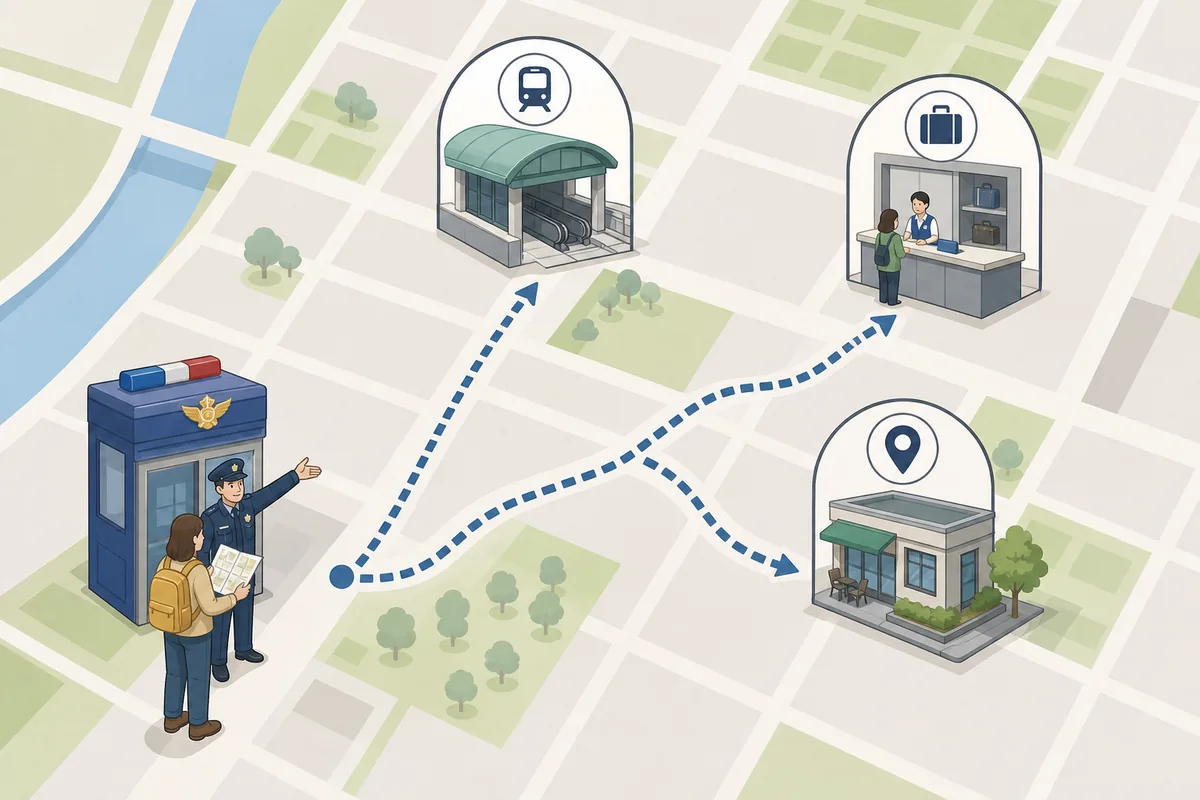
A Korean police box is your first stop for the situations described in this guide. Here is a general map of where to go depending on your situation.
- Lost or disoriented on the street: Walk into the nearest jigudae or pachulso. Show your hotel address or a map pin.
- Lost wallet, bag, or phone: Go to the nearest police box and describe the item. The officer may also check the local lost-and-found registry or direct you to the national lost-and-found system.
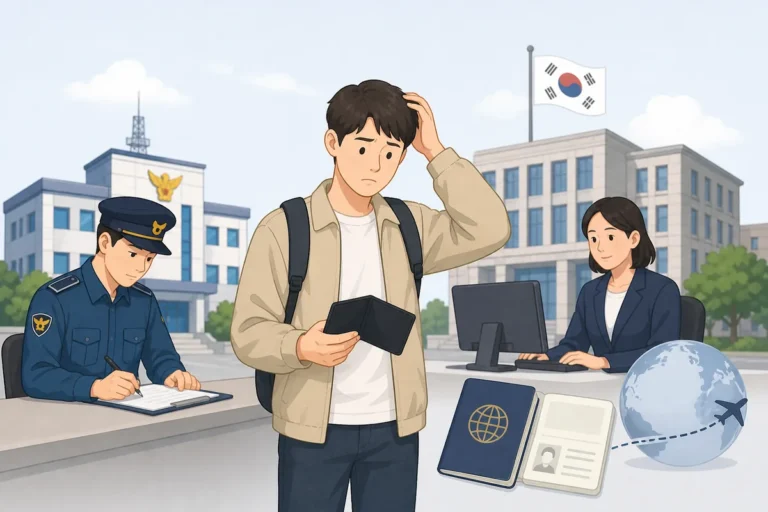
- Lost passport: Start at the police box to get a report reference, then contact your country’s embassy or consulate in Korea for next steps.
- Separated from your group: Go to the nearest police box. Officers can help you contact your group or find a common meeting point.
- Need an official written report: The officer at the police box may handle it or send you to the gyeongchalseo. Follow their guidance.
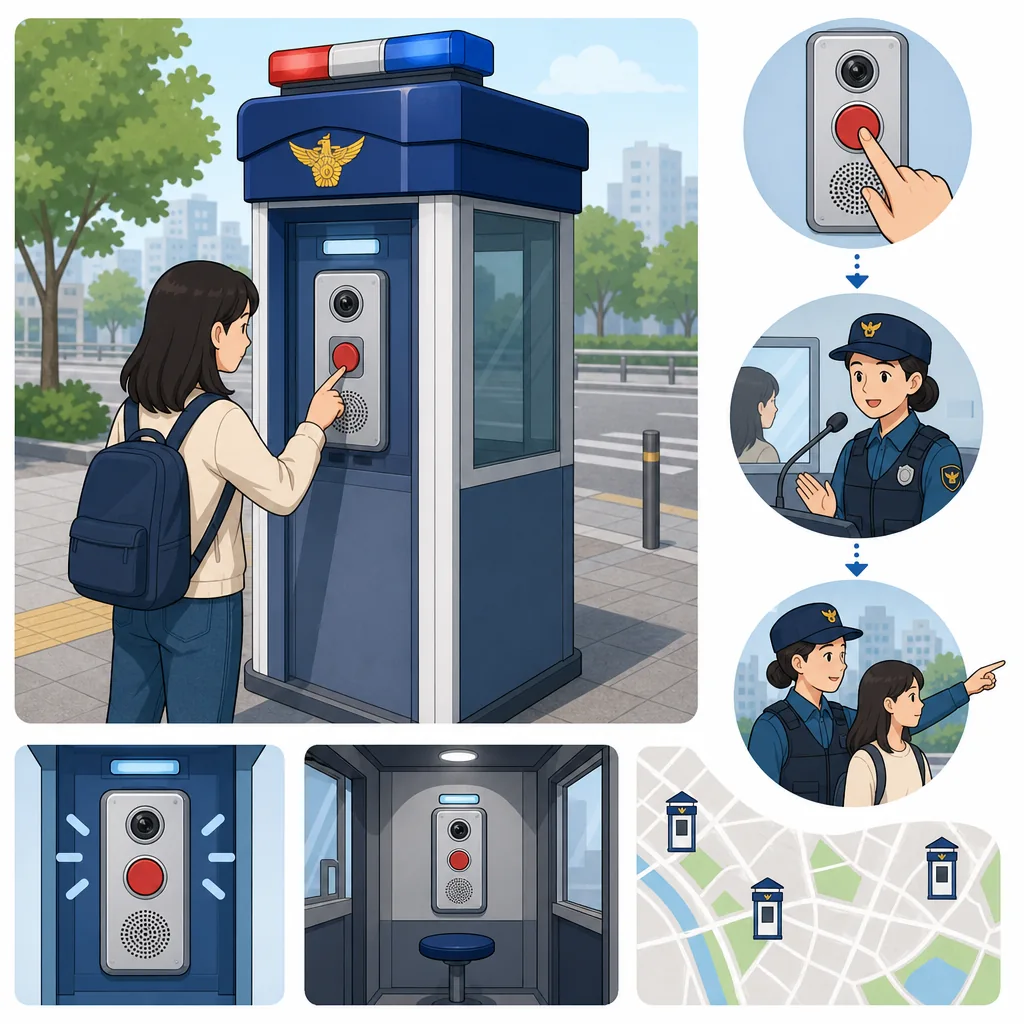
- Cannot find a police box: Call 112 (police) or 120 (Seoul general information line, Korean-language). The 1330 Korea Tourism Hotline offers English-language travel assistance and can help you locate services.
Important
This guide covers everyday travel situations such as getting lost or losing belongings. If you feel you are in immediate danger, call 112 right away. For medical situations, call 119. This guide does not provide medical, legal, or emergency-response advice. Always follow the instructions of the officer on duty.
Common Mistakes
- Assuming officers speak English. Some do, especially in tourist-heavy areas, but many do not. Always bring a phrase on your phone screen rather than relying on spoken English.
- Confusing a police box with a tourist information center. Police boxes are staffed by officers with law-enforcement duties. They can give you quick help, but they are not a dedicated visitor service. For tourism questions, look for a 관광안내소 (gwangwang annaeso) sign instead.
- Waiting outside because you are not sure if you can enter. Police boxes are open to the public. Walk in.
- Not having your hotel address saved. Save your accommodation name and address in Korean characters on your phone before you leave each day. It is the single most useful piece of information you can show an officer.
- Leaving without a reference number. If you report a lost item, ask the officer for any record or reference number before you leave.
- Searching only for “police station” on your map app. Search 파출소 or 지구대 in Korean on Naver Maps or Google Maps to find the closest neighborhood post, not just the main station.
Official Resource
The 1330 Korea Tourism Hotline is operated by the Korea Tourism Organization and offers assistance in English, Japanese, and Chinese. You can call 1330 from anywhere in Korea. It is not a police line, but it can help you locate services, translate a situation, or find the right office. Confirm current hours and language availability directly when you call, as these details may change.
For lost items found on public transit, Korea’s national lost-and-found portal is managed by the National Police Agency. Ask the officer at the police box to help you access or register a report there.
Related Korea Guides
If this guide helped you, you may also want to read about how to use Korean public transit for the first time, what to do if your phone runs out of battery while traveling, how to find your hotel address in Korean, and how to use convenience stores as a navigation landmark in Korean cities. These topics cover the practical, on-the-ground situations that come up most often for first-time visitors.
FAQ
What is a police box in Korea?
A Korean police box is a small, staffed police post located in local neighborhoods across the country. There are two main types: the jigudae (지구대), which covers a wider neighborhood area, and the pachulso (파출소), which covers a smaller sub-district. Both are open 24 hours and are the easiest place for a traveler to walk into for quick help with directions, lost items, or guidance to another office.
Should a visitor go to a police box or a police station in Korea?
For most everyday traveler situations — getting lost, losing a wallet, or needing directions — a police box (jigudae or pachulso) is the right first stop. It is closer, easier to find, and handles routine walk-in requests. A full police station (gyeongchalseo) is better for official written reports or matters that require a formal investigation. If the police box cannot fully help you, the officer there will direct you to the station.
What can I say at a Korean police box if I am lost?
You do not need to speak Korean. Show the officer your hotel name and address saved in Korean on your phone, or use a translation app like Papago to type your situation and turn the screen toward them. A simple phrase to show is 저는 길을 잃었어요 (I am lost). Pointing to a map pin of your destination also works well.
Can tourists report a lost item at a police box in Korea?
Yes. Walk into the nearest jigudae or pachulso and describe the item. Bring a photo of it on your phone if you have one, and have your name and contact number ready. The officer will record the details and may check the local lost-and-found registry. For items lost on public transit, they may direct you to the relevant transit authority or the national lost-and-found system. Ask for a reference number before you leave.
Summary
A Korean police box — jigudae or pachulso — is the quickest official help point for a traveler who is lost, missing belongings, or needs to be pointed in the right direction. Look for a blue 경찰 sign, walk in at any hour, and show a phrase or map on your phone. For official written reports, the officer will guide you to the main gyeongchalseo. Save your hotel address in Korean, keep the 1330 tourism hotline number handy, and remember that 112 is always available by phone if you cannot reach a police box on foot.
Use Korean Police Boxes As Tourist becomes easier to handle when you recognize the situation and follow the practical steps above.
Use Korean Police Boxes As Tourist becomes easier to handle when you recognize the situation and follow the practical steps above.
Note: This guide is for travel navigation in Korea. It is not medical, legal, or emergency professional advice. For urgent situations, contact local emergency services, official staff, or your embassy/consulate as appropriate.
Sources & Verification
- 1330 Travel Helpline & Complaint Center- VISITKOREA — english.visitkorea.or.kr
Last checked: July 30, 2026