Quick Answer
museum sign words in Korea tell you four essential things: when you can enter, how much it costs, which days the venue is closed, and whether photography is allowed. The four signs you will see most often are 관람시간 (visiting hours), 입장료 (admission fee), 휴관일 (closed day), and 촬영금지 (no photography). Once you recognize these four terms, you can read the most important information at almost any Korean museum, palace, or gallery.

Table of Contents
- Introduction
- The Four Key Museum Sign Words
- Common Situations at Museums and Palaces
- What Foreigners Often Get Wrong
- Useful Korean Phrases to Ask Staff
- Warnings and Things to Check
- FAQ
- Summary
Introduction
museum sign words are some of the most practical Korean vocabulary you can learn before visiting a cultural site. Korean museums, palaces, and galleries post clear signs at their entrances, ticket windows, and inside galleries. The problem for many foreign visitors is that these signs are often written only in Korean, or the English translation is small and easy to miss. If you cannot read the sign, you might arrive at the wrong time, pay the wrong amount, miss a free admission day, or accidentally break a photography rule.
This guide focuses on four signs that appear at nearly every cultural site in Korea. You do not need to speak Korean fluently. You just need to recognize these words, understand what they mean, and know where to look for them. With a little preparation, you can walk up to any entrance board or ticket window and understand the key information immediately.
The Four Key Museum Sign Words
Overview at a Glance
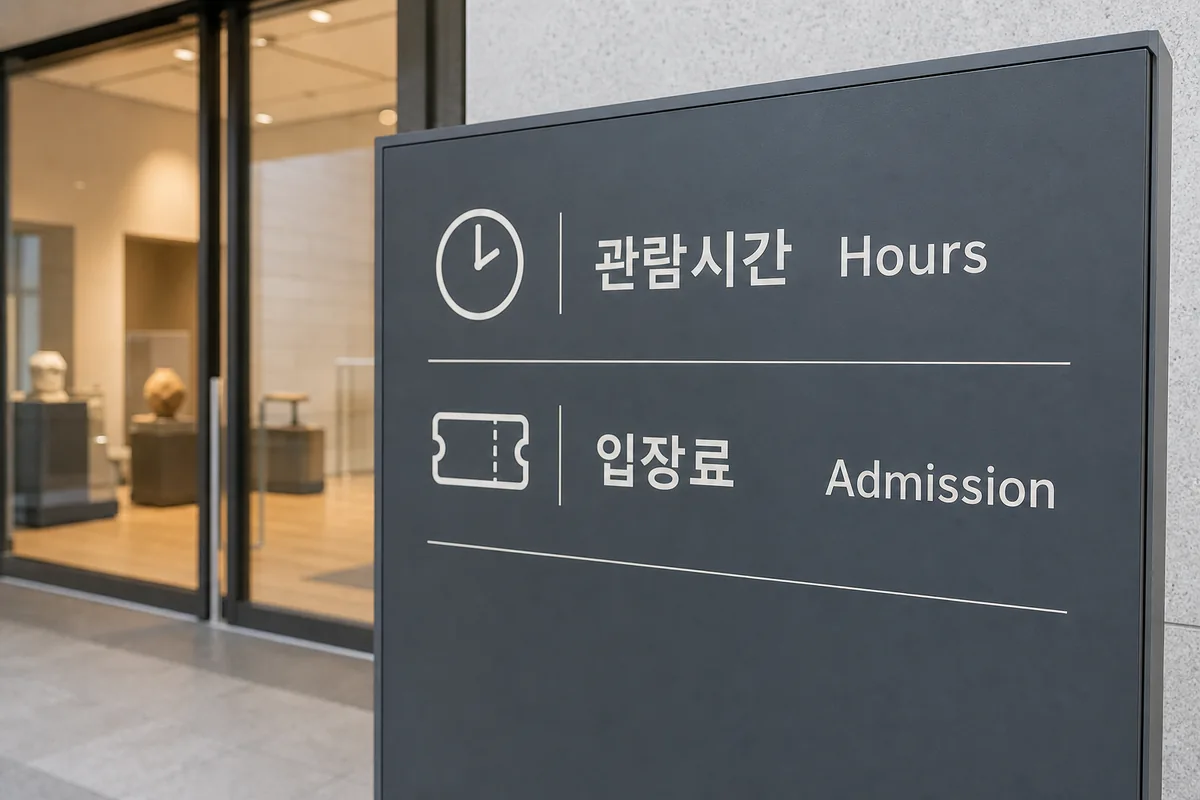
관람시간 — Visiting Hours
You will see 관람시간 posted on the main entrance board, near the gate, or at the ticket window. It is usually followed by a time range such as 09:00 – 18:00. Some venues list different hours for weekdays and weekends. Others change their hours by season, so summer hours may be longer than winter hours. The last entry time is often 30 to 60 minutes before closing. Look for the phrase 입장마감 (ipjang magam), which means “last entry.”
Example sign text you might see:
관람시간: 09:00 – 18:00 (입장마감 17:00)
This means the museum is open from 9 AM to 6 PM, but the last entry is at 5 PM.
입장료 — Admission Fee
Admission fee signs at Korean museums usually list prices in a simple table by age group. National museums such as the National Museum of Korea have free general admission, but special exhibitions inside the same building often charge a separate fee. Always check whether your ticket covers the whole museum or only the permanent collection.
Some venues offer free admission on specific days. The word to look for is 무료관람일 (muryo gwallamil), meaning “free admission day.” These are often on national holidays or the last Wednesday of the month at certain venues, but the schedule changes, so always confirm with the official website before your visit.
휴관일 — Closed Day
휴관일 is one of the most important museum sign words to check before you travel. Many visitors arrive at a museum only to find a notice on the door saying it is closed. The most common closed day in Korea is Monday. However, some venues close on Tuesday, and some close only on certain Mondays each month. Holiday closures are also common around Korean New Year (설날, Seollal) and Chuseok (추석). Always check the official website the day before your visit.
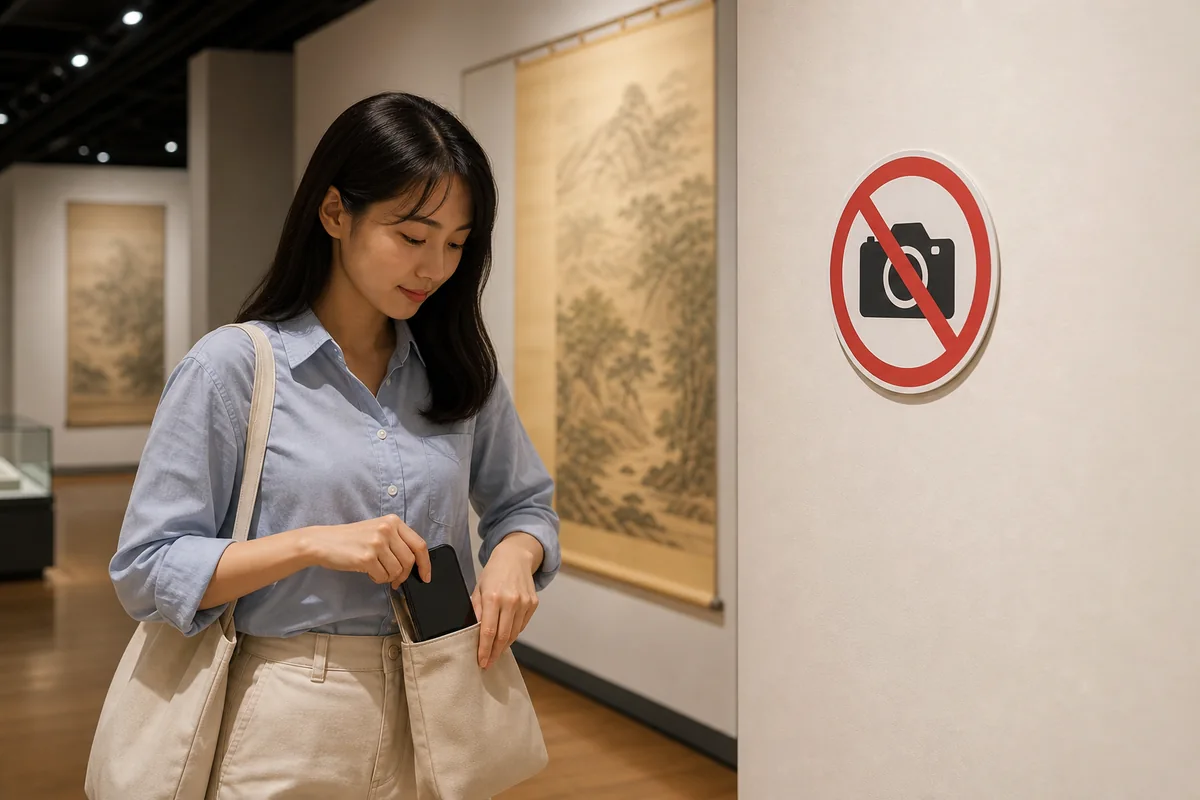
촬영금지 — No Photography
Photography rules vary widely between venues and even between rooms within the same museum. A general museum may allow photography in the permanent collection but prohibit it in a temporary exhibition. Some venues allow phone photos without flash but prohibit tripods or professional cameras. When in doubt, look for a sign near the entrance of each gallery room, or ask a staff member.
Common Situations at Museums and Palaces
At the Main Entrance Board
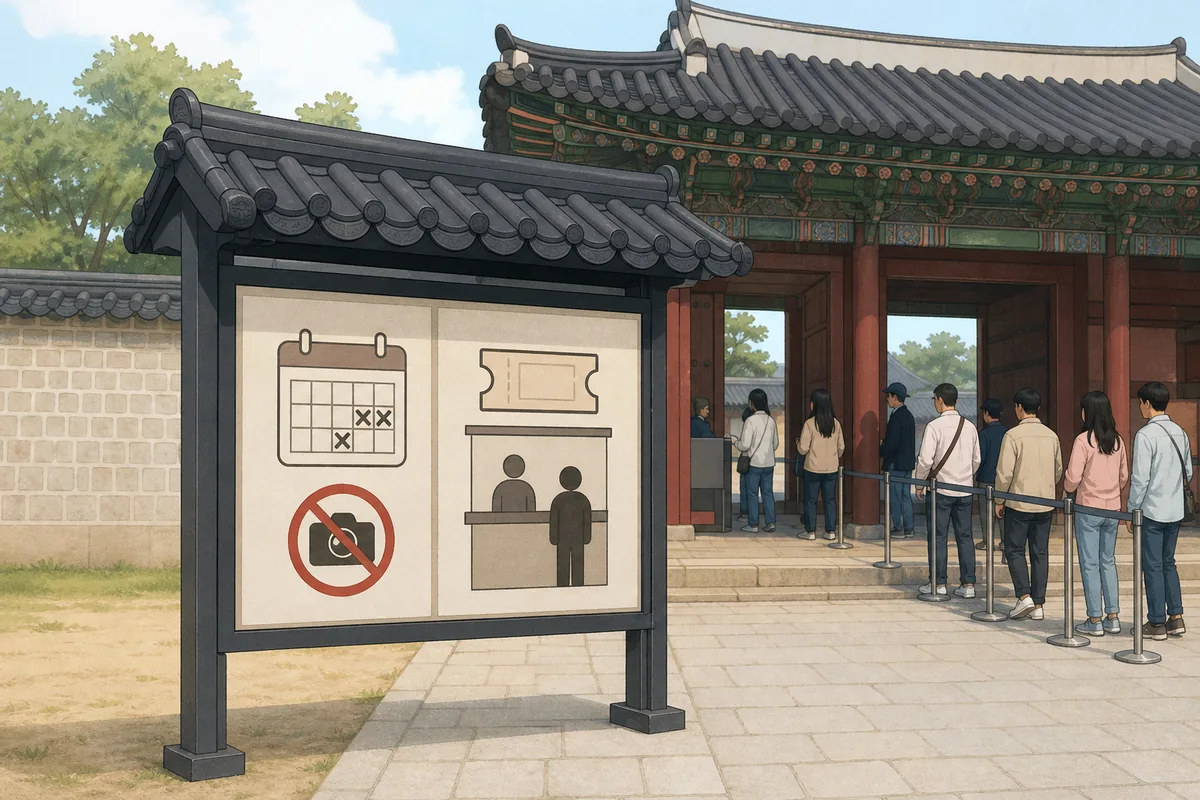
The entrance board at a Korean museum or palace usually shows all four key terms together. You will typically see 관람시간 at the top, followed by 입장료 with a price list, then 휴관일 at the bottom. Take a photo of this board when you arrive. It is your reference for the whole visit.
At the Ticket Window
The ticket window (매표소, maepyoso) will display 입장료 clearly. If you see 무료 written next to a category, that group enters for free. Some venues have a separate ticket for special exhibitions. The staff member may ask “성인 몇 명이세요?” (How many adults?), so knowing 성인 (adult) is useful.
Inside the Gallery
Inside galleries, watch for 촬영금지 signs posted on the wall or on a stand near sensitive exhibits. These signs often use a camera icon with a red cross, which is universally understood. However, the specific rule — no flash only, no phones, no cameras at all — may only be written in Korean, so read the text carefully or ask staff.
On the Door When Closed
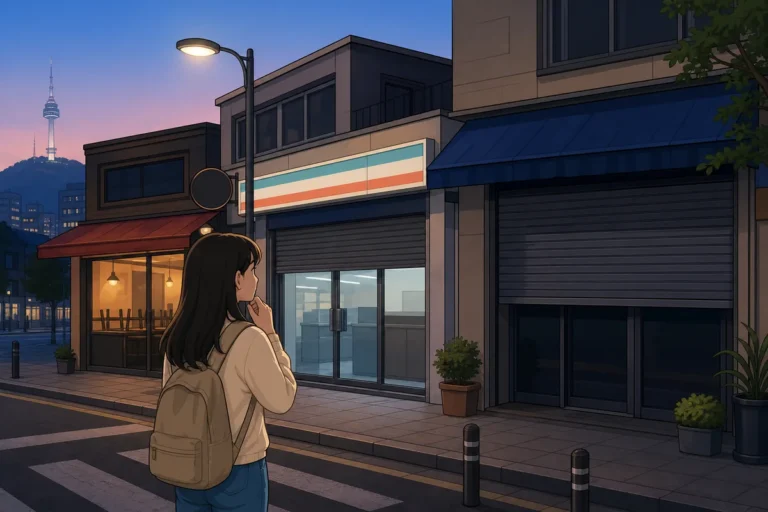
If you arrive and the museum is closed, you will likely see a notice on the door. Look for 휴관 (hyugwan) or 임시휴관 (temporary closure). The notice may include the reopening date. If you cannot read it, take a photo and use a translation app.
What Foreigners Often Get Wrong
Assuming the Same Hours Every Day
Many visitors assume a museum keeps the same hours all week. In reality, many Korean venues have different hours for weekdays, weekends, and public holidays. Seasonal changes are also common. The sign may show two or three different time ranges with labels like 평일 (pyeongil, weekday) and 주말 (jumal, weekend).
Missing the Last Entry Time
The 관람시간 sign shows when the museum closes, but the last entry (입장마감) is usually 30 to 60 minutes earlier. Arriving at 5:50 PM when the museum closes at 6 PM often means you cannot enter at all.
Thinking Monday Closures Are Universal
Monday is the most common 휴관일 in Korea, but it is not universal. Some venues close on Tuesday. Some close only on specific Mondays. A few national museums and palaces are open every day. Do not assume — always check the official site for the specific venue you plan to visit.
Misreading Photography Rules
A 촬영금지 sign in one room does not mean photography is banned throughout the whole museum. Conversely, being allowed to take photos in the lobby does not mean every gallery permits it. Read the sign in each room separately.
Missing Free Admission Days
Some visitors pay full price without knowing that the day they visited was a free admission day. Free days are not always advertised in English at the entrance. Checking the official website before your visit can save you money.
Useful Korean Phrases to Ask Staff
Asking About Opening Hours
Asking About Admission Fees
Asking About Photography Rules
Warnings and Things to Check
- Some venues allow no flash but prohibit all photography in special exhibition rooms.
- 휴관일 can be weekly, monthly, holiday-based, or temporary depending on the venue.
- Official websites and on-site notices may change faster than printed brochures.
- Last entry time is often earlier than closing time.
- Free admission days and special exhibition fees are not always the same as general admission rules.
Summary
If you can read 관람시간, 입장료, 휴관일, and 촬영금지, you can handle most museum and palace notices in Korea. These are the core museum sign words to know before you visit. Check the official website, confirm the last entry time, and read each gallery’s photo rules separately.
FAQ
What does 관람시간 mean?
It means visiting hours or opening hours. It shows when the museum or palace is open to visitors.
Is 촬영금지 the same as no flash?
Not always. 촬영금지 means no photography at all. If only flash is banned, the sign usually says 플래시 금지.
Do Korean museums always close on Monday?
No. Monday is common, but not universal. Some venues close on Tuesday or only on certain Mondays each month.
Does 입장료 include special exhibitions?
Not always. Many museums charge separately for special exhibitions, so check the sign or official website before buying a ticket.