K Pop Festival Survival Guide: What You Need to Know
- Introduction
- What to Bring: The Full Packing Checklist
- Tickets and ID: Entry Procedures
- Bag Rules and Prohibited Items
- Handling Weather Changes
- Queueing Culture in Korea
- Food, Water, and Cashless Payments
- Restroom Lines and Facilities
- Crowd Safety
- Getting Home Safely After the Event
- Common Situations and How to Handle Them
- What Foreigners Often Get Wrong
- Useful Korean Phrases
- Warnings and Things to Check
- FAQ
- Summary
Introduction
The best k pop festival survival guide is the one you read before you leave your hotel, not while you are standing in a two-hour queue in 34-degree heat wondering why you forgot your portable charger. Korea’s live music festival scene is exciting, the production quality is high, the fan energy is intense, and the venues are well organized, but the experience rewards preparation. This guide goes beyond the basics and walks you through entry, bag checks, payment, crowd management, and getting home, with Korea-specific details that travel blogs often skip.
Whether you are heading to a large outdoor festival like Waterbomb or Lollapalooza Seoul, or a stadium show at KSPO Dome or Seoul World Cup Stadium, the core challenges are the same: navigating Korean-language signage, understanding queue etiquette, staying comfortable through weather changes, and not getting stranded after the final encore. This guide addresses all of it, calmly and practically.
What to Bring: The Full Packing Checklist
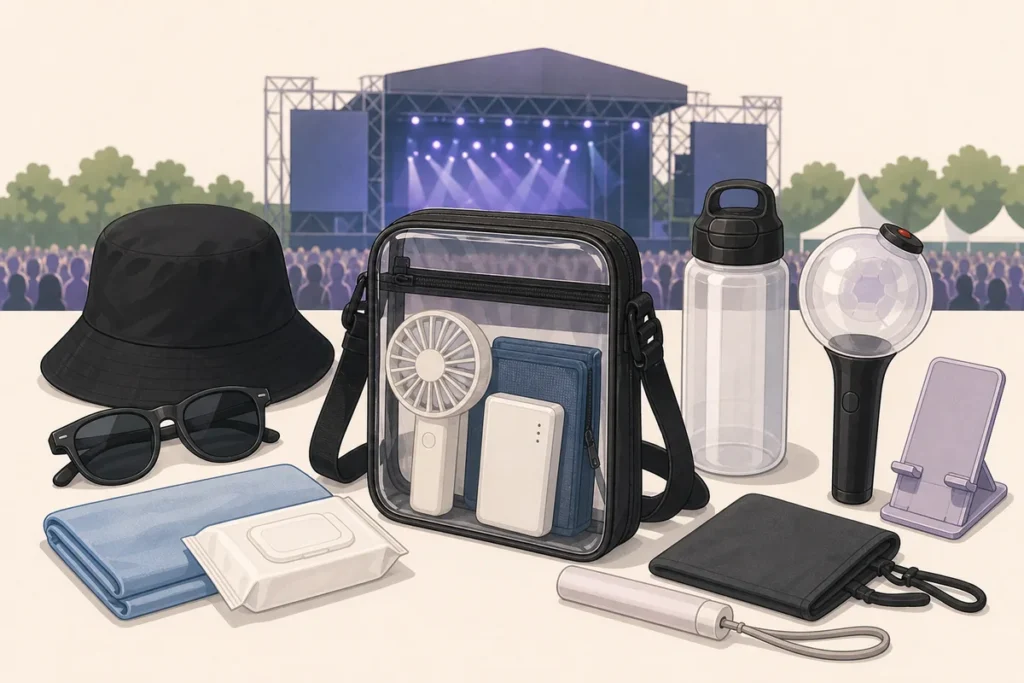
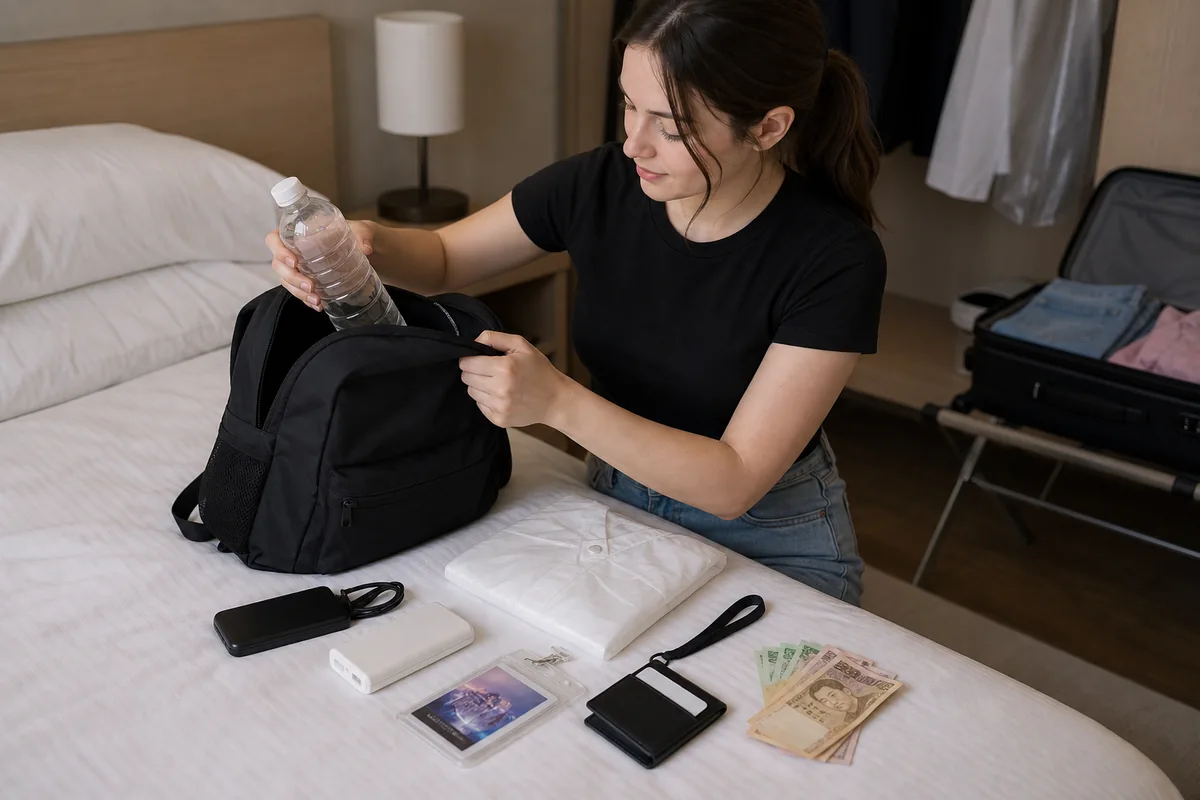
Preparing for a festival day in Korea is different from packing for a regular outing. You may be outside for six to ten hours, moving between standing and seated areas, and dealing with security checks that slow entry if you carry the wrong items.
Essential Items
- Passport or ARC card — Required for ticket collection and sometimes for age-verified entry. A photo on your phone is not always accepted. Carry the physical document.
- Printed ticket plus digital backup — QR codes can fail in bright sunlight or with a cracked screen. Print a copy if possible.
- Portable charger — Non-negotiable. You will use your phone for the ticket, navigation, translation, and photos. Bring one that holds at least 10,000 mAh.
- T-money card or credit card — For transport before and after. Top up your T-money card the day before; machines near venues get crowded.
- Korean debit or credit card, or cash — Many festival vendors do not accept foreign cards. Carry at least 30,000–50,000 KRW in cash as backup.
- Small transparent bag or approved bag — Many venues enforce clear-bag policies. Check the official event page for the exact size limit.
- Sunscreen and a cooling towel — Korean summers are intense. Apply before you leave your accommodation.
- Light rain poncho — Folds flat. Weather changes fast, especially in spring and autumn.
- Earplugs — Sound levels at Korean festivals are very high. Bring musician-grade earplugs that reduce volume without muffling music.
- Snack bar or energy gel — Food queues inside can be long. A snack keeps you going.
- Pen — Useful for lost-and-found forms or wristband registration.
What to Leave Behind
- Large backpacks or hard-shell cases
- Professional cameras with detachable lenses
- Selfie sticks
- Umbrellas with metal tips, if banned by the event
- Outside food and drinks in sealed containers, if prohibited at entry
Tickets and ID: Entry Procedures
Korean concert and festival entry is often more structured than in many other countries. Understanding the process in advance saves time and stress.
Ticket Collection (현장 수령)
If you purchased through Interpark, YES24, Melon Ticket, or a similar Korean ticketing platform, you may need to collect a physical ticket or wristband at a designated booth on the day. This is called 현장 수령, meaning on-site collection. Bring the booking confirmation number and your passport. Collection booths often open one to two hours before the main gates, and queues build fast. Arrive at the ticket booth at least 90 minutes before your scheduled entry time.
Mobile Ticket Entry
Some events use fully digital tickets through apps like Melon Ticket or the artist’s official fan club app. Make sure the app is installed and logged in before you arrive. Download the ticket to offline mode if the app supports it, because mobile data near large venues can be slow due to congestion. Increase your screen brightness to maximum before showing the QR code to scanners.
ID Checks for Age-Restricted Events
Events rated 18+ require proof of age. Your passport is the most reliable document. Korean staff may not recognize foreign driving licences, so do not rely on those alone.
Bag Rules and Prohibited Items
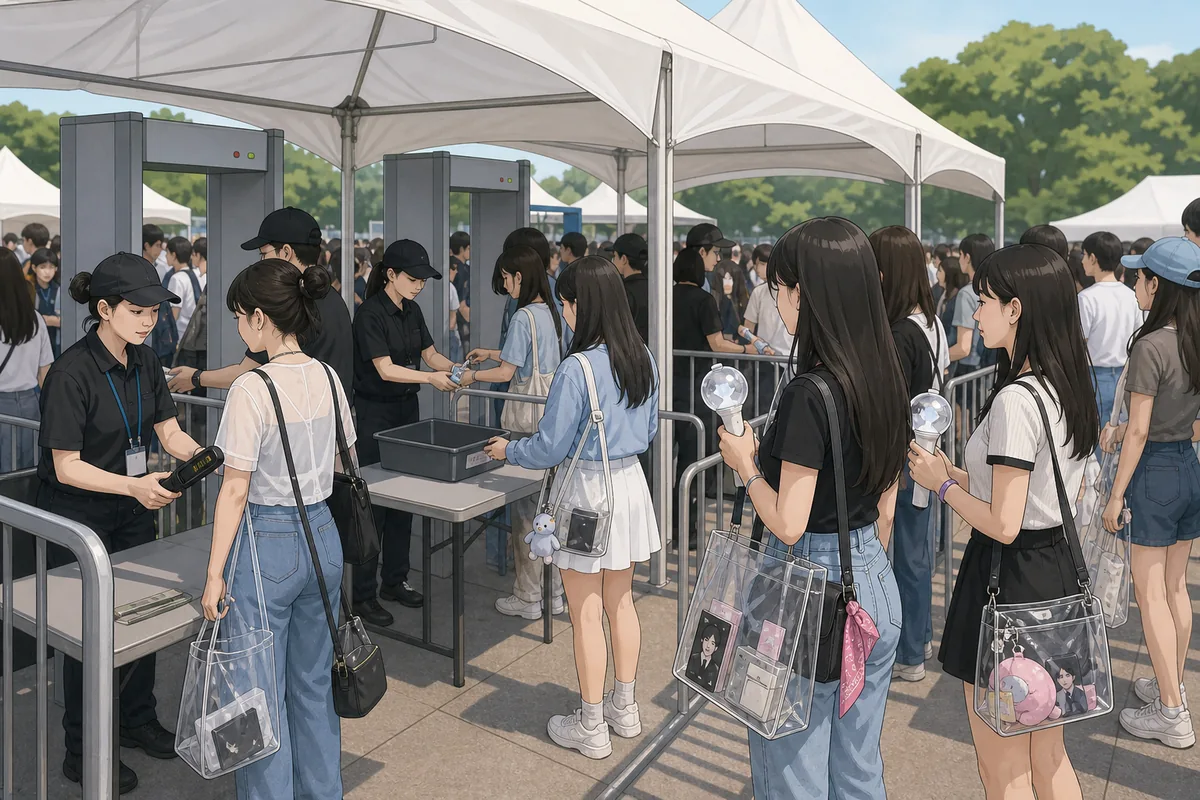
Korean festival security has become stricter in recent years. Most large events now conduct bag checks at every gate, and some use metal detector wands or walk-through arches.
The safest approach is to check the official event website or venue social media account in the week before the event. Rules are sometimes updated close to the date. Look for the prohibited items section. Common prohibited items across most venues include:
- Alcohol brought from outside
- Glass bottles or cans
- Laser pointers
- Drones
- Professional recording equipment
- Large banners or signs on poles
If an item is confiscated at the gate, you will usually be offered the chance to return it to your car or a nearby convenience store locker. There is rarely a cloakroom for confiscated items, so do not bring anything you cannot afford to lose.
Handling Weather Changes
Korea’s festival season runs from late spring through early autumn, which can bring sudden rain, heat, and cool evenings. Here is what to expect by season:
| Season | Typical Risk | What to Prepare |
|---|---|---|
| May – June | Sudden rain showers, mild heat | Poncho, light layers |
| July – August | Extreme heat, humidity, typhoons | Cooling towel, electrolyte tablets, poncho |
| September – October | Sudden temperature drops after sunset | Light jacket, long sleeves in bag |
Check the Korea Meteorological Administration forecast at weather.go.kr the morning of the event. If a typhoon warning is issued, events may be postponed or cancelled. Follow the official event social media accounts for real-time updates.
At outdoor summer festivals, heat exhaustion is a genuine risk. Drink water regularly even if you do not feel thirsty, find shade during breaks between sets, and watch for signs of overheating in yourself and people around you. If someone near you collapses or becomes unresponsive, alert security or medical staff immediately rather than trying to manage the situation yourself.
Queueing Culture in Korea
Korean queues are generally orderly and taken seriously. Cutting in line, even unintentionally, can cause real friction. Here are the key things to know:
- Lines form early. For standing-floor sections, fans may queue from early morning even for an evening show. If a good spot matters to you, research the fan community’s unofficial queue system for that specific event.
- Numbered queuing systems. Some events distribute numbered cards or use an app-based lottery for entry order. Check whether your event uses this system.
- Hold your place politely. If you need to leave the queue briefly, ask the person behind you to hold your spot. Most people are understanding.
- Do not save spots for large groups. Saving more than one or two spots is considered rude and may cause confrontation.
- Follow staff instructions immediately. Event staff often manage crowd flow efficiently. When they direct you to move or stop, respond quickly.
Food, Water, and Cashless Payments
Food and drink options inside Korean festivals have improved significantly, but the queues for popular stalls can be long during set breaks. Plan your meals around the schedule.
Water
Most venues allow you to bring in one sealed 500 ml water bottle. Larger bottles are often confiscated. Free water refill stations may be available inside near first-aid tents. Buying water inside typically costs 2,000–3,000 KRW per bottle.
Food
Festival food stalls in Korea are generally good quality, with tteokbokki, corn dogs, grilled skewers, and international options at larger events. Prices run higher than street food: budget 8,000–15,000 KRW per item. Eat before you arrive or bring a permitted snack to avoid the longest queues.
Payment Methods
This is where many foreigners run into trouble. A significant number of festival food and merchandise vendors in Korea operate on a cashless system using Korean payment apps or Korean-issued cards. Visa and Mastercard issued abroad are sometimes accepted but not guaranteed. The practical solution is:
- Open a Kakao Pay account linked to a Korean bank account if you have one
- Carry 50,000–100,000 KRW in cash as a backup for vendors who do accept it
- Check whether the event operates a wristband top-up system
| Payment Type | Acceptance Rate Inside Festivals | Notes |
|---|---|---|
| Korean card | High | Most reliable option |
| Kakao Pay / Naver Pay | High | Usually requires a Korean bank account |
| Foreign Visa / Mastercard | Medium | Not always accepted; confirm per vendor |
| Cash (KRW) | Medium | Some vendors are cash-only; some cashless-only |
| Apple Pay / Google Pay | Low to Medium | Acceptance is growing but inconsistent |
Restroom Lines and Facilities
Restroom queues at Korean festivals can be long, particularly for women’s facilities during set breaks. Plan restroom visits during the middle of a set rather than at the end. Portable toilet units are common at outdoor events and are generally kept clean by staff throughout the day.
Most Korean festival restrooms do not provide paper towels, and some portable units can run out of toilet paper. Carry a small pack of tissues and a travel-size hand sanitiser.
Accessible restrooms are required at licensed venues. If you or someone in your group needs accessible facilities, look for the blue wheelchair symbol on signage or ask a staff member.
Crowd Safety
Crowd safety awareness is essential at any large event. Korea has updated its public event safety regulations following the Itaewon tragedy in October 2022, and licensed festival organizers now implement more structured crowd management. However, personal awareness remains important.
- Identify exits when you arrive. Walk to the nearest two exits from your spot so you know the route without thinking.
- Stay near the edges of dense standing areas if you feel uncomfortable with crowd pressure. Moving toward the sides rather than backward is usually easier.
- If crowd pressure builds suddenly, cross your arms in front of your chest to protect your ribs, keep your feet shoulder-width apart for stability, and move diagonally toward an edge rather than pushing directly against the crowd flow.
- Agree on a meeting point with your group before entering. Mobile signals can be unreliable inside crowded venues.
- Alert security staff immediately if you see someone in distress, a person who has fallen, or a dangerous crowd surge. Do not try to manage a medical situation yourself.
Getting Home Safely After the Event
The period immediately after a large K-pop event ends is one of the most stressful parts of the day. Tens of thousands of people attempt to leave at the same time, and transport options fill up fast.
Subway
The subway is usually the best option. Most major festival venues are near subway stations, and Seoul Metro often runs extended hours on nights with large events. Expect the first two or three trains after the show to be extremely crowded. If you can wait 20 to 30 minutes at a nearby café or convenience store, the crowds thin noticeably.
Taxi and Ride-Hailing
Kakao T is Korea’s main ride-hailing app and works well in English. However, after a large event, surge pricing applies and driver availability near the venue drops sharply. Walk five to ten minutes away from the main venue exit before requesting a ride so you can get picked up faster and may pay less.
Shuttle Buses
Some festivals operate official shuttle buses from designated stops near the venue. Check the event website for routes and timings. These often sell out in advance or fill immediately after the show, so arrive at the shuttle stop early if this is your plan.
Plan Before You Go
Use Naver Map or Kakao Map to check your route home before the event. Download the offline map if possible. Know which subway line and which direction you need so you are not reading maps in a crowded station at midnight.
Common Situations and How to Handle Them
Your QR Code Won’t Scan
Raise your screen brightness to maximum. Ask the staff member to try scanning from a slightly different angle. If it still fails, step aside and call the ticketing platform’s customer service number. Save the number before you arrive. Do not hold up the queue while troubleshooting.
You Lost Your Group
Agree on a physical meeting point before entering, such as a specific gate number or a landmark like a food truck cluster. If you cannot find your group, go to the information booth and ask staff for help. Text your group your exact location using a landmark description, not just “near the stage.”
Something Was Stolen or Lost
Go to the lost-and-found desk at the venue. Report the loss to staff and fill in a form with your contact details. For theft, you can also contact the nearest police station or call 112. Keep a photo of your passport and ticket on cloud storage so you can access them if your phone is stolen.
You Feel Unwell from Heat
Move to a shaded or air-conditioned area immediately. Drink water slowly. Find the first-aid tent and ask for help if symptoms do not improve quickly.
FAQ
Do I need a Korean card to attend a festival in Korea?
No. You can usually attend with an international ticket and a passport or ARC, but having a Korean card or Korean cashless payment app makes food and merchandise purchases much easier.
Can I bring a backpack?
Sometimes, but many events prefer small bags or clear bags. Large backpacks and hard cases are often discouraged or prohibited. Always check the official rules for your specific event.
What happens if it rains?
Outdoor festivals may continue in light rain, but severe weather can delay or cancel parts of the program. Bring a poncho and follow official event announcements closely.
Is it okay to queue early?
Yes. Early queueing is common at Korean concerts and festivals, especially for standing sections. Just follow the event’s official rules and avoid blocking access roads or staff areas.
What should I do if my phone battery dies?
Use your portable charger first. If you still cannot power on your phone, go to the information booth or ask staff to help you contact your group or retrieve your ticket if you have a printed backup.
What Foreigners Often Get Wrong
- Arriving too late and getting stuck in collection or security lines
- Assuming foreign cards will work everywhere
- Ignoring weather changes because the morning forecast looked fine
- Not carrying enough battery for a full day out
- Forgetting that transport after the show may be the hardest part of the day
- Trying to figure out the route home only after the concert ends
Useful Korean Phrases
Warnings and Things to Check
- Do not rely on screenshots alone if the ticketing app requires live login.
- Do not assume a convenience store nearby will have charger rentals or locker space available.
- Do not wait until the venue is packed to figure out your route home.
- If you have a medical condition, review the event’s first-aid and accessibility information ahead of time.
Summary
The core of a k pop festival survival guide is preparation. Bring the right documents, pack for weather and long waits, expect security and queue checks, plan for cashless payments, and decide how you will get home before the show ends. Korea’s festival scene is fun and well run, but it rewards people who arrive ready.
If you follow the practical steps in this guide, you will spend less time worrying and more time enjoying the music.