If Korean bus stop displays look confusing, the fast answer is to check the route number, then the arrival unit, then any low-floor or last-bus label. The number beside a bus is usually either minutes away or stops away, and the board tells you which one by the Korean unit next to it.
Quick Answer
Read the route number first, then check the arrival estimate. If you see 분, it means minutes. If you see 정류장, it means stops away. 저상 means a low-floor bus, and 막차 means the last bus of the night.
What to Do First
- Match the route number to your planned bus.
- Check the unit: 분 = minutes, 정류장 = stops away.
- Look for 저상 if you want easier boarding.
- Watch for 막차 at night.
- If the board says 운행 종료, that route has finished for the day.
- Use a city transit app to confirm the same stop if the board is hard to read.

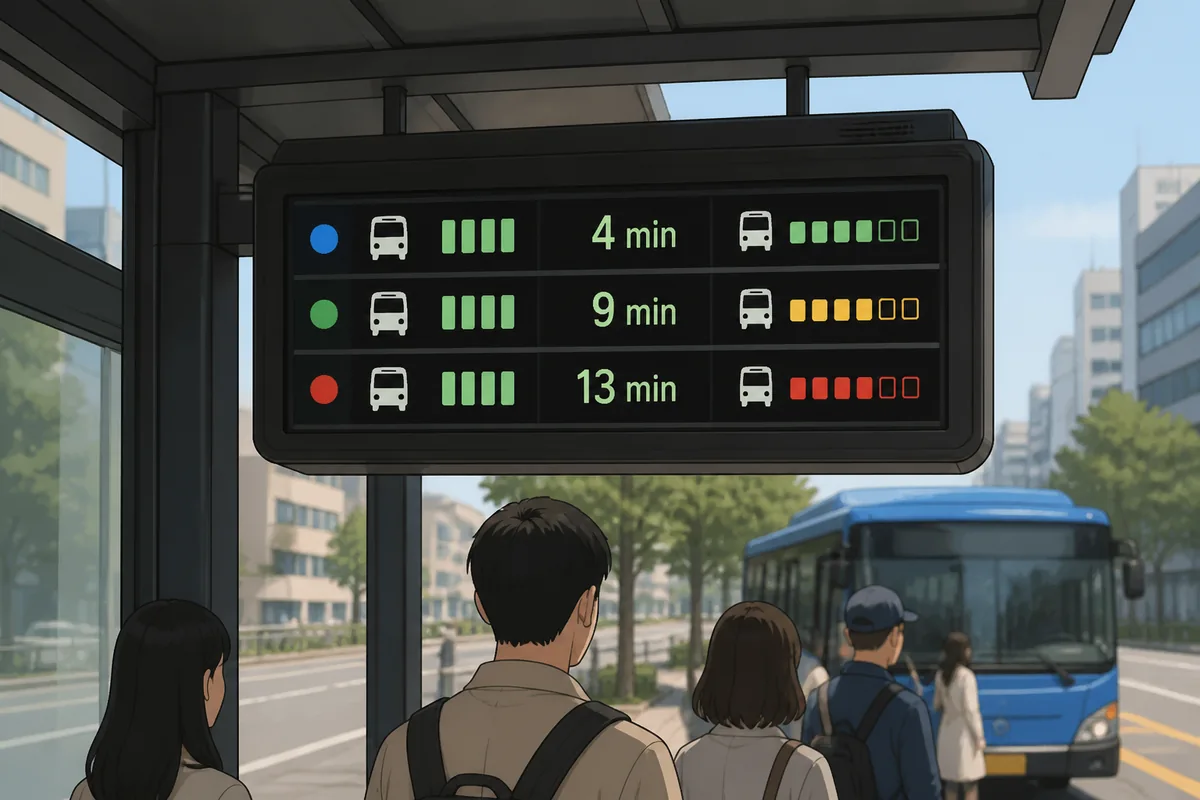
When This Guide Helps
You are waiting at a bus stop and the display shows route numbers, Korean words, and changing arrival times. You want to know whether the next bus is yours, whether it is easy to board, and whether you are looking at the last bus of the night.
This is also useful when a board looks different from the one you saw in another city. Korean bus systems use similar ideas, but the layout and labels can vary by city.
How Korean Bus Stop Displays Usually Work
Most boards show one row per route. A row usually includes the route number, the destination, the arrival estimate, and sometimes a small label or icon for low-floor service or the last bus.
- Route number: the bus line you need.
- Destination: where that bus is heading.
- Arrival estimate: minutes or stops away.
- Extra labels: low-floor, last bus, or service ended.
In Seoul, the display format is often very consistent. In other cities, the same information may appear in a slightly different order, but the core meaning is the same.
Korean Bus Stop Displays: Minutes vs Stops Away
The biggest source of confusion on Korean bus stop displays is whether the number means time or distance by stops.
Minutes format: The board shows 분 after the number, or the unit is easy to spot nearby. That means the bus is about that many minutes away.
Stops-away format: The board shows 정류장 or a stop-based label. That means the bus is that many stops away, not that many minutes away.
When only a number is visible, check the unit again before assuming it is a countdown. In traffic, one stop can take longer than a few minutes.
Low-Floor Bus Indicators
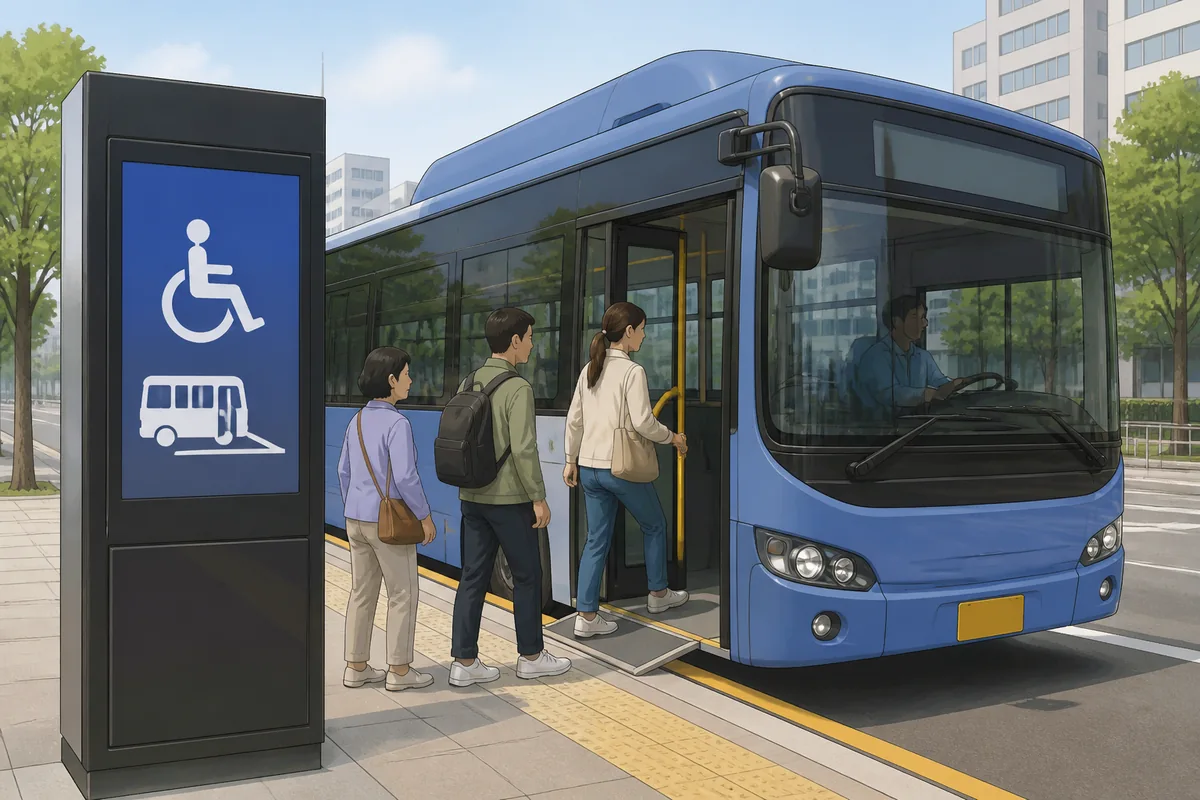
저상 means low-floor bus. This tells you the specific arriving bus has an easier boarding level, often with a ramp or lower entry.
Look for:
- the word 저상
- a wheelchair icon
- a low-floor bus symbol beside the route
This label usually applies to the next arriving bus on that route, not every bus on the route.
Last Bus Labels
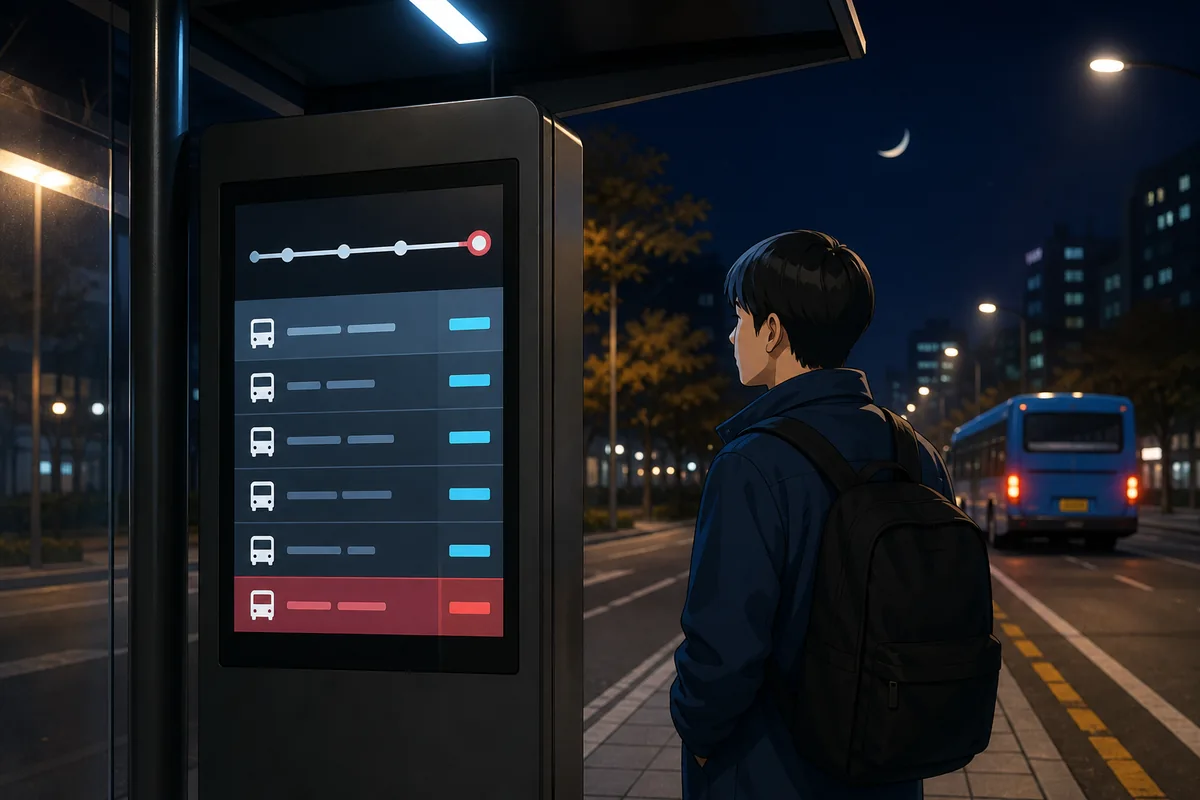
막차 means last bus. When you see it on a board, that arriving bus is the final service for that route that day.
Another common label is 운행 종료, which means service ended. If you see that, the bus for that route is no longer running.
At night, check the board as soon as you reach the stop. The last bus can arrive and leave quickly.
Common Korean Labels and Signs
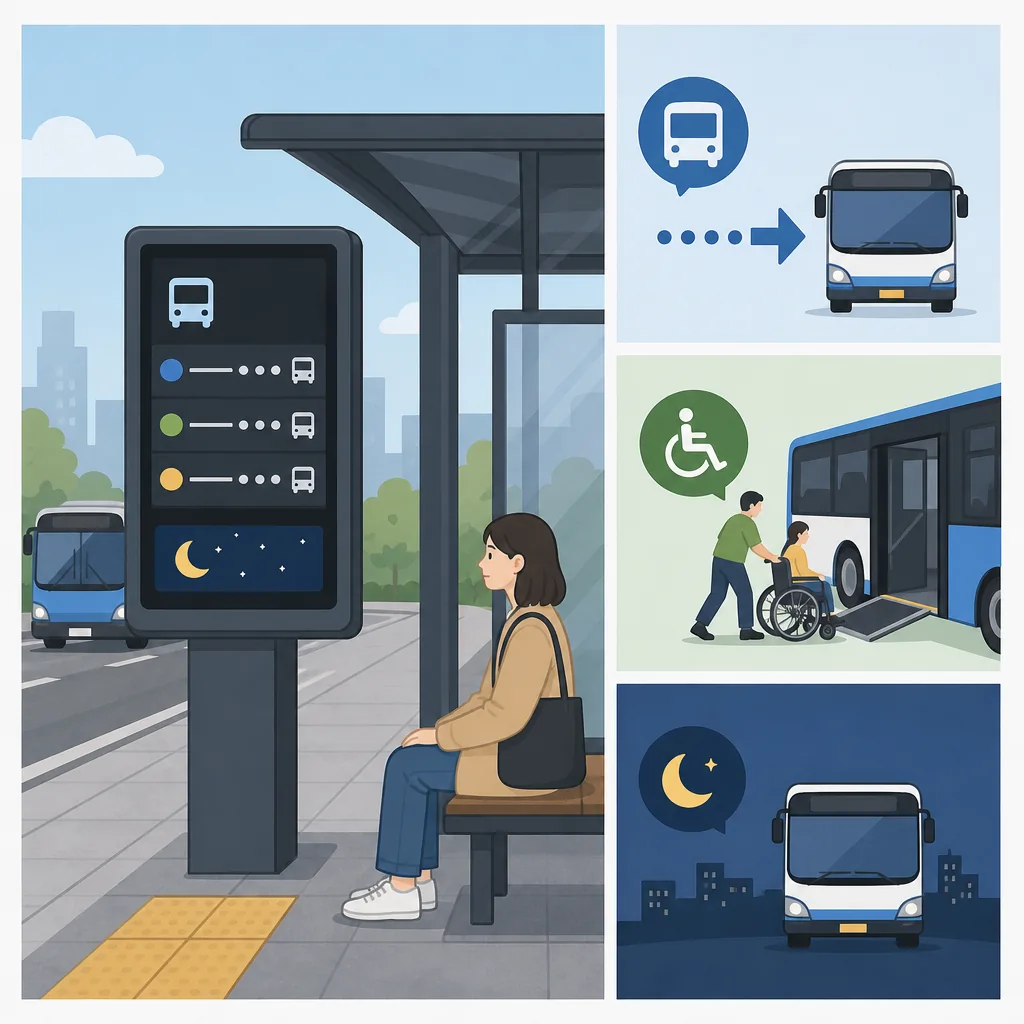
Korean Bus Stop Displays: What Commonly Confuses Visitors
- Seeing a small number and assuming it always means minutes.
- Missing 막차 when the last bus is already approaching.
- Thinking every bus on one route is low-floor.
- Boarding the wrong direction because the destination name is different from the one expected.
- Not noticing 운행 종료 after the route has already stopped for the night.
Where to Get Help
If the board is unclear, check the same stop in an official city transit app or a major map app with transit data. Stop numbers printed on the pole help you find the exact stop in the app.
In Seoul, the city transit information system is the most direct reference. Other large cities also have official bus information systems that show real-time arrivals.
Common Mistakes
- Reading stops away as minutes.
- Waiting for a route without checking the destination.
- Assuming a low-floor bus is guaranteed on the whole route.
- Arriving late and missing 막차.
- Ignoring 운행 종료 and waiting for a bus that will not come.
Short Summary
Korean bus stop displays are easiest to read in this order: route number, arrival unit, low-floor label, last-bus label. 분 means minutes, 정류장 means stops away, 저상 means low-floor bus, and 막차 means last bus. If the board is unclear, confirm the stop in an official transit app.
FAQ
What do Korean bus stop displays show?
They usually show the route number, the destination, the arrival estimate, and sometimes labels for low-floor buses or the last bus of the night.
Does 분 mean minutes on a Korean bus board?
Yes. 분 means minutes.
What does 저상 mean on a bus stop display?
저상 means low-floor bus.
What does 막차 mean at a bus stop?
막차 means the last bus for that route that day.
Why do some Korean bus stop displays show stops instead of minutes?
Some systems use stop-based arrival information instead of time-based estimates, so the board may show how many stops away the bus is rather than how many minutes away it is.
Note: This guide is for travel navigation in Korea. It is not medical, legal, or emergency professional advice. For urgent situations, contact local emergency services, official staff, or your embassy/consulate as appropriate.