Standing Zone Guide for K-pop Concerts in Korea
Quick Answer
A standing zone at a Korean K-pop concert is a floor area with no assigned seats. Entry is often controlled by an admission number (입장번호, ipjang beonho) that decides who enters first. Check the official notice early, arrive before number distribution or queue call times, and follow staff instructions closely because rules can vary by organizer, venue, and artist.
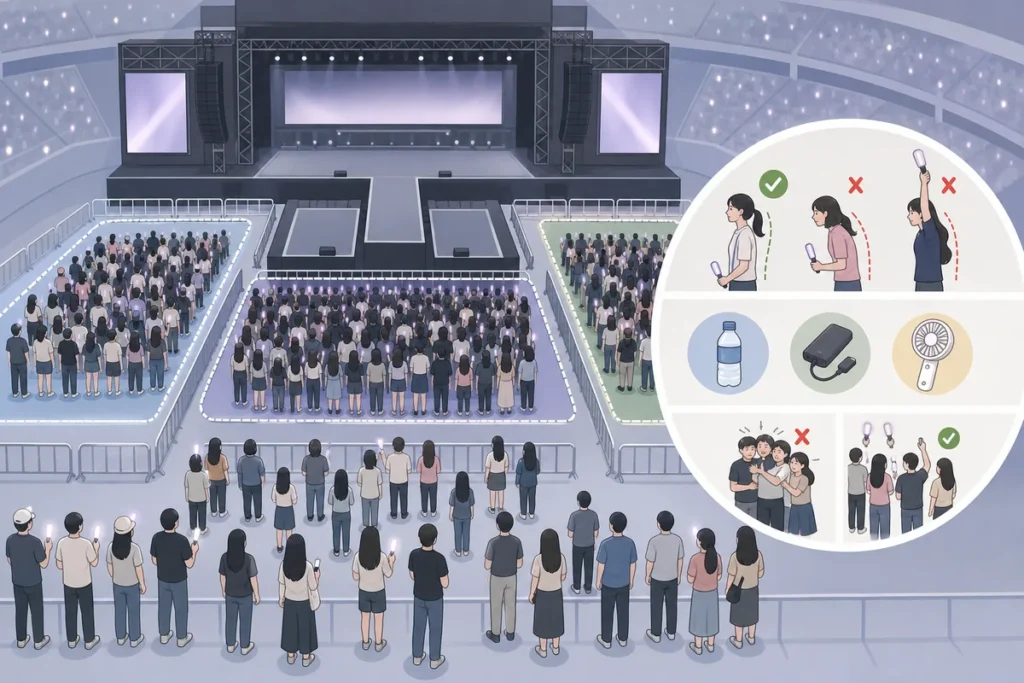
Table of Contents
- What Is a Standing Zone?
- How standing zone admission numbers work
- Why people line up early
- Numbered entry vs. random entry
- What to bring
- Wristbands and stamps
- Moving inside the standing area
- Etiquette and unwritten rules
- Common situations step by step
- What foreigners often get wrong
- Useful Korean phrases
- Warnings and things to check
- FAQ
- Summary

What Is a Standing Zone?
A standing zone is the floor area directly in front of the stage at many K-pop concerts in Korea. Unlike seated sections, where each ticket has a fixed row and seat number, the standing zone is general admission, so you stand wherever space is available once you enter. Because there are no assigned spots, the entry process matters a lot.
Standing zones are sometimes called the pit, the floor section, or 스탠딩 구역 (seutaending guyeok) in Korean. They are popular because they place fans close to the stage, but they also require more planning than seated tickets.
Not every concert has a standing zone. Some venues are fully seated, while others split the floor into different sections. Always check the official seating chart and event notice before assuming your ticket includes standing access.
How standing zone admission numbers work
An admission number, known in Korean as 입장번호 (ipjang beonho), is a number used to decide entry order for standing zone holders. It is separate from the ticket itself. Your ticket lets you attend the concert, but your admission number determines when you enter the standing area compared with other standing zone guests.
Organizers use different systems for admission numbers:
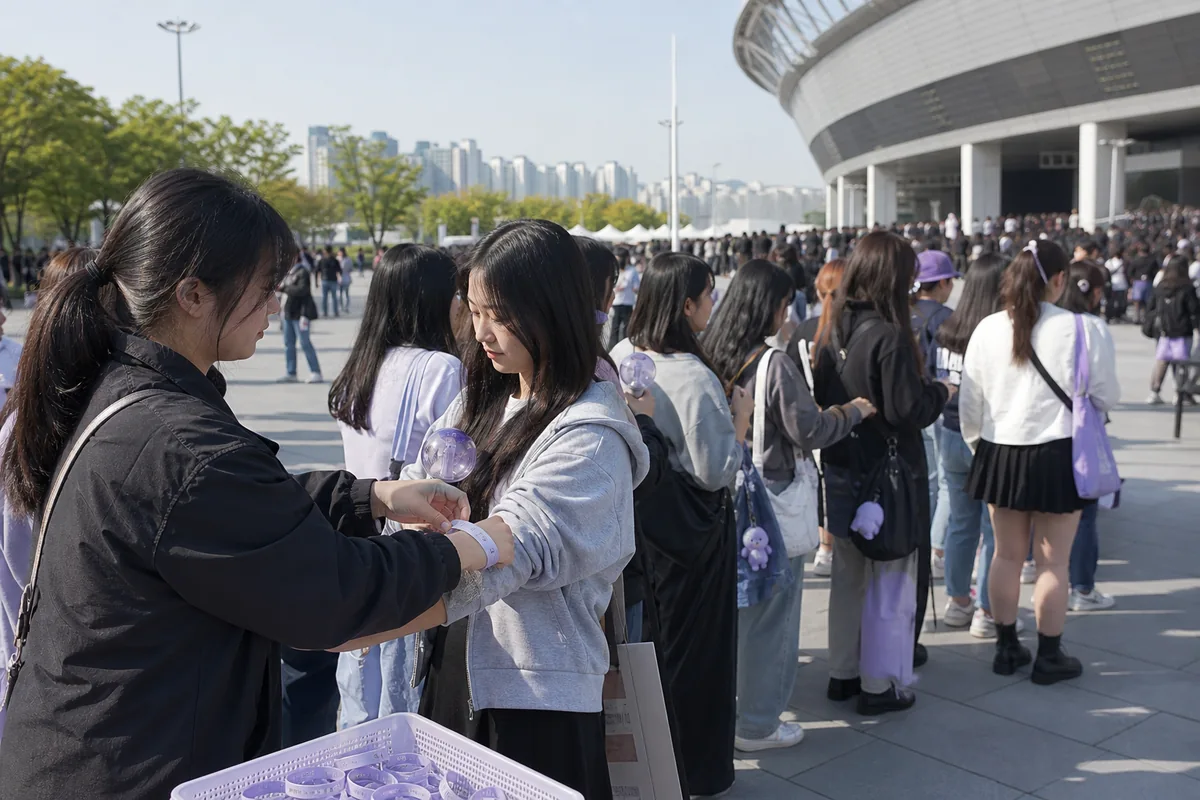
- On-site distribution: Staff hand out numbered cards or wristbands at a set time and place near the venue.
- Digital confirmation: Some events assign numbers through a ticketing site or app and ask you to confirm by a deadline.
- Queue-based order: At smaller events, the number may simply reflect the order in which fans joined the line.
Once the number groups are called, staff usually let people enter in batches. For example, one group may enter first, then the next group follows after a short wait. The exact system depends on the event.
For official ticketing and event notices, see Interpark Ticket and Melon Ticket. These platforms post the final instructions for each concert.
Why people line up early
When admission numbers are given out on a first-come, first-served basis, arriving early affects how close you can stand to the stage. A lower number usually means earlier entry, which gives you a better chance to choose a good spot.
Even when numbers are assigned in advance, fans often arrive early to:
- confirm their number with staff
- find the correct queue lane
- buy merchandise before the concert starts
- avoid missing their call group
For major concerts, standing zone holders often arrive several hours before the show. This is common practice, but the official notice should always be treated as the final rule.
Numbered entry vs. random entry
Most large K-pop concerts use some form of numbered entry, but the exact method is not the same everywhere.
Numbered entry helps reduce crowding and keeps the entrance safer. If your number group is called while you are away, you may have to wait for a later call or follow staff instructions for a separate entry window.
What to bring
- Your ticket: printed or mobile, depending on the event.
- Your ID or passport: some concerts require identity checks.
- Comfortable shoes: you may stand for several hours.
- A small bag: many venues restrict large backpacks.
- Water: check whether outside drinks are allowed.
- A charged phone: you may need it for tickets, notices, and contact.
- A portable charger: only if the venue allows it.
- Light layers: standing zones can get warm and crowded.
Wristbands and stamps
Many events use wristbands or hand stamps as proof that you have checked in for the standing zone. These may be checked again at the entrance to the floor area. In some cases, they also help staff manage re-entry, but that depends on the event rules.
If you get a wristband, keep it on until the event is over. If you get a stamp, avoid rubbing or washing the marked area until you are fully inside and no longer need verification.
Moving inside the standing area
Inside the standing zone, there are no assigned spots. You choose where to stand based on the space available when you enter.
- The center front fills up first.
- Side positions may give a clearer view than you expect.
- If you are shorter, try to avoid standing directly behind a very tall person.
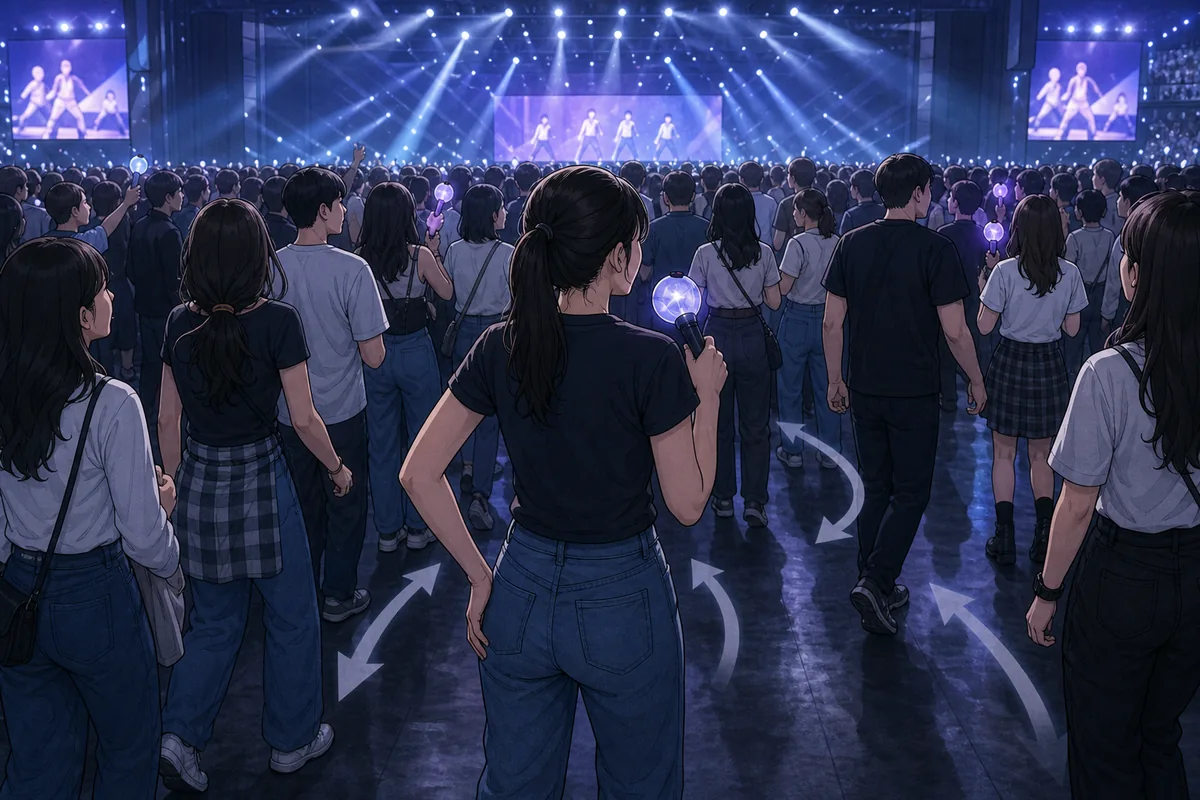
- Some movement is normal, especially when the crowd gets excited.
- If the area feels too tight, move toward the back or edge if possible.
Some venues divide the standing zone into smaller sections. If that happens, make sure you enter the correct area for your ticket type.
Etiquette and unwritten rules
Korean concert lines and standing zones have strong unwritten rules. Even if you did not mean to be rude, breaking them can lead to arguments with other fans.
- Do not cut the queue.
- Do not save a large number of spots for people who are not there.
- Do not push aggressively inside the crowd.
- Respect the people around you.
- Follow staff instructions immediately.
If you leave the line for a long time, do not assume you can return to the same place. Re-entry rules depend on the organizer.
Common situations step by step
1. Arriving at the venue
- Arrive before the official check-in or number distribution time.
- Look for staff signs showing number ranges or ticket types.
- Join the correct line for your section.
- Keep your ticket ready on your phone or in printed form.
2. Receiving your admission number
- Go to the designated check-in point.
- Show your ticket and ID if requested.
- Receive your number, wristband, or entry instruction.
- Stay near the queue area until your group is called.
3. Entering the standing zone
- Move with your group when staff call your number.
- Keep your ticket and wristband ready.
- Walk quickly but do not run.
- Choose a spot and settle in calmly.
What foreigners often get wrong
The ticket number is not the entry order
The number printed on your ticket is often only a booking reference or seat information. It is usually not the admission number used for the standing zone.
Arriving at show time is too late for many standing zones
For standing areas, the process often begins well before the concert starts. If you arrive too late, you may miss your call group.
Queue saving is not freely accepted
Holding a place for one or two people may sometimes be tolerated, but saving spaces for a large group is usually not accepted.
You cannot always move anywhere inside
If the standing area has sub-sections, your access may be limited to one part only.
Every concert can have different rules
Do not assume one concert’s process applies to the next. Always check the official notice for the specific event.
Useful Korean phrases for the standing zone
Warnings and things to check
- Read the official event notice before the concert day.
- Policies can change from one event to the next.
- Do not share or sell your admission number unless the official rules allow it.
- Check bag restrictions in advance.
- Check camera and recording rules before bringing equipment.
- If you feel unwell, move to the edge and alert staff right away.
- This guide is general information only. Official notices always come first.
FAQ
Does a visitor need an admission number for every standing zone concert?
Not always. Some events use numbered entry, while others use line order or open entry. Check the official notice for your concert.
Can a visitor leave the line and come back later?
Usually not in the same place unless the organizer specifically allows it. Ask staff before leaving the queue.
How early should a visitor arrive?
It depends on the event, but standing zone holders often arrive hours before entry starts. Follow the official schedule.
Is a standing zone better than a seat?
It depends on your preference. Standing zones can feel closer and more energetic, but they also involve long waits and less personal space.
Summary
A standing zone gives you close access to the stage, but it also comes with a stricter entry process than seated tickets. The key idea is simple: your ticket gets you in, while your admission number decides when you enter. Arrive early, follow the queue rules, keep an eye on official notices, and be ready for event-specific differences.
Related and Official Resources
Sources & Verification
- Seoul Arts Center — www.sac.or.kr
Last checked: July 30, 2026