How to Use Korean Coin Lockers: 물품보관함 Guide for Travelers
korean coin lockers are one of the easiest ways to store bags while you explore Korea. If you are arriving before check-in, changing stations, or taking a short day trip, a locker can save you from carrying heavy luggage all day. This guide explains how to find, pay for, and use a locker safely, and what to do when the system is different from place to place.
Quick Answer
Look for the sign 물품보관함 (mul-pum bo-gwan-ham) at subway stations, train stations, airports, and bus terminals. Choose a locker size, pay by card or cash depending on the machine, store your items, and save your receipt or code. Return before the time limit to collect your belongings. Systems vary by location, so always read the screen carefully.
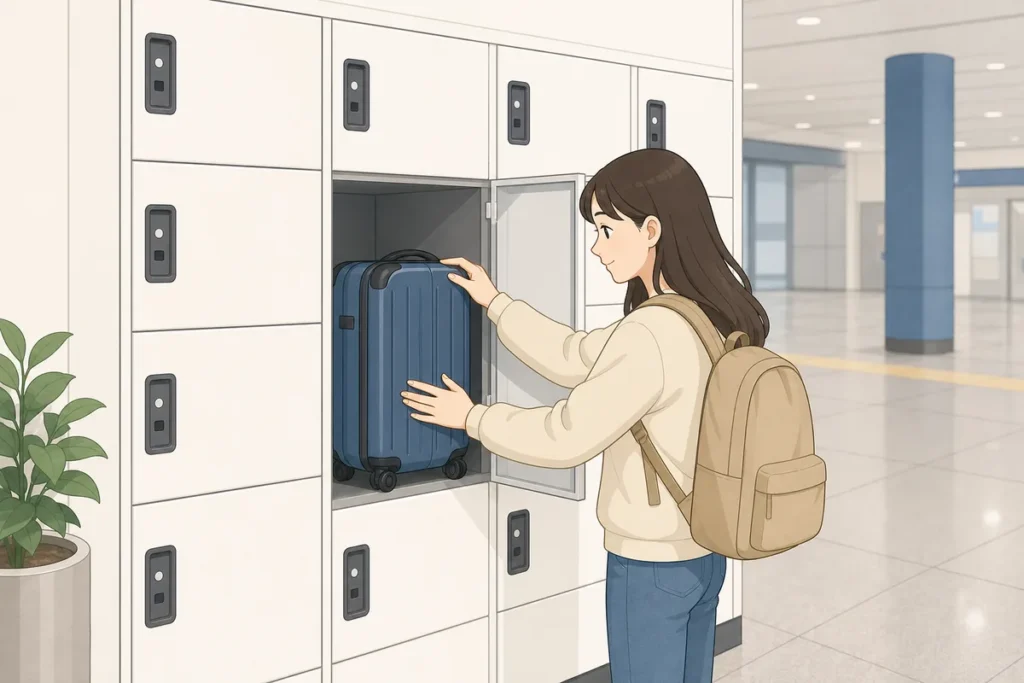
Table of Contents
- Where to Find Korean Coin Lockers
- How korean coin lockers Work: Step by Step
- Locker Sizes and What Fits Inside
- Payment Methods and System Variations
- Common Situations: Full Lockers, Failed Payments, Lost Codes
- What Foreigners Often Get Wrong
- Useful Korean Phrases
- Warnings and Things to Check
- FAQ
- Summary
Where to Find Korean Coin Lockers
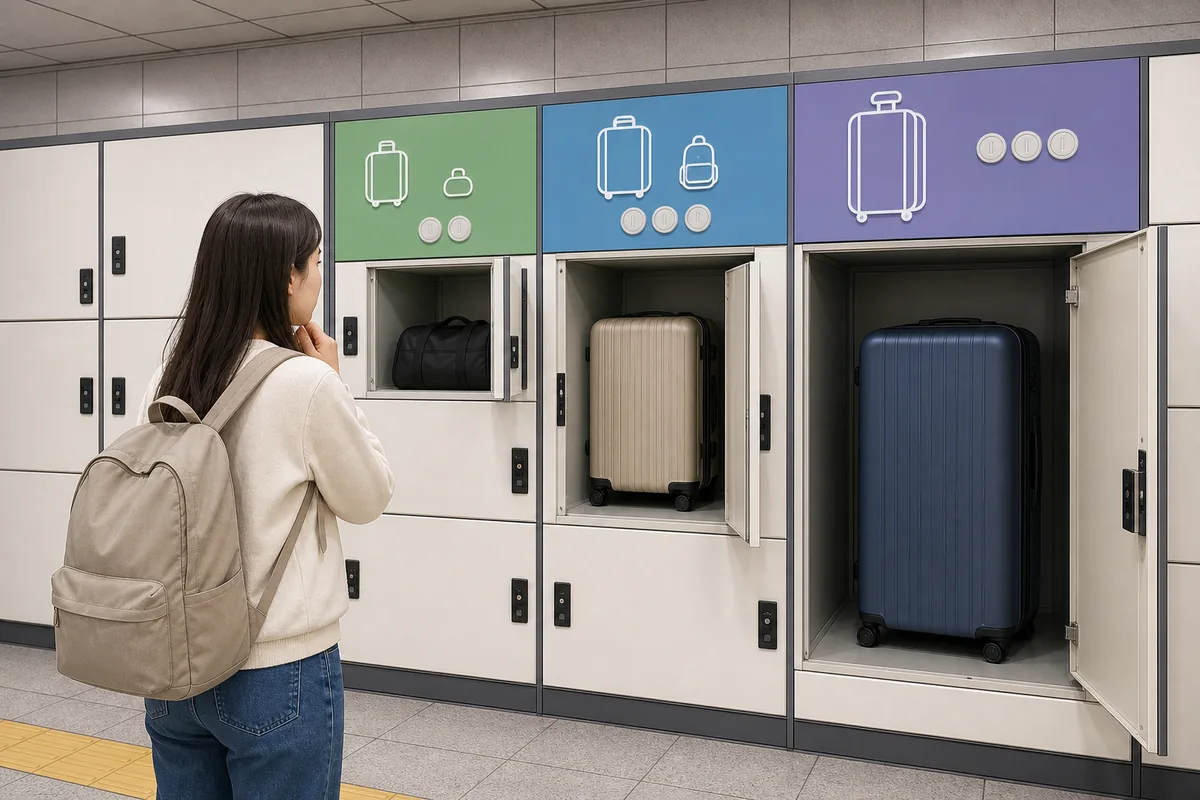
The Korean word for coin locker is 물품보관함. You may also see the shorter word 보관함 on signs. Once you know these words, finding a locker area becomes much easier.
Common Locations
- Subway stations: Many large stations in Seoul and other cities have lockers near exits or ticket gates.
- Train stations: Major rail hubs such as Seoul Station and Busan Station usually have organized locker areas.
- Airports: Airports often have luggage storage lockers, but the operator and payment method may differ from station lockers.
- Bus terminals: Large terminals often have locker sections, though they may be smaller than those in rail stations.
- Tourist attractions: Popular places sometimes offer lockers near the entrance for short-term use.
- Shopping malls and large buildings: Some malls provide free or paid storage near the main entrance or basement level.
If you are not sure where the lockers are, look for the 물품보관함 sign or ask staff at the information desk.
How korean coin lockers Work: Step by Step
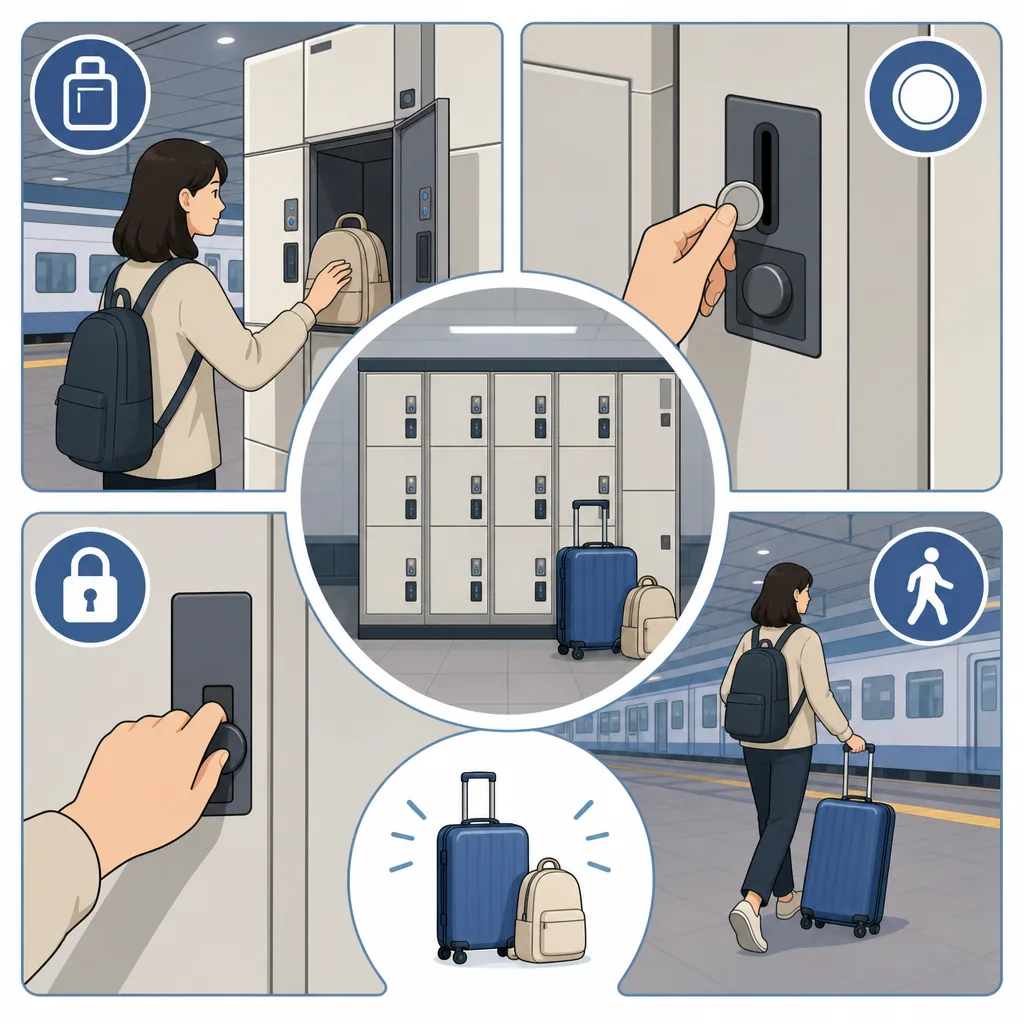
Most locker systems in Korea follow a similar process, but the exact steps can vary by location and operator.
Step 1: Find an Available Locker
Look for a locker with a green light, an open door, or a screen showing that it is available. Some systems use a touchscreen terminal that lets you choose from a map or a list of locker numbers.
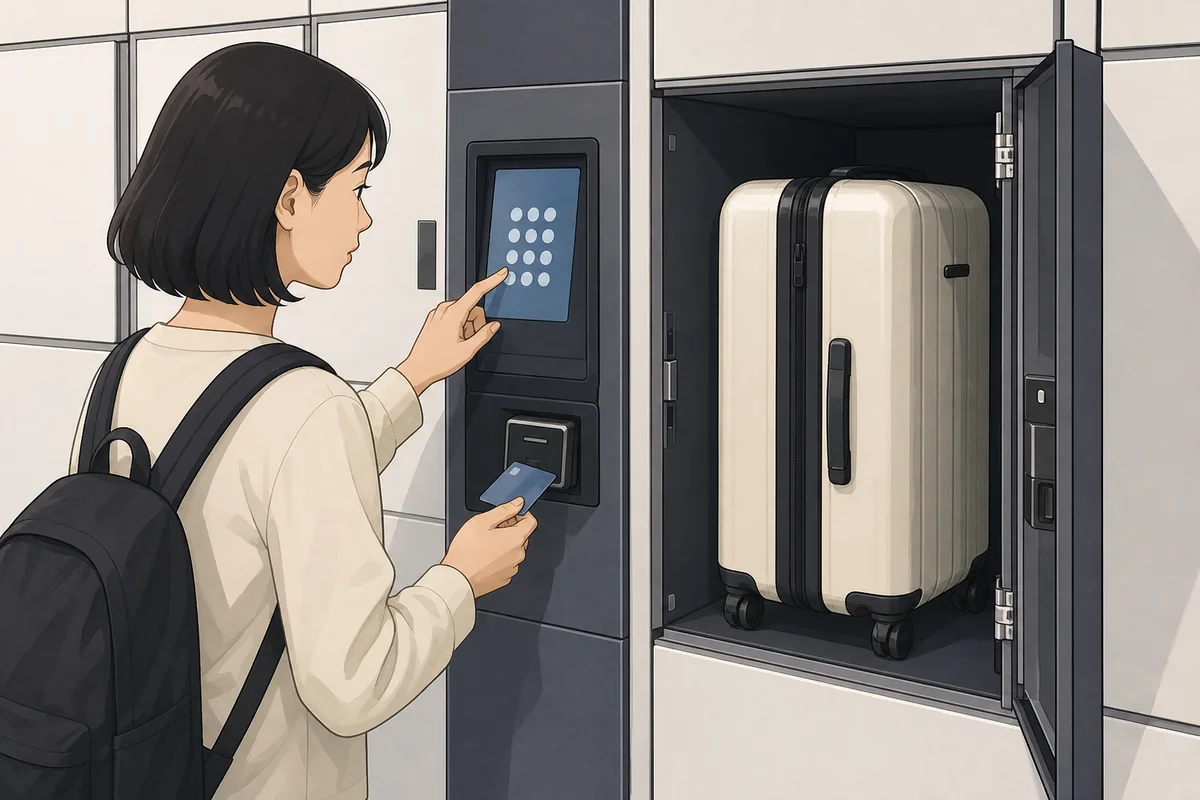
Step 2: Choose Your Locker Size
Lockers usually come in small, medium, and large sizes. Pick the size based on what you want to store. If you are not sure, compare the bag size with the locker dimensions before paying.
Step 3: Pay
Depending on the machine, you may pay with cash, credit card, debit card, or a transit card. Some newer systems also use QR codes, app-based payment, or a kiosk screen.
Step 4: Receive Your Code, Receipt, or Card
The machine may print a receipt, show a PIN code, or give you a QR slip or key card. Keep it safe. You will need it to open the locker again.
Step 5: Store Your Items
Place your belongings inside, close the door firmly, and make sure it locks. If the locker does not feel secure, check the handle again before leaving.
Step 6: Return and Retrieve
Come back before the time limit. Enter your PIN, scan your code, or use your card to open the locker. If the time limit has passed, you may need to pay extra before retrieval.
Locker Sizes and What Fits Inside
| Size | Typical Use | Example Items That Fit |
|---|---|---|
| Small | Day bags and personal items | Small backpack, handbag, shopping bag |
| Medium | Carry-on luggage and larger backpacks | Cabin-size suitcase, travel backpack |
| Large | Full-size checked luggage | Large suitcase, oversized travel bag |
Locker sizes are not perfectly standardized, so a medium locker at one station may be different from a medium locker somewhere else. If your bag is close to the limit, it is safer to choose the next size up.
Payment Methods and System Variations
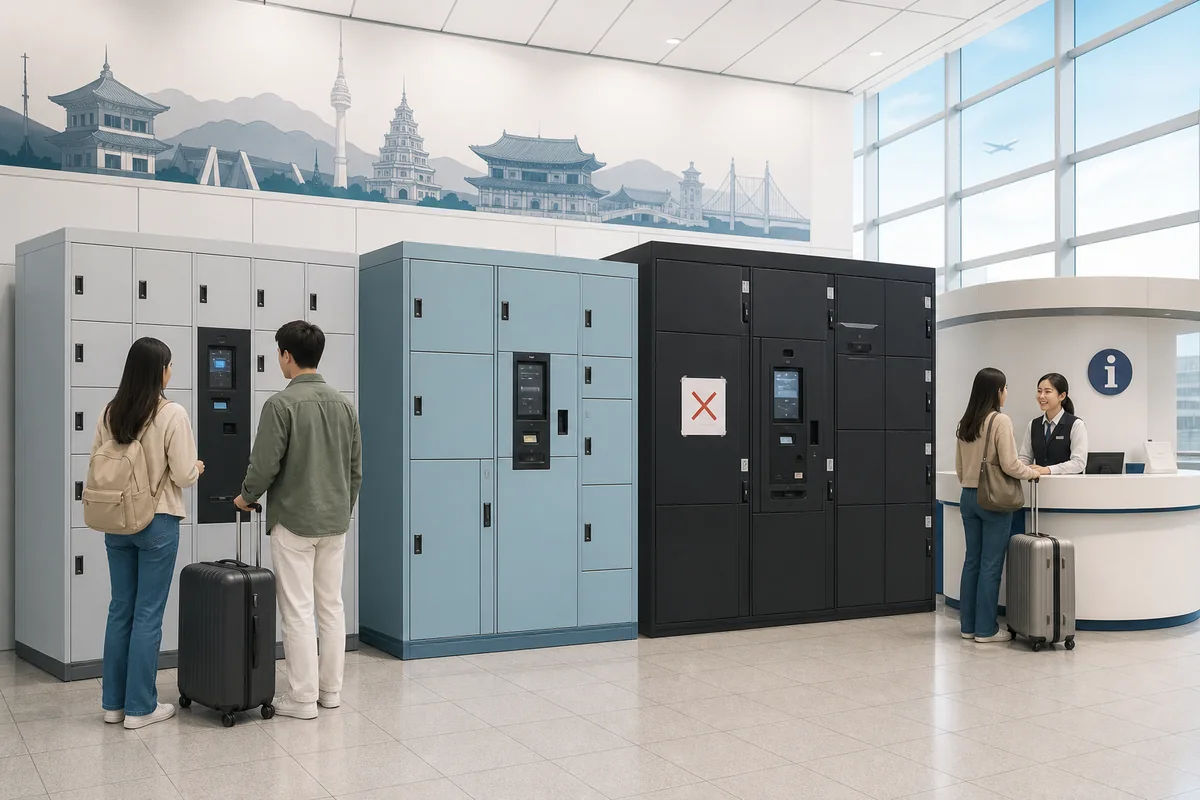
One of the most common points of confusion for travelers is that not all Korean coin lockers work the same way.
| System Type | Payment Method | Retrieval Method | Common Location |
|---|---|---|---|
| Touchscreen terminal | Card, cash, or transit card | PIN code or QR code | Major stations and newer facilities |
| Coin-operated locker | Coins only | Physical key | Older stations or smaller terminals |
| Card-only terminal | Credit or debit card | PIN code on screen or receipt | Airports and newer private operators |
| App or QR system | Card via app or QR scan | Phone QR code or printed slip | Tourist sites and private services |
| Staff-assisted storage | Cash or card at counter | Paper ticket or numbered tag | Some venues, museums, and malls |
Always check the screen before paying. If the machine only accepts cards and you only have cash, try another locker or another service area nearby.
Fees vary by location, size, and duration. Small lockers at transit stations are usually cheaper than airport or private operator lockers, and overnight storage may cost more. Always confirm the current fee on the machine screen before you pay.
Common Situations: Full Lockers, Failed Payments, and Lost Codes
All Lockers Are Full
Try another exit of the same station, since large stations may have multiple locker areas. If that does not help, check a nearby station or ask staff whether a luggage storage service is available.
Payment Fails
If your card does not work, the machine may not accept foreign cards. Older systems may only accept Korean payment methods. Try a different machine or a different payment option if available.
You Lost Your Receipt or Code
Go to the station information desk or customer service center and explain the problem. A payment record or card transaction screenshot may help staff verify your use.
The Locker Will Not Open
If the code is correct but the door still does not open, use the help button if one is available and contact station staff. Do not force the door.
What Foreigners Often Get Wrong
- Assuming every locker works the same: Station lockers, airport lockers, and private lockers can all have different rules.
- Not saving the code or receipt: Take a photo of the screen or receipt before you leave.
- Not checking the time limit: Some lockers are for short-term use only.
- Choosing the wrong size: A large suitcase may not fit in a medium locker.
- Not checking opening hours: Some locker areas close earlier than the station itself.
- Expecting English on every screen: Many machines have English, but not all do.
Useful Korean Phrases for Coin Lockers
These short words and phrases help you find lockers and understand the screen.
Warnings and Things to Check
- Take a photo of your locker number and code right away.
- Check the pickup deadline before you store anything.
- Confirm who operates the locker. Station lockers, private lockers, and venue lockers can have different rules.
- Do not store valuables, perishable food, or prohibited items.
- Overnight storage may not be allowed or may cost extra.
- Fees and systems can change. Always confirm the current information on site.
FAQ
Can a visitor use a foreign credit card at Korean coin lockers?
Many newer lockers at major stations and airports accept international credit cards, but older machines may only accept Korean payment methods. Check the screen before you begin.
How long can a visitor leave a visitor’s bag in a locker?
The time limit depends on the location and operator. Some lockers are for a few hours, while others allow longer storage. Always check the posted rules.
What if a visitor return late?
You may need to pay an extra fee, and in some cases the locker contents may be moved to lost property. Contact staff as soon as possible.
Are there coin lockers at Incheon Airport?
Yes. Incheon Airport has luggage storage services in its terminals, but the exact location, size options, and prices can change.
Can a large suitcase fit in a Korean coin locker?
Often yes, but only in a large locker. If your suitcase is close to the size limit, choose a larger unit or ask staff for help.
Summary
Korean coin lockers are a simple and useful way to store bags while traveling in Korea. Look for 물품보관함, check the size and payment method, save your receipt or code, and return before the deadline. Because systems vary, always read the screen carefully and keep a backup photo of your locker information.