Buying Skincare In Korea: What You Need to Know
- Do not buy a product just because it is viral or a bestseller.
- Do not skip a patch test if your skin is sensitive.
- Do not assume duty-free is always the cheapest option.
- Do not trust claims like “cures acne” or “erases wrinkles fast.”
- Do not ignore the ingredient list just because the packaging looks premium.
- Do not let a set discount push you into buying more than you need.
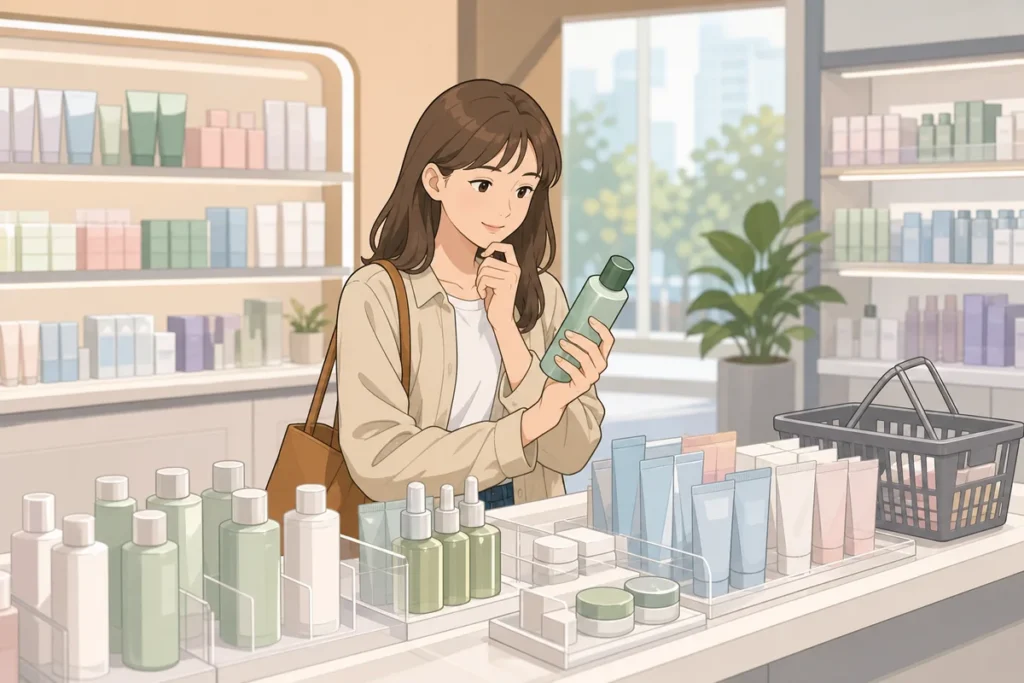
What to check before you buy skincare in Korea
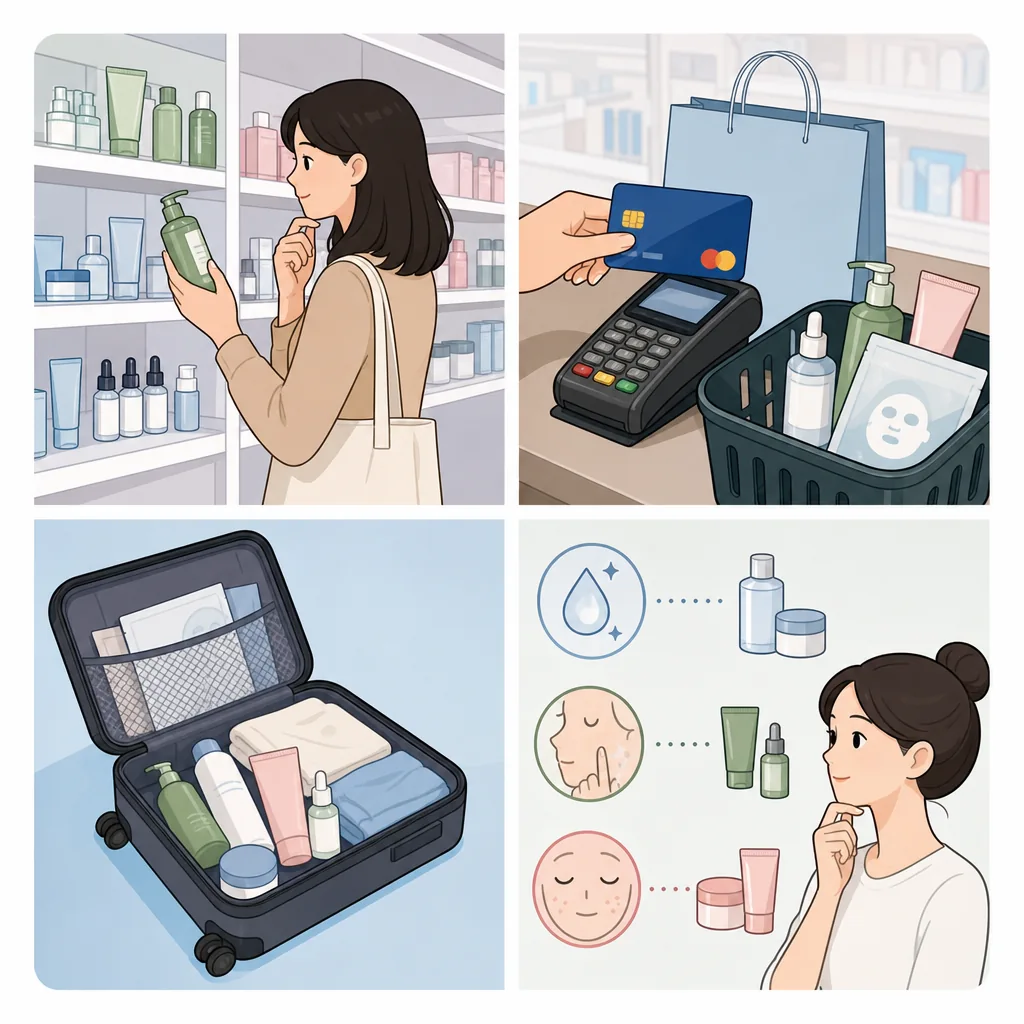
When buying skincare in Korea, the biggest mistake is choosing products because they look trendy or inexpensive instead of checking whether they fit your skin. Start with the basics: your skin type, your current concern, and any ingredients you already know work well or cause trouble.
Store shelves often show English on the front and more detail on the back, but the product type matters more than the brand name. Look for whether it is a toner, serum, cream, or sunscreen, then check whether it is meant for oily, dry, sensitive, acne-prone, or combination skin. Staff at major beauty shops are used to helping foreign shoppers, so saying you have sensitive skin or showing a translated note on your phone usually gets you a useful answer.
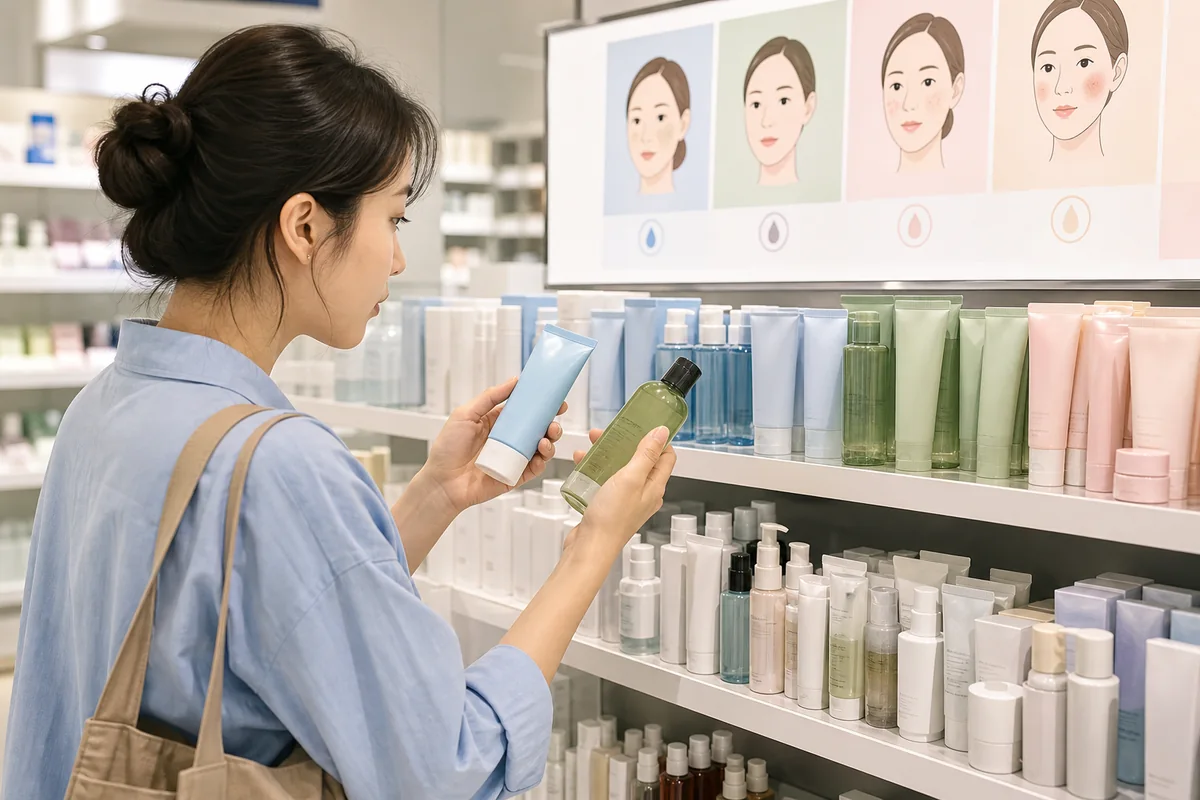
How to match products to your skin type
Korean skincare is often made in several versions for different skin types. A moisturizer that works well for dry skin can feel heavy on oily skin, and a lightweight gel that suits oily skin can feel too thin in winter for dry skin. One of the most common mistakes is buying the most popular version without checking which skin type it targets.
Use these simple cues:
- Oily skin: look for oil-free, sebum-control, mattifying, or gel textures.
- Dry skin: look for hydrating, moisture barrier, ceramide, or hyaluronic acid.
- Sensitive skin: look for calming, cica, fragrance-free, or hypoallergenic.
- Acne-prone skin: look for non-comedogenic, BHA, tea tree, or pore care.
- Combination skin: look for balancing or lightweight formulas.
If you are unsure of your skin type, wash your face with a plain cleanser, wait about an hour without applying anything, and notice where your skin feels tight or shiny. That quick check is often more helpful than a quiz or a sales pitch.
Useful phrases for asking about skin type in store
How to test products safely in stores
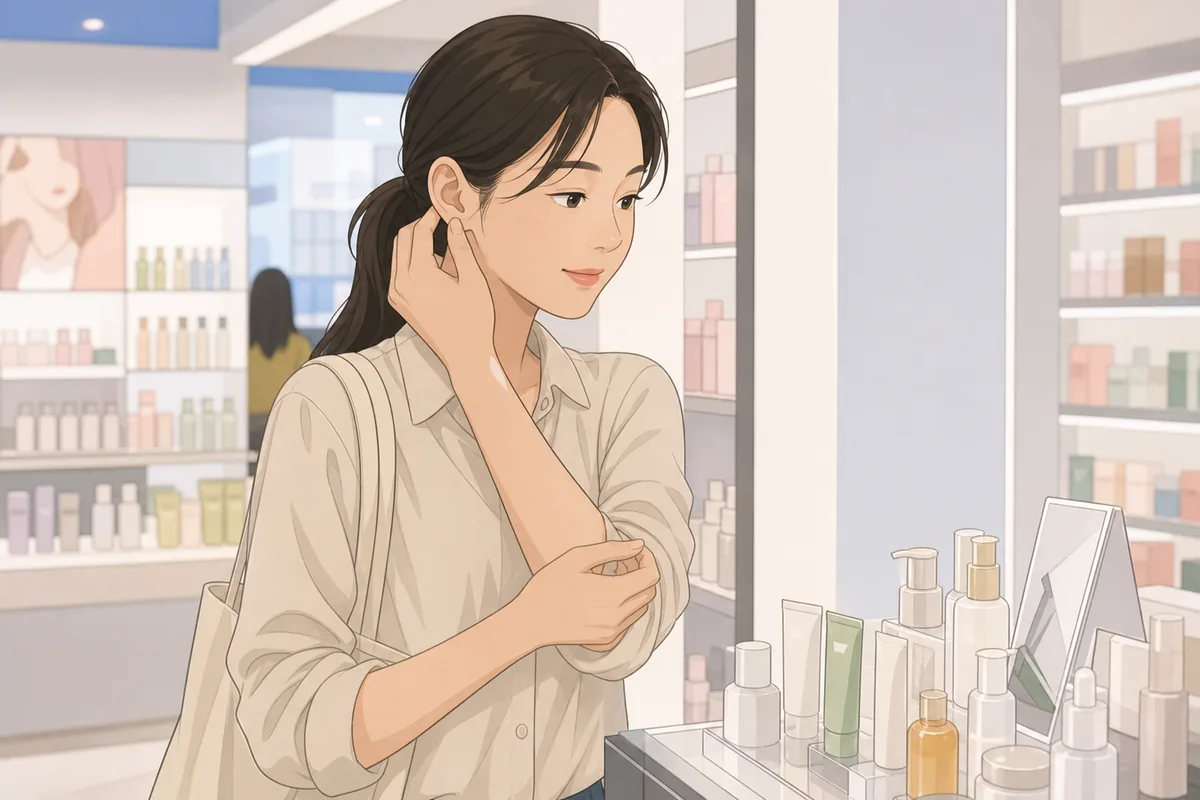
Tester use is normal in Korean beauty stores, including Olive Young, brand stores, and department store counters. The mistake is treating a tester like a full skincare trial. A quick swatch tells you about texture and scent, not how your skin will react after several days.
Use a small amount on your inner wrist or the back of your hand first. For foundation or tinted products, the jawline is usually a better color match than the wrist. If the tester comes with a single-use spatula or cotton pad, use it. Do not put your fingers directly into shared jars or use a dirty applicator on your face.
If the tester looks messy or there is no clean way to use it, skip it and ask staff for a sample sachet. A sample you can take back to your hotel is often the smarter choice for serums, essences, and creams because it shows how the product behaves over more than one use.
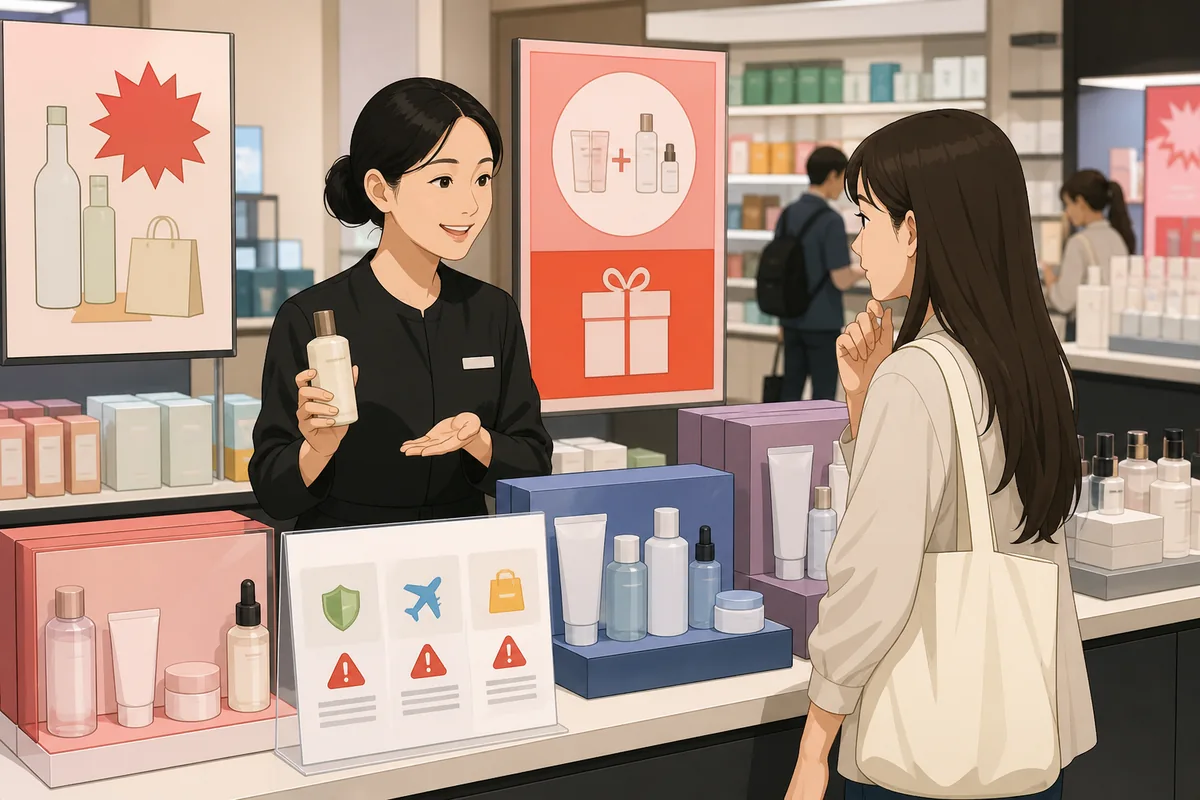
What duty-free can and cannot change
Duty-free shopping in Korea can lower the final price, but it does not automatically mean the best deal. That is one of the easiest mistakes to make when buying skincare in Korea, especially at airports or in-city duty-free stores where the packaging looks attractive and the discount signs are loud.
Check three things before you decide:
- Set contents: many duty-free deals bundle full-size items with minis.
- Regular store promotions: chain stores often run discounts, coupons, or buy-one-get-one offers.
- Exact size: compare the unit price, not just the sticker price.
Duty-free is often useful for premium brands, but regular retail can be just as good for individual items. If you want the best value, compare the total price in the store, not the promise on the sign. It also helps to remember your home country’s import rules and allowance if you are bringing back a lot of cosmetics.
Why popular or trending products are not always right for you
Trending products sell quickly because they are visible, not because they are right for every skin type. A rich cream that is perfect for dry skin can feel too heavy on oily skin. A popular brightening serum can be a bad match if your skin is already sensitive to active ingredients.
Use trends as a clue, not a decision. If an ingredient like cica, ceramide, or hyaluronic acid is everywhere, that only helps if the formula matches your skin and your routine. A better question for staff is not “what is popular?” but “what fits a visitor’s skin and climate right now?”
How to spot medical-style claims and overpromises
Cosmetics are cosmetics, not medicine. That matters when a package or ad sounds more like a treatment plan than a beauty product. If you see promises like curing acne, erasing wrinkles quickly, or changing skin in a few days, treat that as a warning sign.
Cosmetic products can improve hydration, texture, shine, and the look of redness. They can support healthy-looking skin. They are not a substitute for medical treatment, and they do not replace a dermatologist for persistent acne, pigmentation, or skin conditions.
Watch especially carefully with brightening or whitening language. In cosmetic use, “brightening” usually means a more radiant or even-looking finish, not a medical result. If the claim sounds extreme, the safest move is to lower your expectations or skip the product.
Simple buying checklist for tourists
Before you pay, check these five things:
- Does it match your skin type?
- Did you test a small amount first?
- Did you compare duty-free with regular retail?
- Does the claim sound cosmetic, not medical?
- Are you buying it because you need it, not just because it is trending?
How does a visitor choose skincare in Korea for a visitor’s skin type?
Start with your basic skin type: oily, dry, sensitive, combination, or acne-prone. Then choose products labeled for that type and ask staff for a gentle or simple option if you are unsure. Brand popularity matters less than whether the formula fits your skin.
Is it okay to use testers in Korean beauty stores?
Yes. Tester use is normal in Korean beauty stores, but use clean applicators and apply only a small amount. A tester is best for checking texture, scent, and first impressions. If you want a better idea of long-term reaction, ask for a sample sachet.
Does duty-free always make skincare cheaper in Korea?
No. Duty-free can be a good deal, but regular stores often run discounts and bundles that are just as competitive. Compare the total value, the size, and what comes in the set before buying.
Can a visitor trust skincare products that say they heal acne or erase wrinkles?
No. Those are medical-sounding claims, and cosmetics should not be treated like medicine. A skincare product can help the look of skin, but it should not promise to cure a condition or replace dermatology care.
Are trending Korean skincare products always a good buy?
Not always. Trends are useful as a starting point, but the best product is the one that matches your skin type, climate, and routine. A viral product that works for someone else can still be a poor fit for you.
Note: This guide is for travel navigation in Korea. It is not medical, legal, or emergency professional advice. For urgent situations, contact local emergency services, official staff, or your embassy/consulate as appropriate.
Related Korea Guides
Sources & Verification
- VISITKOREA – Imagine Your Korea — english.visitkorea.or.kr
Last checked: July 30, 2026