Quick Answer
Everyday life in Korea is mostly apartment blocks, bus stops, neighborhood shops, school gates, markets, and parks—not just entertainment districts. If you are trying to understand what you will actually see on the street, this guide helps you read the ordinary places and signs that shape daily life in Korea.
What to Do First
- Look for the large entrance number on apartment gates—it tells you which complex and building you are near.
- Find the nearest convenience store (편의점) as your first orientation landmark; they are on almost every block.
- Check bus stop poles for route numbers and the subway symbol (M or a colored circle) to confirm transit access.
- Watch for yellow zigzag road markings near school gates—slow down and stay alert in those zones.
- Spot the green cross sign to identify a pharmacy when you need basic supplies.
- Use the park notice boards (안내판) to understand what areas are open and where paths lead.
- When in doubt about a building’s purpose, look for the Korean label above the entrance—this guide decodes the most common ones.
When This Guide Helps
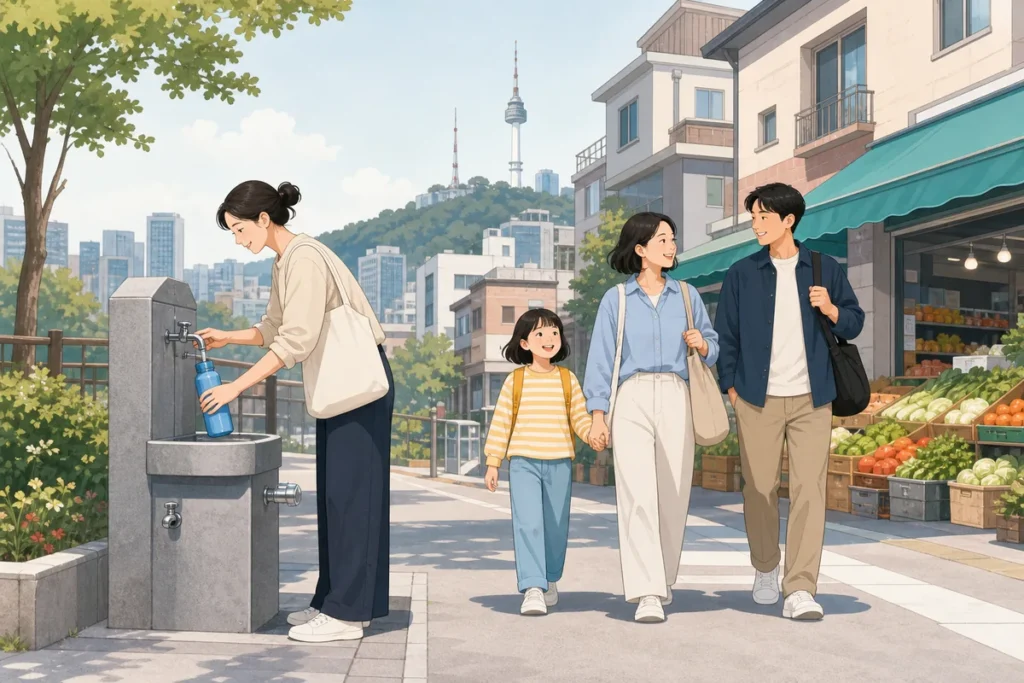
You are walking through a real neighborhood and the streets feel quieter, more residential, and full of signs you cannot read. You are not lost exactly, but you are not sure what you are looking at. This guide is for that moment.
It also helps if you are staying in a local guesthouse, renting a short-term apartment, visiting a friend outside the city center, or simply trying to understand what everyday life in Korea looks like beyond the pop-culture image.
What Everyday Life in Korea Looks Like
Apartment Complexes (아파트 단지)
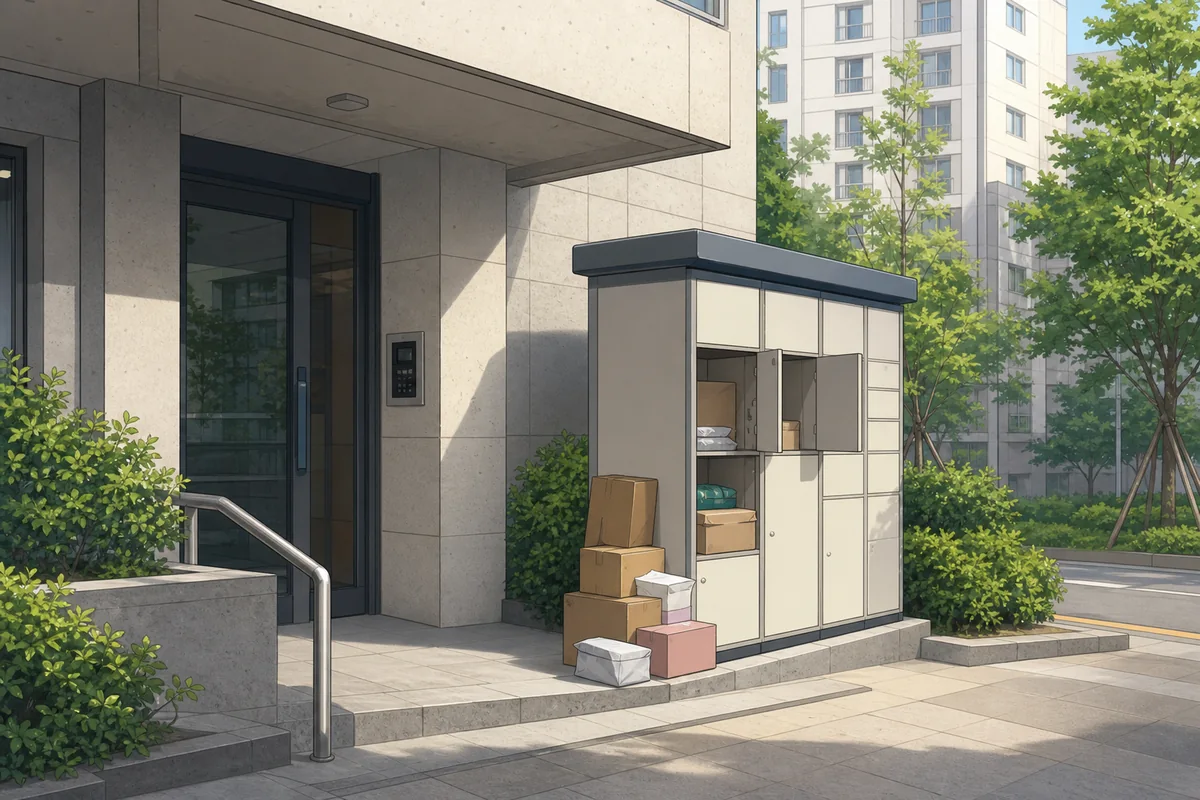
The most common feature of city and suburban neighborhoods is the apartment complex. These are clusters of identical high-rise buildings, usually numbered, with shared parking, courtyards, and often a playground or garden. The entrance gate usually shows the complex name, and each building is labeled with a number (동, pronounced dong). If you are meeting someone inside, they will often come out to the gate rather than expecting a visitor to enter alone.
Villas and Low-Rise Homes (빌라, 단독주택)
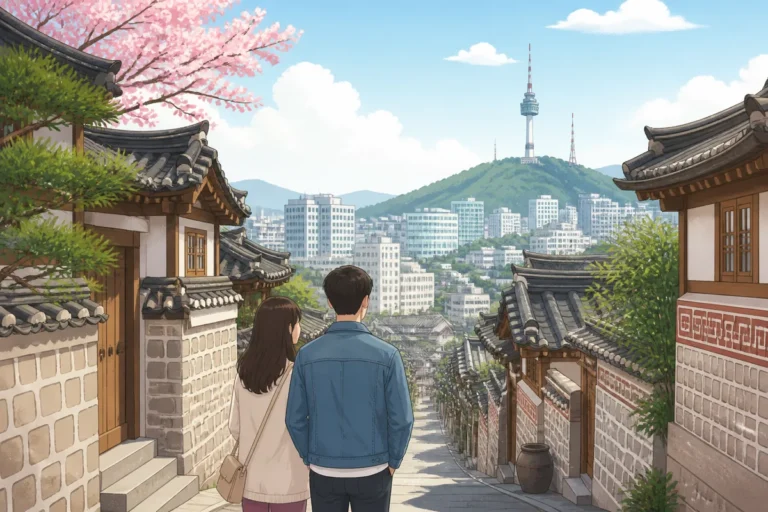
Older neighborhoods and hillside areas often have smaller buildings called 빌라: three to five stories, usually without an elevator. You may also see 단독주택, or standalone houses, behind small walls or gates. These areas have narrower alleys, fewer chain stores, and a more local feel.
Commuter Routes and Transit Points
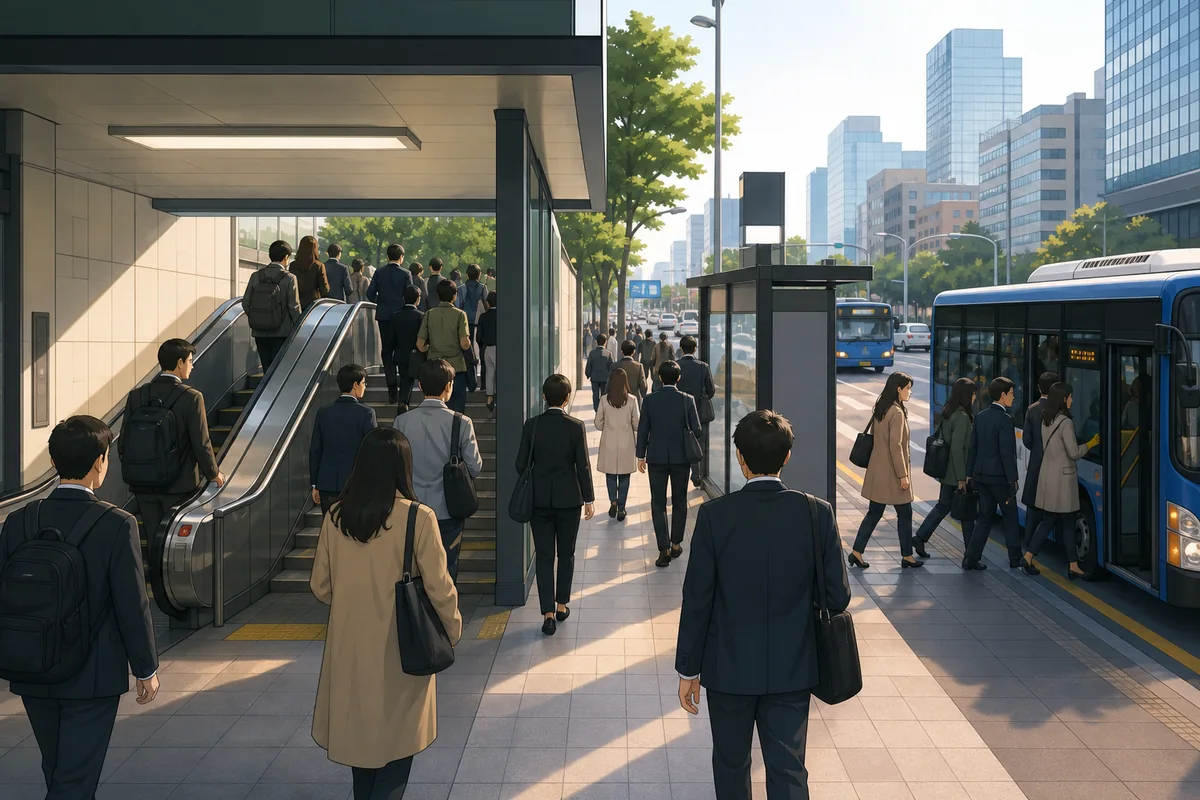
Morning and evening rush hours turn ordinary streets into streams of commuters. Bus stops fill quickly, and subway entrances become bottlenecks. At these times, stay to the right on stairs and escalators, and let people exit before you board.
Bus stops usually have a pole with route numbers listed vertically. Many now include a digital screen showing the next arrival in minutes. Subway entrances are marked with a station symbol or number, and the station name is often shown in Korean plus English or romanization.
Traditional Markets (시장)
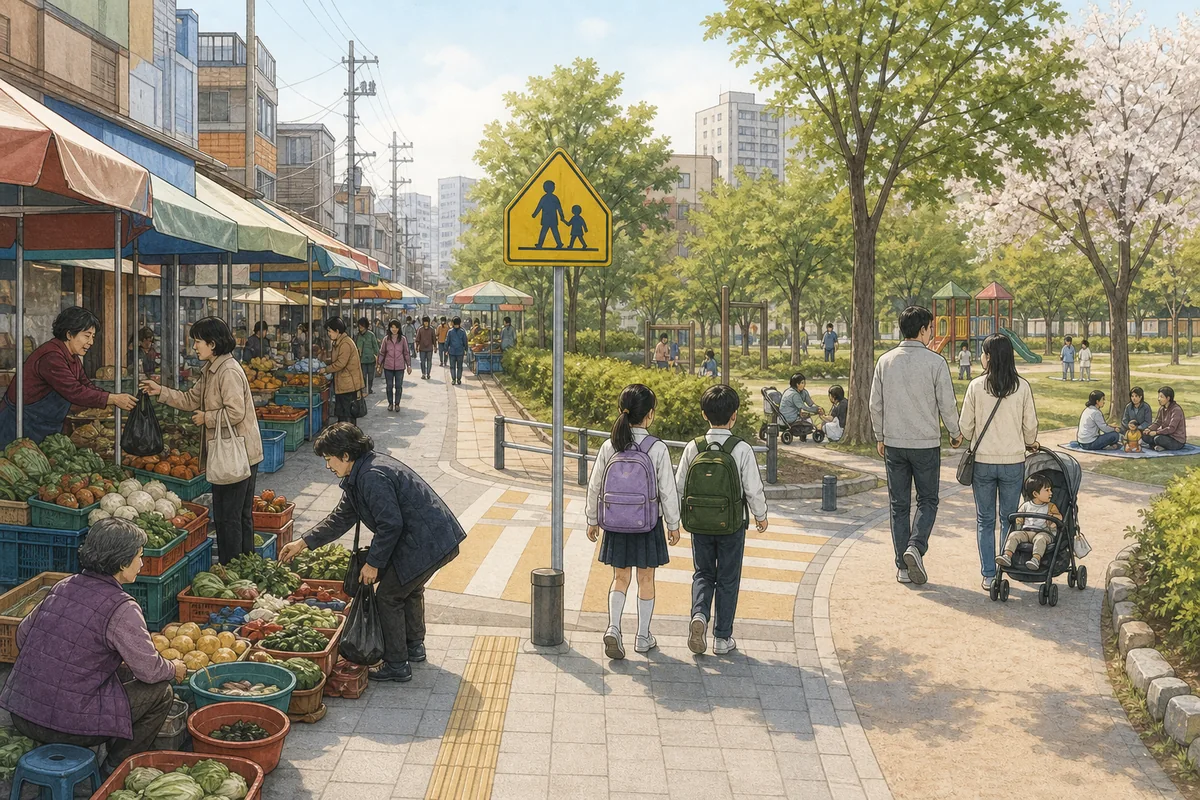
Most neighborhoods have a traditional market nearby. These are covered or semi-covered alleys lined with stalls selling vegetables, fish, meat, snacks, and household goods. The entrance usually has a large 시장 sign or the market name. Inside, it is busy and loud, with vendors calling out and food being cooked nearby.
You do not need Korean to shop there. Point at what you want, show how many with your fingers, and the vendor will usually show the price on a calculator. Cash is still common at market stalls.
School Zones (어린이 보호구역)
Around elementary schools, you will see yellow or orange road markings, reduced speed signs, and the phrase 어린이 보호구역 on signs and painted on the road. This means children’s protection zone. Traffic is slower here, especially during school hours, so cross normally and follow the signal.
Parks and Community Green Spaces (공원)
Korean neighborhoods almost always have a nearby park, from a small square with benches to a large riverside park with cycling paths. The entrance often has an 안내판 with a map, rules, and facility locations. Park exercise equipment is free to use, and many parks have morning exercise groups or after-school play areas.
Small Local Streets and Storefronts
The ground floor of many neighborhood buildings is commercial. You will often see a convenience store (편의점), pharmacy (약국, marked with a green cross), hair salon (미용실), snack shop (분식), dry cleaner (세탁소), and real estate office (부동산). These storefronts are the backbone of daily life in Korea, and the convenience store is often the easiest landmark to find.
Korean Phrases You Can Show
Useful Korean Signs or Words
Where to Get Help
If you are lost in a neighborhood, a convenience store is usually the easiest first stop. Staff are used to answering basic direction questions, and the store itself is a strong landmark.
Pharmacies are another useful place to ask for directions or basic supplies. Subway stations also have staffed information windows near the gates. If you need a government office for a local neighborhood question, look for a 주민센터, which is the community center for the area.
For emergency help, call 112 for police or 119 for fire and ambulance.
Common Mistakes
- Walking into apartment complexes uninvited. They often look open, but they are private residential space.
- Assuming the market takes cards. Traditional market stalls are often cash-friendly first.
- Ignoring school-zone markings. Use the crosswalk and follow the signal near 어린이 보호구역 signs.
- Confusing 부동산 with a regular shop. It is a real estate office, not a general convenience store.
- Missing the bus stop screen. The digital arrival board is often the fastest way to check the next bus.
- Expecting English menus at 분식 shops. Pointing and simple phrases work better than searching for a full menu translation.
FAQ
What does everyday life in Korea look like outside tourist areas?
Outside tourist districts, everyday life in Korea is mostly residential and practical. You will see apartment blocks, small shops on the ground floor, bus stops with arrival screens, school gates with yellow zone markings, and nearby parks. Traditional markets add noise and color, but the general rhythm is quiet and functional.
What are common places foreigners see in a Korean neighborhood?
Common sights include apartment gates, convenience stores, pharmacies, snack shops, dry cleaners, hair salons, bus stops, subway entrances, and local parks. In older areas, you may also see low-rise villa buildings and a traditional market alley.
Is life in Korea mostly in apartment buildings?
In cities and suburbs, apartment complexes are the most common housing form, so they shape much of daily life. You will also see villa buildings and standalone homes in older or less dense neighborhoods.
What Korean signs should a visitor recognize in everyday areas?
The most useful signs are 편의점, 약국, 시장, 공원, 어린이 보호구역, 동, 안내판, and 지하철 or a subway symbol. These cover the main places and labels you will encounter in a normal neighborhood.
Note: This guide is for travel navigation in Korea. It is not medical, legal, or emergency professional advice. For urgent situations, contact local emergency services, official staff, or your embassy/consulate as appropriate.
Sources & Verification
- VISITKOREA – Imagine Your Korea — english.visitkorea.or.kr
Last checked: July 30, 2026