Quick Answer
Korean hotel room controls usually follow the same order: insert the card key first, turn on the master lights near the entrance, then use the wall panel or remote for heating or cooling. Do-not-disturb and cleaning buttons are often separate near the door or bedside, and the front desk can explain the exact layout for your room in a minute.
What to Do First
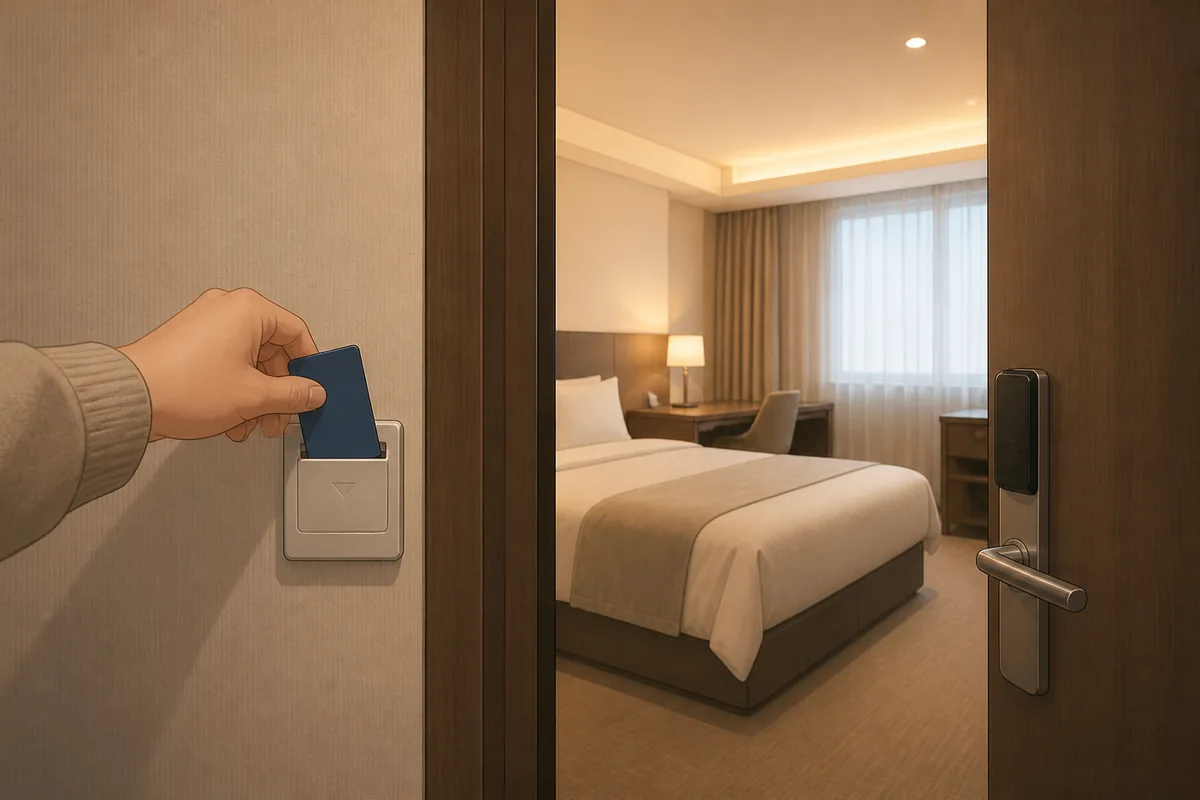
- Put the room card into the power slot by the door
- Look for the main light switch or all-lights button near the entrance
- Find the temperature panel and check whether it shows heating or cooling
- Use the up and down buttons to set the room temperature
- Check the door-side or bedside buttons for do-not-disturb and housekeeping
- If the panel does not respond, ask the front desk whether the hotel uses a centralized seasonal system
When This Guide Helps
If Korean hotel room controls look confusing, the usual fix is simple: check the card slot, the main light switch, and the temperature panel in that order. Many visitors think the room is broken when it is really set up with a master power card, a separate light switch, and a seasonal heating or cooling system. Some hotels use a bedside remote, some use a wall panel, and some use both. Check VISITKOREA – Imagine Your Korea for the current details.
That layout is common in business hotels, city hotels, and newer chain properties. The exact icons and labels vary, but the control pattern is usually the same.
Korean Hotel Room Controls Explained
Card-Key Power Slot
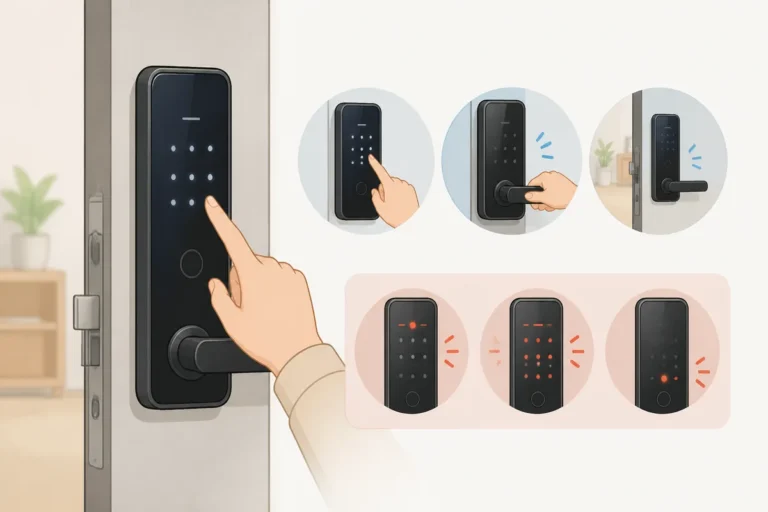
In many Korean hotels, the room card goes into a slot just inside the door. That slot turns on the room power. Without the card in place, lights, outlets, and the air conditioner may not work. Some newer hotels use a tap-style sensor instead of a physical slot, but the job is the same.
If the room feels dead when you enter, check this first. It is one of the most common reasons a traveler thinks the room is malfunctioning.
Master Light Switch
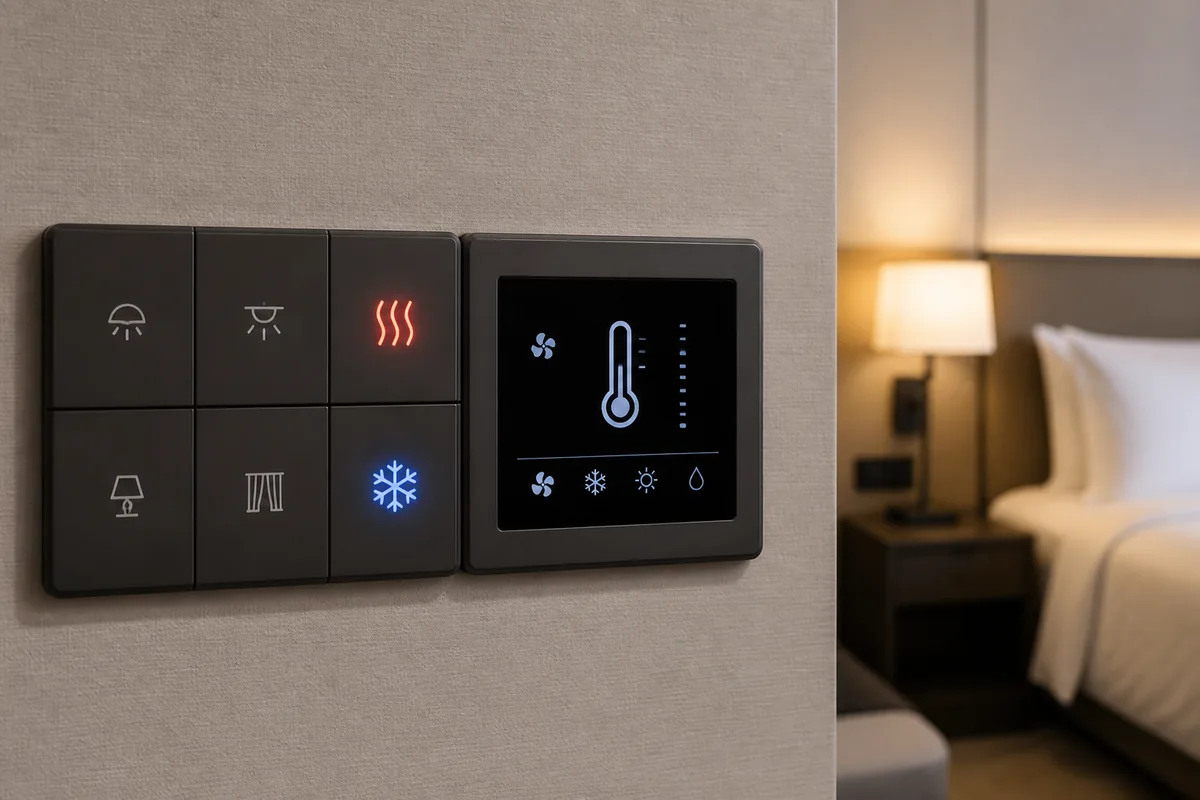
Many rooms have a master switch near the entrance. It may be marked as all lights, whole room, or use the Korean word 전체 (jeonche), meaning all. Pressing it usually turns the main room lights on or off at once. Bedside lamps, desk lamps, and bathroom lights often have their own switches too.
If only one light works, look for a second switch beside the bed or desk. The room may be fine; the individual lamp is just off.
Heating and Air Conditioning
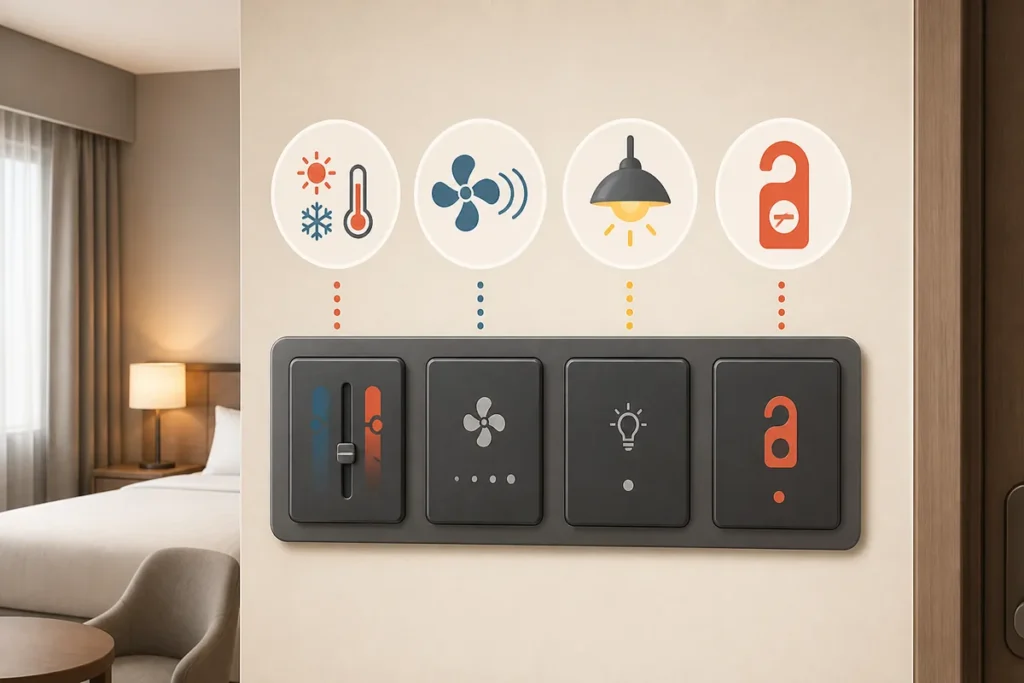
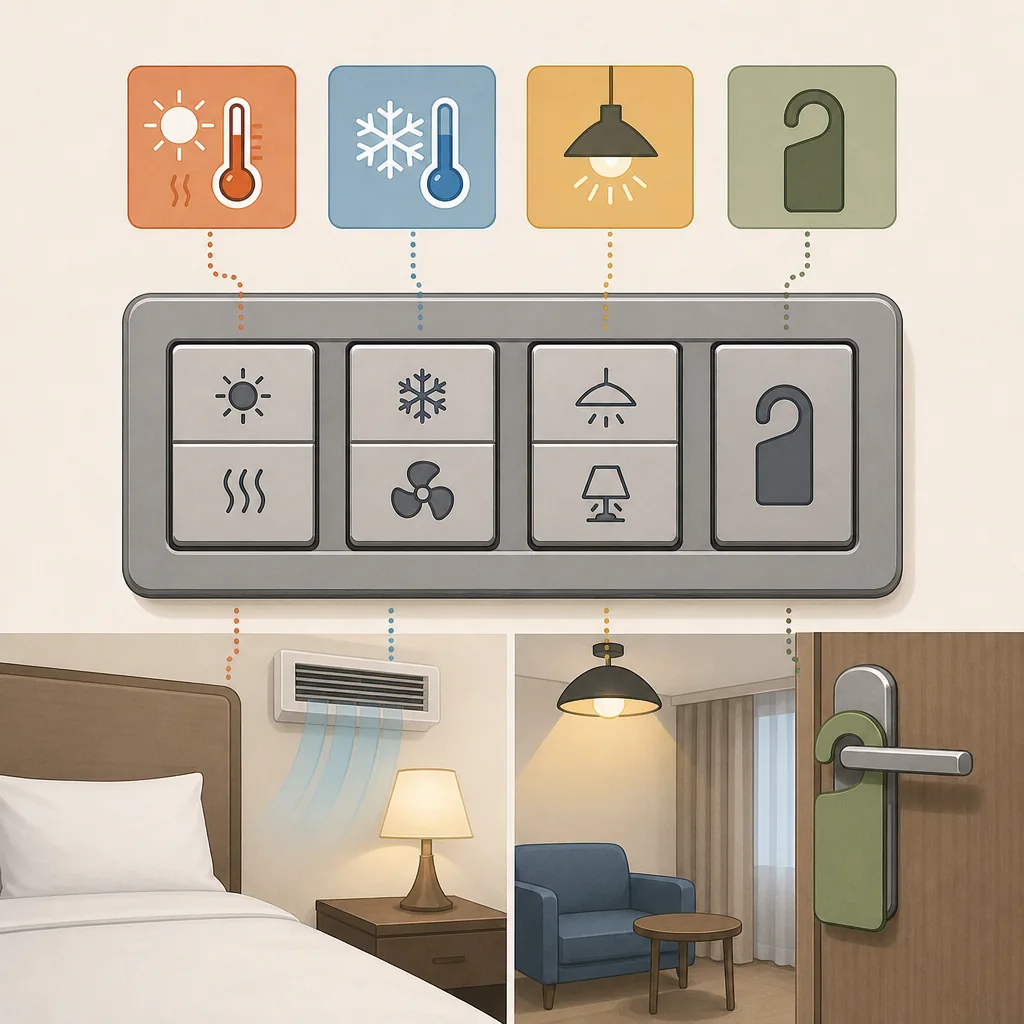
Temperature controls are usually on a wall panel or small remote. Look for 난방 (nanbang) for heating and 냉방 (naengbang) for cooling. A snowflake icon usually means air conditioning, while a sun or flame icon usually means heat.
One common point of confusion in Korean hotels is centralized seasonal control. Some properties only run heating in colder months and only run cooling in warmer months. In those rooms, the panel may show a setting but still not let you switch modes freely. If the room is too hot or too cold and the panel does not change anything, the front desk can confirm whether the hotel is using a central system.
Do-Not-Disturb and Cleaning Buttons
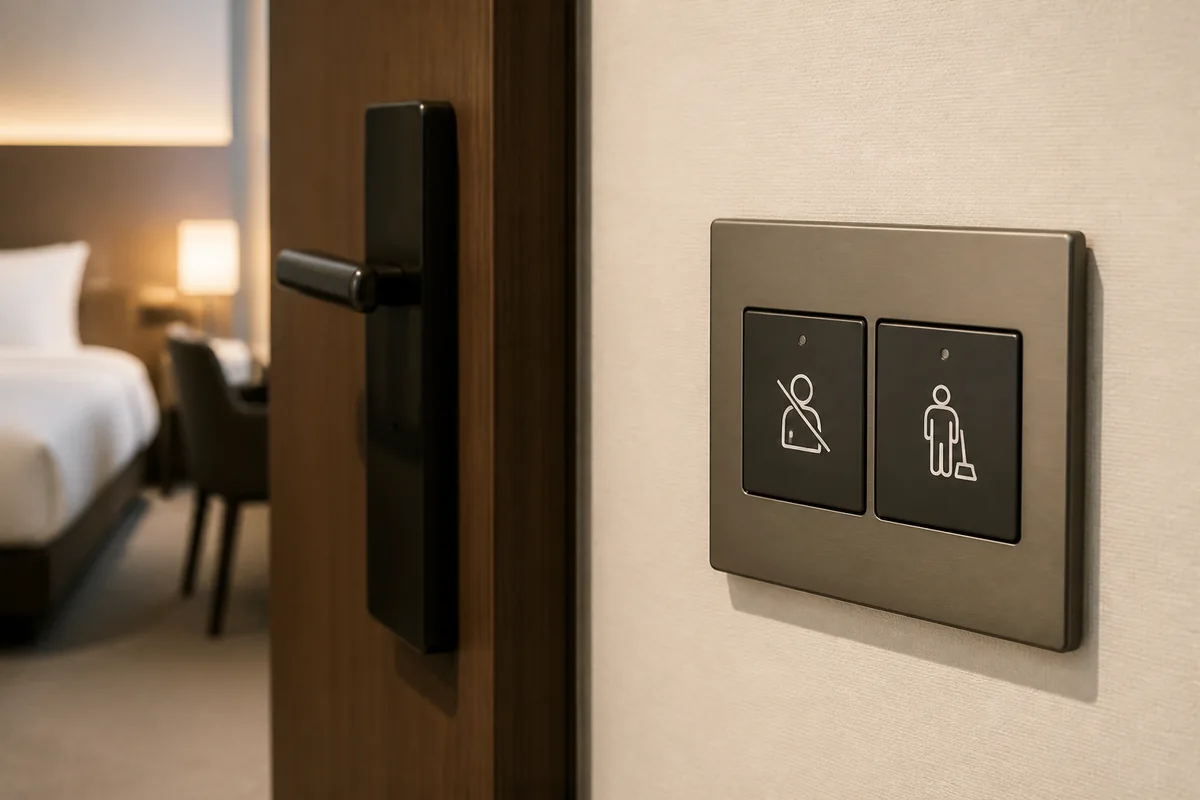
Some Korean hotels use a button panel instead of a door hanger for privacy and housekeeping. The privacy button may be labeled 방해 금지 (banghae geumji), and the cleaning request button may be labeled 청소 요청 (cheongso yocheong). You may also see lock, person, broom, or bed icons.
When privacy is on, a light outside the room usually tells housekeeping not to enter. When cleaning is requested, staff may see that the room is ready for service. The exact colors and symbols vary by hotel.
Bedside Control Panel
Many higher-end rooms have a bedside panel for lights, curtains, sleep mode, and privacy settings. These panels can look like a small touch screen or a row of labeled buttons. If something unexpected happens, press the same button again before trying a different one.
Korean Phrases You Can Show
Useful phrases for the front desk
Useful Korean Signs or Words
Labels and icons you may see on the panel
Where to Get Help
The front desk is the fastest place to ask about room controls. In Korean hotels, reception is often called 프런트 (peuronteu). You can call from the room phone, go downstairs, or ask in person at the desk. If you are unsure whether the room uses a centralized heating and cooling system, the staff can tell you right away.
If the room phone has a front desk button or a bell icon, use that. A short sentence plus a pointing gesture at the panel is usually enough.
Common Mistakes
- Taking the card out and expecting the room to stay on: In many hotels, removing the card cuts room power after a short delay.
- Missing the master switch: The lights may not work until the entrance switch is turned on.
- Expecting free mode changes all year: Some hotels keep heating and cooling on a seasonal schedule.
- Pressing the wrong privacy button: Cleaning and do-not-disturb are often separate, and the icons can be easy to mix up.
- Assuming every panel works the same way: Room controls vary by hotel brand and room type.
Official Resource
For hotel information and travel basics in Korea, use the Korea Tourism Organization. If the room system still does not make sense after checking the card slot and main switches, the hotel front desk is the correct staffed place to ask.
Quick Summary
Korean hotel room controls usually make sense once you check them in order: card slot, master lights, temperature panel, then privacy or cleaning buttons. The most common surprises are seasonal heating and cooling systems and separate light switches by the bed or desk. If the panel is still unclear, the front desk can identify the exact setup for your room.
Note: This guide is for travel navigation in Korea. It is not medical, legal, or emergency professional advice. For urgent situations, contact local emergency services, official staff, or your embassy/consulate as appropriate.
Sources & Verification
- VISITKOREA – Imagine Your Korea — english.visitkorea.or.kr
Last checked: August 7, 2026