Why Korean Cities Full Mountains: What You Need to Know
- Expect mountain views in most Korean cities — this is normal.
- Plan for uphill walking in older hillside neighborhoods.
- Use subway exits near trailheads if you want an easy hike.
- Check a map before walking between neighborhoods; a ridge may be in the way.
- Do not assume streets follow a grid.
- Notice hikers in full gear on weekday mornings — hiking is everyday life here.
- Use mountains as landmarks for orientation.
Why Korean cities look mountainous
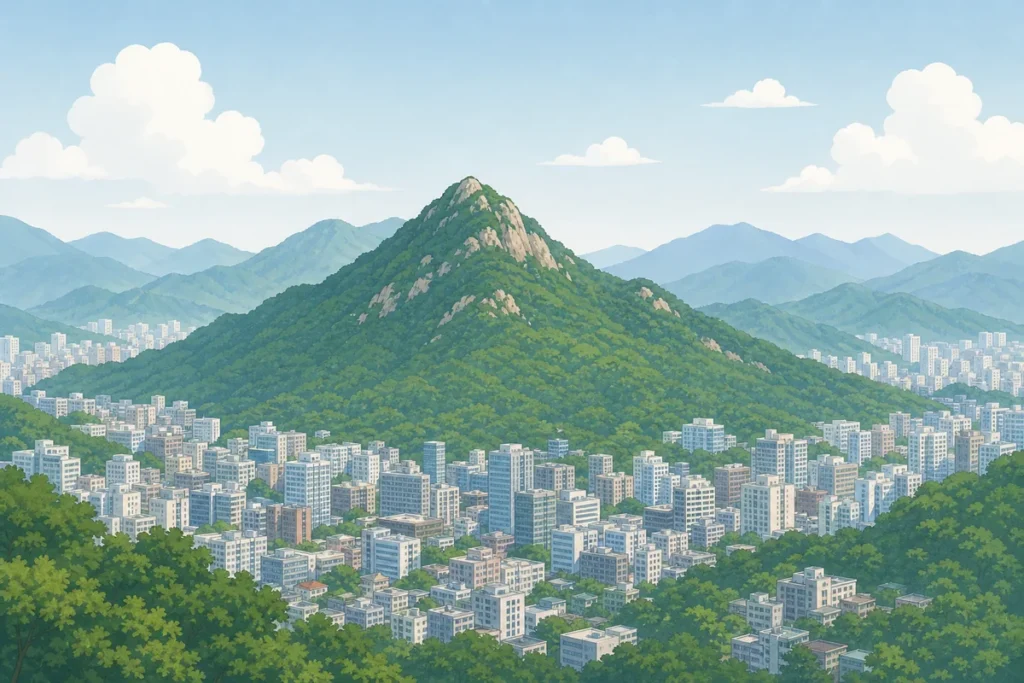
Korean cities mountains are not a planning accident. Korea’s land is naturally rugged, so cities had to develop in the flatter ground that existed. That usually meant river basins, coastal strips, and valley floors. As the city grew, the mountains stayed where they were.
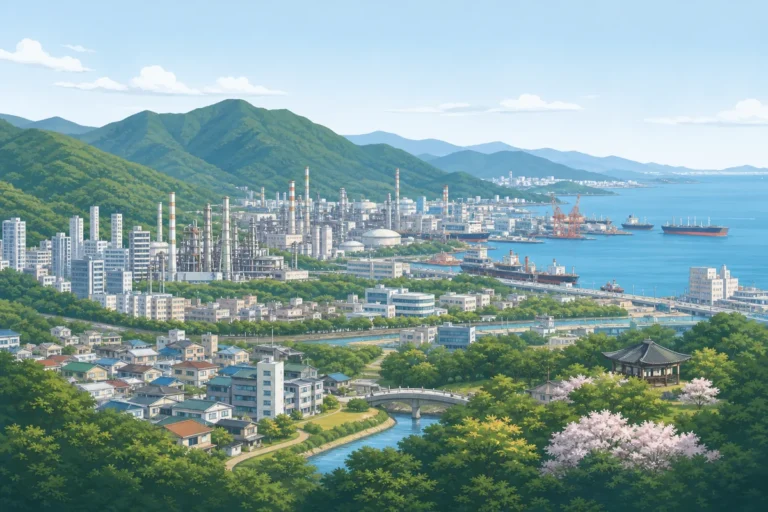
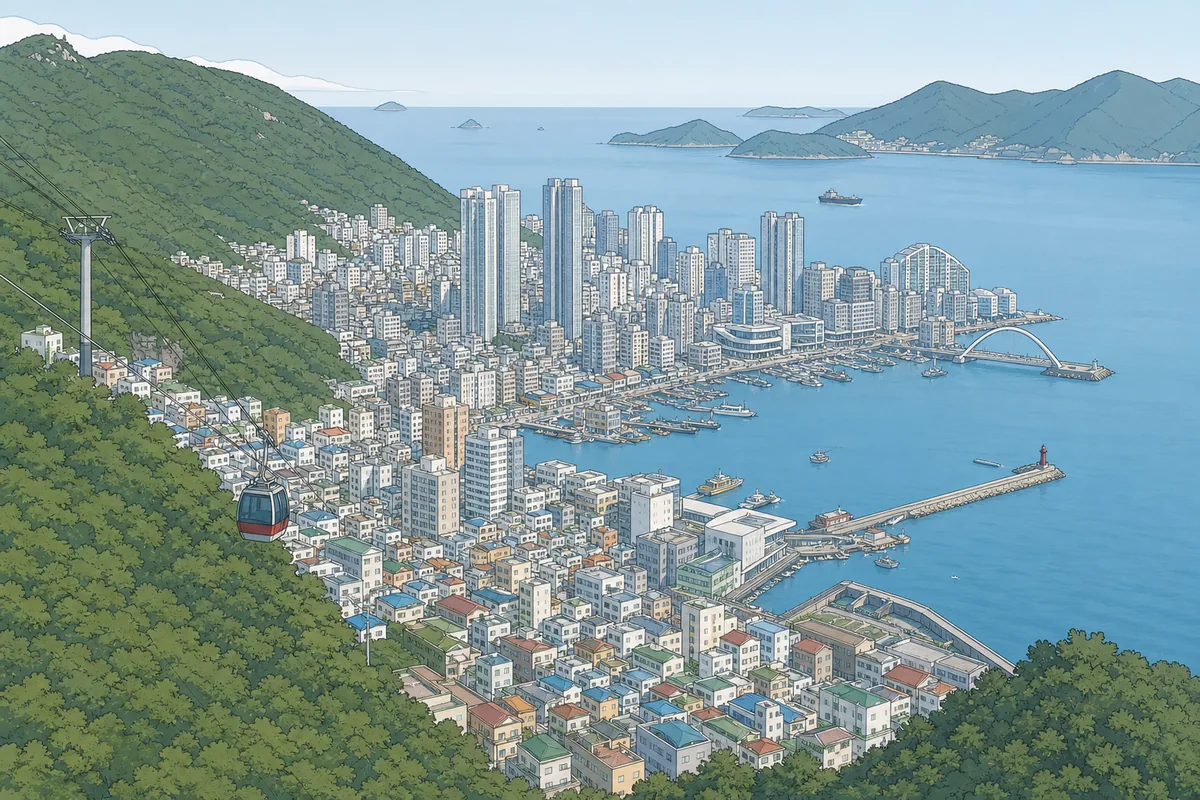
In Seoul, Busan, and Daegu, you can often see apartment towers, roads, and neighborhood blocks sitting right next to steep ridges. If you are used to flat, spread-out cities, the landscape feels layered: dense urban areas on the low ground, then hills, then forested slopes.
How Korean cities mountains shaped Seoul, Busan, and Daegu
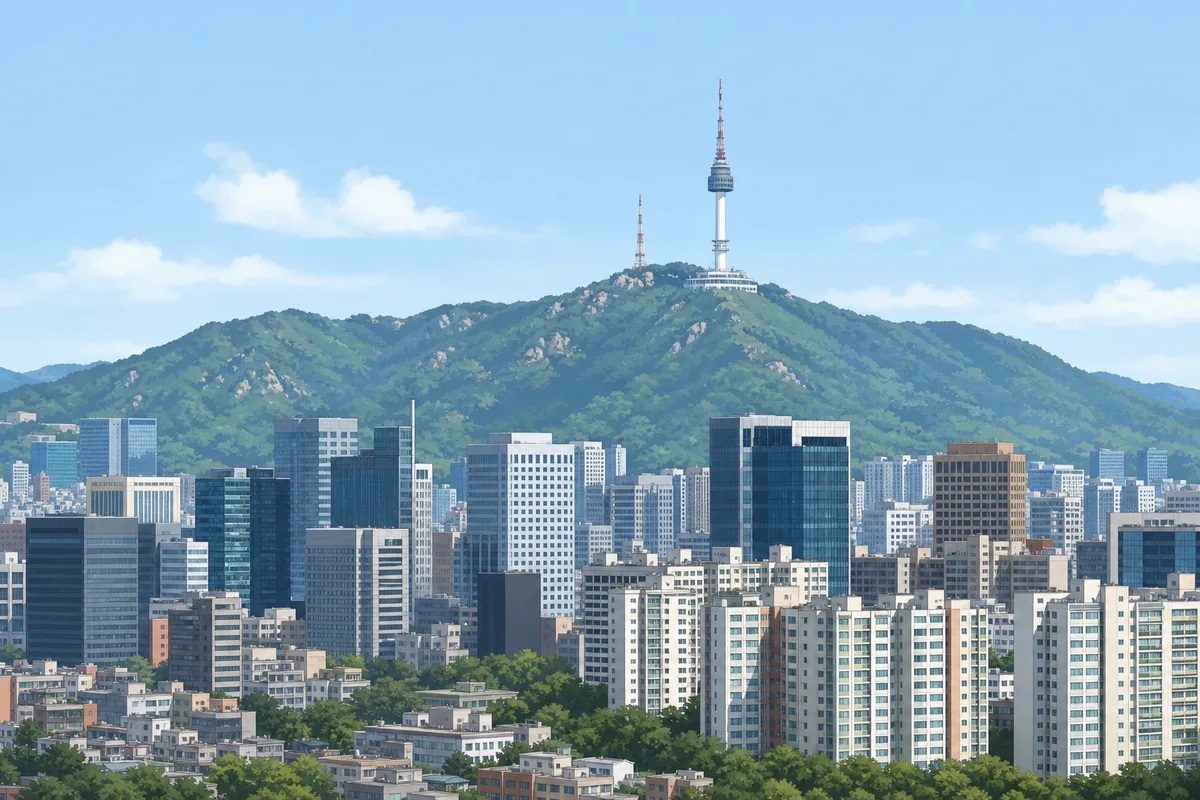
Each city shows the same basic pattern in a different way. Seoul sits in a basin-like area with mountains around it, so the city naturally spreads along the river and lower ground. Busan is squeezed between the sea and steep hills, which is why roads and neighborhoods often climb sharply. Daegu sits in an inland basin, so the center is flatter, but mountains still frame the city and appear close to everyday life.
This is why the city view in Korea often includes a ridge line in the background. The mountain is not outside the city in a separate wilderness zone. In many places, it is part of the city edge, or even part of the city itself.
Why cities developed in valleys and coastal flats
Flat land was valuable for farming, roads, and settlement, so people naturally built where construction was easiest. Over time, the biggest cities expanded from those same flat zones and then pushed partway up lower slopes once the valley floor filled up. That left the mountains as fixed borders around the urban area.
Older neighborhoods usually sit on the original flat land or close to it. Newer development often grows on reclaimed land, in expanded districts, or along transport corridors instead of climbing into the hills. That is one reason some parts of a Korean city feel compact and steep while others feel wide and modern.
How mountains affect roads, subways, and walking routes
Korean cities mountains change how you move around. Roads curve around slopes instead of following a perfect grid. A short distance on the map can become a long walk if a ridge sits between two neighborhoods. Subway lines also tend to follow flatter corridors, which means some journeys go around hills rather than straight through them.
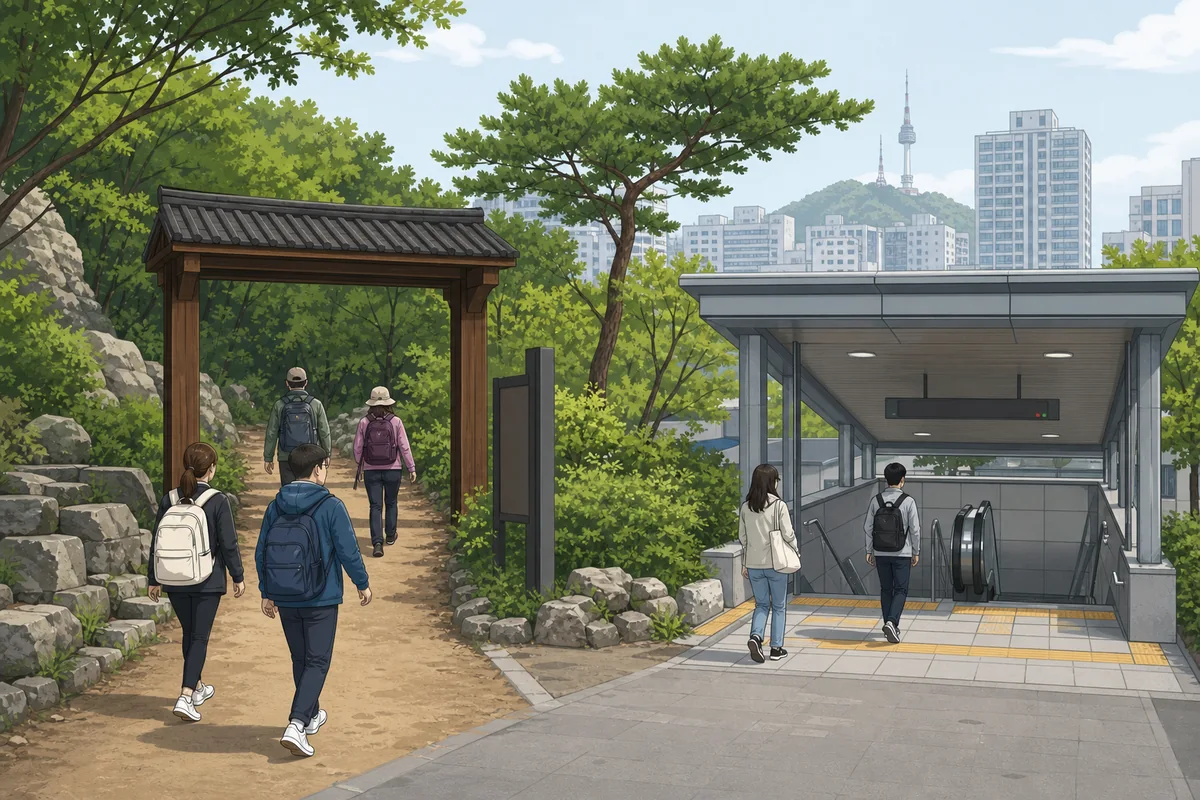
That geography also helps explain why trailheads can be so close to subway stations. In many cities, you can get off the train and start hiking within minutes. That easy access is one big reason hiking became a normal part of city life.
Why hiking is so common in everyday Korean life
Because the mountains are close, hiking is not treated as a distant outdoor trip. It is part of ordinary routine. People go before work, after work, or on weekend mornings. You will often see local hikers with proper shoes, trekking poles, and layered outdoor clothing, even for a short climb.
Mountains also have cultural importance. Many trails pass temples, shrines, and viewpoints that are used as part of everyday urban life. That makes the mountain feel less like wilderness and more like a shared city space.
What this means for first-time visitors
If you are visiting for the first time, do not expect Korean cities to behave like flat-grid cities. Walking times can be longer than they look on a map, and some neighborhoods require uphill stretches. The upside is that the scenery is excellent, and the mountains can help you navigate. In Seoul, for example, ridgelines and major peaks are useful reference points, while in Busan the hills help you understand where the sea and valleys are.
For visitors, the biggest adjustment is simple: treat the mountains as part of the city, not as something separate from it.
Frequently Asked Questions
Why are Korean cities built around mountains?
Because most of Korea is mountainous, cities grew in the limited flat land available. River valleys, basins, and coastal areas became the main urban areas, while the surrounding mountains stayed in place.
Why does Seoul have so many mountains inside the city?
Seoul sits in a natural basin surrounded by ridges and peaks, so mountains became part of the city boundary as it expanded. Many of them are now urban parks or hiking areas close to transit.
Why is hiking so popular in Korea?
Because mountains are so close to where people live, hiking is easy to fit into normal life. A trailhead can be just a short subway or bus ride away, which makes it a common weekday or weekend activity.
Do mountains affect transportation in Korean cities?
Yes. Roads, bus routes, and subway lines usually follow flatter terrain, so mountains can make routes curve or go around ridges instead of crossing straight through them.
Why Korean Cities Full Mountains becomes easier to handle when you recognize the situation and follow the practical steps above.
Why Korean Cities Full Mountains becomes easier to handle when you recognize the situation and follow the practical steps above.
Note: This guide is for travel navigation in Korea. It is not medical, legal, or emergency professional advice. For urgent situations, contact local emergency services, official staff, or your embassy/consulate as appropriate.
Sources & Verification
- VISITKOREA – Imagine Your Korea — english.visitkorea.or.kr
Last checked: July 30, 2026