Koreans Live Apartments: What You Need to Know
koreans live apartments because apartments became the most practical way to house large city populations in a country with limited flat land, fast urban growth, and strong demand for good schools and transit access. In everyday Korean cities, the apartment complex is the default home type, not a special category.
Quick Rule
- Apartment towers are the normal urban housing form in Korea.
- Complexes often bundle parking, playgrounds, security, and small shops.
- School zones and subway access strongly shape demand.
- New towns were planned around apartment clusters from the start.
- Older low-rise neighborhoods are often being redeveloped into new towers.
- Locals often use apartment complex names as landmarks.
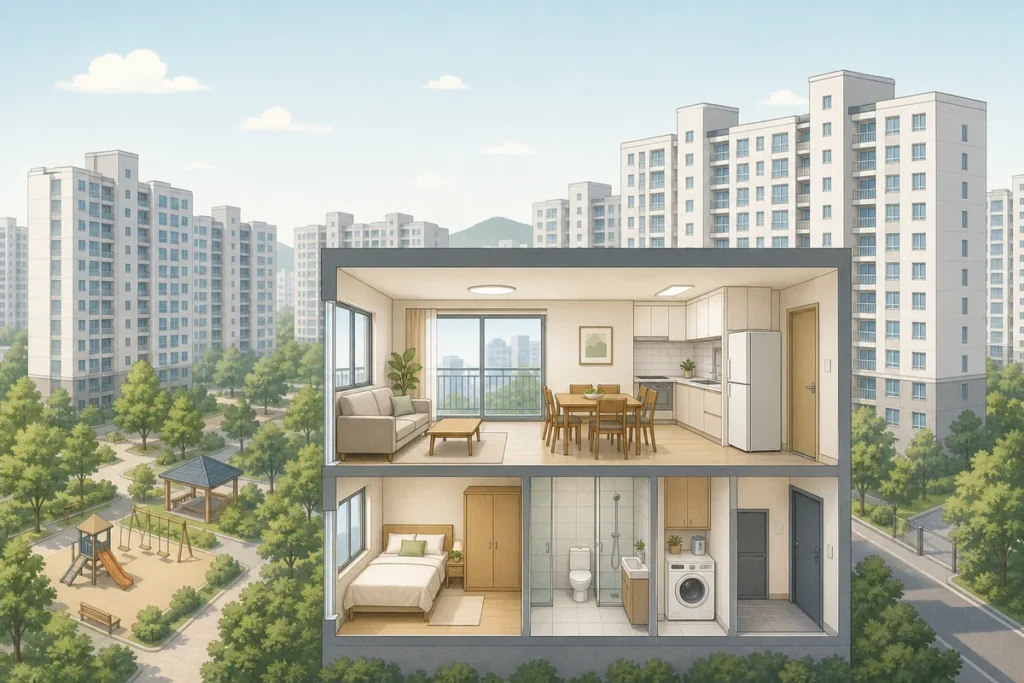
koreans live apartments for one simple reason: Korean cities were built around dense, efficient apartment living, and that system still works better than detached houses for most urban families. What looks unusual to visitors is just the standard housing model for Seoul, Busan, Incheon, and many other cities.
Why apartments became the standard home type
After the Korean War, South Korea had to house a rapidly growing urban population very quickly. Apartment blocks were faster to build than individual houses, easier to manage, and better suited to high-density city living. Once large construction firms and public planners started building entire apartment districts at scale, the format became the everyday norm.
By the time modern Korean cities were fully taking shape, apartments were no longer an emergency solution. They had become the expected form of housing for middle-class urban life, especially in major metro areas.
How land shortage and city density shaped housing
Korea has limited flat land, and major cities like Seoul are squeezed by mountains, rivers, and already-developed neighborhoods. That makes horizontal sprawl difficult. Apartment towers solve that problem by putting many households on a relatively small site.
This is why Korean apartment buildings are often grouped into large complexes rather than standing alone. A single site can hold several towers, parking, paths, green space, and shared services. The result is far more efficient than building separate houses one by one.
Why new towns are built with apartment complexes
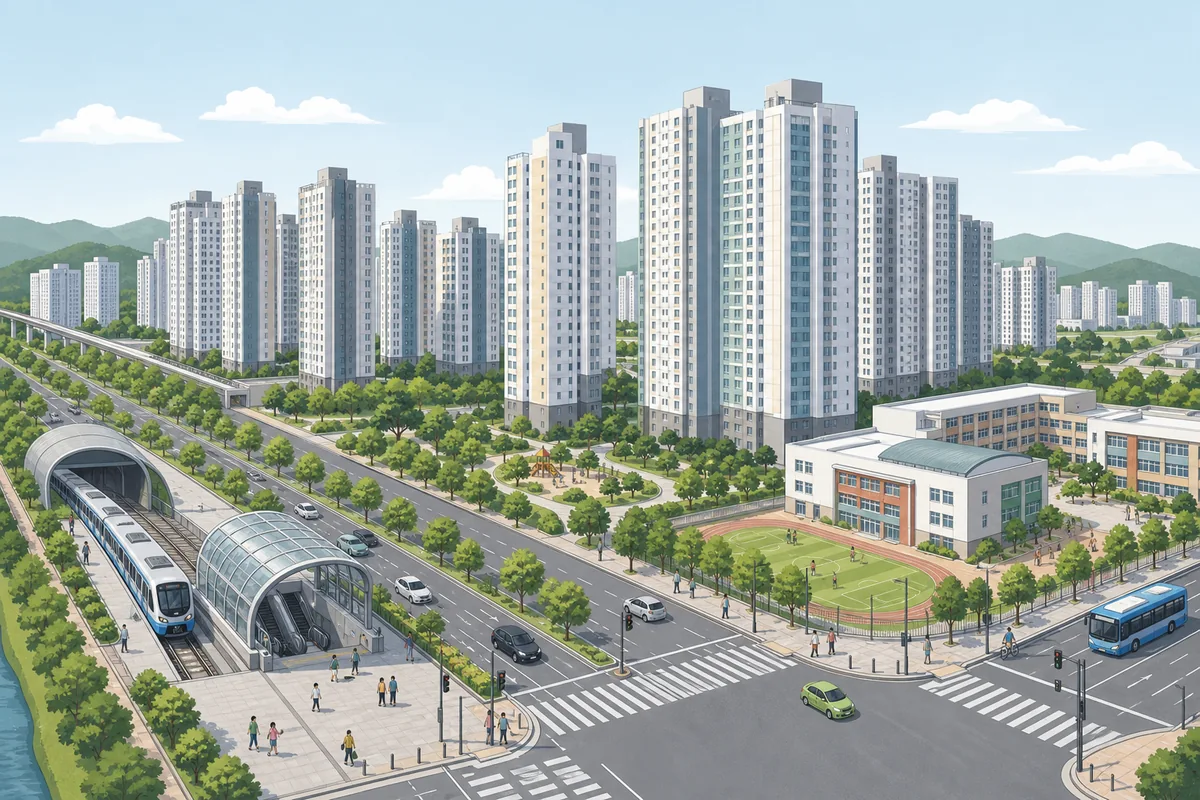
When existing cities became too crowded, Korea developed planned new towns outside Seoul and other large urban centers. These areas were designed around apartment complexes from the beginning, with roads, schools, subway access, and shopping areas planned together.
This is a big reason apartment living feels so complete in Korea. A modern complex is not just a building. It is part of a planned neighborhood system that connects homes to transit, education, and daily services.
What apartment facilities add to daily life
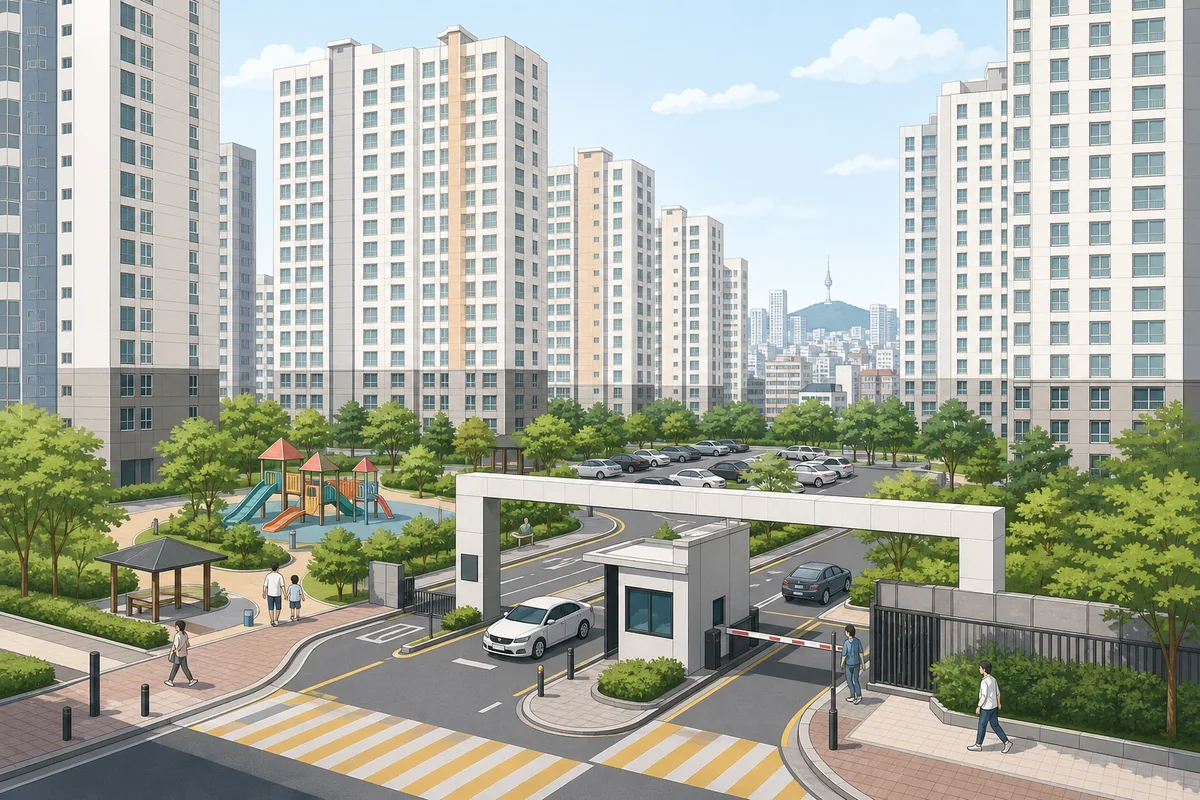
Korean apartment complexes often include features that make daily routines easier: parking, playgrounds, security gates, recycling areas, package delivery spaces, and sometimes fitness rooms or small convenience stores. In a busy city, that convenience matters a lot.
Families often choose apartments because the complex itself supports daily life. Children have a place to play, deliveries are easier to manage, and maintenance is handled through a management office instead of by each household alone.
How school access and transit affect housing demand
In Korea, the address you live at can affect which school your child attends. That makes school zones a major part of housing decisions. Families often look for apartments in strong school districts, and those complexes become more desirable and expensive.
Transit access matters just as much. A complex near a subway station is usually more attractive than an otherwise similar one farther away. That is why apartment listings often emphasize walking time to the nearest station.
Why redevelopment keeps replacing older low-rise areas
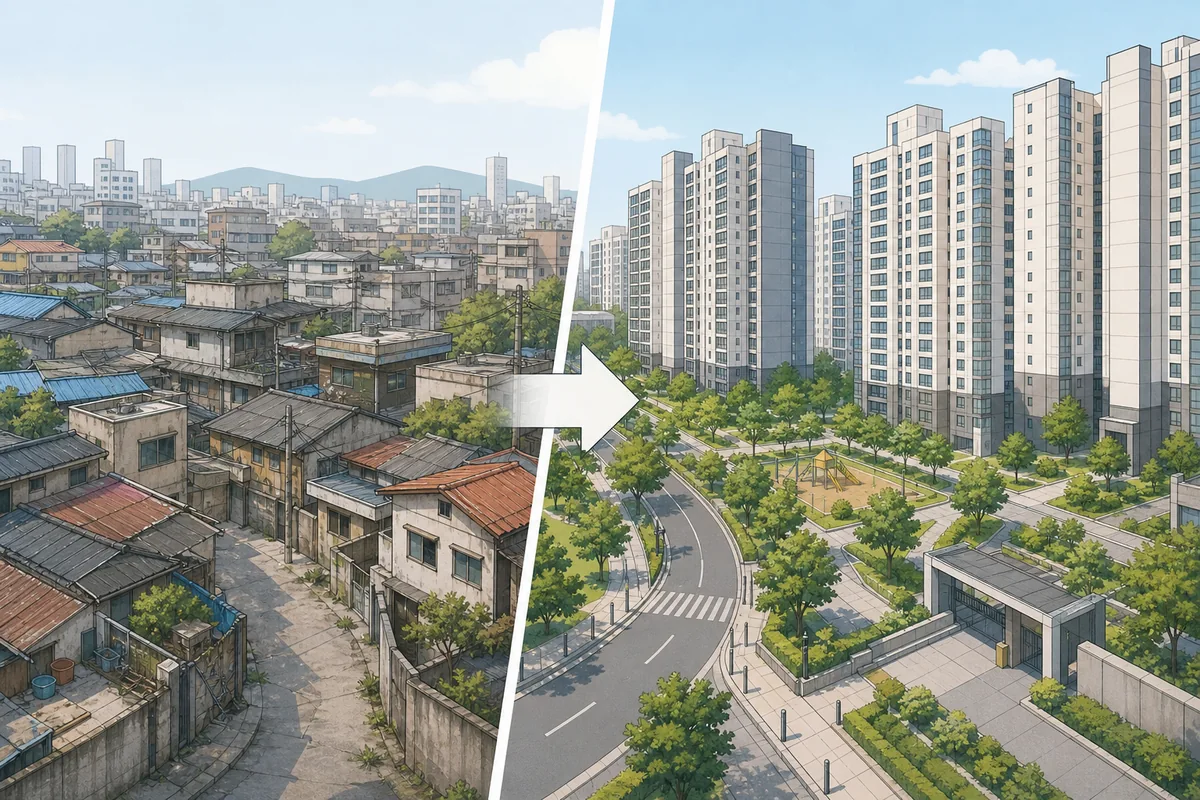
Many older neighborhoods still have low-rise houses, villas, and narrow alley streets. Over time, though, these areas often get redeveloped into apartment complexes. The land is valuable, the old buildings are harder to maintain, and modern towers fit more residents on the same site.
This is why Korean cities often show a mix of old and new in the same area. A row of older houses may sit beside a brand-new high-rise complex, and the older block is often next in line for redevelopment.
What a Korean apartment complex means to visitors
If you are traveling in Korea, apartment complexes are useful landmarks. Locals commonly give directions using complex names, entrance gates, or building numbers. The layout can look repetitive at first, but once you learn to read the complex name, building number, and unit number, navigation becomes much easier.
In address form, dong usually refers to the building number and ho to the unit number. That is one reason apartment-heavy neighborhoods are easier to understand once you know the system.
Useful Korean apartment terms
What to remember
- koreans live apartments because apartment living fits Korea’s land, density, and city planning realities.
- New towns, schools, and subway access are often built around apartment complexes.
- Redevelopment keeps replacing older low-rise neighborhoods with new towers.
- For visitors, apartment complex names are practical landmarks.
- Knowing danji, dong, and ho makes Korean housing references much easier to read.
Frequently asked questions
Why do Koreans prefer apartments over houses?
Apartments are easier to maintain, usually better connected to transit and schools, and often come with shared facilities such as security, parking, and playgrounds. For many urban families, that is the more convenient everyday choice.
Why are there so many apartment complexes in Seoul?
Seoul is dense and has limited buildable land. Apartment complexes let the city house more people on smaller sites, which fits the way the capital has grown over time.
Do apartments in Korea always mean expensive housing?
No. Apartment prices vary widely by district, age, size, and transit access. Some are affordable, while others in prime school zones or near major stations are very expensive.
What is a Korean apartment complex like?
Many complexes work like small neighborhoods. They often include several buildings, parking, green space, package areas, security, and a management office.
Note: This guide is for travel navigation in Korea. It is not medical, legal, or emergency professional advice. For urgent situations, contact local emergency services, official staff, or your embassy/consulate as appropriate.
Sources & Verification
- VISITKOREA – Imagine Your Korea — english.visitkorea.or.kr
Last checked: July 30, 2026