Ulsan Not Just Factories: What You Need to Know
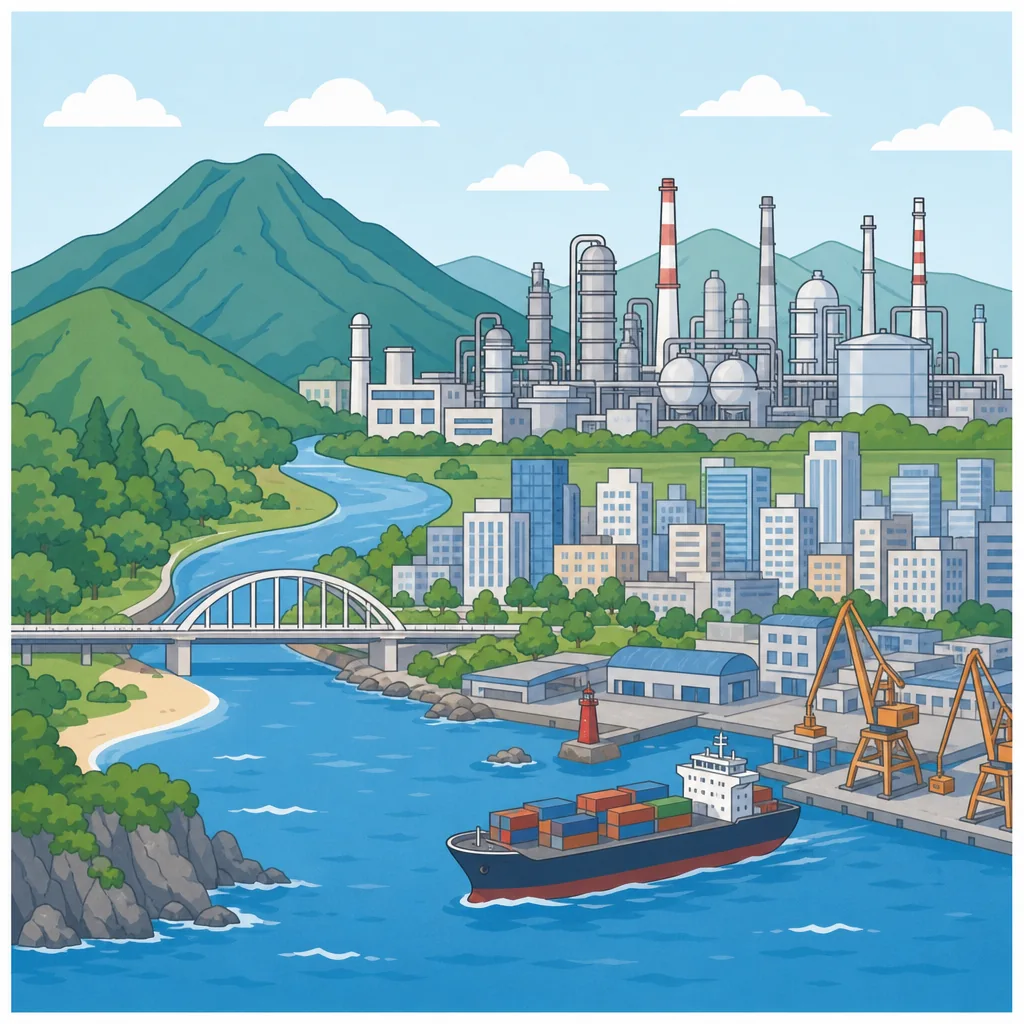
Ulsan is best understood as an industrial city that also has real sightseeing value. If you only picture factories and shipyards, you’ll miss the Taehwa River, the coastline, and mountain views that make the city surprisingly balanced. It is worth a visit — especially if you want a less crowded, more local side of Korea.
Quick City Rule
- Expect industry and nature side by side — that contrast is the point of Ulsan.
- Start at Taehwa River to get your bearings in the city center.
- Head to Daewangam Park for the coastal scenery and pine-lined cliffs.
- Don’t skip the river walk just because you’ve seen parks elsewhere — this one is unusually clean and wide.
- Save the industrial skyline view for evening; it looks dramatic from the right vantage point.
- Plan at least one full day; half a day will leave you feeling like you only scratched the surface.
- Ulsan suits travelers who enjoy scenery without crowds, not those chasing nightlife or shopping districts.
What Ulsan Is Known For
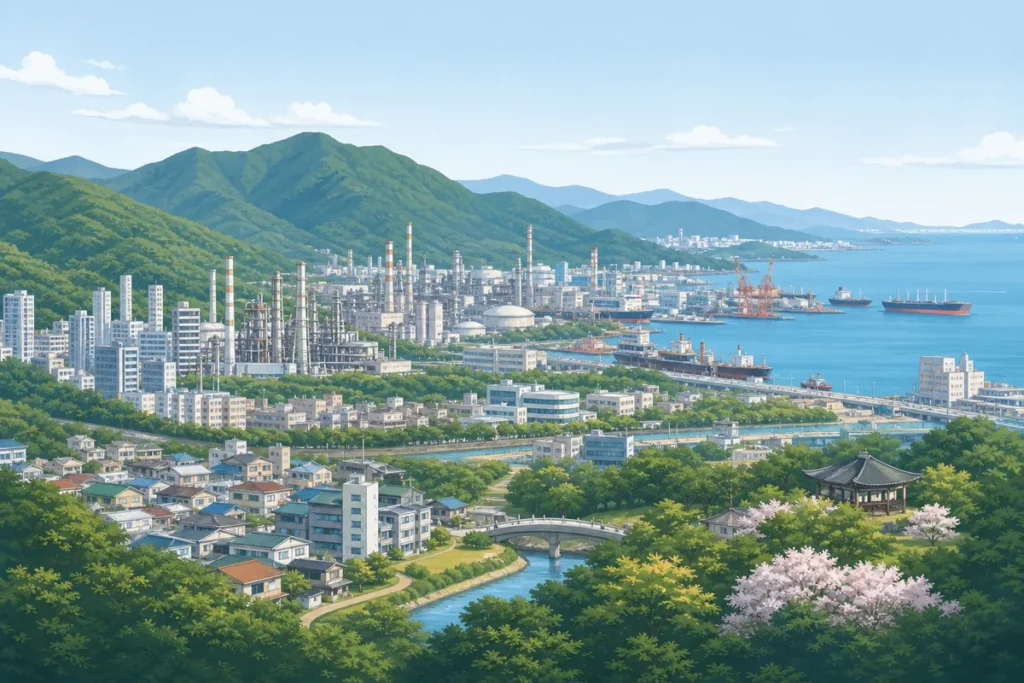
Ulsan is one of Korea’s most productive cities. It sits on the southeast coast, about an hour from Busan by KTX, and it punches well above its weight in terms of economic output. Hyundai cars are built here. Some of the world’s largest ships are assembled here. The city’s name carries serious industrial weight inside Korea, and that reputation tends to reach foreign travelers before anything else does.
But that single-note reputation undersells the place. Ulsan is also a city of rivers, pine forests, sea cliffs, and mountain ridges. The industrial zones are real and visible — you will see them — but they occupy specific parts of the city, not all of it. The rest of Ulsan is green, coastal, and genuinely worth exploring.
Why People Call Ulsan an Industrial City
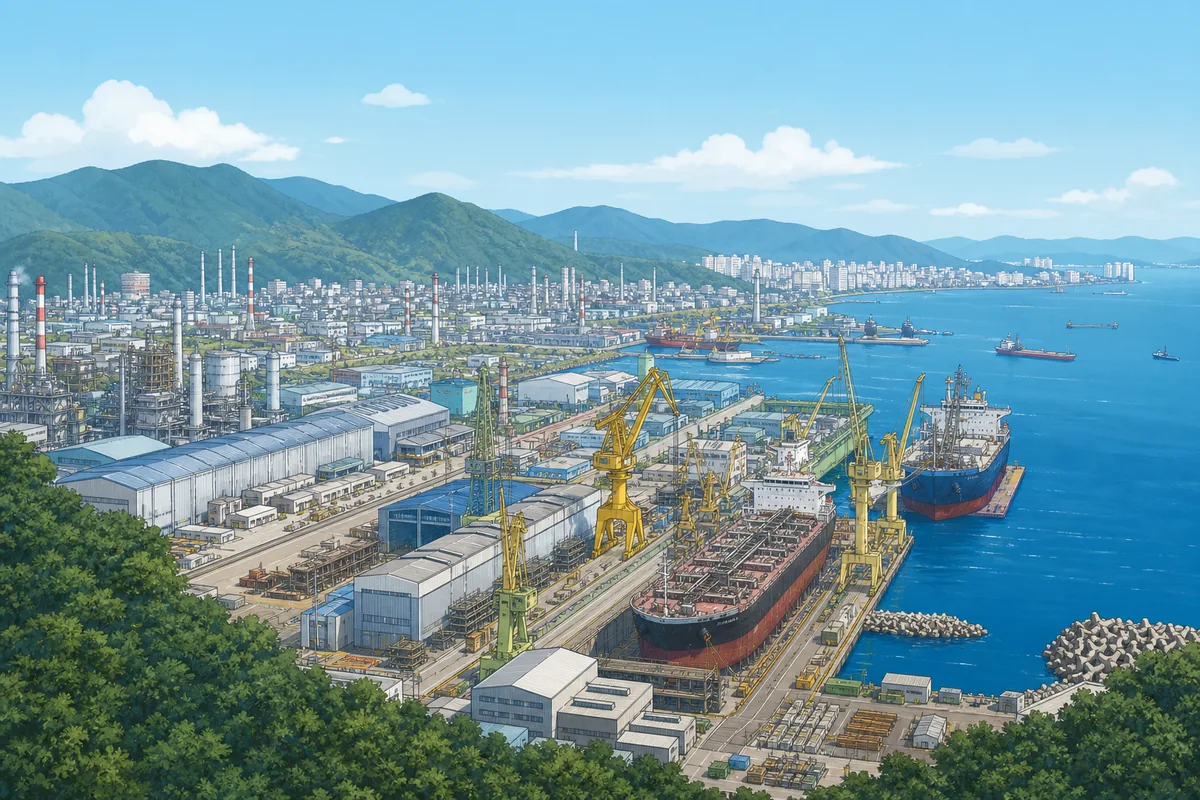
The label is accurate, and it has a clear origin. In the 1960s and 1970s, the Korean government designated Ulsan as a special industrial zone to drive the country’s economic development. Heavy industry moved in fast: petrochemicals, shipbuilding, and automotive manufacturing all took root here. Hyundai Motor Company built its main plant in Ulsan, and the Hyundai Heavy Industries shipyard in the Dong-gu district became one of the largest in the world.
That history shaped the city’s layout. Industrial facilities cluster along the coast and in specific districts, while residential and commercial areas grew around them. If you arrive by train and look out the window as you approach the city, you will see smokestacks, cranes, and tankers in the harbor. That view is part of Ulsan’s identity, not something hidden or embarrassing. Koreans who work in those industries are proud of what the city built.
What surprises most first-time visitors is how contained the industrial zones feel. Step away from the port areas and the city shifts quickly into something that looks nothing like a factory town.
Where the Mountains and Sea Fit Into the City
Ulsan is ringed by mountains on three sides and opens to the sea on the east. Gajisan Provincial Park sits to the northwest, with peaks high enough for serious hikers. Munsusan and other smaller ridges run through and around the city, giving neighborhoods unexpected green backdrops. On a clear day, you can see mountain silhouettes from the middle of the city center.
The coastline runs along the eastern edge of Ulsan. It is not a beach resort strip — this is not Busan’s Haeundae. Instead, it is a rugged, pine-covered shore with rocky outcrops, small fishing communities, and dramatic cliff formations. The sea here feels wilder and less developed, which is exactly what makes it interesting.
The combination — heavy industry, mountain ridges, and a raw coastline — is genuinely unusual. Most cities are one or the other. Ulsan manages to be all three at once, and that layered character is what makes it worth decoding rather than dismissing.
Taehwa River and the City Center
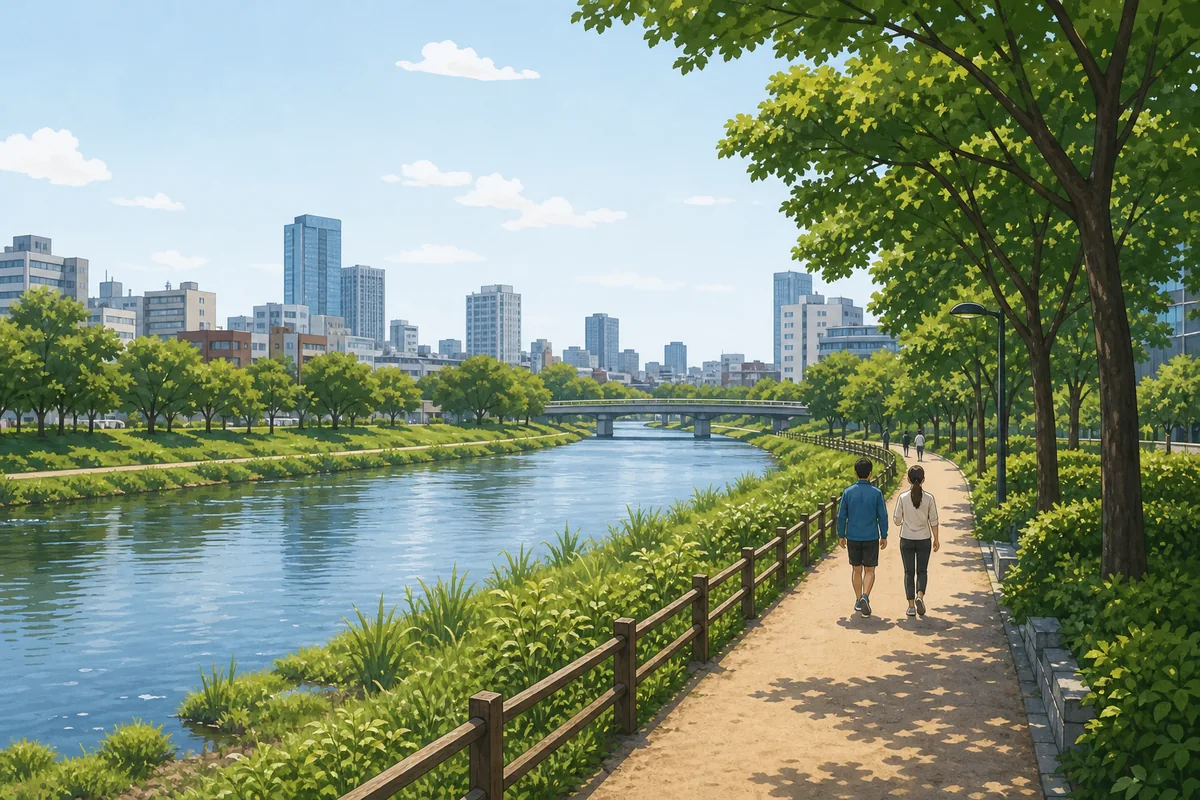
The Taehwa River runs through the heart of Ulsan, and the riverside park built along its banks is one of the best urban green spaces in the country. The river itself is wide and clean — a significant achievement, since it was heavily polluted during the peak industrial decades. A major restoration effort turned it around, and now the riverbanks are planted with reeds, wildflowers, and walking paths that stretch for kilometers.
Every autumn, the silver grass along the Taehwa River blooms into tall, feathery plumes that catch the light and move with the wind. It draws visitors from across Korea. Outside that season, the river park is still a calm, pleasant place to walk, cycle, and watch the city from the water’s edge.
The city center sits close to the river, with the main commercial streets, cafes, and restaurants nearby. It is compact and easy to navigate on foot. This part of Ulsan feels like any mid-sized Korean city — comfortable, lived-in, and not overwhelming for a first-time visitor.
Daewangam and the Coastal Side of Ulsan
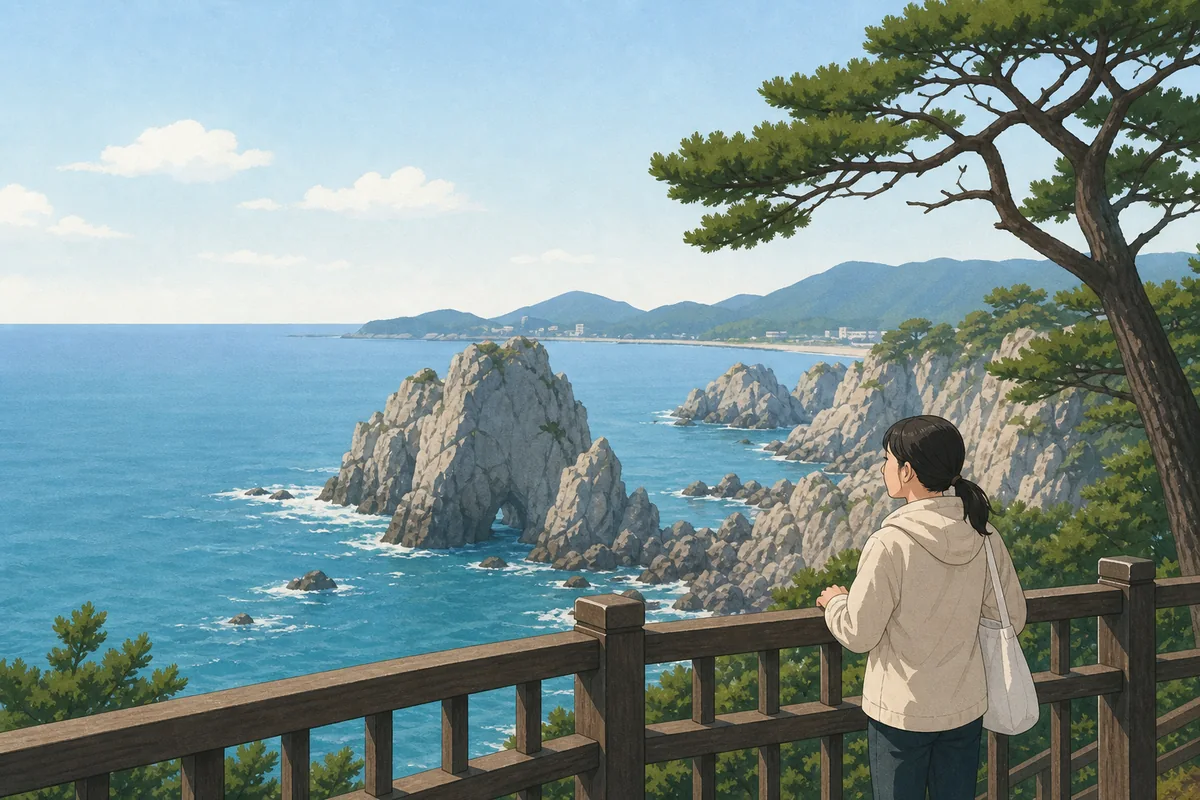
Daewangam Park is the clearest proof that Ulsan is not just an ulsan industrial city story. It sits on the northeastern tip of the city, where a dense pine forest meets a jagged volcanic rock coastline. The rocks are dark and angular, shaped by the sea over centuries, and the pine trees grow right to the cliff edge. Wooden walkways wind through the forest and along the shore, making it easy to explore without scrambling over rocks.
The name Daewangam means “Great King Rock,” and the main rock formation — a cluster of dark stones rising from the water — is the centerpiece. On a windy day, the waves crash against the rocks loudly enough that you feel it as much as hear it. On calm days, the water between the rocks is clear and still.
Nearby, the Ilsan Beach area offers a more open stretch of coastline. It is not a swimming beach in the resort sense, but it is a good place to sit and look at the sea. Fishermen work the rocks nearby, and small seafood restaurants along the coast serve fresh catch — grilled fish and raw fish dishes are the local staples here.
The drive or bus ride from the city center to Daewangam takes you past the Hyundai shipyard. You will see enormous ships under construction in dry docks, cranes taller than most buildings, and the scale of the operation is genuinely impressive even if you have no interest in ships. That transition — from city streets to shipyard to pine-covered coast — happens in about twenty minutes and captures Ulsan’s character better than any description can.
Who Should Add Ulsan to a Korea Trip
Ulsan works well for travelers who have already seen Seoul and Busan, or who specifically want to avoid the most crowded tourist circuits. It is a real Korean city that functions on its own terms, not a place built around visitor expectations. That makes it more interesting for some people and less interesting for others.
If you like coastal scenery without beach crowds, Daewangam is hard to beat. If you enjoy urban parks and riverside walks, the Taehwa River area is genuinely excellent. If you are curious about how Korea became an economic powerhouse — and what a city built on that effort actually looks like — Ulsan gives you a ground-level answer that no museum exhibit can replicate.
It is not the right stop for travelers focused on shopping, nightlife, or dense cultural heritage sites. Ulsan’s temples and historical spots exist but are not the main draw. The city’s appeal is environmental and atmospheric: the contrast between industrial scale and natural scenery, the sense of a city that works hard and still makes room for mountains and sea.
A day trip from Busan is possible, but an overnight stay lets you see the river at different times of day and reach the coast without rushing. Two days is comfortable for most visitors.
Quick Takeaway for First-Time Visitors
What to Remember About Ulsan
- Ulsan is a genuine ulsan industrial city — the factories and shipyards are real and visible, and that is part of what makes it interesting.
- The Taehwa River park is one of Korea’s best urban riverside spaces, especially in autumn.
- Daewangam Park offers dramatic coastal scenery with pine forests and volcanic rock formations.
- The city is compact and manageable for a first-time visitor who can handle basic Korean travel.
- It suits travelers who want a less crowded, more local experience — not those chasing major tourist highlights.
- One to two days is enough to get a real feel for what Ulsan is.
Ulsan Not Just Factories becomes easier to handle when you recognize the situation and follow the practical steps above.
Ulsan Not Just Factories becomes easier to handle when you recognize the situation and follow the practical steps above.
Frequently Asked Questions
Is Ulsan only an industrial city?
No. Ulsan is famous as an industrial hub, but the city also has a wide river park, pine-covered coastal cliffs, and mountain scenery. The industrial districts are concentrated in specific areas, and the rest of the city is greener and more scenic than most first-time visitors expect.
What is Ulsan known for in Korea?
Ulsan is known for being the home of Hyundai Motor Company and one of the world’s largest shipbuilding operations. Inside Korea, it is also recognized for the Taehwa River restoration and the Daewangam coastal park. The silver grass blooming along the river each autumn draws visitors from across the country.
Can tourists visit Ulsan if they are not interested in factories?
Absolutely. You do not need any interest in industry to enjoy Ulsan. The Taehwa River park, Daewangam Park, and the eastern coastline are all worth visiting on their own terms. The industrial scenery is visible in parts of the city, but it does not define the visitor experience.
Is Ulsan good for a first-time Korea trip?
It works well as a secondary stop rather than a first stop. If you are visiting Seoul and Busan, adding Ulsan for one or two days gives you a very different perspective on Korea — less polished for tourists, more grounded in how the country actually functions. For a traveler whose entire Korea trip is one city, Seoul or Busan would be more practical starting points.
Note: This guide is for travel navigation in Korea. It is not medical, legal, or emergency professional advice. For urgent situations, contact local emergency services, official staff, or your embassy/consulate as appropriate.
Sources & Verification
- VISITKOREA – Imagine Your Korea — english.visitkorea.or.kr
Last checked: July 30, 2026