Use Express Intercity Buses Korea: What You Need to Know
express intercity buses in Korea are easy to use once you know the terminal name, the platform number, and your assigned seat. Go to the correct terminal, buy a ticket at the counter or kiosk, check the departure board, store large luggage under the bus, and board at the lane on your ticket.
What to Do First
- Confirm the exact terminal name before you leave.
- Check whether your route is an express bus or an intercity bus.
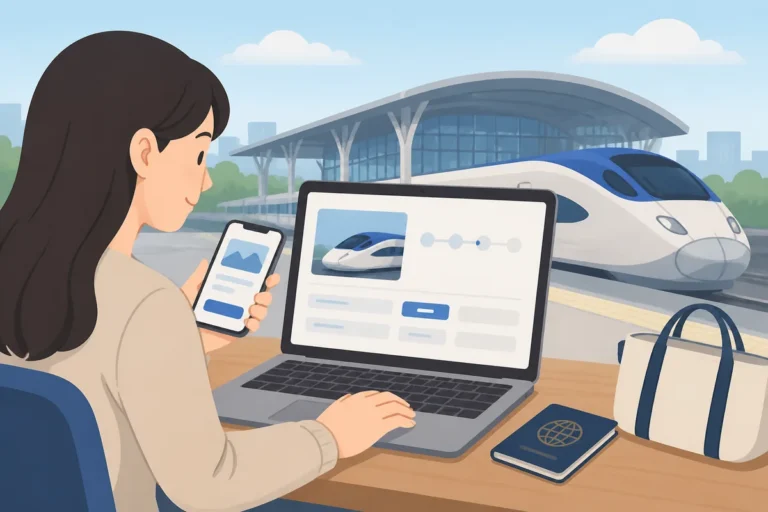
- Buy a ticket at the counter, kiosk, or booking app.
- Look at the ticket for departure time, platform number, and seat number.
- Arrive early enough to find the platform and load luggage.
- Keep valuables with you in the cabin.
- Stay on the bus through any rest stop until the final arrival.
When This Guide Helps
If you are using express intercity buses for the first time in Korea, this guide shows the normal trip flow from terminal to arrival. It is for travelers who know their destination city but are unsure which terminal to use, how to buy the ticket, where to board, and what to do with luggage.
It also helps if you are reading Korean signs slowly and want the most important words to recognize at a bus terminal.
What to Do First
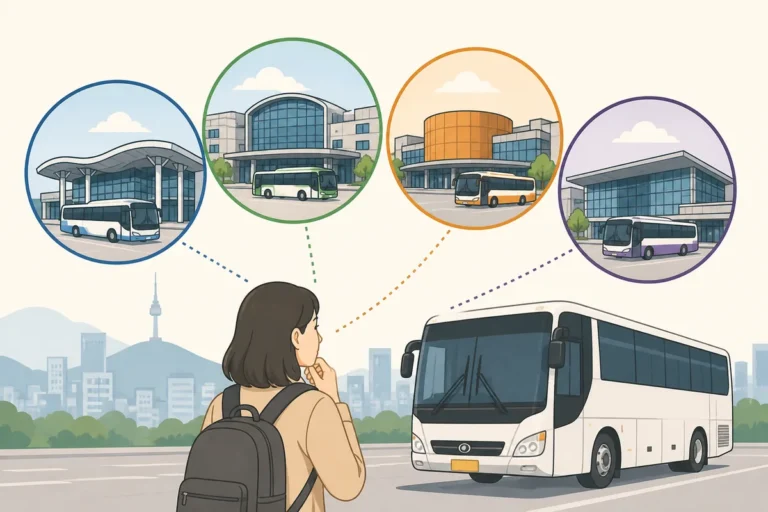
Start by checking the terminal name, not just the city name. Many cities have more than one bus terminal, and express buses and intercity buses often use different buildings. Search the destination in a map app and match the terminal on your ticket with the terminal on the building.
Then buy your ticket and check three things immediately: 출발 for departure time, 승차홈 for the boarding lane or platform, and 좌석 번호 for your seat number. Those three items tell you almost everything you need on the day of travel.
Express intercity buses: what is different?
Express buses usually connect major cities on highway routes with fewer stops. Intercity buses serve a wider range of cities and towns and may stop more often. For the traveler, the practical difference is simple: the route name and terminal name matter more than the bus label alone.
In many cities, the two systems are handled at different terminals, so do not assume any long-distance bus will leave from the same place.
Buying the Ticket
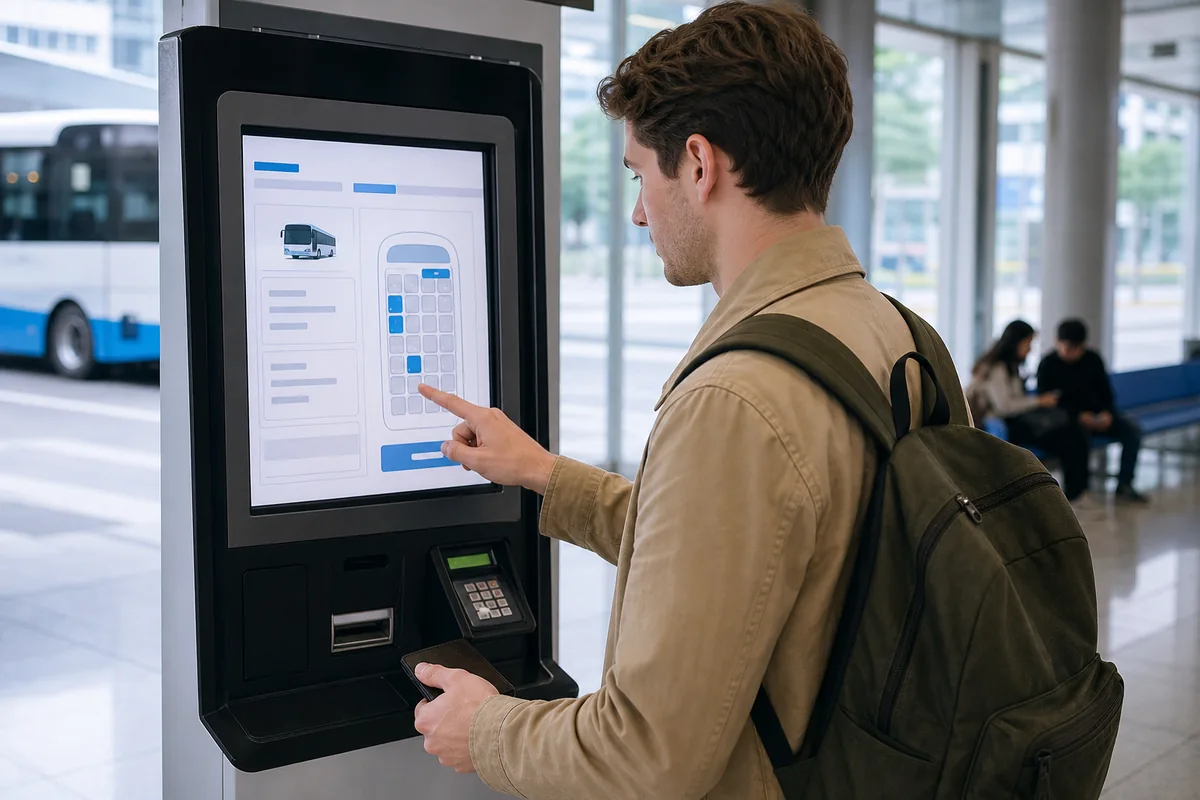
You can usually buy tickets in three ways: at the staffed counter, at a self-service kiosk, or through an official booking app. At major terminals, English menus are common on kiosks, and staff can usually point you to the right place if you show the destination name on your phone.
For last-minute trips, the counter is the simplest option. For busy weekends or holiday periods, booking ahead is smarter because seats can sell out.
Kiosk or counter?
A kiosk is useful if you want to choose a seat yourself and move quickly. A counter is better if you need help with the route, terminal, or payment. If your card does not work at the kiosk, go straight to the counter.
Reading the Ticket
Your ticket gives you the key boarding details. Check it before leaving the ticket area so you do not have to guess later.
Important: Do not rely on the city name alone. The ticket should match the terminal, departure time, platform, and seat number. If any of those look unclear, ask at the counter before you go to the platform.
Finding the Terminal and Platform
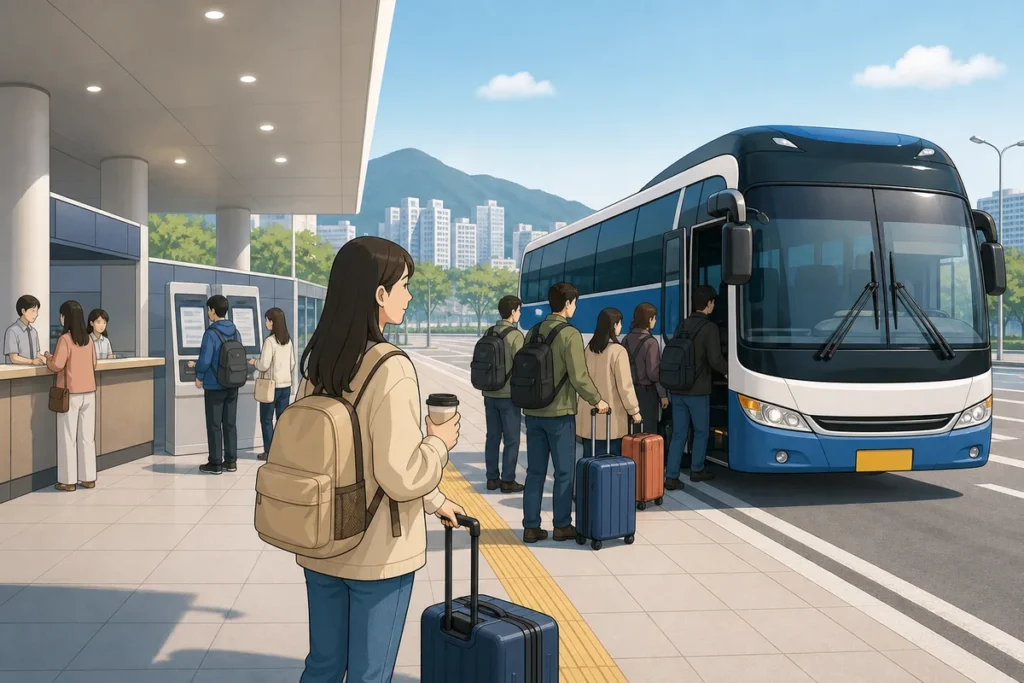
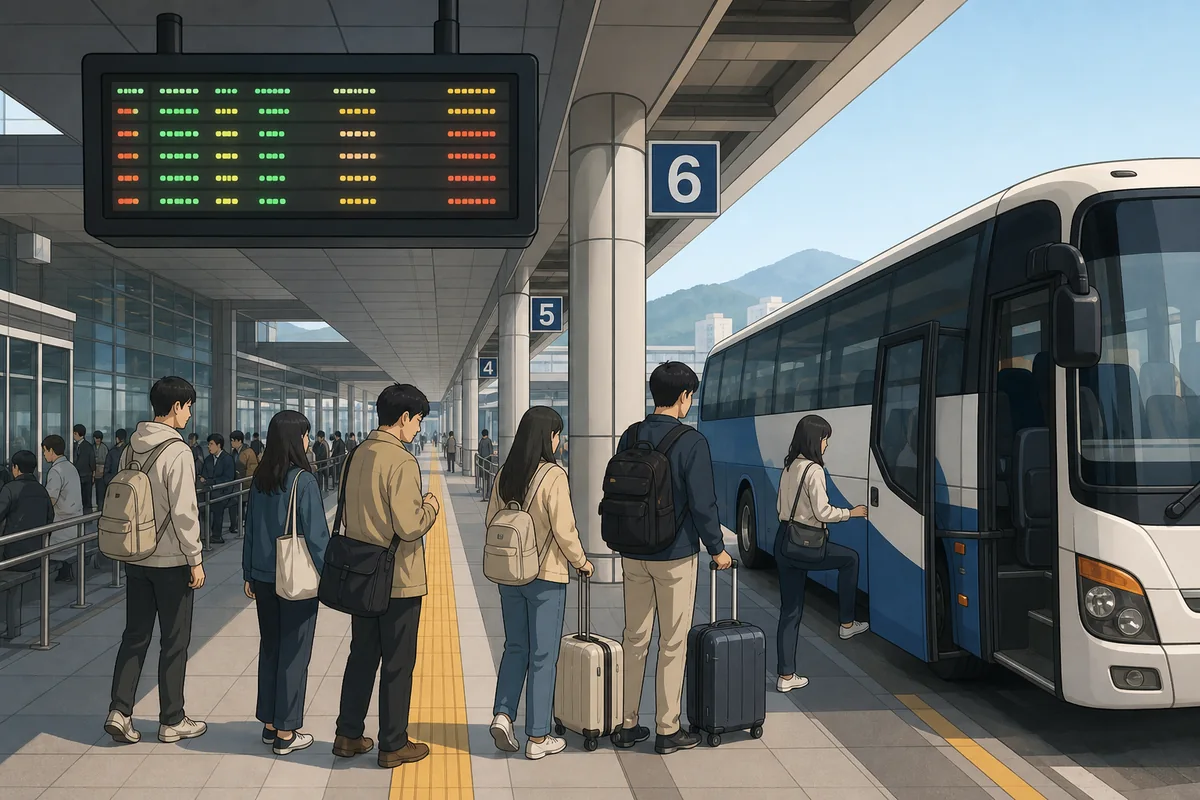
Inside the terminal, look for the departure board and match your destination with the lane number on your ticket. The platform number is the most useful clue for boarding, because many terminals have several lanes lined up side by side.
If you are not sure where to stand, show your ticket to staff or ask at the information desk. A terminal is usually an indoor hall with ticket windows, waiting seats, restrooms, and departure lanes, not a street bus stop.
Boarding and Assigned Seats
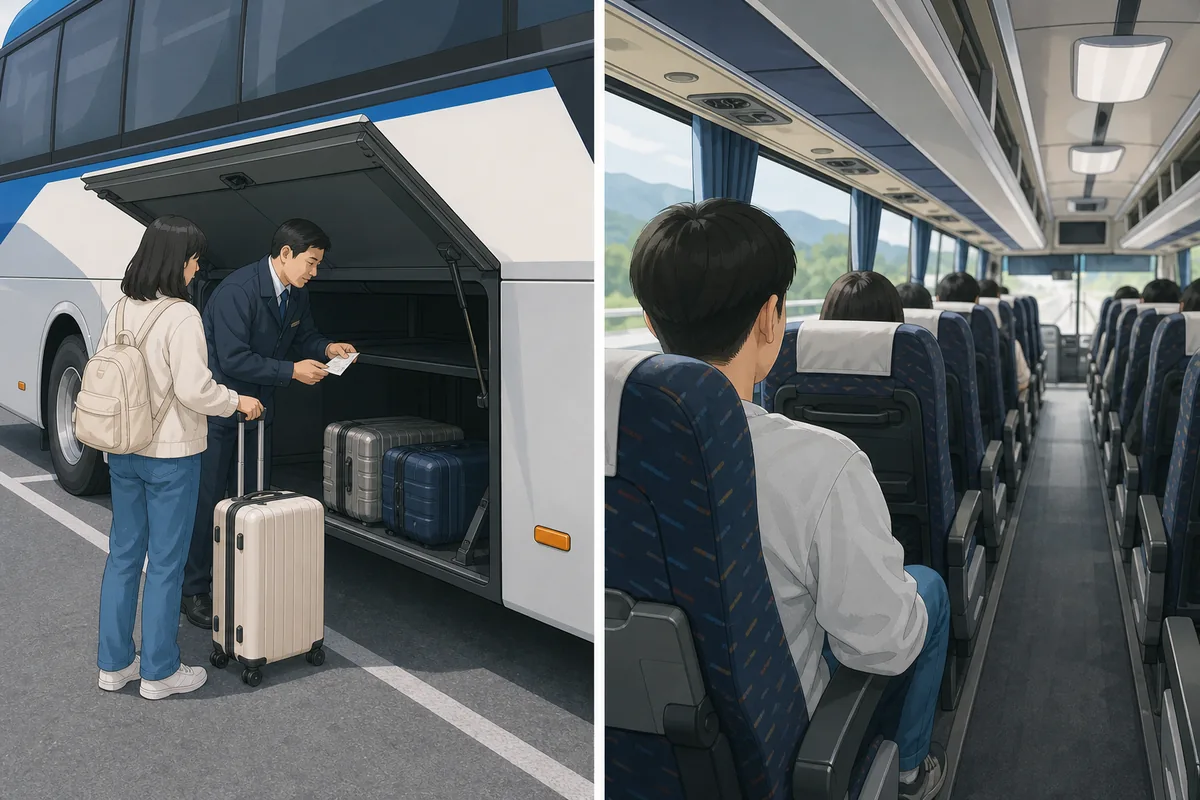
Most Korean express and intercity buses use assigned seats. Your seat number is printed on the ticket, and the bus interior will show matching numbers above the seats or on the seat backs. Sit in the assigned seat and keep your ticket until you are on board and settled.
Large bags usually go into the luggage compartment under the bus before boarding. Keep your passport, wallet, phone, and small bag with you in the cabin.
Luggage Storage and Rest Stops
When the driver or staff opens the luggage compartment, place your large bag inside and remember roughly where you put it. There is usually no complicated check-in process, so it helps to keep your bag easy to recognize.
Some longer routes stop at a highway rest area, called 휴게소. A rest stop is for a short break, not the final destination. If the bus stops midway, wait for the driver’s announcement before getting off or moving your luggage.
Short version: With express intercity buses, the main job is to use the right terminal, read the ticket carefully, board at the correct platform, and sit in the assigned seat. Once you know those steps, the system is straightforward and reliable.
Use Express Intercity Buses Korea becomes easier to handle when you recognize the situation and follow the practical steps above.
Use Express Intercity Buses Korea becomes easier to handle when you recognize the situation and follow the practical steps above.
Common Mistakes
- Going to the wrong terminal because the city has more than one bus terminal.
- Confusing city buses with long-distance express or intercity buses.
- Arriving too late and missing the platform or luggage loading time.
- Sitting in an open seat instead of the assigned seat on the ticket.
- Leaving valuables in the luggage compartment under the bus.
- Thinking a rest stop is the arrival terminal.
For official information, check Incheon Airport official information.
FAQ
What is the difference between express and intercity buses in Korea?
Express buses usually run between major cities with fewer stops, while intercity buses serve a wider network of cities and towns with more stops. The exact terminal name matters most when you are planning the trip.
Can a visitor buy bus tickets at the terminal in Korea?
Yes. Most terminals have ticket counters and self-service kiosks. Kiosks often have English menus, and counters are useful if you want help or your card does not work.
Do Korea express and intercity buses have assigned seats?
Yes. The seat number is usually printed on the ticket, and you should sit there unless staff tell you otherwise.
Where does a visitor put a visitor’s luggage on a Korean bus?
Large luggage goes in the compartment under the bus before departure. Keep small bags and valuables with you inside the cabin.
What does a rest stop mean on a Korean bus trip?
A rest stop is a short break at a highway service area. It is not the arrival point, so stay on the bus unless the driver says the trip has ended.
Note: This guide is for travel navigation in Korea. It is not medical, legal, or emergency professional advice. For urgent situations, contact local emergency services, official staff, or your embassy/consulate as appropriate.
Sources & Verification
- Seoul Arts Center — www.sac.or.kr
Last checked: July 30, 2026