Korean Numbers Travelers: What You Need to Know
Korean numbers for travelers split into two systems: Sino-Korean handles prices, minutes, dates, room numbers, and floors. Native Korean handles hours on the clock and counting many everyday items. For most travel situations — reading a price tag, finding a floor, checking a reservation time — Sino-Korean is the one you need. When in doubt, just say the digits in English or show the number on your phone; staff will understand immediately.
What to Do First
- Identify whether you are reading a price, time, date, or floor — that tells you which number system applies.
- For prices and won amounts, read the digits straight using Sino-Korean (or just say the numbers in English).
- For clock time, use native Korean for the hour word and Sino-Korean for the minutes.
- For elevator panels, read B1/B2 as basement floors — they are always labeled in that format.
- For dates, read day, month, and year numbers in Sino-Korean — same digit sounds as prices.
- When ordering quantities, learn the most common counters: 개 (items), 명 (people), 잔 (drinks), 병 (bottles).
- If you are unsure, show the number on your phone screen — this works everywhere in Korea.
When This Guide Helps
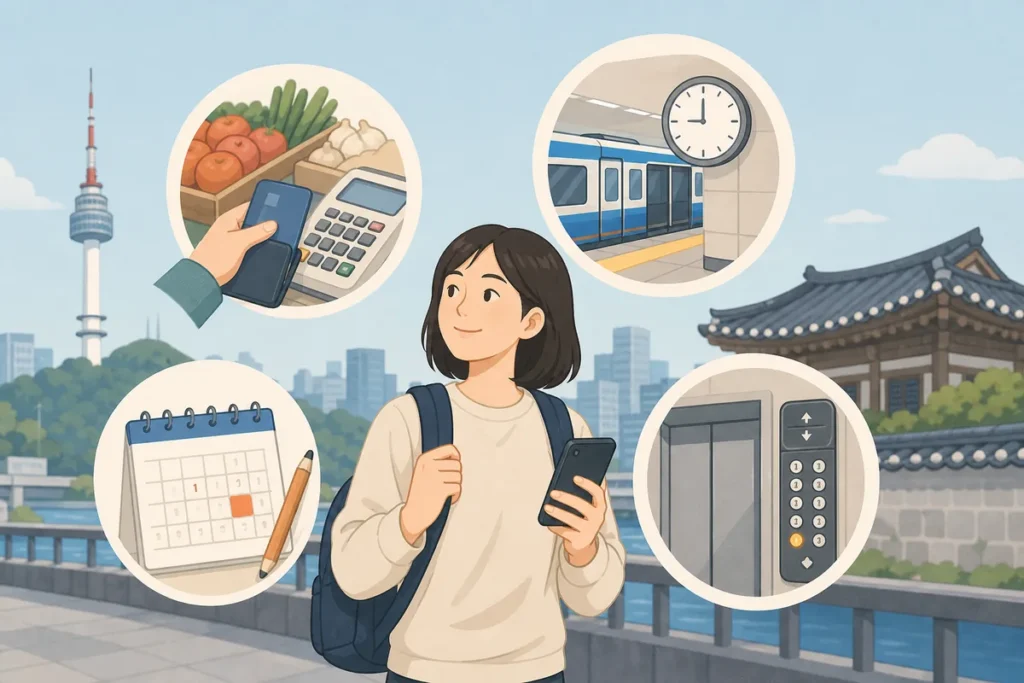
If you need korean numbers for travelers to read a price, tell the time, understand a date, or find a basement floor in Korea, the key is knowing which number system to use. In most travel situations, Sino-Korean numbers handle prices, minutes, dates, rooms, and floors, while native Korean numbers are used for counting many everyday items and hours.
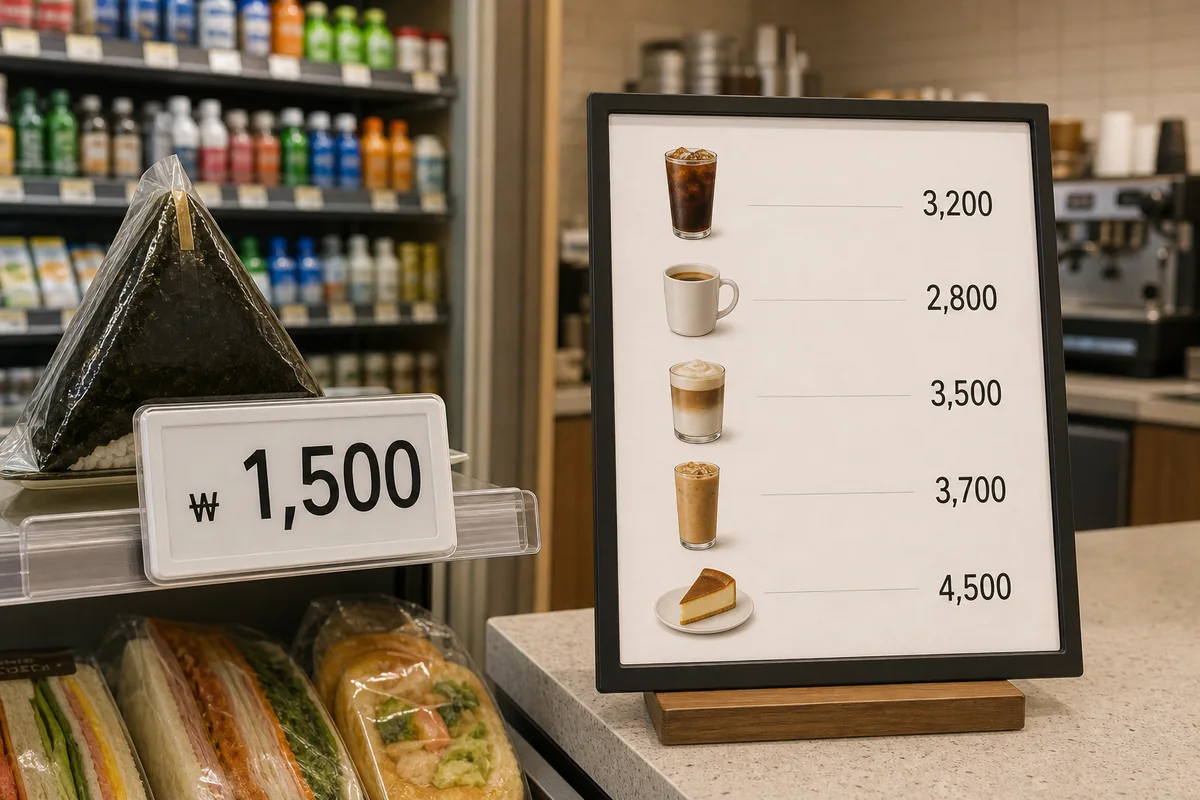
You are standing at a café counter and the price board says 5,500원. You are checking into a hotel and your room is on the 지하 2층. Your reservation slip says 2시 30분 and you are not sure if that is 2:30 or something else. These are exactly the moments this guide covers.
Korean uses two separate number systems, and the switch between them happens constantly in daily life. Most travelers never need to master both fully — but knowing which system applies to which situation saves real confusion at counters, in elevators, and when reading signs.
The Two Systems at a Glance
Think of it this way. Sino-Korean numbers are the workhorse for anything involving official counts: money, minutes, months, days, years, floors, room numbers, phone numbers. They follow a clean pattern: 일(1), 이(2), 삼(3), 사(4), 오(5), 육(6), 칠(7), 팔(8), 구(9), 십(10).
Native Korean numbers are older and used for counting physical things in front of you — and critically, for saying the hour when telling time. They run: 하나(1), 둘(2), 셋(3), 넷(4), 다섯(5), 여섯(6), 일곱(7), 여덟(8), 아홉(9), 열(10). Native Korean only goes up to 99 in everyday use, so anything involving large numbers like prices automatically falls to Sino-Korean.
Reading Prices in Won
Every price in Korea is in won (원), and won amounts use Sino-Korean numbers. The digit sounds match the list above. A price tag reading 3,000원 is 삼천 원 (sam-cheon won). 15,000원 is 만 오천 원 (man o-cheon won). The key units are 천 (1,000), 만 (10,000), and 십만 (100,000).
| Written price | Korean reading | Rough pronunciation |
|---|---|---|
| 1,000원 | 천 원 | cheon won |
| 3,000원 | 삼천 원 | sam-cheon won |
| 5,500원 | 오천오백 원 | o-cheon o-baek won |
| 10,000원 | 만 원 | man won |
| 15,000원 | 만 오천 원 | man o-cheon won |
| 50,000원 | 오만 원 | o-man won |
In practice, cashiers show you the total on a screen. You rarely need to say the price out loud. But if you want to confirm — or if a market vendor quotes you verbally — these patterns cover most situations.
Clock Time: The Mixed System
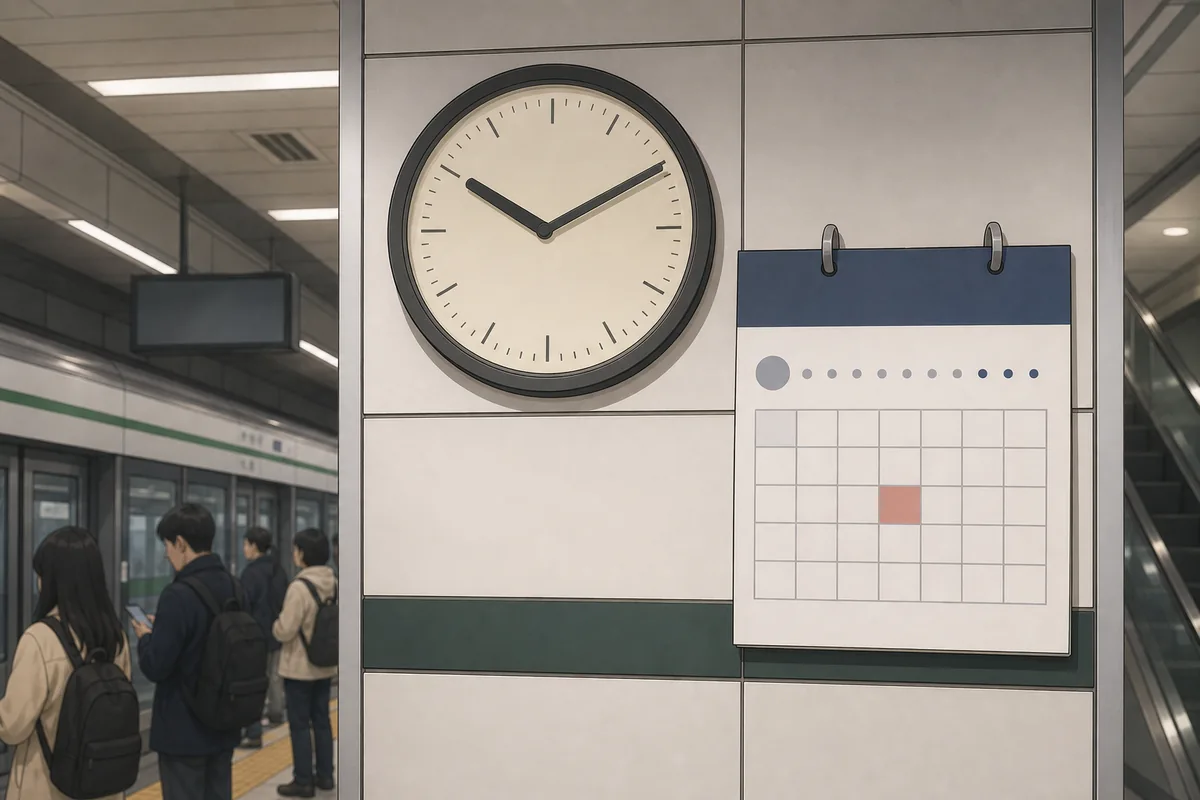
This is where travelers get tripped up. Korean clock time uses both systems at once. The hour uses native Korean numbers. The minutes use Sino-Korean numbers.
So 2:30 is 두 시 삼십 분 — 두 (native Korean for 2) + 시 (hour marker) + 삼십 (Sino-Korean 30) + 분 (minute marker). Your reservation card saying 2시 30분 means exactly 2:30 PM (or AM — context tells you which).
Korea uses a 12-hour clock in speech. Signs and digital displays often use 24-hour format, so 오후 2시 means 2 PM and 오전 10시 means 10 AM. 오후 is afternoon/PM, 오전 is morning/AM.
Dates: Year, Month, Day
Korean dates are written in year-month-day order: 2025년 6월 15일. All three parts use Sino-Korean numbers. 년 means year, 월 means month, 일 means day. So that date reads as 이천이십오 년 유월 십오 일 — but for travel purposes, the digits are the same ones you use for prices. Just read the numbers and add the unit word.
On tickets, reservations, and signs, dates almost always appear in numeric form (2025.06.15 or 2025/06/15), so you rarely need to say the full Korean date out loud. Recognizing the format is the main skill.
Floor Numbers and Basement Floors
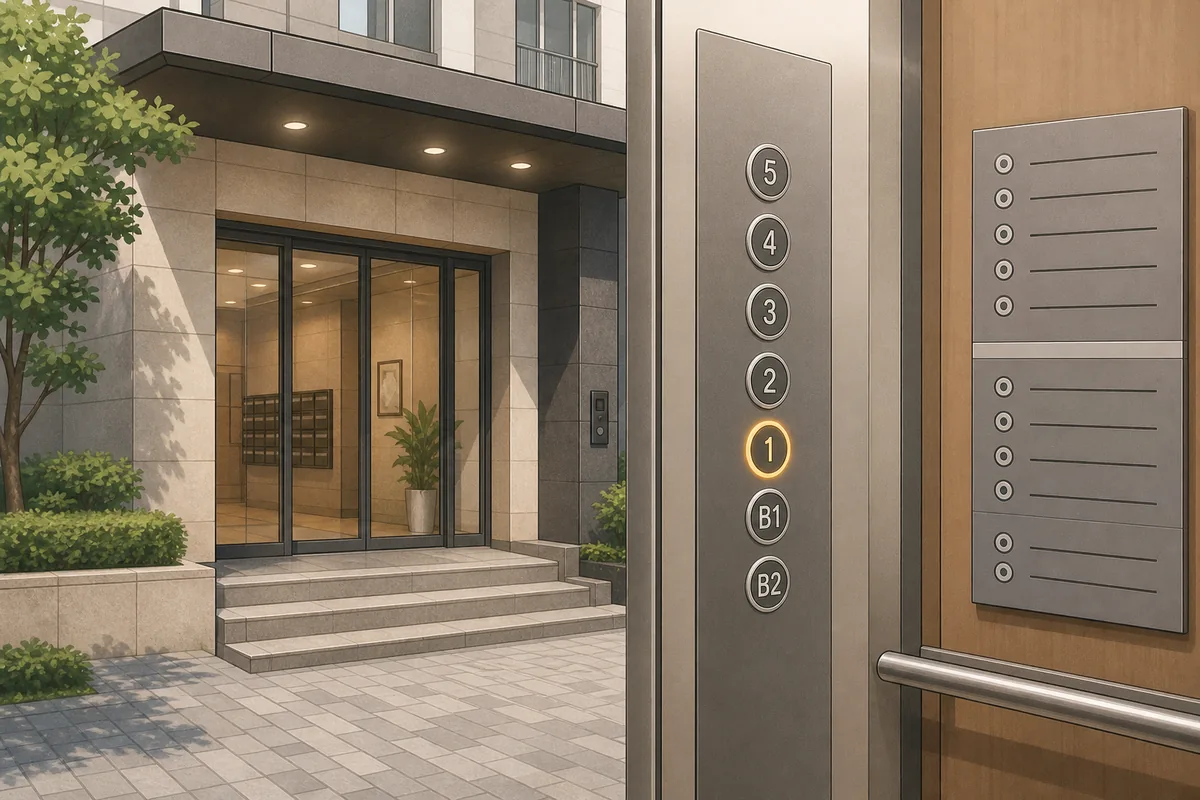
Elevator panels in Korea use 층 (cheung) for floor. Ground floor is 1층 (il-cheung). Second floor is 2층 (i-cheung). All floor numbers use Sino-Korean.
Basement floors are marked as B1, B2, B3 on elevator buttons — or written as 지하 1층, 지하 2층, 지하 3층. 지하 (ji-ha) means underground. B1 is 지하 1층, B2 is 지하 2층. Department stores and subway-connected malls often have B2 or B3 food halls, so you will see this constantly.
Hotel room numbers work the same way — they are just read as plain Sino-Korean digits. Room 305 is 삼백오호 (sam-baek-o-ho), where 호 means room number. Staff will usually just say the digits, though, so listening for the numbers is enough.
Korean Numbers for Travelers: Common Counters When Ordering
Korean uses counter words after numbers — similar to saying “two cups of coffee” rather than just “two coffee.” When ordering or asking for quantities, native Korean numbers pair with most everyday counters. Here are the ones you will use most:
Everyday Counters for Travelers
For ordering, holding up fingers works perfectly alongside the counter word. Two fingers and saying 잔 gets you two drinks without any confusion.
Korean Numbers for Travelers: Phrases You Can Show
Phrases to Show or Say at Counters and Hotels
Useful Korean Signs or Words
Signs and Labels You Will See
Where to Get Help
If numbers are causing real confusion at a counter or hotel desk, the fastest fix is to show the number on your phone screen and point. Almost every cashier, hotel receptionist, and ticket booth staff member in tourist areas can read digits and respond in kind.
For deeper help, the Korea Tourism Organization (KTO) helpline at 1330 operates 24 hours, offers English support, and can assist with translation over the phone. You can call from any Korean phone or landline. This is especially useful if a verbal number exchange at a transport counter or accommodation is going wrong and you need a live interpreter.
Tourist information centers — found in major train stations, airports, and popular neighborhoods like Myeongdong and Insadong — have staff who can write numbers down for you or help you decode a sign or receipt.
Common Mistakes
- Using native Korean numbers for prices. Prices always use Sino-Korean. Saying 하나 천 원 instead of 천 원 sounds wrong and confuses staff.
- Forgetting 만 (10,000) as a unit. Korea groups prices by ten-thousands, so 50,000 is 오만 원, not five thousand plus something else.
- Reading time with one system only. In speech, the hour and minutes use different systems.
- Mixing up B1 and 1F. B1 is basement one, not ground floor. 1층 is the first above-ground floor.
- Overthinking room numbers. Room and floor numbers are usually easiest to handle by reading the digits directly.
Common Mistake to Avoid
Do not assume every number in Korean works the same way. Prices, dates, floors, and room numbers use Sino-Korean patterns, while clock hours and many counters use native Korean. If you remember only one rule, remember this switch.
Summary
Korean numbers for travelers are easiest once you separate the two systems. Use Sino-Korean for prices, minutes, dates, floors, and room numbers. Use native Korean for counting items and saying the hour. For almost every travel task, reading the digits and showing your phone screen is enough to move quickly and avoid mistakes.
Korean Numbers Travelers becomes easier to handle when you recognize the situation and follow the practical steps above.
Korean Numbers Travelers becomes easier to handle when you recognize the situation and follow the practical steps above.
Official Resource
The Korea Tourism Organization’s 1330 travel helpline is the main official support line for visitors who need language help or help decoding travel information.
FAQ
When does a visitor use Sino-Korean numbers in Korea?
Use Sino-Korean numbers for prices, minutes, dates, room numbers, floor numbers, phone numbers, and most measurements.
When does a visitor use native Korean numbers in Korea?
Use native Korean numbers for counting many items, telling hours on the clock, age in casual speech, and some counters like 개 or 명.
How does a visitor read basement floors in Korea?
Basement floors are usually marked with B1, B2, and so on. B1 means the first basement level, not floor 1.
How do I say 3,000 won or 12:30 in Korean?
3,000 won is usually read with Sino-Korean numbers, and 12:30 uses a mix: native Korean for the hour and Sino-Korean for the minutes in common speech.
Note: This guide is for travel navigation in Korea. It is not medical, legal, or emergency professional advice. For urgent situations, contact local emergency services, official staff, or your embassy/consulate as appropriate.
Sources & Verification
- VISITKOREA – Imagine Your Korea — english.visitkorea.or.kr
Last checked: July 30, 2026