Why There So Many Cafes Korea: What You Need to Know
Korean cafe culture is so visible because cafes here do more than sell coffee: they work as study spaces, meeting places, dessert destinations, and everyday social hangouts. One street can hold five or six cafes at once because each one attracts a slightly different crowd, mood, or purpose, and staying for an hour or two is completely normal.
What to Do First
- Walk into any cafe freely — no reservation needed, no minimum order pressure at the door.
- Order at the counter first, then find a seat (most cafes work this way).
- Pick up your order when your number or name is called — most cafes are self-service.
- Stay as long as you like — lingering is expected and normal here.
- Look for a large table or booth if you want to work on a laptop or meet someone.
- Check the menu board for dessert options — many cafes lead with food, not coffee.
- If the cafe is full, walk half a block — another one is almost certainly open.
When This Guide Helps
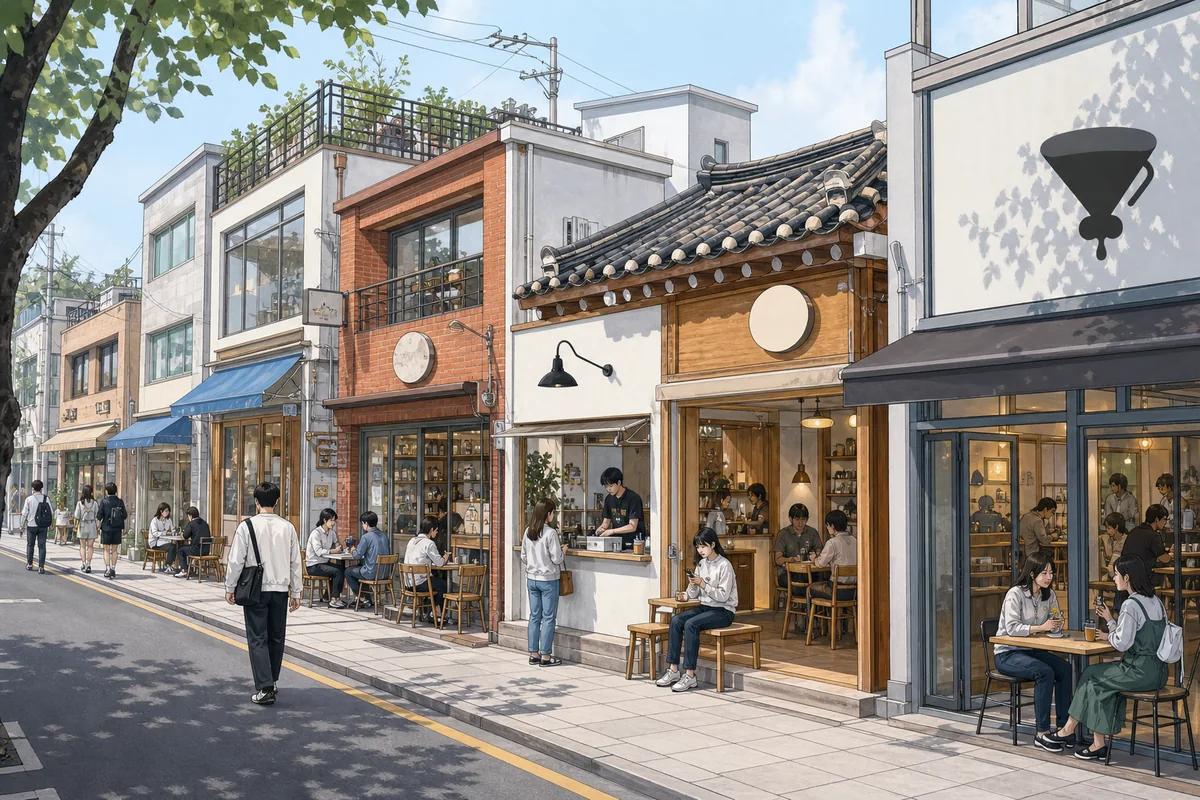
Korean cafe culture explains why a street in Hongdae, Gangnam, Sinchon, or near any university can seem packed with cafes. You may see three on one block, or a huge multi-floor cafe that looks more like a lounge than a coffee shop. This guide shows why that density makes sense and what locals are actually using those spaces for.
It also helps if you want to use a cafe the local way — not just for a quick drink, but as a comfortable place to sit, work, study, or meet a friend for a while without feeling rushed.
Why Korean Cafe Culture Creates So Many Cafes
Cafes Are Not Just About Coffee
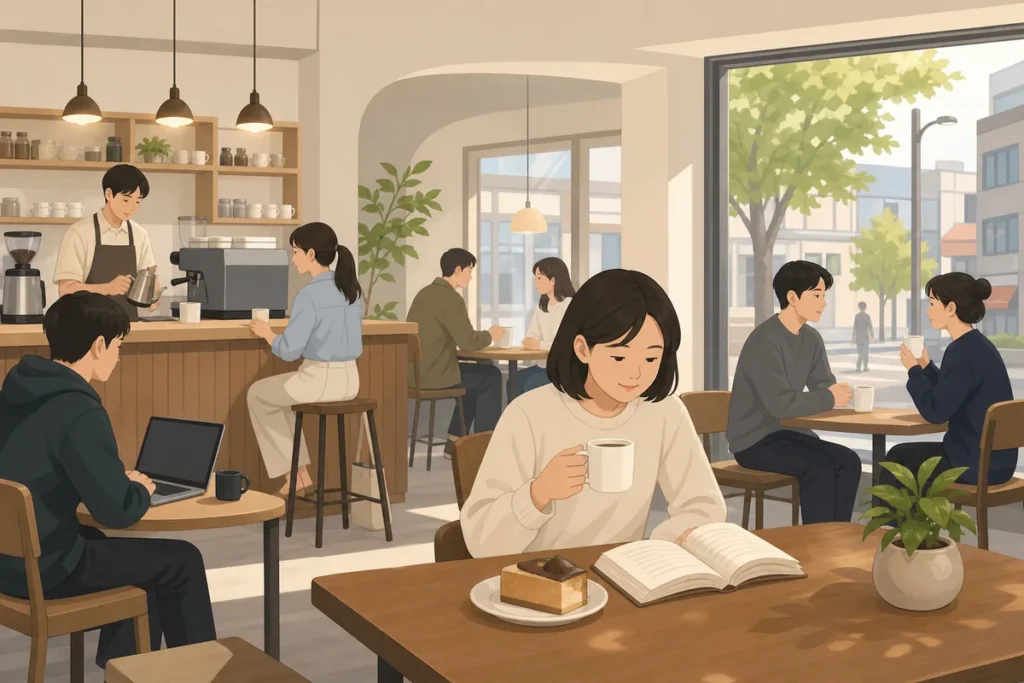
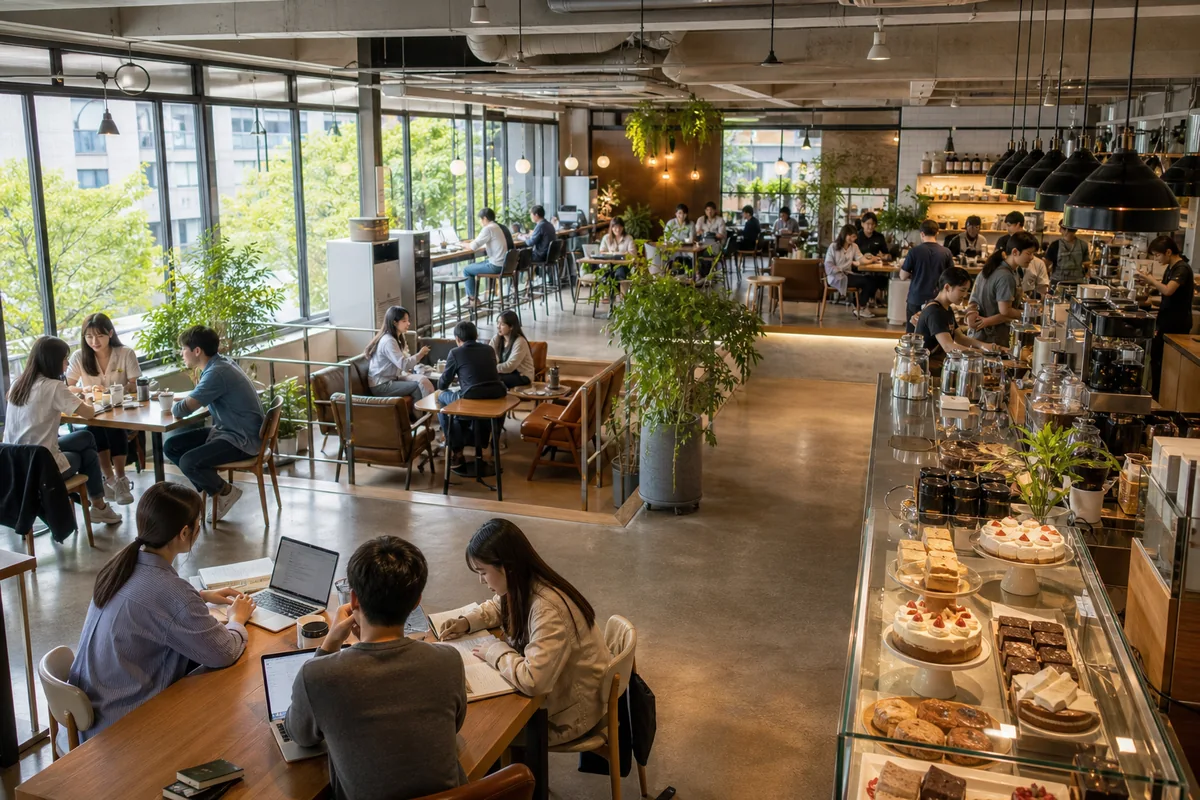
The most important thing to understand about korean cafe culture is that coffee is often secondary. The real product is the space. People use cafes the way others might use a library reading room, a quiet corner of a park, or a friend’s living room. You go to a cafe to sit somewhere comfortable, get something done, or spend time with someone — and you happen to order a drink while you are there.
This is why many cafes can survive on the same street. One is bright and open for group meetings. One is quiet and has good Wi-Fi for solo studying. One has an Instagram-friendly interior and elaborate desserts. They are not all fighting for the exact same visit.
The Study Culture Connection
Korea has a strong study culture, and cafes absorb a huge part of it. University students, exam-prep students, and working adults studying for certifications all use cafes as their go-to workspace. A library requires silence and has limited hours. A cafe lets you order something, plug in your laptop, and stay for a few hours without being pushed out.
Around universities like Yonsei, Korea University, or Ewha, it is normal to see laptops, textbooks, and chargers on most tables. Some cafes even design seating for solo workers, with individual desks, power outlets, and low background music.
Meeting Culture and the Third Place
Korean social life happens a lot in cafes. Job interviews, first dates, friend catch-ups, tutoring sessions, and small business meetings commonly take place there rather than at home or in an office. Apartments in Korean cities are often small, and inviting people over is less common than in some other places. A cafe is neutral, comfortable, and easy to reach.
That makes the cafe a classic “third place” — somewhere that is neither home nor work but still matters in daily life. In Korea, that role is especially strong.
Large-Format Cafes: 대형카페
You will notice some cafes in Korea are enormous — two or three floors, hundreds of seats, rooftop terraces, and interiors that feel closer to a boutique hotel lobby than a coffee shop. These are called 대형카페 (daehyeong kape), meaning large-format or mega cafes.
They are popular because they can handle large groups, they offer a destination experience, and they photograph well. Many are set in converted warehouses, old factories, or standalone buildings with parking. People make a deliberate trip to visit them. The cafe itself is the attraction, not just the drink.
Desserts and Atmosphere Matter as Much as Coffee
Walk into almost any Korean cafe and the dessert display is as prominent as the coffee menu. Bingsu, tteok cakes, croissants, soft-serve, seasonal fruit drinks, and elaborate lattes are standard. Many visitors who do not even drink coffee still find plenty to order.
Atmosphere matters too. Lighting, furniture, tableware, and seasonal decor are part of the experience. Cafes often change their menus and interiors with the seasons because the visual and sensory side of the visit is part of what people are paying for.
Why So Many Can Survive on One Street
From a business perspective, cafe density works because urban foot traffic is high and the customer base is huge. Chains like Starbucks, A Twosome Place, Ediya, and Mega MGC Coffee operate alongside thousands of independent cafes. The independents survive by offering something distinct — a unique interior, a specialty roast, a signature dessert, or a specific vibe that draws a loyal local crowd.
That variety keeps the neighborhood full of options, even when several cafes sit within a short walk of each other.
Common Mistakes
- Sitting down before ordering. In almost every Korean cafe, you order and pay first, then find a seat.
- Leaving without checking for a buzzer. Some cafes hand you a pager (진동벨) after you order. Stay close enough to hear it.
- Expecting to be rushed out. Staying two or three hours on one order is usually acceptable.
- Ignoring the dessert menu. Many cafes are as much dessert shops as coffee shops.
- Assuming all cafes are chains. Many of the most interesting ones are independent and may have little English signage.
Korean Phrases You Can Show
Useful Korean Signs or Words
Where to Get Help
You rarely need outside help inside a Korean cafe — the process is simple and staff are usually patient with visitors. If you are confused at a kiosk, show a staff member your phone with a translation app open.
If you want a specific type of cafe, Naver Map reviews and photos are the easiest way to compare seating, atmosphere, and dessert options before you go. Tourist information centers in areas like Myeongdong, Insadong, and Hongdae can also point you toward well-known local cafes if you want a recommendation in person.
Useful Public Signals You’ll Notice
Many cafes post signs that help you choose quickly:
- 포장 — takeout
- 매장 — dine-in
- 진동벨 — buzzer pager for pickup
- 셀프 — self-service
- 디저트 — dessert
Once you know these words, it is much easier to read a cafe menu board or kiosk without guessing.
The Short Version
Korean cafe culture runs deep because cafes fill roles that go far beyond coffee. They are study rooms, meeting venues, dessert spots, and social spaces all at once. That is why you see so many on a single street — each one serves a slightly different need, and staying a while is the whole point. Walk in, order at the counter, find a seat, and stay as long as you like.
Why There So Many Cafes Korea becomes easier to handle when you recognize the situation and follow the practical steps above.
Why There So Many Cafes Korea becomes easier to handle when you recognize the situation and follow the practical steps above.
FAQ
Why are there so many cafes in Korea?
Because cafes in Korea function as study spaces, meeting rooms, dessert destinations, and social hangouts — not just coffee shops. High foot traffic, a strong coffee habit, and a culture of spending time in comfortable public spaces all support very high cafe density.
What is a 대형카페 in Korea?
대형카페 (daehyeong kape) means a large-format or mega cafe. These are cafes with multiple floors, lots of seats, and a strong focus on atmosphere and design. People often visit them as destinations rather than quick coffee stops.
Do people in Korea really go to cafes to study?
Yes, very commonly. Students and working adults use cafes as study and work spaces because they offer Wi-Fi, outlets, and a comfortable place to stay for a few hours. Around universities, laptop-heavy tables are a normal sight.
Are Korean cafes just a trend?
No. Menu styles and interior trends change, but the habit of using cafes as everyday social spaces is long-established. The trend side adds variety, while the deeper cafe habit keeps demand strong.
Note: This guide is for travel navigation in Korea. It is not medical, legal, or emergency professional advice. For urgent situations, contact local emergency services, official staff, or your embassy/consulate as appropriate.
Sources & Verification
- VISITKOREA – Imagine Your Korea — english.visitkorea.or.kr
Last checked: July 30, 2026