Korean Public Toilets Explained: What You Need to Know
Korean public toilets are usually easy to use once you know two things: toilet paper is often flushable, and many stalls have bidet buttons with simple controls. If you are confused by the buttons, paper bin, or accessible stall, this guide shows what to do step by step.
What to Do First
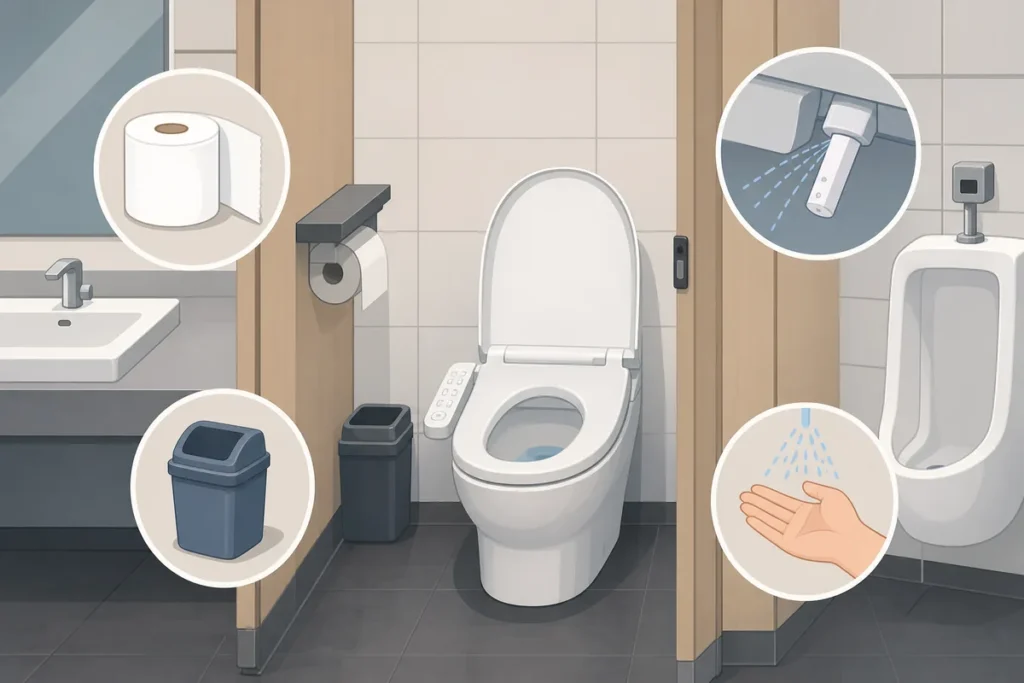
- Check for a trash bin in the stall — if one is there, put used paper in it, not the toilet
- Look at the wall or door for a posted sign; follow it if present
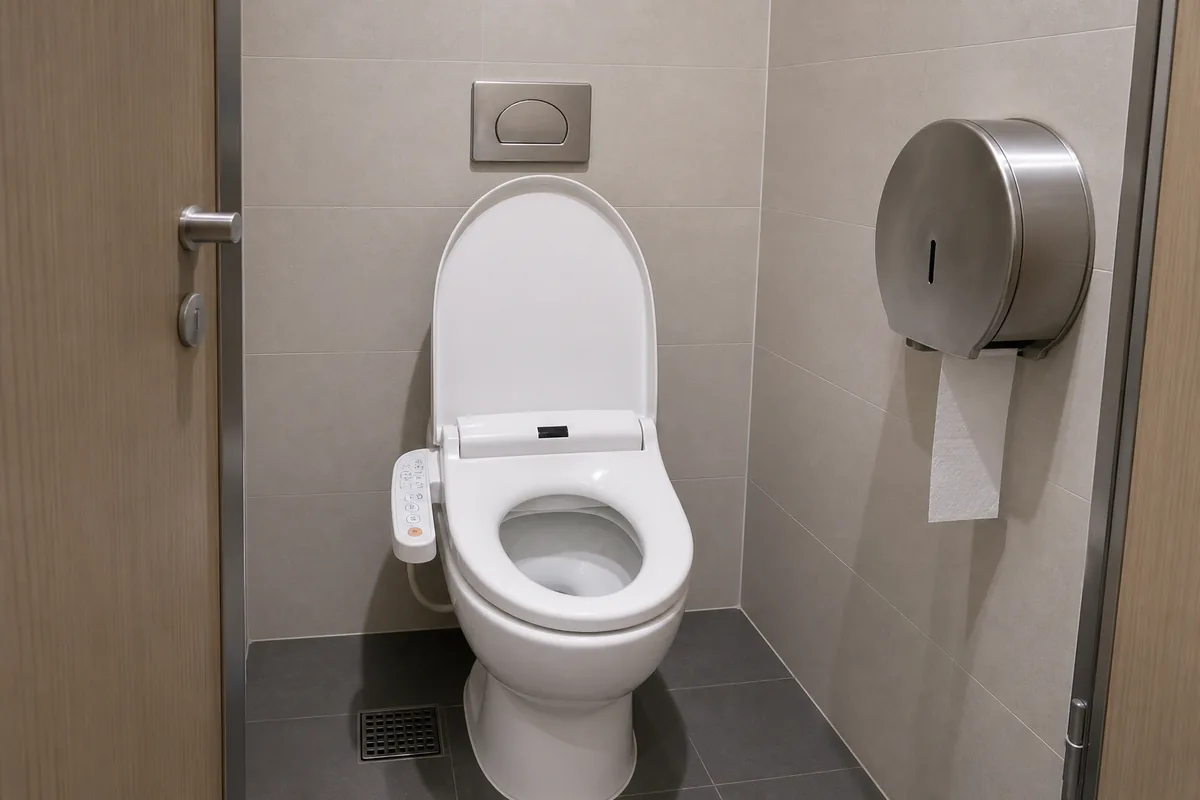
- Find the flush handle or button before you sit — it is usually on the right side or on the top of the tank
- If there is a bidet panel, ignore it until you need it — the toilet works fine without it
- Use the paper provided in the stall or from the dispenser outside the stalls
- Press the largest or most obvious button on the bidet panel to stop any function that starts accidentally
- For accessible stalls, look for the wider door with a wheelchair symbol — anyone can use them if others are full
When This Guide Helps
This guide is for you if you are standing inside a Korean restroom right now and not sure what to do with the paper, the bin, or the panel of buttons on the wall. It covers the most common moments of confusion: flushing versus binning toilet paper, understanding basic bidet controls, and finding the right stall when you need more space. You do not need to read Korean to follow the steps here.
A Closer Look at Korean Public Toilets
Check the posted sign first. If a stall clearly asks users to place paper in a waste bin, follow that instruction. Otherwise, flush toilet paper normally and do not put unrelated waste in the bowl.
- Follow the facility’s posted sign.
- Use a waste bin when the sign specifically directs you to it.
- Flush toilet paper normally unless the posted sign says otherwise.
Korean public toilets: Toilet Paper: Flush It or Bin It?
Most modern Korean public toilets — especially in subway stations, shopping malls, tourist sites, and newer buildings — have plumbing that handles toilet paper fine. You can flush it. The general rule is simple: if there is no bin in the stall, flush the paper.
Older buildings, rural rest stops, and some traditional market restrooms still have narrower pipes. Those stalls almost always have a small plastic bin next to the toilet. When you see that bin, use it for used paper. A sign on the wall or door often confirms this. It looks unhygienic at first, but the bins are emptied regularly and the instruction exists to protect the plumbing, not to inconvenience you.
When in doubt and there is a bin present, use the bin. It is always the safe choice.
Korean public toilets: Bidet Buttons: What They Do
Many toilet stalls in Korea — particularly in department stores, nicer restaurants, KTX train stations, and newer public restrooms — have a bidet panel on the wall or attached to the toilet seat. The panel looks complicated but most travelers only need to know three or four buttons.
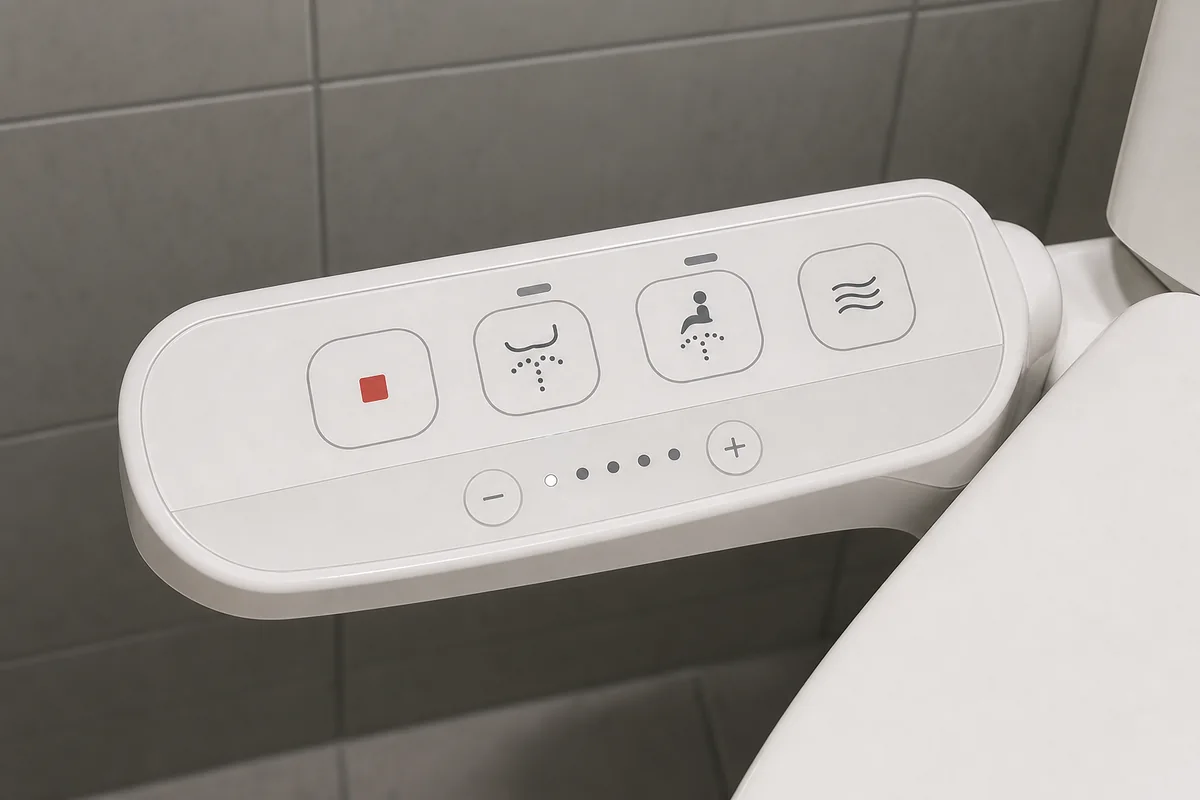
The buttons are usually labeled in Korean, but the symbols are consistent enough to recognize quickly. A water-spray icon points upward for the rear wash function. A softer or smaller spray icon is for the front wash. A fan or air icon means dry. The stop button — often red, or labeled with a square symbol — stops everything. If you press something by accident, press the largest or most obvious button to stop it.
You never have to use the bidet. The toilet functions completely normally without touching the panel at all.
The Paper Dispenser Outside the Stalls
Some restrooms — especially older ones in parks or public buildings — have a single large toilet paper roll mounted on the wall outside the individual stalls, near the sinks. Take what you need before you go in. If you forget, you can open the stall door slightly and reach out, or ask someone nearby. This setup surprises many first-time visitors but is completely normal.
Accessible Stalls
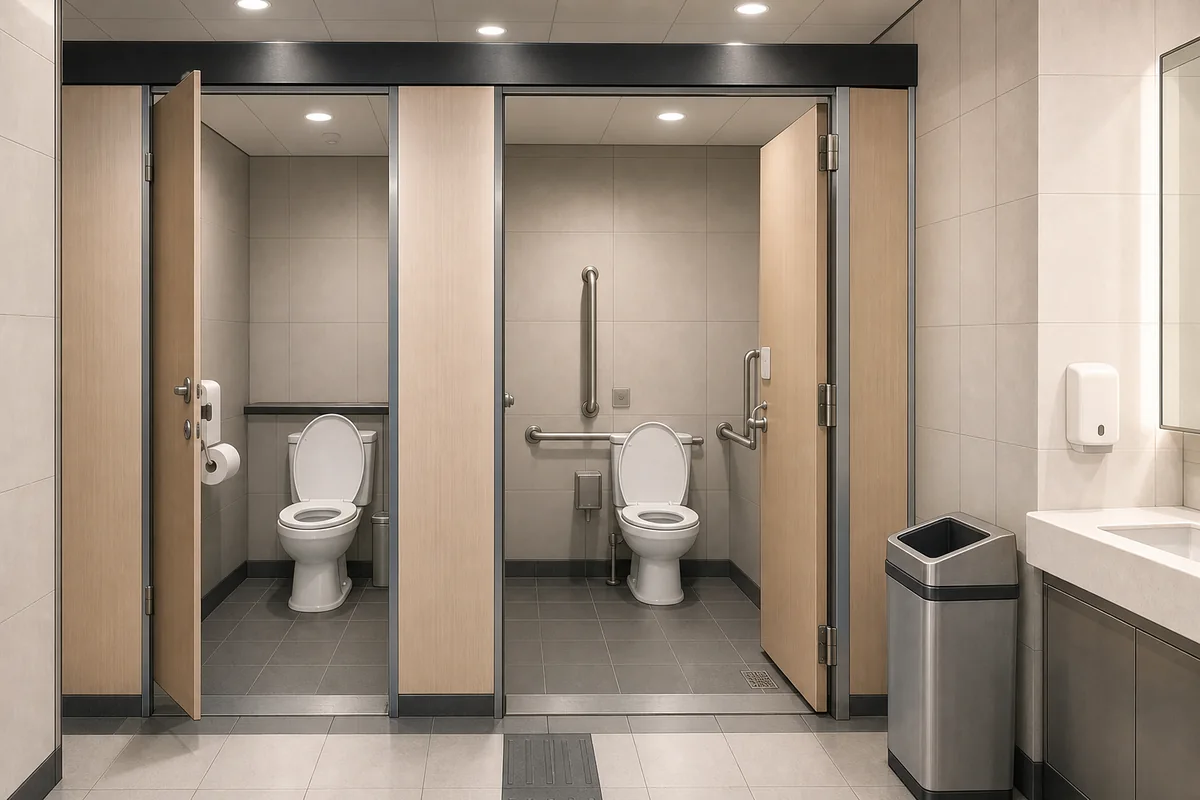
Every public restroom in Korea is required to have at least one accessible stall. It is wider, has grab bars on the walls, and sometimes has an emergency call button. The door has a wheelchair symbol on it. These stalls are for people who need them, but if all regular stalls are occupied and the accessible stall is free, it is generally acceptable to use it briefly. Inside, the toilet and flush work the same way as a regular stall.
Korean Phrases You Can Show
Useful Korean Signs or Words
Where to Get Help
If something goes wrong inside the restroom — a bidet that will not stop, a door that will not open, or an emergency — look for a call button on the wall. Accessible stalls always have one. It is usually red or orange and marked with a bell or person symbol. Press it and staff will come to the door.
Outside the restroom, any building staff member, subway station worker, or information desk can help you find a different restroom or answer a basic question. Show them the phrases above if speaking is difficult.
In a genuine emergency inside a public facility, press the call button or shout for help. Staff in Korean public buildings are trained to respond.
Common Mistakes
- Flushing paper when a bin is present. If there is a bin in the stall, it is there for a reason. Use it. Flushing paper in older plumbing can cause a blockage.
- Ignoring the paper dispenser outside the stalls. In some restrooms, paper is only available before you enter the stall. Take some before you go in.
- Pressing bidet buttons out of curiosity before sitting down. The spray activates immediately. Press buttons only when you are ready.
- Assuming the accessible stall is a storage room. The wider door with a wheelchair symbol is a fully functioning toilet stall.
- Looking for a Western-style handle flush. Many Korean toilets flush with a button on the top of the tank or a sensor on the wall. Check all sides before reaching for anything.
- Leaving without washing hands. Soap and hand dryers or paper towels are standard in almost every Korean public restroom. The sinks are just outside the stalls.
The Short Version
Korean public toilets are clean, well-maintained, and straightforward once you know the two main rules: flush paper if there is no bin, use the bin if there is one. Bidet panels are optional — you never have to touch them. If a sign is posted on the stall door or wall, follow it. For everything else, the restroom works exactly as you would expect.
Korean Public Toilets Explained becomes easier to handle when you recognize the situation and follow the practical steps above.
Korean Public Toilets Explained becomes easier to handle when you recognize the situation and follow the practical steps above.
FAQ
Can you flush toilet paper in Korea?
In most modern public toilets — subway stations, malls, tourist attractions, and newer buildings — yes, you can flush toilet paper. The plumbing handles it fine. In older restrooms, especially in traditional markets or rural areas, a small bin in the stall signals that paper should go in the bin instead. Follow the bin or any posted sign if present; otherwise, flushing is fine.
What do the bidet buttons in Korea mean?
The most common buttons are: 세정 (se-jeong) for rear wash, a smaller or softer spray icon for front wash, a fan or air symbol for drying, and 정지 or 멈춤 (stop) to end any function. You never have to use the bidet — the toilet works normally without touching the panel. If something activates by accident, press the stop button, which is usually the most prominent or differently colored button on the panel.
Why is there a trash bin in the toilet stall in Korea?
Older buildings in Korea have narrower pipes that can block easily if toilet paper is flushed. The bin is there to collect used paper and keep the plumbing clear. It is emptied regularly by cleaning staff. When you see a bin in the stall, use it for paper rather than flushing. A posted sign on the door or wall often confirms this instruction.
Are accessible toilets easy to find in Korea?
Yes. Korean law requires accessible toilet facilities in all public buildings, and they are consistently marked with a wheelchair symbol on the door. They are usually inside the main restroom area or occasionally in a separate room just beside it. The stall is wider, has grab bars, and includes an emergency call button. The toilet and flush inside work the same as in a regular stall.
Note: This guide is for travel navigation in Korea. It is not medical, legal, or emergency professional advice. For urgent situations, contact local emergency services, official staff, or your embassy/consulate as appropriate.
Sources & Verification
- VISITKOREA – Imagine Your Korea — english.visitkorea.or.kr
- 한국어기초사전 — krdict.korean.go.kr
- National Institute of Korean Language — www.korean.go.kr
Last checked: July 30, 2026