Quick Answer
If you need a doctor or pharmacy in Korea, these Korean medical phrases help you say where it hurts, how long it has lasted, how strong it feels, and whether you have allergies or current medication. You can speak them or show them on your phone.
What to Do First
- Go to a clinic (의원) for a normal visit, or a hospital (병원) if you are already heading to a larger facility.
- At reception, say: 영어 할 수 있는 의사 있어요? to ask for an English-speaking doctor.
- Write down the body part, pain level, and how long it has lasted before you go in.
- List allergies and current medication on your phone so you can show them quickly.
- If you have a prescription, bring it to the pharmacy counter (약국) after the visit.
When This Guide Helps
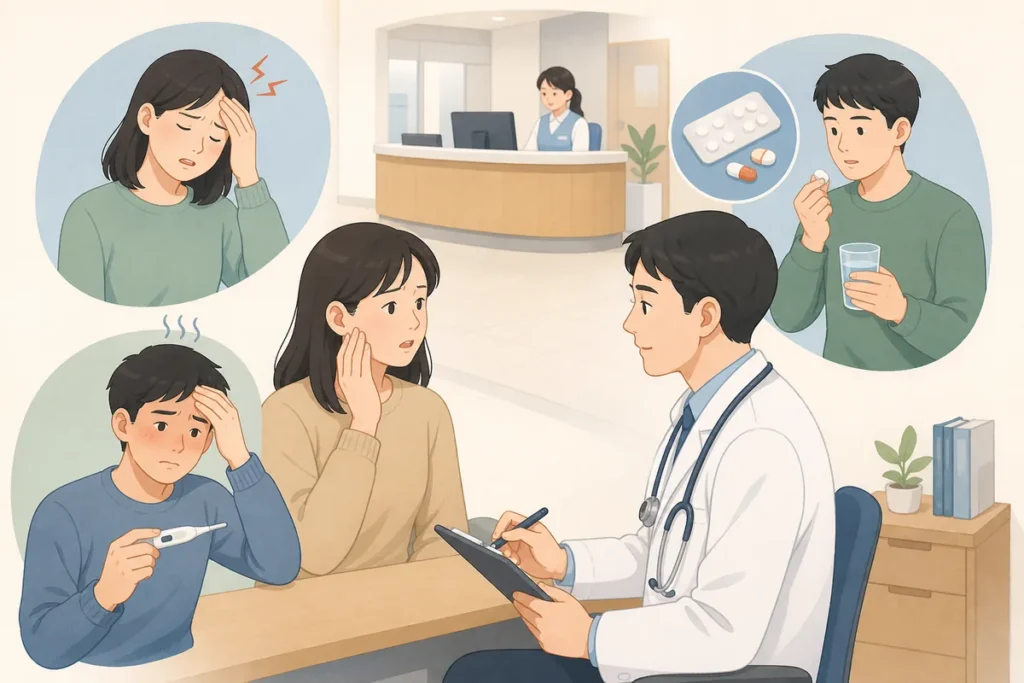
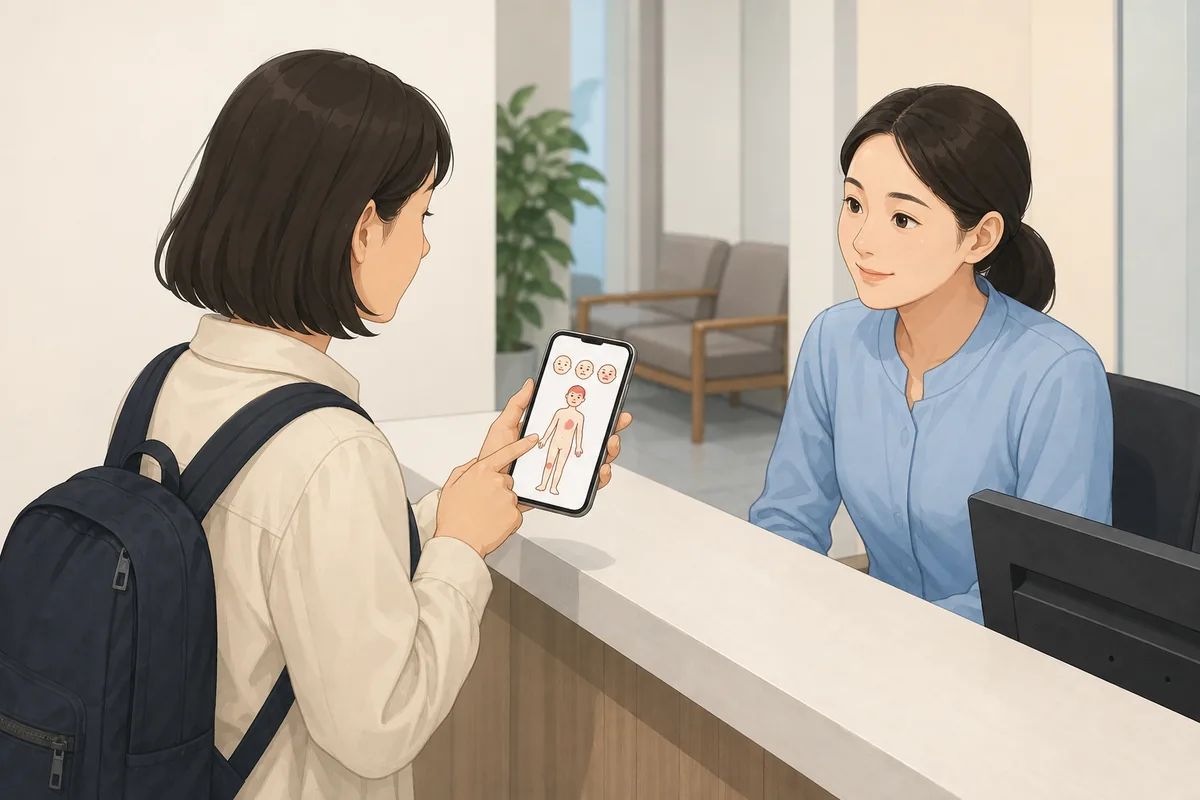
This guide helps when you need to explain a symptom at a clinic, hospital, or pharmacy and do not want to guess the Korean. The main job is simple: say the body part, say how bad it feels, say when it started, and show any allergy or medicine notes.
It also helps if you want to ask for an English-speaking doctor or use a translation app at the front desk.
What to Do First
Start with the shortest possible sentence and point to the area if needed. Staff usually understand a combination of a phrase, a gesture, and a note on your phone.
If you are at a clinic, check in at 접수 first. If you are at a pharmacy, show the prescription or the medicine name and ask for help at the counter.

Korean Medical Phrases You Can Show
These phrases are useful for a clinic visit, a hospital desk, or a pharmacy counter. Showing them on a phone is normal and often easier than trying to speak fluently.
Asking for an English-Speaking Doctor
Body Part and Pain Phrases
Fever and Other Symptoms
How Long It Has Lasted
Allergies
Current Medication
At the Pharmacy Counter
Useful Korean Signs or Words
These words help you spot the right desk or room faster.
Where to Get Help
For a routine visit, walk into a local clinic and check in at 접수. For a prescription, take the paper to a nearby 약국. Large hospitals often have an international patient desk or an international clinic, and reception can point you in the right direction.
If you do not speak Korean, show the phrase card, the medicine name, or your written notes. That is a normal part of the process.
Common Mistakes
- Only saying the pain and not the body part.
- Forgetting to say how long the symptom has lasted.
- Not mentioning allergies or current medication.
- Arriving at the pharmacy without the prescription when one is required.
- Trying to explain everything in one long sentence instead of using short phrases and pointing.
Tip: Keep a note on your phone with your main symptom, allergies, and medication names in English. Then show it before you start speaking.
Official Resource
The Emergency Medical Information Center in Korea provides hospital and emergency information for visitors and residents.
Korean Travel WordsLook up useful Korean signs, menu words, and phrases.Search words
FAQ
How do I say “my stomach hurts” in Korean?
Say 배가 아파요 (baega apayo). If needed, point to the area and add how long it has been happening.
How does a visitor ask for an English-speaking doctor in Korea?
Say 영어 할 수 있는 의사 있어요? You can also ask for English interpretation at reception.
What should a visitor tell the pharmacy in Korea?
Show the prescription, your current medication, and any allergies. Then say 이 처방전으로 약 주세요 if you need medicine filled from a prescription.
How do I say I have a fever in Korean?
Say 열이 있어요 (yeori isseoyo). If you have other symptoms, show them one by one instead of trying to explain everything at once.
Summary: The easiest way to use Korean medical phrases is to keep it short: say the body part, pain level, symptom duration, allergies, and current medication, then show the note to staff.
Note: This guide is for travel navigation in Korea. It is not medical, legal, or emergency professional advice. For urgent situations, contact local emergency services, official staff, or your embassy/consulate as appropriate.
Sources & Verification
- VISITKOREA – Imagine Your Korea — english.visitkorea.or.kr
Last checked: July 30, 2026