I Don’t Speak Korean Politely: How to Say It in Korean and Ask for English
I Don’t Speak Korean Politely: What You Need to Know
i dont speak korean politely is one of the most useful things you can learn before arriving in Korea. Whether you are standing at a convenience store counter, trying to order food, or asking for directions at a train station, this single phrase can open a door instead of closing one. Many visitors either stay silent and look confused or jump straight into English — both of which can feel awkward for the person helping you. A short, polite Korean opener changes the whole tone of the interaction and almost always brings a warmer response.
This guide is written for first-time visitors and newcomers who may not read Korean script yet. You do not need to memorize the alphabet to use these phrases. Romanized pronunciation guides are included throughout so you can speak the words aloud right away.
Quick Answer
The best all-purpose phrase to use immediately is:
한국어를 못해요. 영어 괜찮아요?
Hangugeo-reul mot-haeyo. Yeong-eo gwaenchanayo?
Meaning: “I can’t speak Korean. Is English okay?”
Say this after a brief greeting like 안녕하세요 (Annyeonghaseyo — Hello). It is polite, clear, and gives the other person an easy way to respond.


Table of Contents
- Main Explanation: What the Phrase Actually Means
- Common Situations and What to Say
- What Foreigners Often Get Wrong
- Useful Korean Phrases
- Warnings and Things to Check
- FAQ
- Summary
Main Explanation: What the Phrase Actually Means
In Korean, politeness is built into the grammar itself. The ending -요 (-yo) added to a verb makes it polite and appropriate for strangers, shop staff, taxi drivers, and anyone you meet in a public setting. You do not need to learn complex grammar to use it — just attach it to the short phrases in this guide and you will already sound respectful.
The core phrase 한국어를 못해요 (Hangugeo-reul mot-haeyo) literally means “I cannot do Korean.” It is honest, humble, and completely natural. Koreans hear this from foreign visitors regularly and will not find it strange. What matters most is that you tried — saying even one polite Korean phrase before switching to English signals respect, and people notice that.
You can also use a slightly softer version: 한국어를 잘 못해요 (Hangugeo-reul jal mot-haeyo), which means “I cannot speak Korean well.” This version sounds even more modest and is often preferred in service settings.
Always Start with Hello
Before any phrase, say 안녕하세요 (Annyeonghaseyo). This greeting is universally understood, works at any time of day, and immediately sets a polite, friendly tone. Think of it as the key that unlocks a helpful response. Skipping the greeting and launching straight into your request — in any language — can feel abrupt in Korean culture.
Asking If English Is Possible
After saying you cannot speak Korean, the natural follow-up is to ask whether English is an option. 영어 괜찮아요? (Yeong-eo gwaenchanayo?) means “Is English okay?” It is softer and less demanding than “Do you speak English?” and gives the other person room to say yes, no, or offer another solution like writing things down or using a translation app.
Asking Someone to Speak Slowly
If someone does try to speak to you in Korean, asking them to slow down is completely acceptable. 천천히 말해주세요 (Cheoncheonhi malhaejuseyo) means “Please speak slowly.” Combined with a small apologetic expression, this keeps the conversation going without frustration on either side.
Common Situations and What to Say
Convenience Store
Staff at convenience stores are often young and may know a little English. A simple greeting followed by your phrase is usually enough. If you need a bag, a receipt, or help with a machine, point and use 이거요 (Igeo-yo — “This one, please”) after your opener.
Taxi
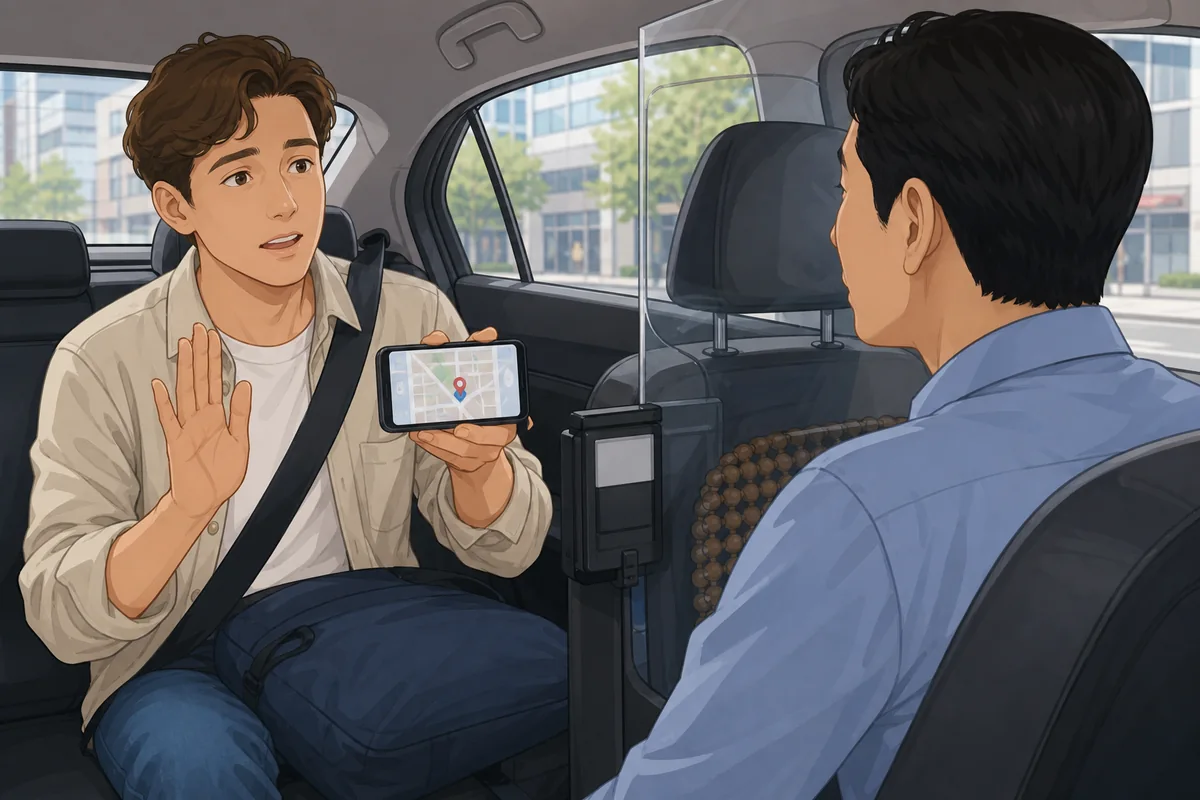
Show the driver your destination on a map app or written in Korean on your phone. Before handing over the phone, say your phrase so the driver knows communication may be limited. Many taxis now have translation apps or navigation systems that help bridge the gap.
Train Station
Major stations such as Seoul Station and Busan Station have English signage and English-speaking staff at information desks. Still, using your polite opener at the ticket counter will help staff understand immediately what kind of assistance you need.
Restaurant
Many restaurants have picture menus or QR-code menus with photos. After your greeting and phrase, point to the item you want. If you have dietary needs, prepare a written note in Korean in advance — translation apps like Papago (by Naver) or Google Translate can help you prepare this before you go.
Service Counter (Bank, Post Office, Government Office)
These settings can be more formal. Use the full greeting plus your phrase, and ask if there is an English-speaking staff member available: 영어 할 수 있는 분 계세요? (Yeong-eo hal su inneun bun gyeseyo? — “Is there someone who can speak English?”). Many larger branches have at least one English-capable staff member.
What Foreigners Often Get Wrong
Speaking English First with No Korean Opener
Walking up to someone and immediately speaking English — especially loudly or slowly — can feel dismissive in Korea. It skips the social step of acknowledging that you are in a Korean-speaking environment. Even one Korean phrase first makes a significant difference in how warmly people respond.
Using Overly Direct Wording
Saying something like “I don’t understand” flatly, without the polite verb ending, can sound blunt. Always use the -요 ending. It costs nothing and signals that you are making an effort.
Assuming Silence Means Refusal
If someone pauses or looks uncertain after you speak, they are usually thinking of how to help — not ignoring you. Give them a moment. Many people will pull out their phone to use a translation app rather than speak directly.
Forgetting to Smile and Use Body Language
A calm, friendly expression goes a long way. Korean service culture values patience and politeness. If you look frustrated, staff may become hesitant to engage. A small bow of the head when greeting or thanking someone is always appreciated.
Relying Entirely on English in Rural Areas
Outside of major cities, English proficiency among the general public is lower. This is not a problem — it just means your Korean phrases and a good translation app become even more important. Do not assume English will always be available.

Useful Korean Phrases
These phrases cover the most common language needs for a newcomer. Practice saying them aloud before you arrive — even approximate pronunciation is understood and appreciated.
Warnings and Things to Check
- Pronunciation does not need to be perfect. Koreans are generally patient with foreign accents. Making the attempt matters more than getting every sound exactly right.
- Not everyone speaks English. Even in Seoul, many older Koreans or staff in smaller shops may not speak English at all. This does not mean they will not try to help — they often will, using gestures, phones, or calling a colleague.
- Translation apps are your backup, not your first move. Apps like Naver Papago or Google Translate work well for Korean. Download them before you travel and enable offline translation for Korean in case you have no data connection.
- Tone matters as much as words. A calm, friendly tone will always get a better response than a frustrated or loud one, regardless of which language you are using.
- Confirm service availability with official sources. English-language assistance at specific offices, counters, or tourist spots can change. Check with the relevant official website or call ahead if English support is critical for your visit.
- This guide covers language and communication only. It does not cover legal, medical, visa, or financial matters. For those situations, seek qualified professional assistance.
FAQ
Does saying “I don’t speak Korean” sound rude in Korean?
No — as long as you use the polite verb ending -요 and say it after a greeting. The phrase 한국어를 못해요 is humble and honest. Koreans generally appreciate that you acknowledged the language situation rather than ignoring it.
Should I say the phrase before or after hello?
Always after hello. Start with 안녕하세요 (Annyeonghaseyo), then follow with your phrase. The greeting sets a respectful tone and makes everything that follows feel more natural.
What if the other person does not understand me at all?
Try showing the phrase on your phone screen in Korean text. You can also open a translation app and type what you want to say. Pointing, gesturing, and showing pictures on your phone are all widely accepted and understood in Korea.
Is it okay to use English after saying the Korean phrase?
Absolutely. The Korean opener is a courtesy — it signals respect for the local language. After that, switching to English is completely fine. Many younger Koreans in cities will be happy to try English once they know you need it.
Can I just use a translation app instead of learning any phrases?
You can, but knowing even two or three spoken phrases makes interactions much smoother and warmer. A translation app is a great backup, but opening one immediately without any spoken attempt can feel impersonal. A short verbal greeting and phrase first, then the app if needed, works best.
What if I mispronounce the phrase badly?
Most people will still understand your intention. Korean speakers are generally patient with foreign pronunciation. If they look confused, try showing the Korean text on your phone screen — that usually resolves the issue immediately.
Is there an English-language support line for tourists in Korea?
Yes. The Korea Tourism Organization operates a multilingual tourist helpline. You can reach it at 1330 from within Korea. It offers assistance in English, Japanese, Chinese, and other languages. Confirm current hours and services at the official Visit Korea website.
Summary
Knowing how to say i dont speak korean politely — using 한국어를 못해요 after a simple hello — is one of the most practical skills you can bring to Korea as a newcomer. It takes seconds to learn, costs nothing, and consistently results in warmer, more helpful responses from the people you meet.
- Always start with 안녕하세요 before any phrase.
- Use 한국어를 못해요. 영어 괜찮아요? as your go-to opener in shops, taxis, restaurants, and counters.
- Ask someone to speak slowly with 천천히 말해주세요 if they respond in Korean.
- Ask for written help with 써 주실 수 있어요? and use a translation app on the text.
- Keep your tone calm and friendly — it matters as much as the words.
- Download Naver Papago or Google Translate before you travel, with offline Korean enabled.
- Call 1330 for multilingual tourist assistance anywhere in Korea.
You do not need to speak fluent Korean to have respectful, successful interactions. A little politeness goes a very long way.