Quick Answer
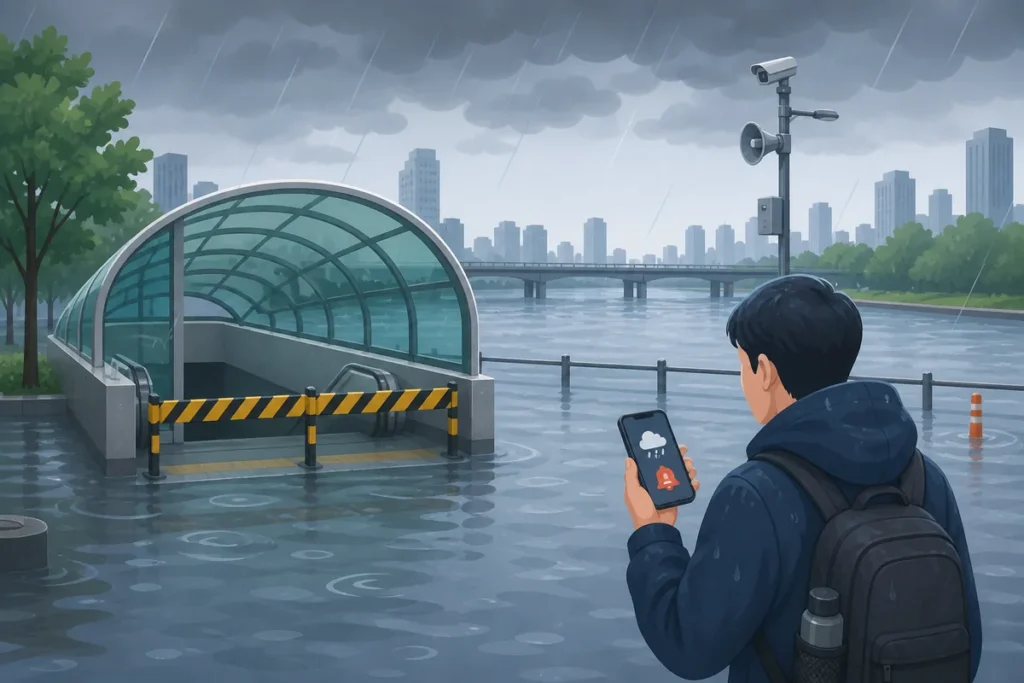
If heavy rain is forecast or already falling in Korea, check official weather and transport alerts before you leave your accommodation. This heavy rain travel guide covers the key decision: delay non-urgent trips, avoid underpasses and river parks, and verify subway status through official apps before heading out. Flooded exits and road closures can appear within minutes of a downpour.
What to Do First
- Check the Korea Meteorological Administration (KMA) app or website for active rain warnings in your area.
- Open the official transit app to see if any lines or exits are suspended.
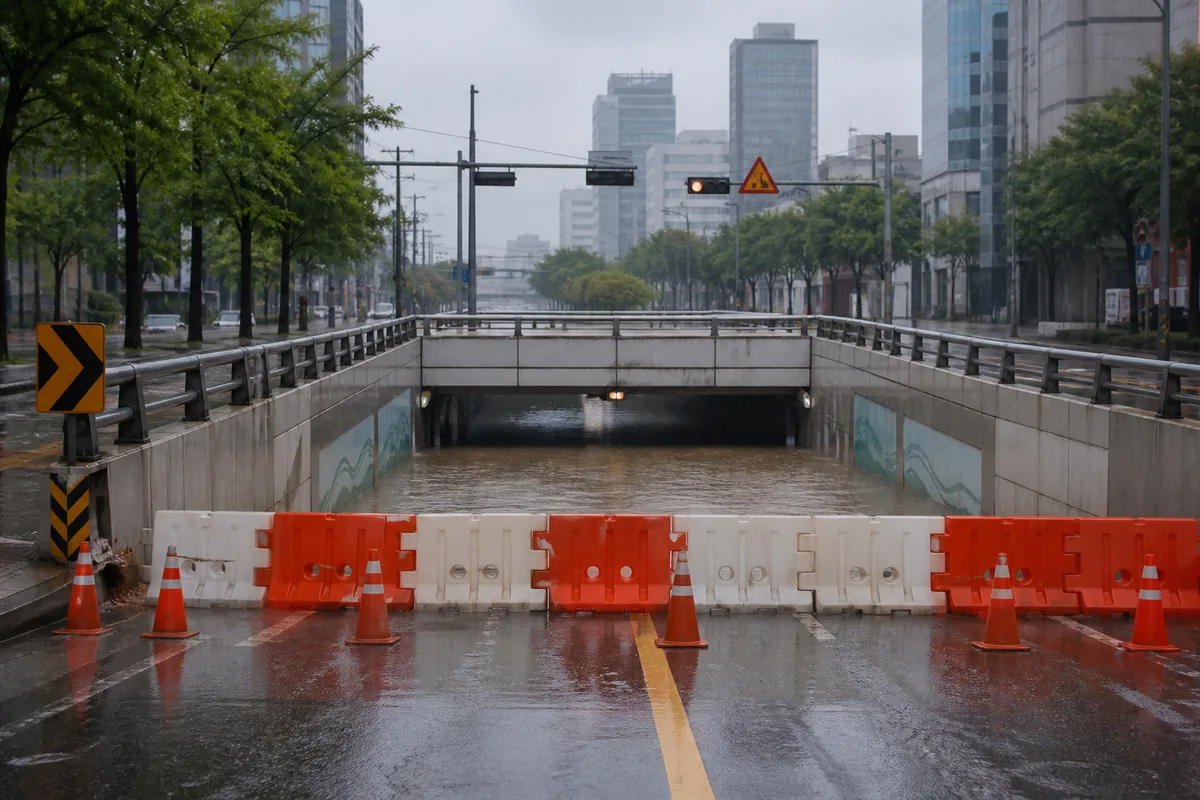
- Avoid river parks and low-lying underpasses until the rain stops and alerts clear.
- Stay on main roads and elevated paths rather than shortcuts through underpasses or basement-level areas.
- If you receive a Korean emergency text (재난문자), take it seriously — it signals an active official alert.
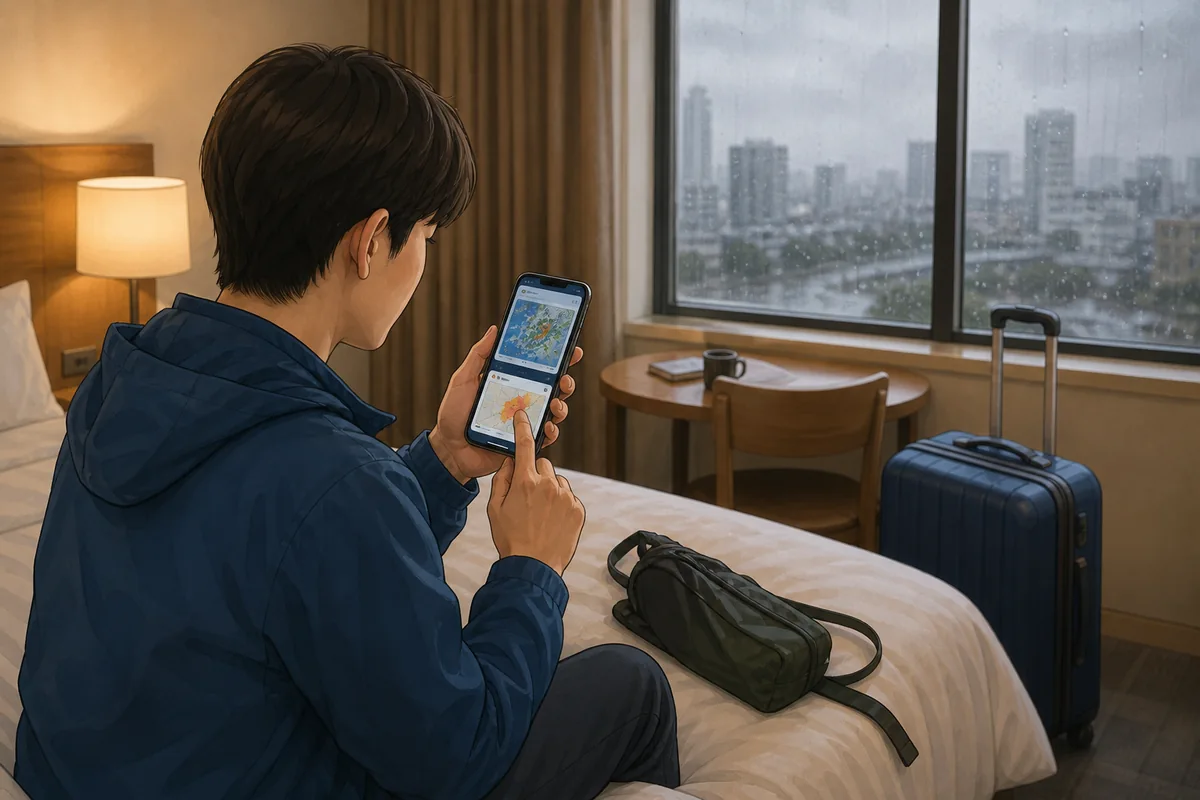
- Ask hotel staff or a staffed subway information desk to confirm current conditions in plain language.
- If you are already outside and water is rising around you, move to higher ground and enter the nearest large building immediately.
When This Guide Helps
If heavy rain is forecast or already falling in Korea, check official weather and transport alerts before you leave your hotel. Korea’s rainy season (장마, jangma) runs roughly from late June through late July, but heavy rain can arrive outside that window too, including typhoon-related downpours later in the summer. Check Home – Korea Meteorological Administration for the current details.
This guide is most useful if you received a Korean emergency text you cannot read, you can see water pooling near a subway entrance, or you are trying to decide whether to walk through an underpass or take a longer surface route. It is written for the next-hour decision, not for long-term trip planning. Check Seoul Metro | 공지사항 for the current details.
What to Do First
Start with the official weather alert, then check transport status, then choose a safer route. In Korea, that order matters because a subway line can still run while one exit, one road segment, or one riverside path is already closed.
- Check the Korea Meteorological Administration for warnings in your district.
- Check the subway operator, bus notice page, or rail app for service changes.
- Avoid river parks, underpasses, and basement-level shortcuts during active rain.
- Use the main road, a staffed station entrance, or a large indoor venue if you need to wait.
- Show the emergency text to hotel or station staff if the message is in Korean.
Korean Phrases You Can Show
Phrases to Show Staff or Ask Out Loud
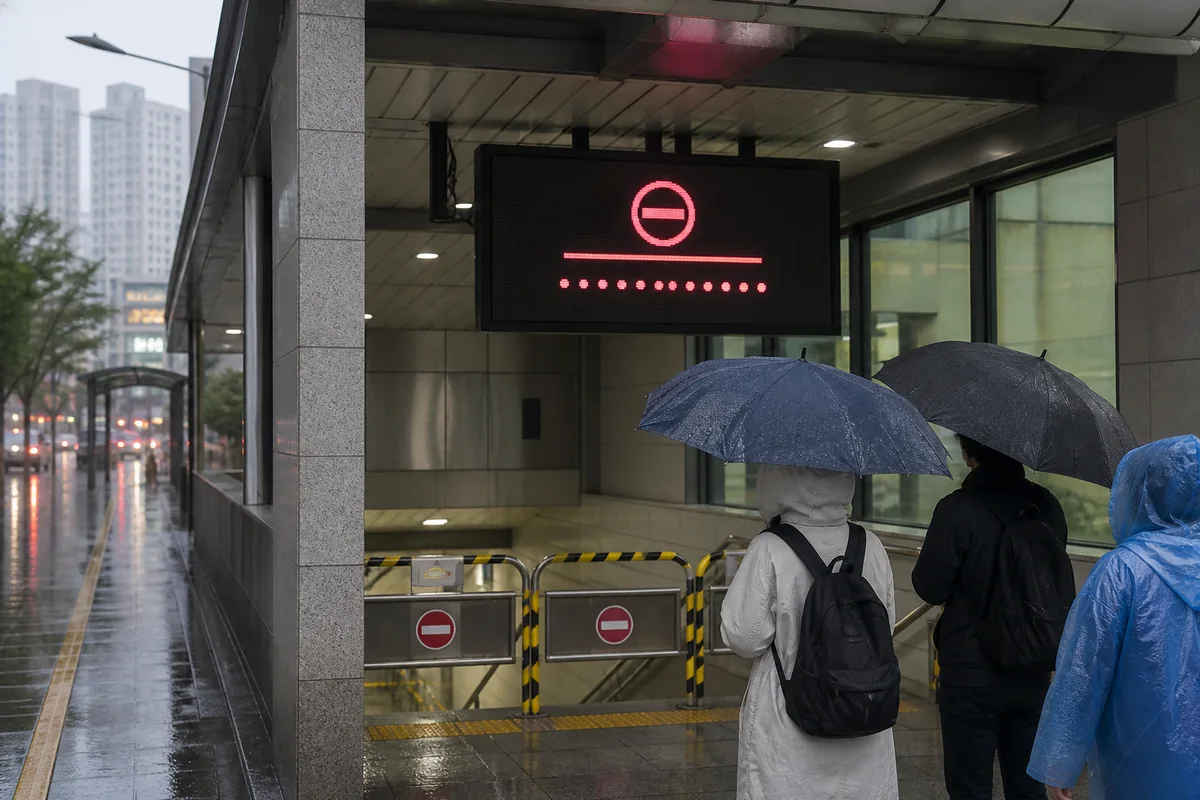
Useful Korean Signs or Words
Words to Recognize on Notices, Screens, and Barriers
Where to Get Help
The most reliable people to ask are staffed subway information desks inside any station. Staff can check current line status and tell you which exits are open. If you are outside and unsure, walk into a hotel lobby, department store, or convenience store and ask staff to confirm whether the route ahead is closed.
For official real-time information, use the Korea Meteorological Administration for weather warnings, the Seoul Metro app or website for Seoul subway status, and Korail official channels for intercity rail. For English-language help interpreting alerts, the Korea Tourism Organization 1330 helpline is available 24 hours.
Tourist information centers operated by the Korea Tourism Organization can also help explain alerts and direct you to safer transport options.
Common Mistakes
- Assuming the subway is fine because the entrance is open. One exit can close even while the line continues running.
- Relying only on general map apps for flood closures. Official transport notices update faster during active rain.
- Walking through an underpass because the water looks shallow. Standing water and a 통제 sign are enough reason to turn back.
- Ignoring the emergency text because it is in Korean. Show it to hotel staff or a station worker right away.
- Going to riverside parks during or just after heavy rain. These areas close quickly and can become unsafe fast.
- Waiting at a closed subway exit. Use another exit or ask staff for the nearest safe surface route.
Related Korea Guides
FAQ
Will the subway stop during heavy rain in Korea?
Not always, but parts of it can. Full line suspensions are less common than delays or exit closures, especially near flooded streets or low-lying stations. Check the official transit notice before going to the station.
Should tourists avoid underpasses and river parks in heavy rain?
Yes. Underpasses and riverside parks are among the fastest-flooding places in Korean cities. If you see barriers, standing water, or the word 통제, do not enter and take a surface detour instead.
What official sources should I trust during rain alerts?
Use the Korea Meteorological Administration for weather warnings, the local subway or rail operator for service notices, and the Korea Tourism Organization for English-language help interpreting alerts.
What does 재난문자 mean on my phone?
It means an official emergency alert text for your area. Show it to hotel staff or station staff if you cannot read the Korean message.
Is it safer to wait inside a station during a heavy rain alert?
Only if the station area is open and staff are directing passengers normally. If water is rising near entrances or exits, move to a safer higher place and ask staff where to go next.
Note: This guide is for travel navigation in Korea. It is not medical, legal, or emergency professional advice. For urgent situations, contact local emergency services, official staff, or your embassy/consulate as appropriate.
Sources & Verification
- Home – Korea Meteorological Administration — Korea Meteorological Administration
- Seoul Metro | 공지사항 — Seoul Metro
Last checked: August 7, 2026
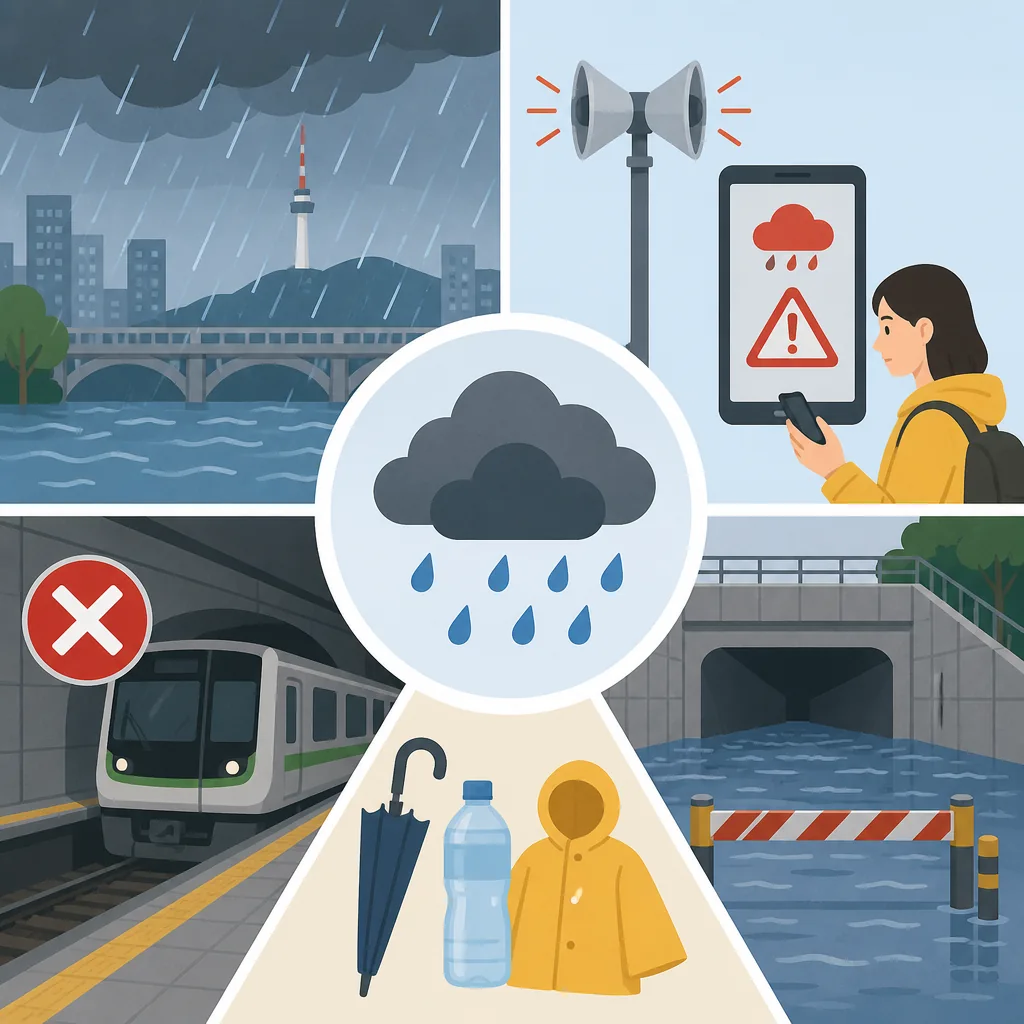
Visual note: This guide uses an explanatory illustration, not an official screen, sign, or document.