Quick Answer
Typhoon Dolphin may disrupt some flights, ferries, and outdoor plans in Korea this week, especially from August 7 to 9, but the impact depends on the latest Korea Meteorological Administration (KMA) forecast and each carrier’s update. Jeju and the southern coast face the highest disruption risk; Seoul is more likely to see rain and some wind than major shutdowns. Do not assume landfall or widespread cancellations unless officials and operators confirm them.
Last updated: August 7, 2025 — 09:00 KST. Conditions can change quickly. Check live official notices before you leave.
What to Do First
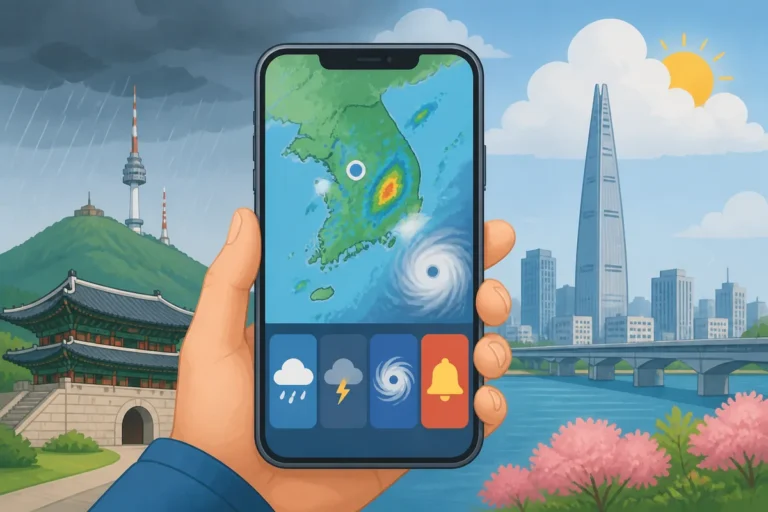
- Check the latest KMA typhoon track and city forecast for your route.
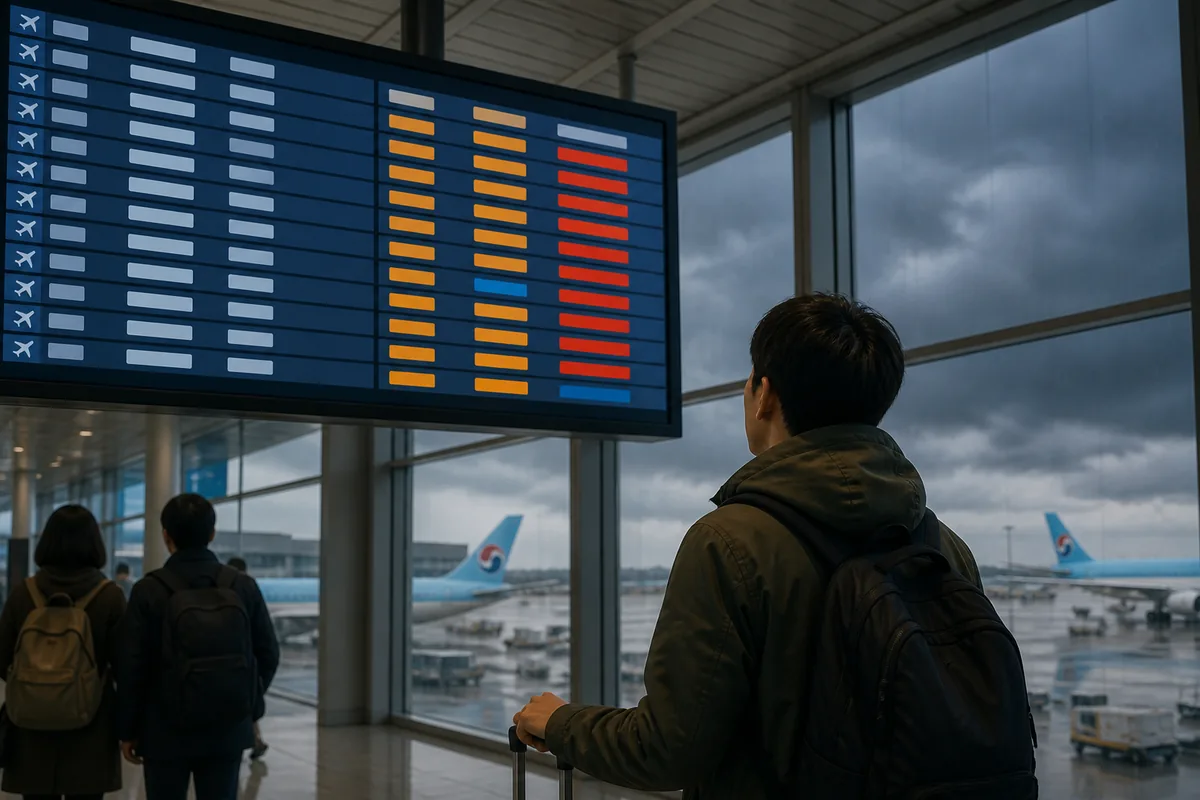
- Check your airline’s official app or website for delays, cancellations, or weather notices.
- If you have a ferry booking, check the terminal or ferry operator directly; ferry suspensions are often announced separately.
- Look up your exact city, not just “Korea weather.” Seoul, Busan, and Jeju can differ a lot.
- Keep booking confirmations and ticket details ready in case you need rebooking at a counter.
- Check again the evening before travel and again on the morning of departure.
When This Guide Helps
Typhoon Dolphin matters most if you have flights, ferry tickets, or outdoor plans in Korea between August 7 and 9. It is especially useful for Jeju routes, southern coastal travel, and visitors who are trying to decide whether a day trip, hike, beach visit, or island transfer is still realistic.
This is a travel navigation guide, not a crisis response page. Use it to check the right official updates in the right order.
What to Do First With Typhoon Dolphin
Start with the KMA forecast, then check your transport operator. That order matters because a typhoon name alone does not tell you whether your flight, ferry, or city plan is affected.
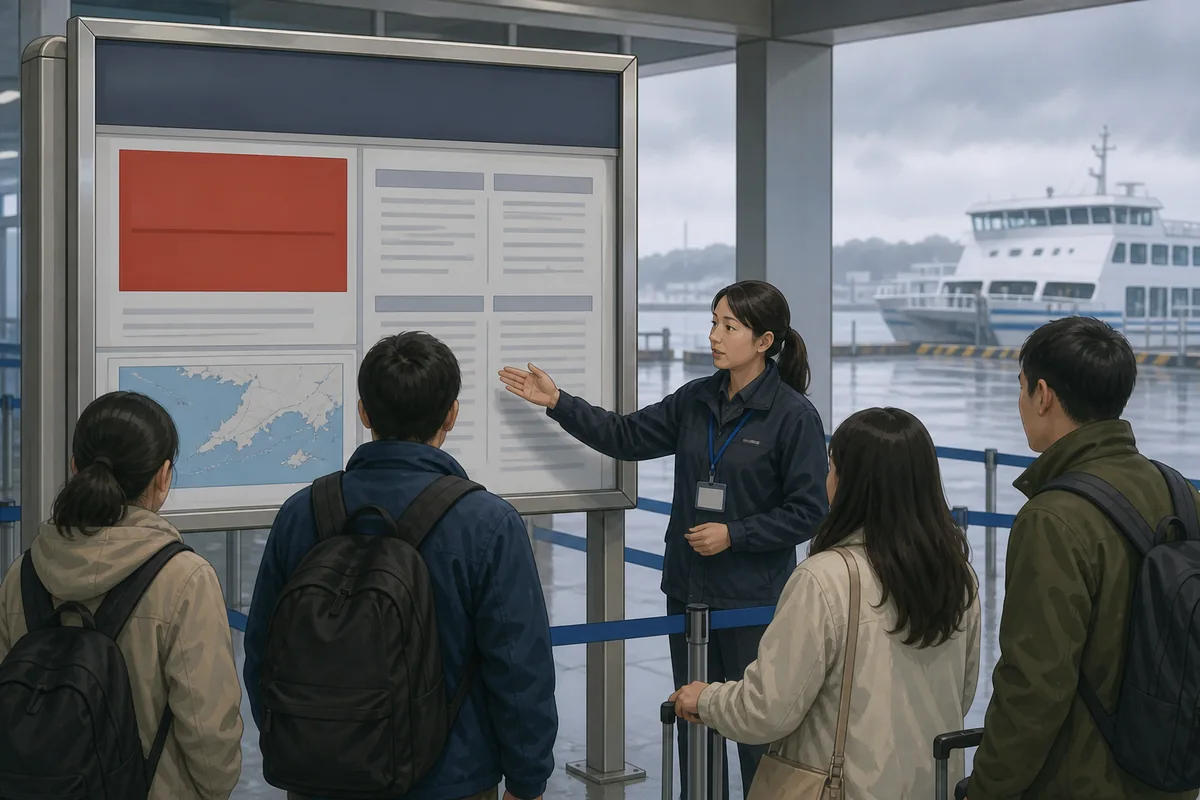
If you are flying, look for airline notices about weather disruption and rebooking. If you are taking a ferry, check the port or terminal notice board first, because ferry suspensions are often posted before passengers receive direct messages. If you are staying in a city, use the local forecast for that city rather than a national summary.
Travelers often miss one simple point: Jeju, Busan, and Seoul can be in very different conditions on the same day.
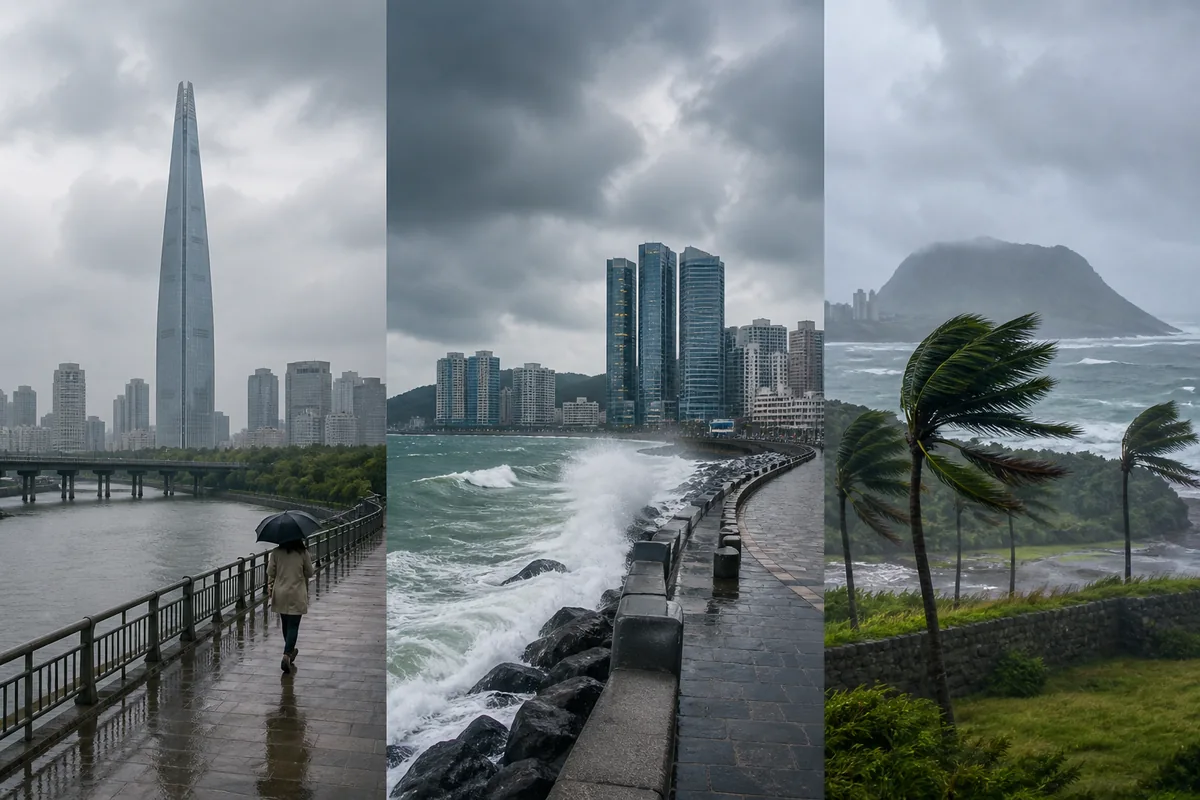
Typhoon Dolphin by City: Seoul, Busan, Jeju
Jeju
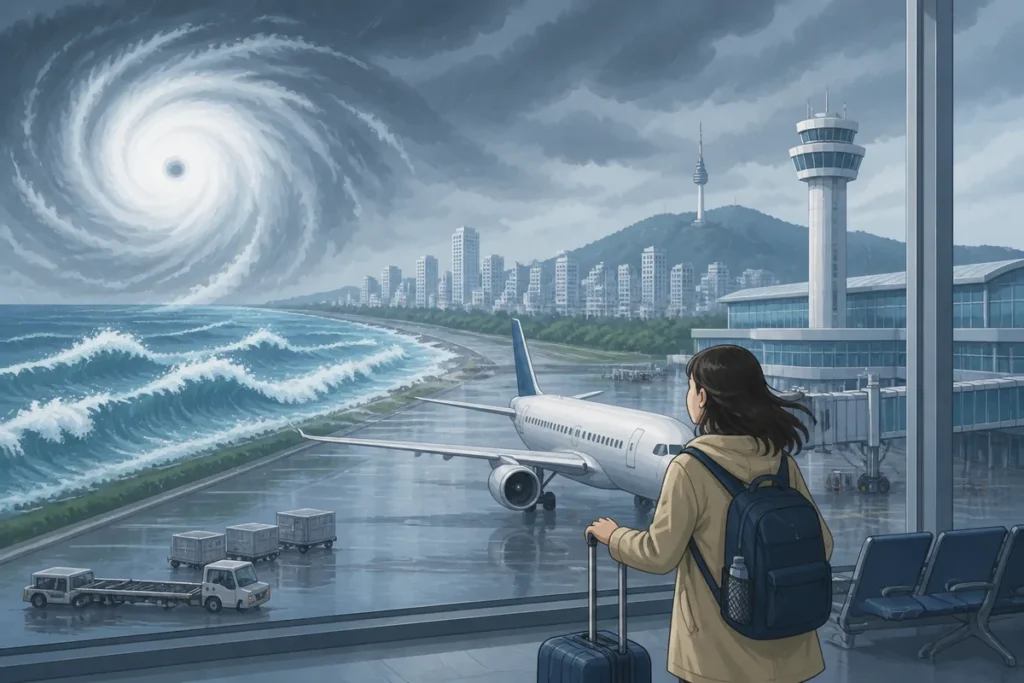
Jeju is usually the most exposed part of Korea during a typhoon approach. Strong wind, heavy rain, and transport disruption are the main concerns. Jeju flights and Jeju–mainland ferries deserve the closest checks.
Busan and the south coast
Busan and nearby coastal areas often see heavy rain and gusty wind even when the storm center does not pass directly overhead. Ferry routes to smaller islands are more likely to be suspended than city transport on land.
Seoul
Seoul is more likely to see rain bands and some wind than full transport shutdowns. Delays are still possible, especially on routes tied to the south or Jeju, so do not rely only on Seoul’s overall weather outlook.
Flights and Ferries
Typhoon Dolphin can affect flights, but airline decisions are route-specific. Some domestic flights, especially to and from Jeju, are the first to change. International flights at Incheon are less likely to be canceled across the board, though delays and selected cancellations are realistic.
Ferries are usually more sensitive to typhoon conditions than flights. Ports and operators suspend service when wind or wave conditions become unsafe, sometimes before the worst weather arrives. If you need to travel by ferry, check the terminal notice board or operator notice directly instead of waiting for a general travel app.
Korean Phrases You Can Show
Useful Korean Signs or Words
Where to Get Help
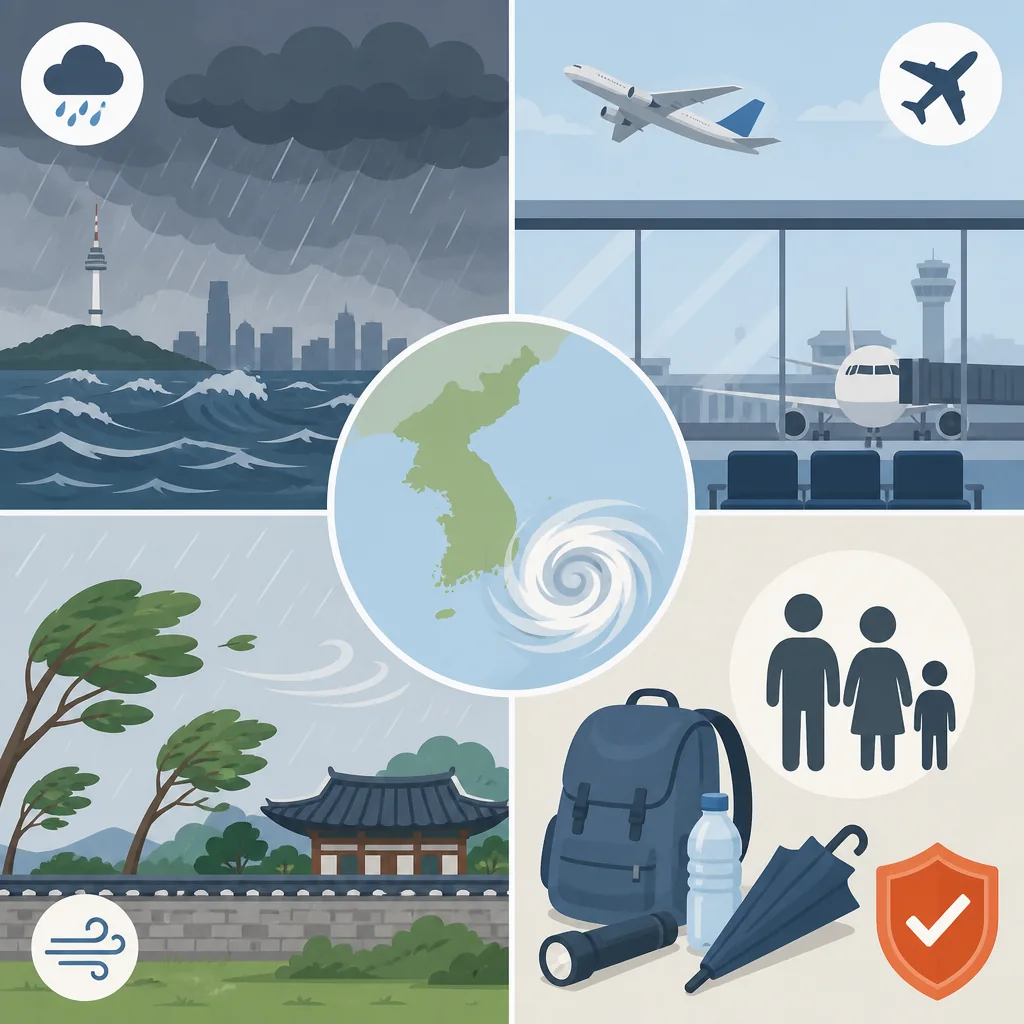
For flights, use the airline app, airport counter, or customer service line. For ferries, go to the terminal counter or check the operator notice board. For general English-language travel help in Korea, the 1330 tourist helpline is the easiest public option.
For weather, use the KMA forecast and local city forecast together. That gives a clearer picture than a single national headline.
Korean Context — Forecast Uncertainty
Typhoon tracks change as the system moves closer. A route that looks risky in the morning can shift by the evening update, and the reverse is also true. The safest travel habit is simple: check the forecast, then check the operator notice, then check again on the travel day.
Common Mistakes
- Assuming all of Korea will be affected the same way.
- Waiting for a message instead of checking the airline or ferry notice directly.
- Using only Seoul weather to judge a Jeju or Busan trip.
- Forgetting that ferries are often suspended before flights are heavily affected.
- Planning outdoor activities without a backup indoor option.
The Short Version
Typhoon Dolphin is the main weather issue to watch this week if you are traveling in Korea. Jeju and the south coast are most exposed, Seoul is more likely to see rain than major shutdowns, and ferries are usually the first transport to be suspended. Check KMA, then your airline or ferry operator, then recheck on the day you travel.
FAQ
Will Typhoon Dolphin cancel flights to Korea this week?
It can disrupt some routes, especially flights tied to Jeju and the south. Full cancellation depends on the track, timing, and airline decision. Check the airline’s official notice before heading to the airport.
Will ferries in Korea stop during Typhoon Dolphin?
Ferries are often suspended during typhoon conditions, and the notice can come before the worst weather arrives. Check the port or ferry operator directly for the latest status.
What will the weather be like in Seoul, Busan, and Jeju?
Jeju is usually the most exposed, Busan often sees heavy rain and wind, and Seoul is more likely to get outer rain bands. Use the latest city forecast from KMA instead of relying on a national summary.
Should I cancel outdoor plans because of the typhoon?
For Jeju and the south coast, outdoor plans are the first thing to review. For Seoul, check the local wind and rain forecast and keep an indoor backup. Recheck on the morning of the activity.
Note: This guide is for travel navigation in Korea. It is not medical, legal, or emergency professional advice. For urgent situations, contact local emergency services, official staff, or your embassy/consulate as appropriate.
Visual note: This guide uses an explanatory illustration, not an official screen, sign, or document.