Hwajangsil Signs Explained: Korean Bathroom Signs and What They Mean
Introduction
Hwajangsil signs explained is one of the most useful everyday topics for visitors in Korea. The word 화장실 (hwajangsil) usually means bathroom, restroom, or toilet, and you will see it on doors, hallway signs, and public notices in places like subway stations, cafés, restaurants, malls, offices, and parks.
Most Korean bathroom signs are simple once you know the key words. Some use pictograms, some use short Korean labels, and some include important instructions about toilet paper, cleaning, or occupancy. This guide focuses on the signs foreigners see most often and how to use them correctly.
Main explanation: hwajangsil signs explained
Start with the word 화장실
The core word
You may also see 화장실 with an arrow, a floor number, or a pictogram. In busy buildings, the sign may be on a wall or hanging from the ceiling rather than on the door itself.
Gender signs on restroom doors
Gender labels
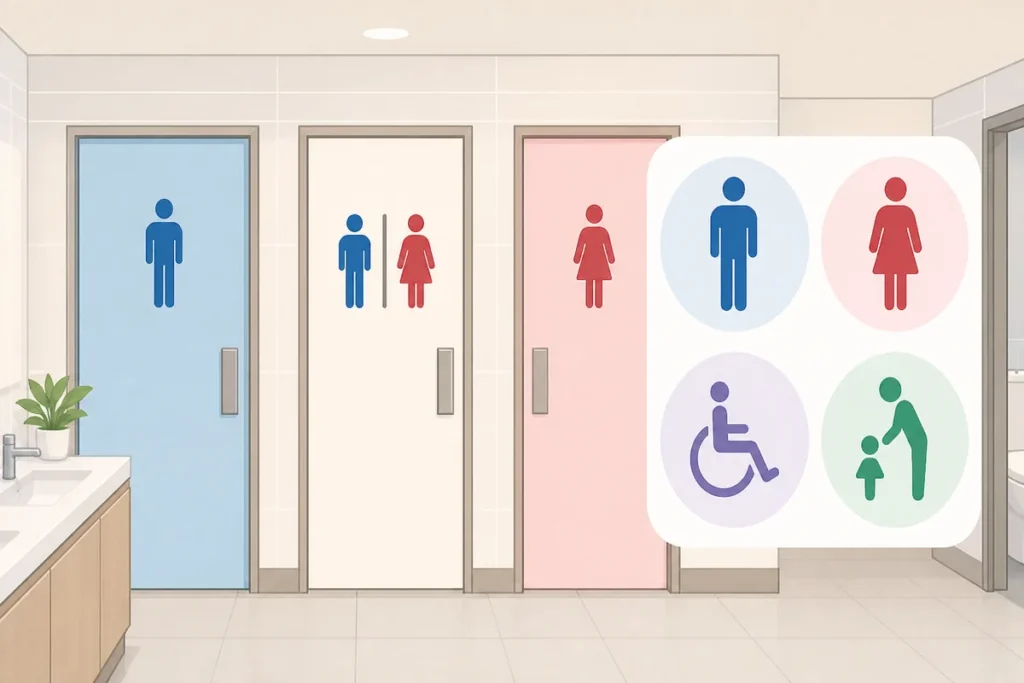
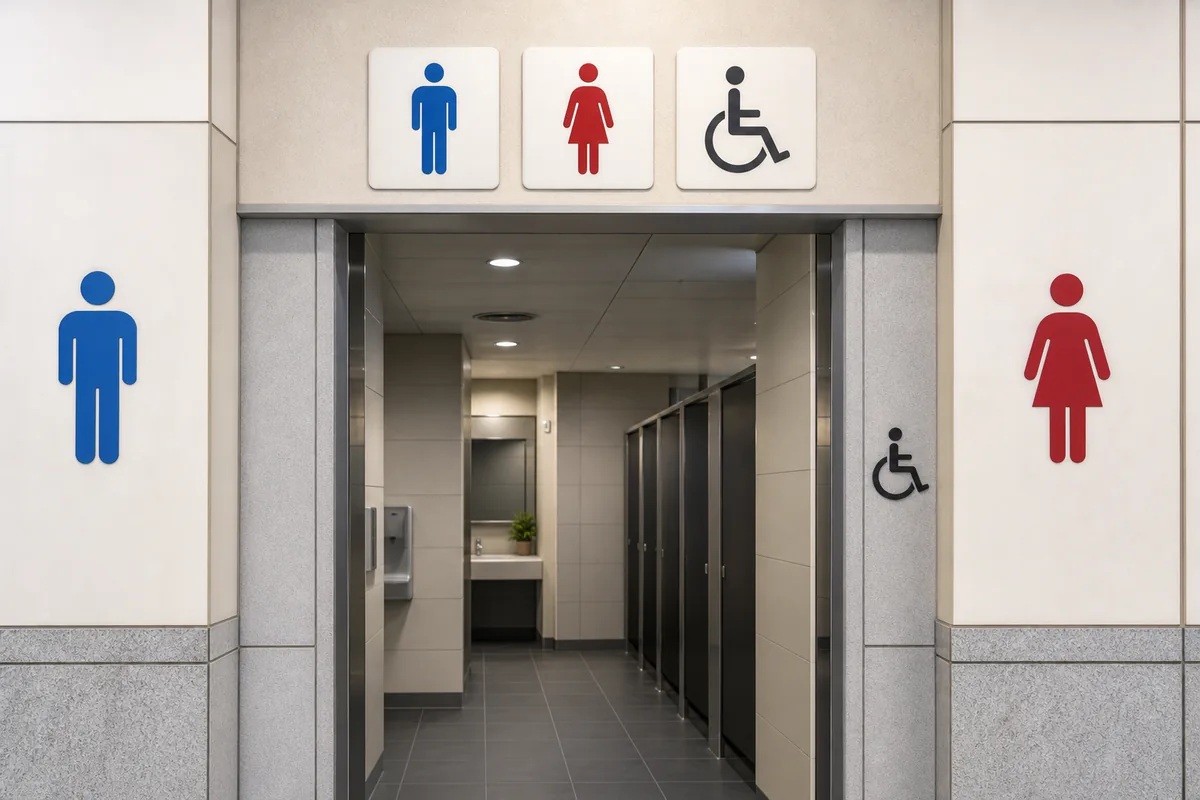
In many modern places, you will also see the familiar male and female pictograms. In older buildings, the Korean text may be the only clue, so knowing 남 and 여 helps a lot.
Accessible restroom signs
Accessibility labels
Accessible restrooms are more common in newer public buildings, subway stations, and larger malls. If you need one, look for the wheelchair symbol plus a Korean label such as 장애인 화장실.
Unisex or shared restrooms
Shared-use wording
Fully unisex restrooms are not the default in Korea, but you may see shared or single-room facilities in small cafés, older buildings, or places with limited space.
Occupied and vacant indicators
Door status signs
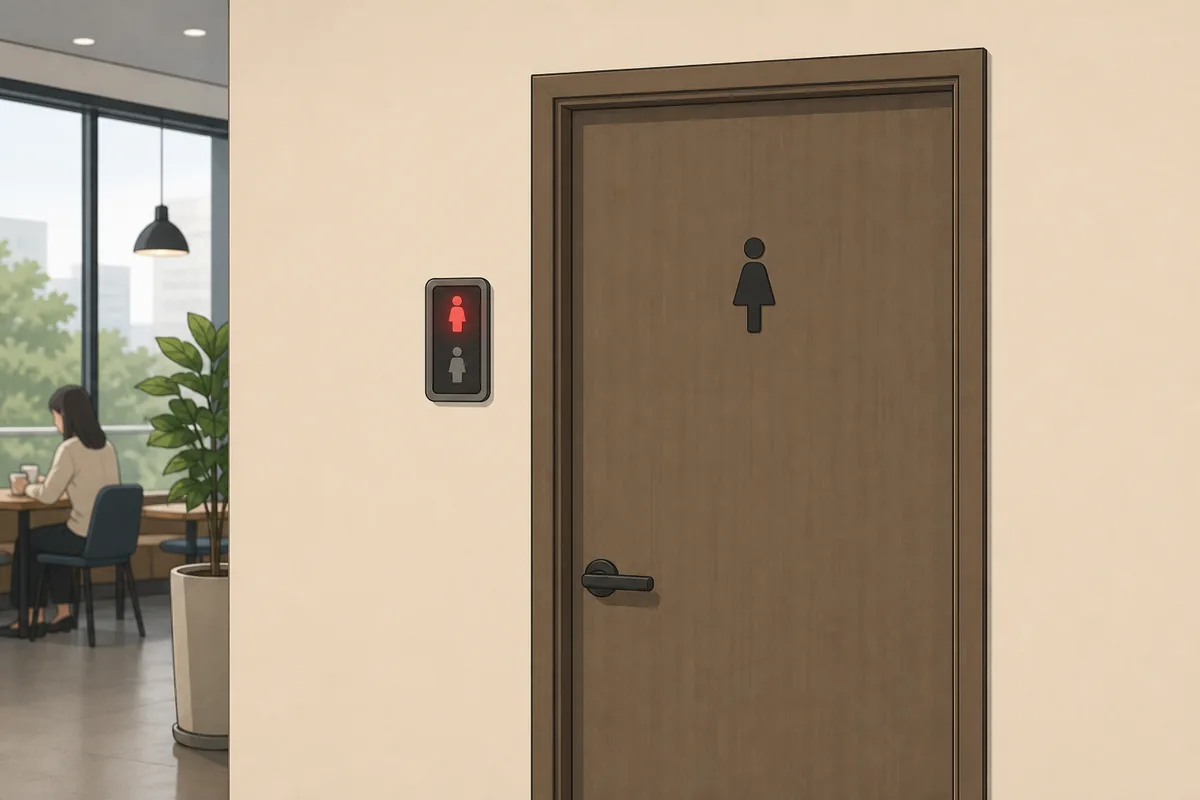
Occupancy signs are usually very clear. If a stall shows 사용 중, it is occupied. If it shows 비어 있음, it is available. In some places, the colors also help, with red often meaning busy and green meaning free.
Common restroom notices
Important notice wording
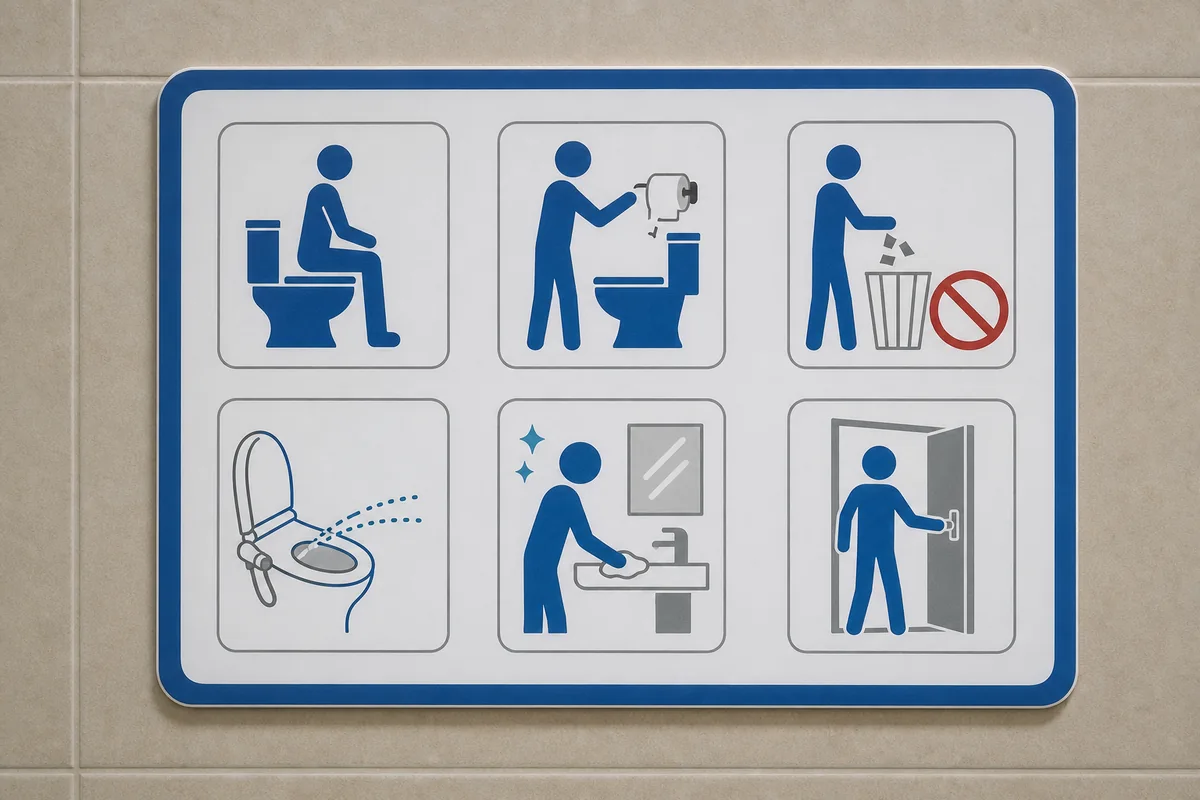
The toilet-paper notice is especially important. In some buildings, paper is flushed normally. In others, it goes in a small bin beside the toilet. Always follow the posted rule.
Directional signs
Wayfinding words
Common situations
Here are a few real-life examples of hwajangsil signs explained in context.
When you see a closed door in a café
Look for 화장실, 남, 여, or a pictogram. If the door shows 사용 중, someone is inside. If there is no status sign, knock gently before entering.
When you are in a subway station
Subway restrooms are usually marked clearly with arrows and floor or area labels. Accessible restrooms are often nearby and labeled 장애인 화장실.
When a sign hangs across the entrance
If you see 청소 중, the restroom is being cleaned. Wait a moment or use another one on a different floor.
When you see a bin next to the toilet
Check the wall for a disposal notice. If it says 휴지는 휴지통에 버려주세요, use the bin rather than flushing paper.
What foreigners often get wrong
- Assuming every restroom uses the same symbols and wording.
- Entering the wrong door because the sign is only in Korean text.
- Flushing toilet paper when the notice says to throw it in the bin.
- Ignoring 사용 중 and trying the door anyway.
- Thinking 공용 화장실 means something unusual when it simply means shared use.
- Missing the fact that some restrooms are outside the restaurant and shared by the whole building.
Useful Korean phrases
Simple phrases for bathrooms
FAQ
Does 화장실 always mean toilet?
It usually means bathroom, restroom, or toilet. In everyday use, it is the standard word for a public or private restroom.
What does 사용 중 mean on a bathroom door?
It means occupied or in use. Wait until it changes to a vacant sign.
Should a visitor flush toilet paper in Korea?
It depends on the notice in that restroom. Some places allow flushing, while others ask you to throw the paper in a bin.
Are all Korean bathrooms gender-separated?
No. Many are separated by gender, but some small or shared restrooms are single-room or common-use facilities.
What should a visitor do if a visitor cannot find the bathroom?
Ask a staff member with 화장실이 어디예요? They will usually point you in the right direction.
Related and Official Resources
Sources & Verification
- 한국어기초사전 — krdict.korean.go.kr
- National Institute of Korean Language — www.korean.go.kr
Last checked: July 30, 2026