Yeong-eop Sigan: How to Read Korean Store Hours
Understanding yeong eop sigan — the Korean term for business or operating hours — is one of the most practical skills a visitor to Korea can learn. Even if you can navigate the subway, order food, and find your hotel without any trouble, you may still arrive at a café, clinic, or local restaurant only to find the shutters down and a handwritten notice on the door. Korean businesses follow patterns that are different from what many visitors expect, and once you know those patterns, planning your day becomes much easier.
This guide explains how Korean store hours are displayed on signs, map apps, and storefront notices. It covers the most common terms you will see, the situations most likely to catch you off guard, and how to check hours before you leave your accommodation.
Quick Answer
Yeong eop sigan means “business hours” in Korean. Most Korean shops and restaurants post their hours on the door or window, and you can also check Naver Map or Kakao Map. Watch for a regular closing day (휴무일, hyumu-il), a lunch break (브레이크타임, beurei-keu ta-im), and a last-order time, which is often 30 to 60 minutes before closing. Map apps are helpful but can be outdated, so always check the storefront sign if you are making a special trip.
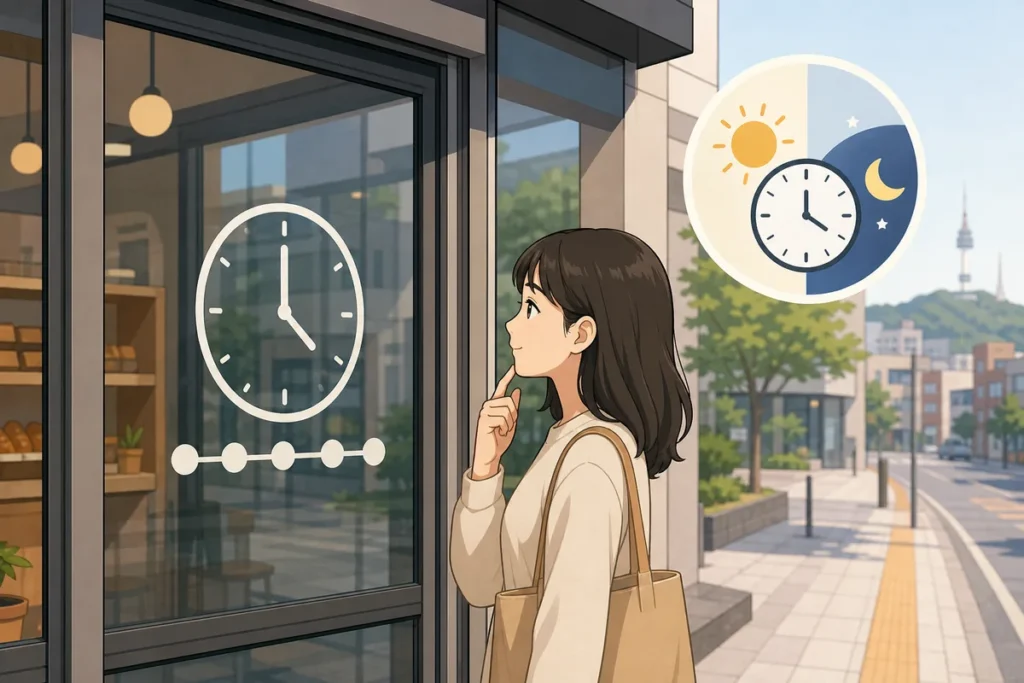
Table of Contents
- Main Explanation: How Korean Store Hours Work
- Common Situations
- What Foreigners Often Get Wrong
- Useful Korean Phrases
- Warnings and Things to Check
- FAQ
- Summary
Main Explanation: How Korean Yeong eop sigan Works
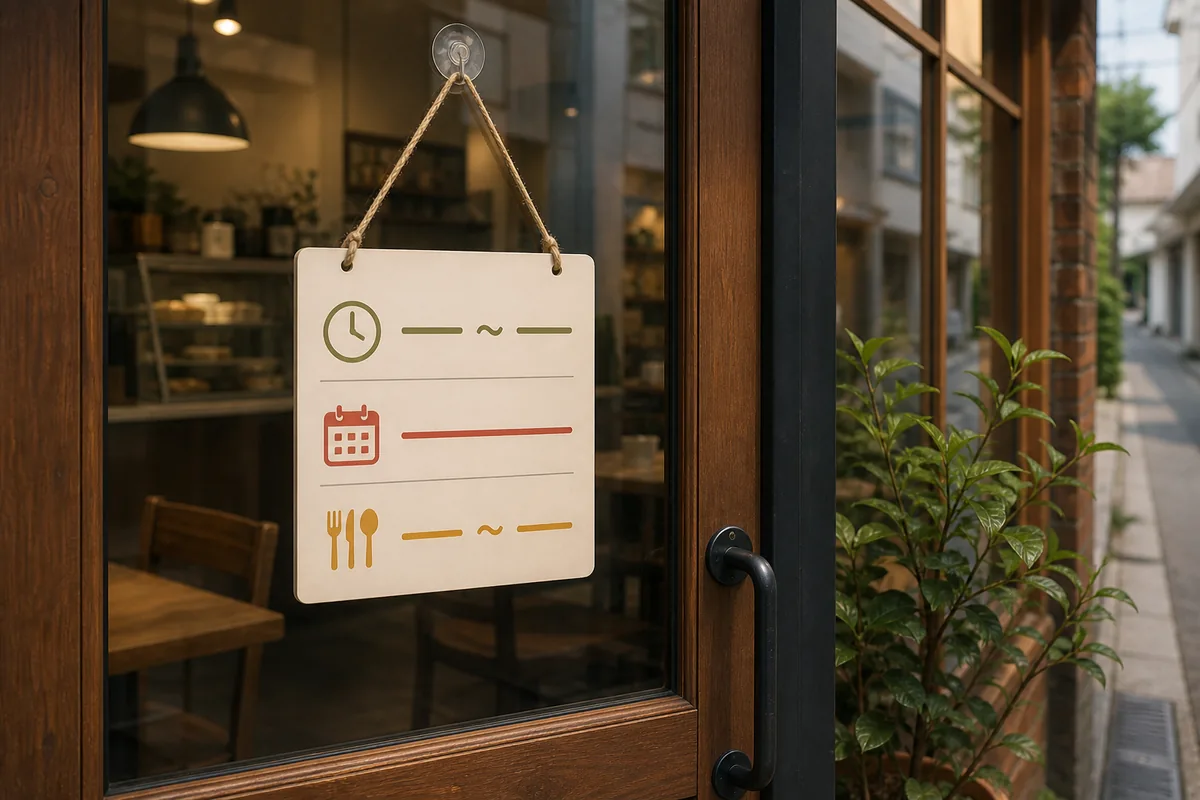
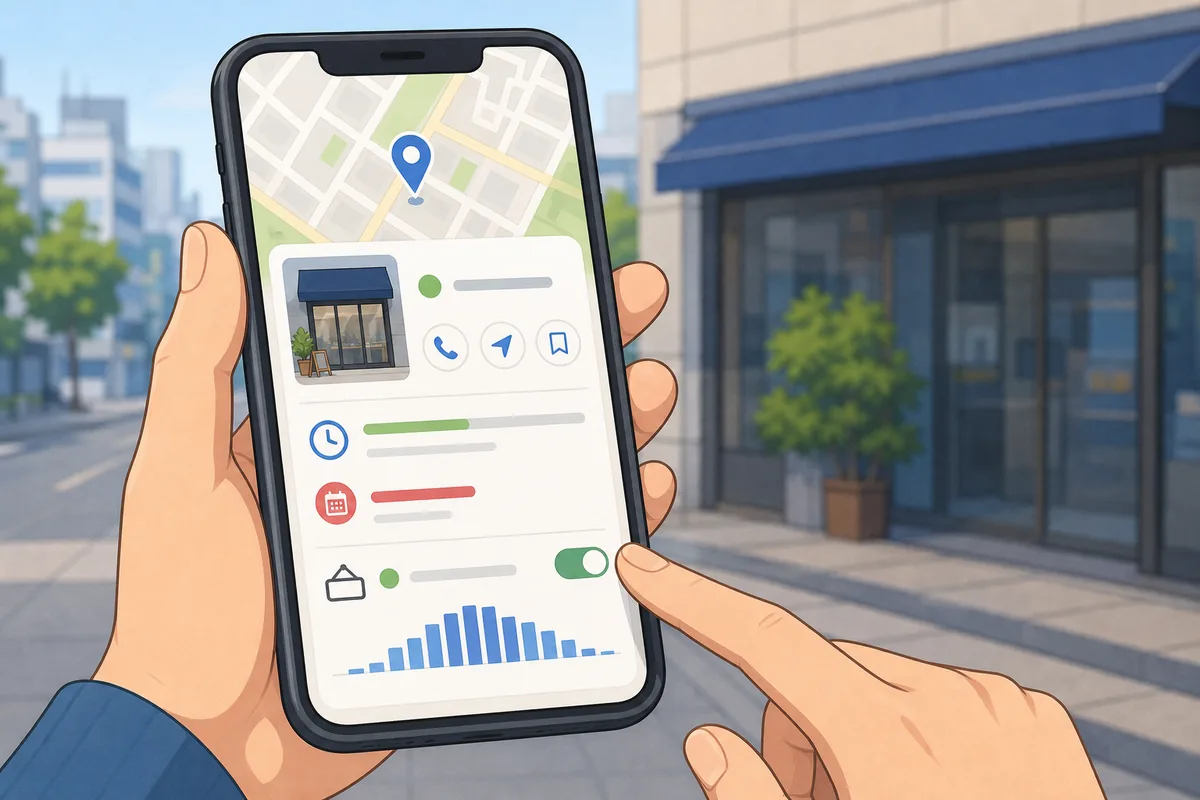
Korean businesses display their hours in a fairly consistent way once you know what to look for. The information usually appears on a small laminated sign near the entrance, on a sticker on the glass door, or on a printed notice inside the window. Online map listings on Naver Map and Kakao Map also show hours, though these are entered by the business owner and may not always be current.
Daily Opening and Closing Times
Most signs show a simple time range using the 24-hour clock or a combination of numbers and the Korean characters for AM (오전, o-jeon) and PM (오후, o-hu). You will often see something like 10:00 – 22:00 or 오전 10시 – 오후 10시. Both mean the same thing: the place opens at 10 in the morning and closes at 10 at night.
Many restaurants and cafés have different hours on different days of the week. A café might open at 8 AM on weekdays but not until 10 AM on weekends. Always look for a day-by-day breakdown rather than assuming the hours listed apply every day.
Last Order (라스트 오더)
This is one of the most important things to understand. In Korea, a last order time is posted separately from the closing time. It tells you the latest time you can place an order or be seated. Last order is typically 30 minutes to one hour before the shop closes. If a restaurant closes at 21:00, the last order might be 20:00 or 20:30. Arriving at 20:45 and expecting to order a full meal is a common source of frustration for visitors.
Closed Day (휴무일)
Many Korean businesses, especially small local restaurants, family-run cafés, and independent shops, close on one weekday each week. This is called the hyumu-il (휴무일), or regular day off. Wednesday and Monday are popular choices, but it varies by business. The sign near the door will usually state which day the place is closed. Some businesses write this as 매주 수요일 휴무, meaning “closed every Wednesday.”
Break Time (브레이크타임)
Many Korean restaurants, particularly lunch-and-dinner spots, close for a break in the afternoon between roughly 14:30 and 17:00. This is called beurei-keu ta-im (브레이크타임), borrowed directly from English. During this window the kitchen is closed even though the front door might be unlocked or the lights might still be on. You may be able to sit and have a drink, but hot food will not be available. Always check whether a break time applies before you arrive hungry in the mid-afternoon.
Holiday and Seasonal Changes
Korean public holidays, especially Chuseok (추석) and Seollal (설날), cause widespread closures. Many small businesses close for several days around these holidays, and even some larger shops reduce their hours. Temporary changes are often announced on a handwritten notice taped to the door or posted on the business’s social media account. Map apps are rarely updated quickly enough to reflect these changes.
Temporary Closure Notices
You may occasionally see a sign that says 임시 휴업 (im-si hyu-eop), meaning temporary closure, or 준비 중 (jun-bi jung), meaning “preparing” or “not yet open.” These are common on new businesses that are not quite ready, or on existing businesses that have closed for a short period due to illness, renovation, or a family event.
Common Situations
A Restaurant with a Lunch Break
You find a well-reviewed Korean restaurant that opens at 11:30 AM. You arrive at 3:00 PM and the door is unlocked, but a staff member tells you the kitchen is closed. The sign near the register says 브레이크타임 14:30 – 17:00. This is completely normal. Come back after 5 PM and you will be welcomed for dinner service.
A Café That Opens Late on Weekdays
A specialty coffee shop near a university might not open until noon on weekdays because its main customers are students who come in the afternoon and evening. The sign may show 월–금 12:00 – 22:00 / 토–일 10:00 – 22:00, meaning Monday through Friday from noon, and Saturday through Sunday from 10 AM. Do not assume a café follows the same schedule as a convenience store.
A Clinic Closed on Wednesdays
Many small private clinics in Korea — including general practitioners, dental offices, and skin clinics — are closed on Wednesday afternoons or all day Wednesday. This is a common convention in Korean healthcare. If you need non-emergency medical attention, check the clinic’s hours carefully. Naver Map listings for clinics usually include their schedule, but call ahead to confirm, especially around holidays. For any medical emergency, contact 119 immediately.
A Convenience Store Open 24 Hours
Large convenience store chains such as CU, GS25, 7-Eleven, and Emart24 are usually open 24 hours a day, seven days a week in busy urban areas. However, some branches in quieter neighborhoods or smaller towns may close overnight. Look for the sign 24시간 영업 (isip-sa si-gan yeong-eop), meaning “24-hour operation,” to confirm. If you need something late at night and you are not in a city center, it is worth checking in advance.
A Small Local Shop with Irregular Hours
Small independent shops — a neighbourhood rice cake seller, a local tailor, a family-run hardware store — may not post regular hours at all, or they may keep hours that depend on the owner’s schedule. These shops are harder to plan around. If you have a specific errand at a small local business, asking a nearby shopkeeper or checking Kakao Map for any posted hours is your best option.
What Foreigners Often Get Wrong
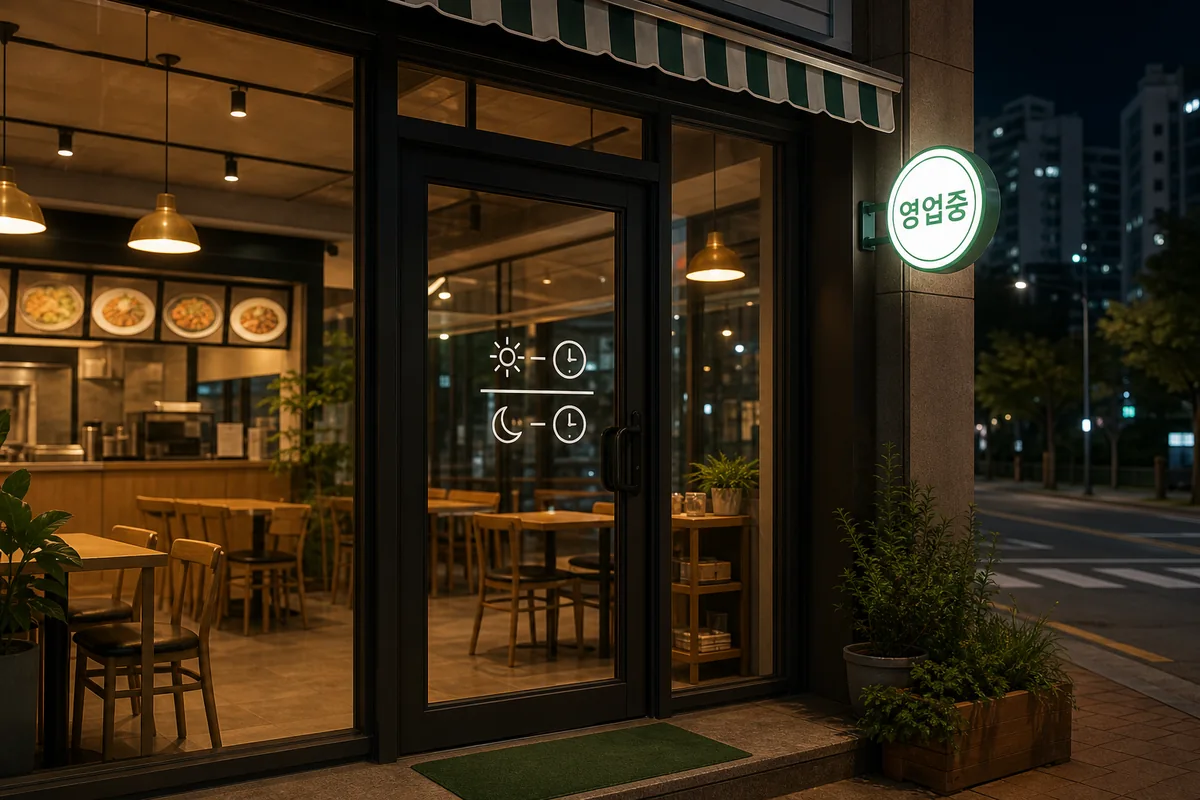
- Assuming a sign showing hours means all-day service. A sign saying “11:00 – 22:00” does not mean you can order food at any point in that window. Break time and last order cut that window shorter.
- Confusing closing time with last order. If the sign says the restaurant closes at 21:00 and last order is 20:00, arriving at 20:30 may mean you cannot order a full meal.
- Trusting map app hours without checking. Naver Map and Kakao Map are excellent tools, but business owners do not always update their listings. Hours shown on an app can be months or even years out of date.
- Not checking for a weekly closed day. Many visitors walk up to a favourite restaurant on a Monday or Wednesday only to find it closed. A quick look at the door sign before making the trip saves a lot of disappointment.
- Expecting holiday hours to match normal hours. During Chuseok and Seollal, even businesses that are normally open every day may close for three to five days. Plan meals and errands accordingly.
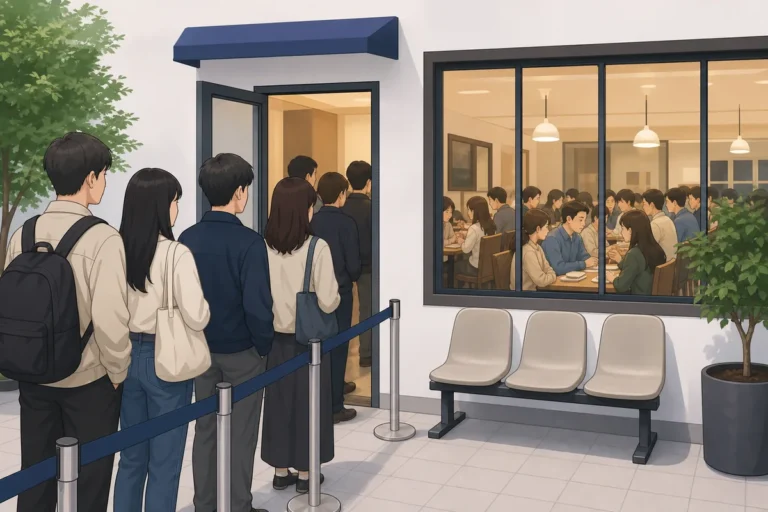
- Thinking a lit interior or unlocked door means the place is open. Some businesses leave lights on for security or leave the door unlocked while staff are cleaning. If no one greets you, look for a sign or ask politely.
Useful Korean Phrases for Reading Store Hours
These are the terms you are most likely to see on signs, map listings, and storefront notices. You do not need to speak Korean to use them — recognising the characters or the romanised spelling is enough to understand what a sign is telling you.
Warnings and Things to Check
- Map apps can be outdated. Naver Map and Kakao Map are the most reliable options in Korea, but the hours shown depend on what the business owner has entered. A listing might show last year’s hours. Always cross-check with the physical sign on the door, especially for small or independent businesses.
- Storefront signs are often more reliable than apps. If you see a conflict between what the app says and what the sign on the door says, trust the sign. It is more likely to reflect current reality.
- Holiday closures are rarely updated on apps in advance. During major Korean holidays such as Chuseok and Seollal, many businesses close without updating their online listing. If you are visiting during a holiday period, call ahead or check the business’s social media page.
- Hours can change without notice. A restaurant might shift its opening time by an hour, add a break time, or change its closed day due to staffing. Checking the sign each time you visit is a good habit.
- Clinics and pharmacies have specific schedules. Medical facilities often have different hours on different days and may close on Saturday afternoons or Sundays. For non-emergency health questions, confirm hours directly. For emergencies, call 119 or go to the nearest emergency room.
- Some businesses use a reservation or queue system. A few popular restaurants open their doors but stop taking new customers once they are full. Arriving before opening time is sometimes necessary at very busy spots.
FAQ
Can I trust the hours shown on Naver Map or Kakao Map?
These apps are a good starting point and are generally reliable for well-known businesses. However, the hours are entered by the business owner and are not always kept up to date. For small local shops, independent restaurants, and any visit during a public holiday period, it is worth checking the physical sign on the door or calling ahead to confirm. Naver Map and Kakao Map both have a phone number listed for most businesses, making a quick call easy.
What does break time mean in a Korean restaurant?
Break time (브레이크타임, beurei-keu ta-im) is a period in the afternoon, usually between roughly 14:30 and 17:00, when the kitchen stops taking food orders. The restaurant is not closed entirely — staff may still be present and you might be able to get a drink — but hot meals will not be served. This practice is common at restaurants that serve both lunch and dinner. Check the sign near the entrance for the exact schedule.
What is the difference between closing time and last order?
Closing time is when the business ends service and shuts down. Last order is earlier, and it is the final time you can place an order or be seated. If you arrive after last order, you may still see an open door or staff inside, but full service may no longer be available.
What does 휴무일 mean?
휴무일 means the regular day off or closed day for a business. Many small shops choose one weekday to close every week. If a sign says 매주 수요일 휴무, the business is closed every Wednesday.
What should I do if the map app and storefront sign do not match?
Trust the storefront sign first. It is usually the most current information. If the difference matters for your plans, call the business or check its social media page before making the trip.
Summary
Reading yeong eop sigan is mostly about noticing a few key patterns: the main opening and closing time, a weekly closed day, break time, last order, and holiday changes. Once you understand those pieces, Korean store signs become much easier to read.
When in doubt, check the storefront notice first and use map apps as a backup. That simple habit will save you from arriving at a closed café, missing a restaurant’s last order, or showing up during a lunch break.