K-pop Concert in Korea: What to Bring, What Not to Bring, and Entry Tips
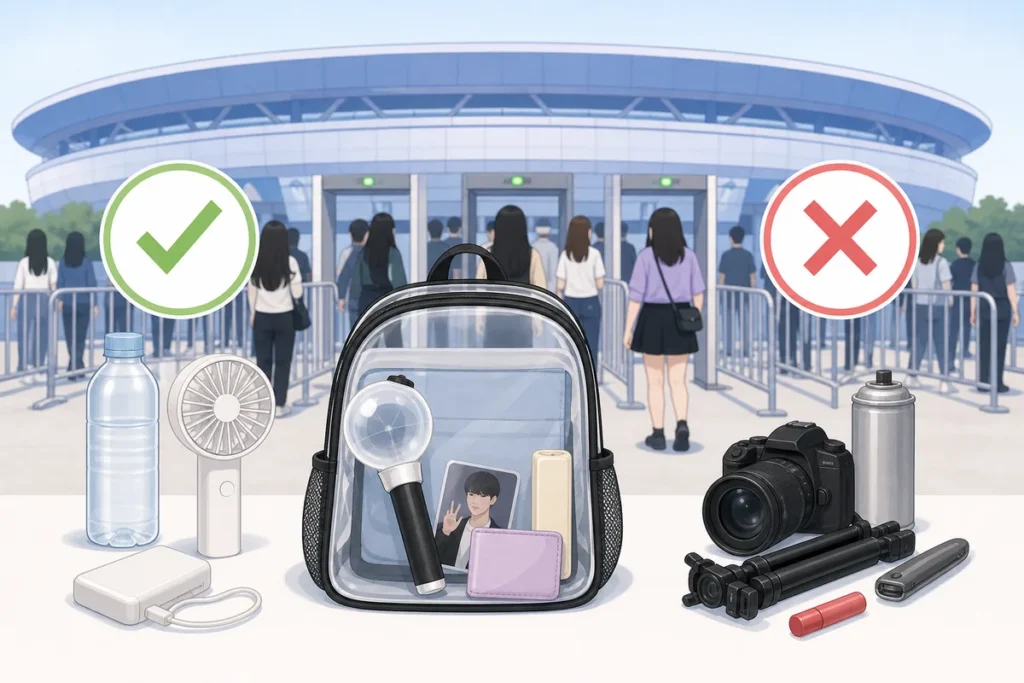
K Pop Concert Korea: What You Need to Know
- Introduction
- Packing Checklist
- Prohibited Items
- How Entry Checks Work
- Seated, Standing, and Fan-Event Entry
- Common Situations
- What Foreigners Often Get Wrong
- Useful Korean Phrases
- Warnings and Things to Check
- FAQ
- Summary
Introduction
K Pop Concert Korea is explained below for visitors who need a clear, practical answer. K-pop concert Korea rules can feel stricter than concerts in many other countries, especially when it comes to bag checks, ticket verification, and recording limits. If you are already comfortable traveling, the main challenge is not the concert itself but knowing which items will actually make it through the gate. This guide focuses on the practical basics: what to bring, what is usually banned, and how entry works at Korean venues.
Whether you are visiting Korea for a show or attending your first local idol concert, the official event notice is the most important thing to read before you go. Venue, artist, and ticket type all affect the final rules, so treat any general guide as a starting point rather than a guarantee.
Packing Checklist
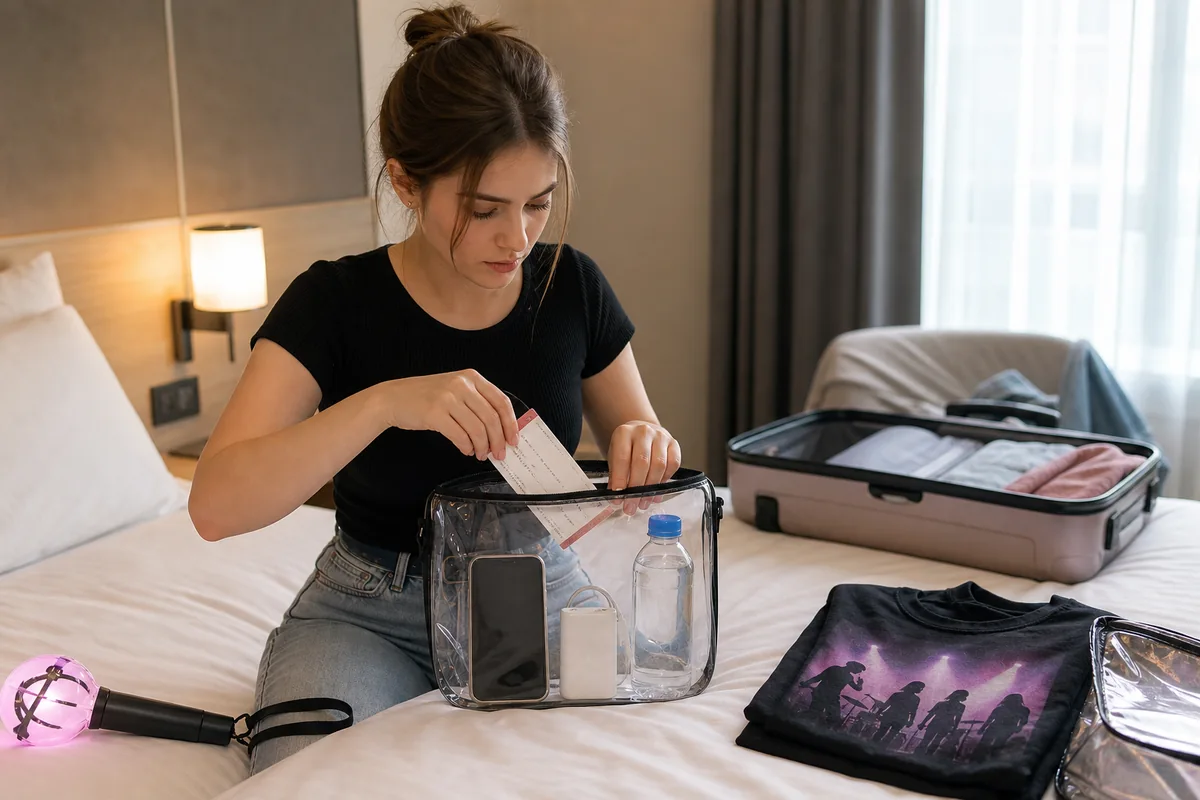
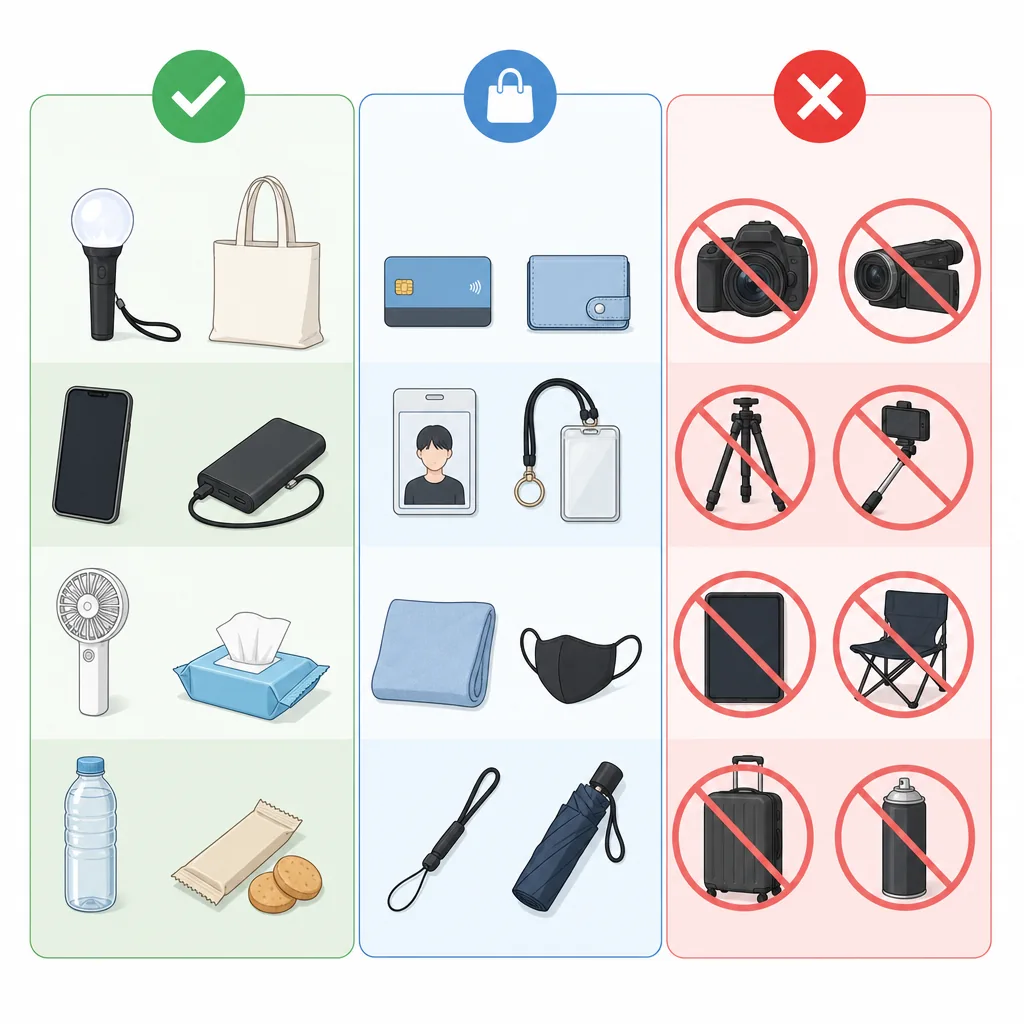
Essentials You Should Bring
- Ticket: Know whether your entry is by mobile ticket, QR code, or printed ticket. Some platforms may require the live app screen, not just a screenshot.
- Photo ID: A passport is the safest option for foreign visitors. A Korean Alien Registration Card is also commonly accepted. Bring the ID that matches the ticket name if name checking is required.
- Charged phone: You will likely need it for your ticket, maps, messaging, and transport after the show. A dead phone can become a serious problem at entry and when you leave.
- Portable charger: Useful for long lines and late-night transport, but check whether your specific event has battery restrictions.
- Card and some cash: Merchandise booths and nearby convenience stores may not all accept the same payment method.
- Small bag or clear bag: Many venues prefer compact bags, and some events require clear bags or limit bag size.
- Official lightstick: Usually allowed, but some venues or artists may restrict certain models, sizes, or batteries.
- Comfortable shoes: You may wait in line for a long time, even with assigned seating.
- Light jacket or layer: Indoor venues in Korea can be cold because of strong air conditioning.
- Earplugs: Optional, but helpful if you are sensitive to loud sound.
Fan Items to Pack Carefully
- Banners or slogan boards: Usually fine if they match the venue size rules and do not use hard poles.
- Handmade cheer items: These may be allowed, but unofficial lightsticks or oversized props can be refused.
- Portable batteries: Commonly useful, but event notices sometimes set capacity limits or safety rules.
Prohibited Items
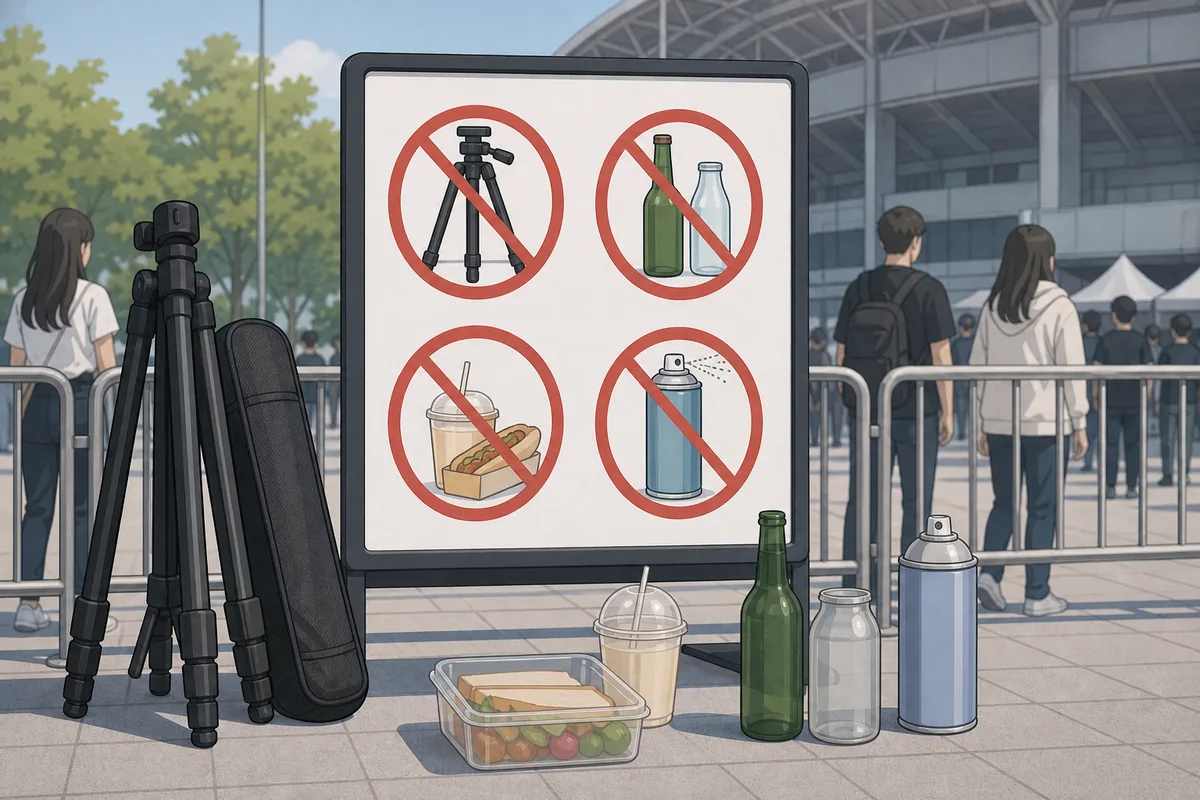
The following items are commonly restricted at K-pop concerts in Korea. The exact list depends on the event, so always compare it with the official notice.
- Professional cameras: DSLR and mirrorless cameras are often banned, and detachable lenses are usually not allowed.
- Tripods and selfie sticks: These are typically prohibited because they block views and create safety risks.
- Drones: Not allowed inside or around the venue.
- Weapons and sharp objects: Standard security restrictions apply.
- Glass bottles and large liquids: Some venues allow limited water, but large containers are often restricted.
- Outside food and alcohol: Usually not allowed, especially in larger venues.
- Laser pointers and noise devices: Commonly banned because they distract performers and other fans.
- Large umbrellas and bulky items: Compact items are sometimes fine, but oversized objects may be rejected at the gate.
- Aerosol sprays: Often restricted for safety reasons.
How Entry Checks Work
The Queue
Many Korean concerts use organized queue lines, and fan club ticket holders may receive numbered waiting slips before general admission starts. If your show is large, arrive early enough to avoid stress at the entrance and to leave time for bag checks and ticket scanning.
Ticket Verification
Staff usually scan a barcode or QR code at the gate. If your ticket is mobile, open the ticketing app early and increase the screen brightness. Some systems do not accept screenshots. If your ticket is under someone else’s name, staff may ask for matching ID before letting you in.
ID Checks
ID checks are common for age-restricted events, fan-club priority entry, and shows with strict name verification. For foreigners, a passport is the most reliable document to carry. A Korean residence card is also accepted in many cases. Do not assume a foreign driver’s license will work as your only ID.
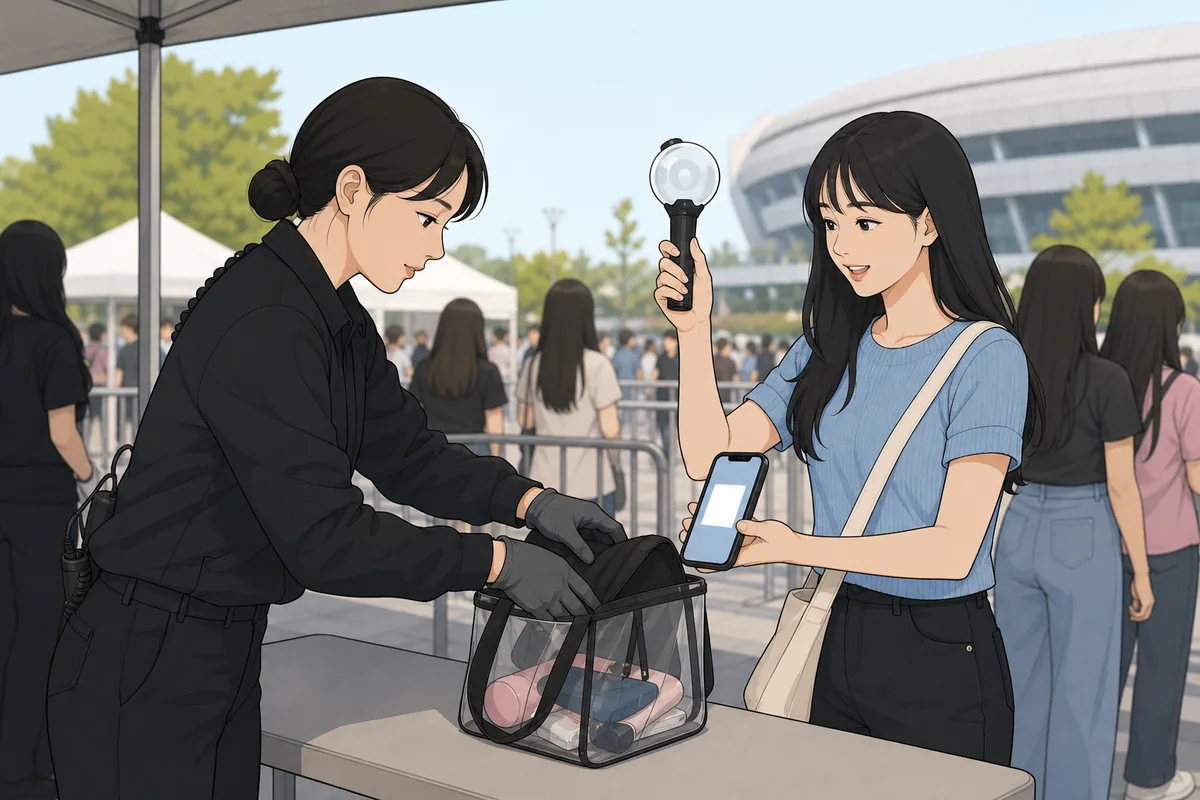
Bag Checks
Security staff may look inside your bag and use a metal detector or similar screening tool. The check is usually fast, but it becomes slower if you bring a large backpack or items that need extra review. Keep your bag easy to open so you can move through the line smoothly.
Seated, Standing, and Fan-Event Entry
Seated Concerts
Many arena shows in Korea are fully seated. In that case, your seat number and gate are usually printed on the ticket. A small bag is best because oversized bags may be awkward under your seat and may be sent to storage if the venue has one.
Standing Sections
Standing pits often use a separate numbered entry system. Your position depends on your queue number, so earlier entry matters. Keep your items minimal and practical, because you may be shoulder-to-shoulder with other fans for a long time.
Fan Meetings and Showcase Events
Fan meeting and showcase entry rules are often stricter than regular concerts. Some events require pre-registration, matching ID, or non-transferable tickets. Read the notice carefully, because resale or name mismatch can lead to refusal at the door.
Common Situations
Your Mobile Ticket Does Not Scan
If the barcode fails, step aside and open the ticket directly in the app. Do not rely on a screenshot unless the ticketing platform explicitly allows it. If the issue continues, go to the box office with your booking details and ID.
You Arrive Late
Late entry may be allowed at seated shows, but standing sections are often less flexible once the area is full. Arriving early is the safest choice if you want a smoother entry experience.
Your Lightstick Is Questioned
If staff hesitate about your lightstick, follow their instructions and keep calm. Official merchandise is usually the safest choice, while unofficial versions may be rejected depending on the event rules.
You Cannot Find the Gate
Major venues usually have Korean and English signs, but not every direction is obvious. Check the gate or zone on your ticket and ask staff if needed. Simple questions are usually enough to get pointed in the right direction.
The Merchandise Line Is Long
Official merchandise lines can take a long time at popular shows. Some fans shop before doors open and return later if needed. Popular goods may sell out quickly, especially lightsticks and photo cards.
What Foreigners Often Get Wrong
- Bringing the wrong ID: A passport or residence card is the safest choice. A foreign driver’s license may not be accepted.
- Arriving with a dead phone: Your ticket, maps, and transport plans all depend on your phone.
- Assuming cameras are allowed: Large cameras are often banned, even if mobile phones are fine.
- Carrying too much: Large bags are annoying at security and impractical inside the venue.
- Skipping the official notice: The event notice controls the final rules.
- Expecting English support everywhere: Some staff can help in English, but not always. Having a translation app is useful.
- Forgetting transport after the show: Late-night trains and buses may not match concert timing, so plan ahead.
Useful Korean Phrases
At the Gate and Security Check
Inside the Venue
Warnings and Things to Check
FAQ
Can a visitor bring a backpack?
Sometimes, but a small bag is safer. Large backpacks may be inconvenient or refused depending on the venue.
Can a visitor bring a lightstick?
Usually yes, especially if it is the official version for the artist. Check whether your event has battery or size restrictions.
Does a visitor need a visitor’s passport?
For foreigners, yes, it is the safest ID to bring unless you have another official Korean ID accepted by the event.
Are cameras allowed?
Often not if they are professional cameras, detachable-lens cameras, or large recording devices. Phone rules depend on the event.
Can a visitor bring food or water?
Water policies vary and food is often restricted. Check the official notice before you pack anything.
K Pop Concert Korea becomes easier to handle when you recognize the situation and follow the practical steps above.
Summary
The safest way to prepare for a concert is to bring only the essentials, keep your bag small, and check the official notice one more time before you leave. The rules can be different for seated shows, standing pits, and fan events, so do not rely on general assumptions. In practice, careful preparation saves time at the gate and makes the whole night easier.
Related and Official Resources
Sources & Verification
- Seoul Arts Center — www.sac.or.kr
Last checked: July 30, 2026