Foreigners Get Wrong About Korean Markets: What You Need to Know
korean markets are not all the same. Some are tourist-friendly food-and-snack streets, while others are everyday neighborhood markets. That difference changes prices, payment habits, meal timing, and opening hours, so the first thing to check is what kind of market you are in.
What to Do First
- Check whether the market is tourist-focused or a local neighborhood market
- Carry cash, even if you expect to use a card
- Go before noon if you want the best food selection
- Look for posted signs for price, card acceptance, and business hours
- Do not assume bargaining is normal at every stall
When This Guide Helps
This guide helps when you are planning your first visit to korean markets and want to avoid the most common mistakes. It is especially useful if you are trying to figure out whether a market is for tourists or for local daily shopping, whether you need cash, and whether the food stalls are open when you arrive.
What Foreigners Often Get Wrong About korean markets
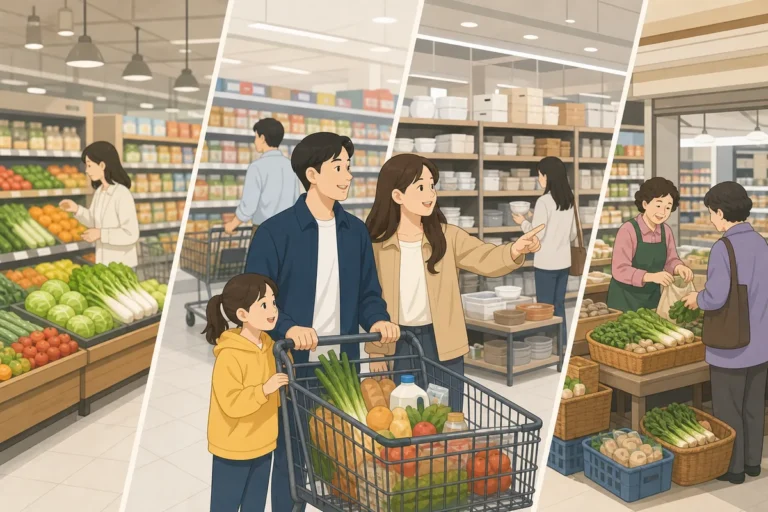
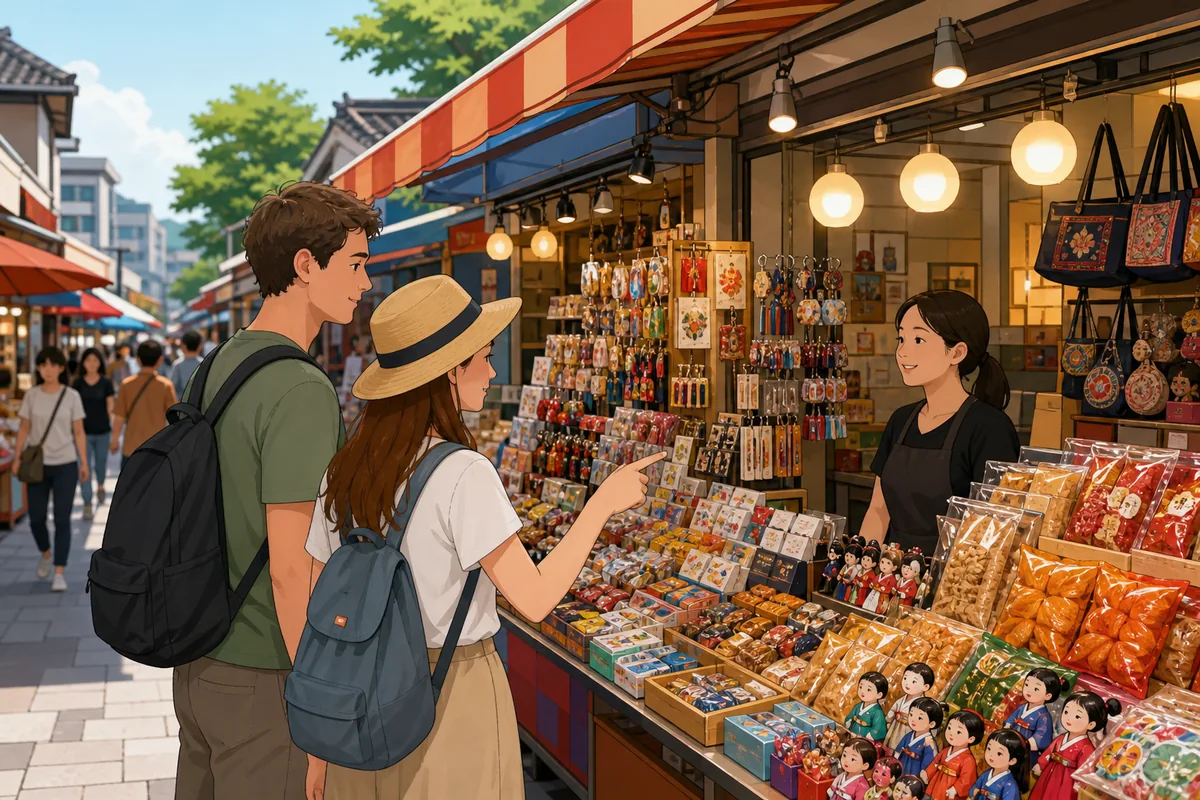
The biggest mistake is treating every market like a single tourist attraction. In reality, korean markets fall into different patterns. Tourist markets usually have more ready-to-eat food, clearer signs, and more visitors. Local markets focus on groceries, housewares, side dishes, and neighborhood shopping.
That difference matters. In a tourist market, you may find snack stalls, souvenir stands, and vendors used to foreign visitors. In a local market, you are more likely to see produce, meat, tofu, dried goods, and small food stalls serving nearby residents. The pace is different, the signs are different, and the payment expectations are different.
Tourist Markets vs Local Markets
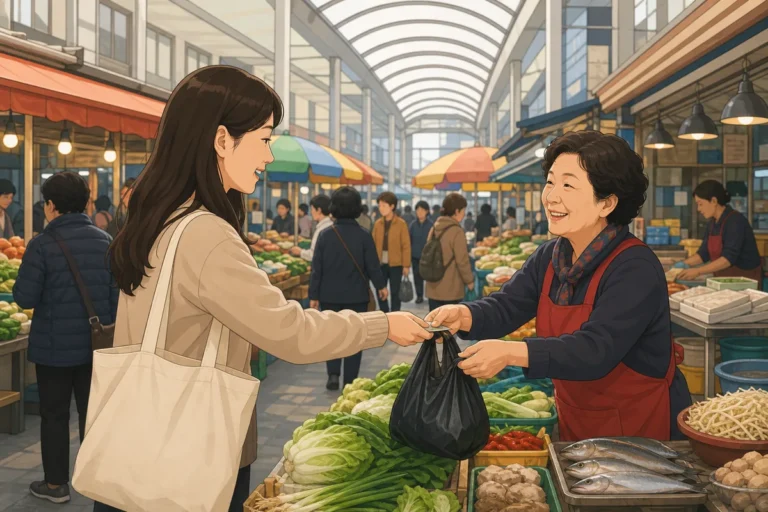
Tourist markets are the easiest place for first-time visitors to start. They usually have more English signage, more visible food areas, and more vendors who can deal with simple questions. Prices are often posted more clearly, and card payment is more common than in small neighborhood stalls.
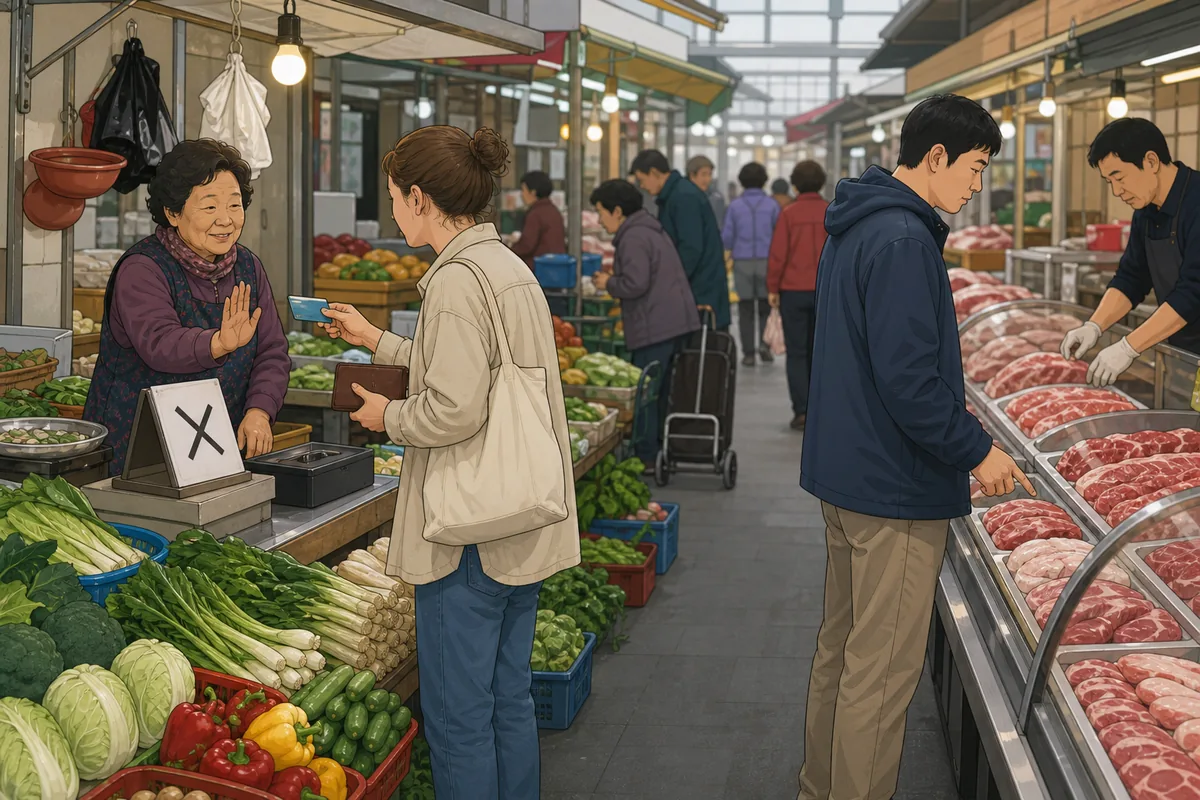
Local everyday markets are built for routine shopping. They open early, get busy in the morning, and often quiet down by the afternoon. Vendors may not speak English, and cash is still the safest option at many stalls. These markets are useful if you want a more local experience, but they work best when you arrive prepared.
Prices and Bargaining
Many visitors expect to bargain everywhere in a market. That is not how most stalls work. In many korean markets, prices are fixed, especially for food, produce, and everyday items. If a sign shows a price, treat it as final.
Some flexibility exists at certain tourist stalls, especially for clothing, accessories, or multiple-item purchases. Even then, keep it polite and brief. If the answer is no, accept it and move on.
Cash and Card
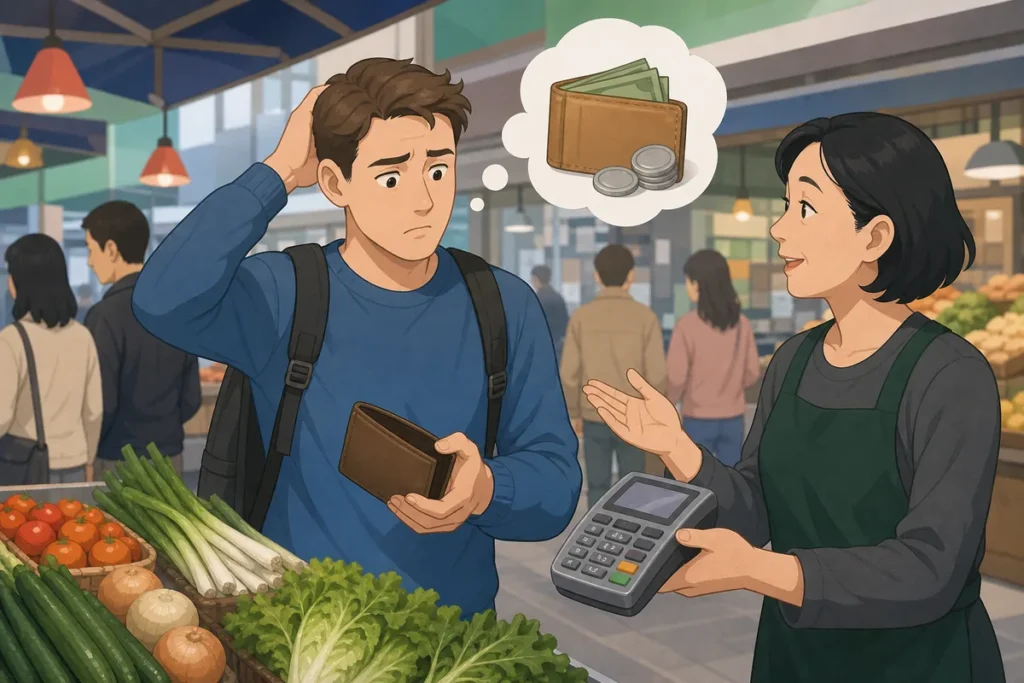
Do not assume every stall takes cards. Some tourist markets do accept them, but smaller stalls and local markets often prefer cash. A stall may have a card terminal, a sign that says 카드 가능, or a clear cash-only notice. If you are unsure, ask before ordering.
Best practice: carry Korean won in cash before entering the market. A card is useful as backup, but cash is the safer default, especially in local markets.
Useful Korean Signs or Words
Meal Timing Is Earlier Than Many Visitors Expect
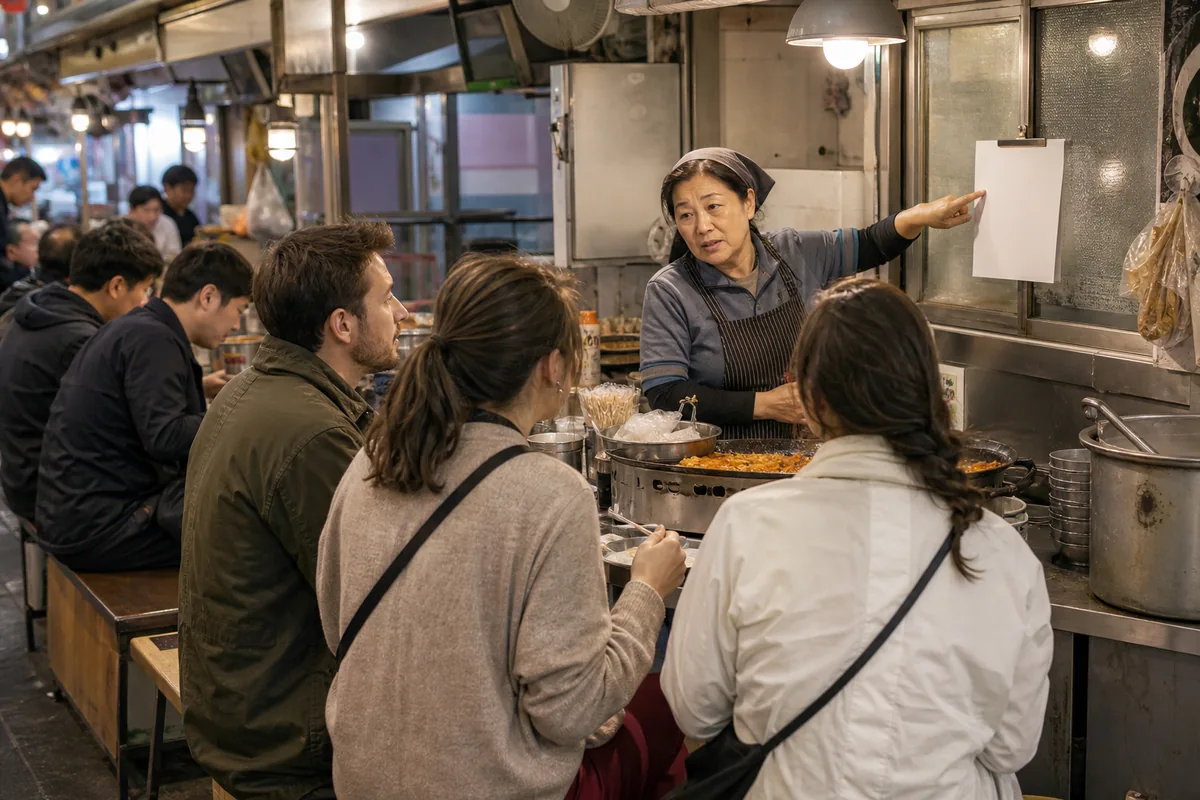
Food stalls in korean markets are often busiest in the morning and around lunch. If you arrive late in the afternoon, the best dishes may already be sold out or the stall may be closing. For a real market meal, aim to go before noon.
Some tourist markets stay active later than neighborhood markets, but the food still follows a daytime rhythm. If you are going mainly for eating, do not plan on a full dinner-style visit unless you have checked the market’s schedule in advance.
How to Check Before You Order
Before you buy anything, look for three things: the posted price, the payment sign, and the stall hours. If you see a clear board, read it first. If you do not understand it, point and ask. A short question is enough.
Korean Phrases You Can Show
Where to Get Help
Larger tourist markets often have an information desk or staffed booth. That is the easiest place to ask about directions, opening hours, or market layout. In smaller local markets, nearby convenience store staff are often the simplest backup if you need help finding something or checking a basic detail.
If you need official travel information, the Korea Tourism Organization’s tourist helpline is a useful resource for general visitor questions.
Common mistake: assuming every market is open late. Many local markets and food stalls close earlier than tourists expect, and some stalls follow their own weekly rest day.
Common Mistakes
- Assuming every market is a tourist food street
- Arriving too late for food
- Expecting card payment at every stall
- Trying to bargain when the price is already fixed
- Ignoring posted hours and stall-specific closing times
The short version: this topic work by market type, not by one universal rule. Tourist markets and local markets have different prices, payment habits, and hours. Bring cash, go early for food, and check the signs before you buy.
Foreigners Get Wrong About Korean Markets becomes easier to handle when you recognize the situation and follow the practical steps above.
Foreigners Get Wrong About Korean Markets becomes easier to handle when you recognize the situation and follow the practical steps above.
For official information, check Visit Korea official travel information.
FAQ
Do this topic take card payments?
Some do, especially in tourist areas, but many stalls in local markets still prefer cash. Carry both, and check for a card terminal or a 카드 가능 sign before you order.
Can you bargain in this topic?
Sometimes, but not everywhere. Bargaining is more likely at certain tourist stalls, while food, produce, and everyday goods often have fixed prices.
What time should I go to a Korean market for food?
Go in the morning or before noon if you want the best selection. Many food stalls start winding down in the afternoon.
What is the difference between a tourist market and a local market in Korea?
Tourist markets are set up for visitors, with more snacks, clearer signs, and more card-friendly stalls. Local markets serve neighborhood shoppers and usually focus on groceries, side dishes, and daily goods.
Note: This guide is for travel navigation in Korea. It is not medical, legal, or emergency professional advice. For urgent situations, contact local emergency services, official staff, or your embassy/consulate as appropriate.