Incheon More Than Airport: What You Need to Know
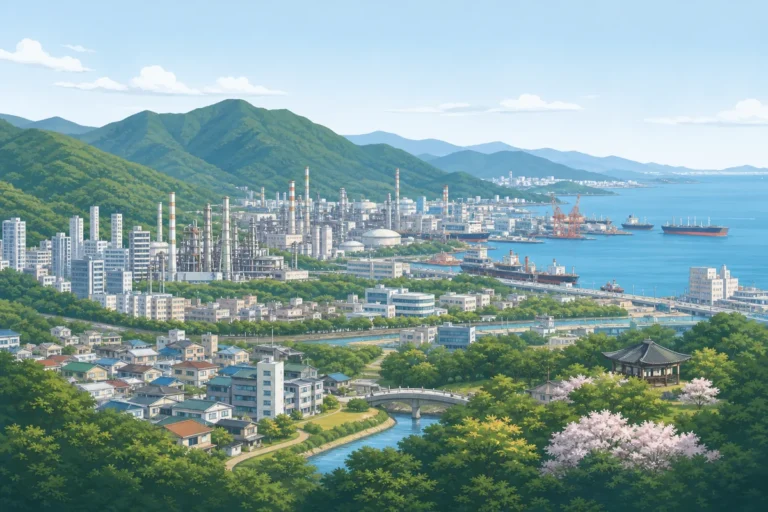
If you only know incheon port city as the airport, you are missing the city’s real character. Incheon is an old port city with trade history, heritage streets, Chinatown, Wolmido, Songdo, and island areas that feel completely different from the airport zone.
Quick Decision Guide
- Want history and old architecture? Start near Incheon Station and the open-port district.
- Want Chinese food and colorful streets? Walk into Chinatown from Incheon Station.
- Want a seaside promenade and local leisure feel? Go to Wolmido.
- Want modern skyline views and planned-city parks? Choose Songdo.
- Have a half day? Combine Chinatown, the open-port streets, and Wolmido.
- Want a quieter escape? Look at Muuido or Deokjeokdo by ferry.
- Have only a short layover? Songdo is the easiest city detour.
Why Incheon is more than the airport
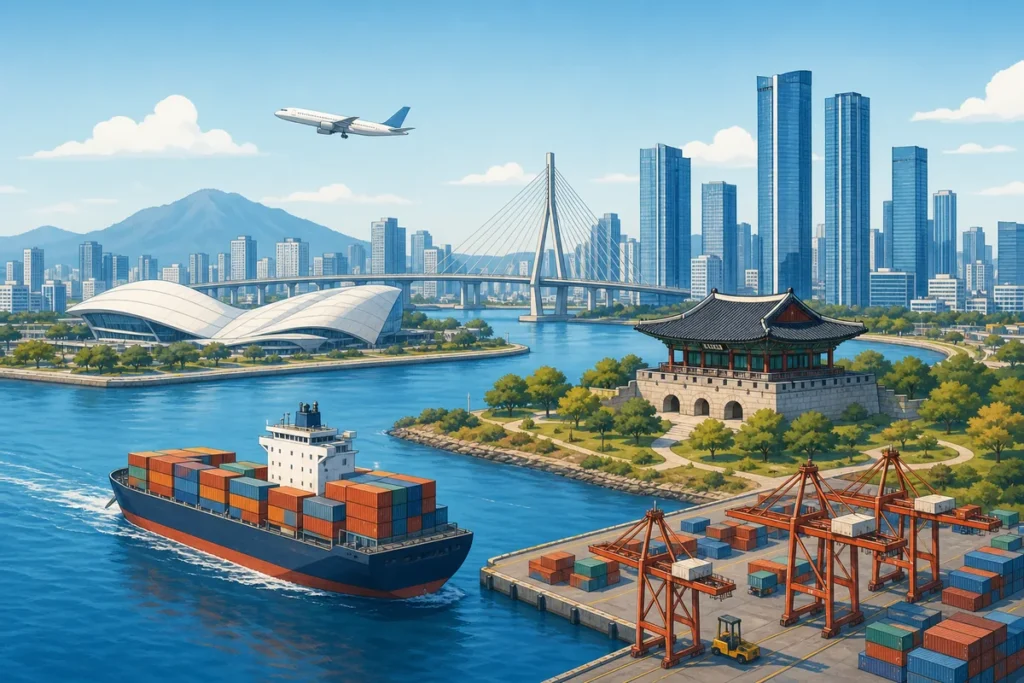
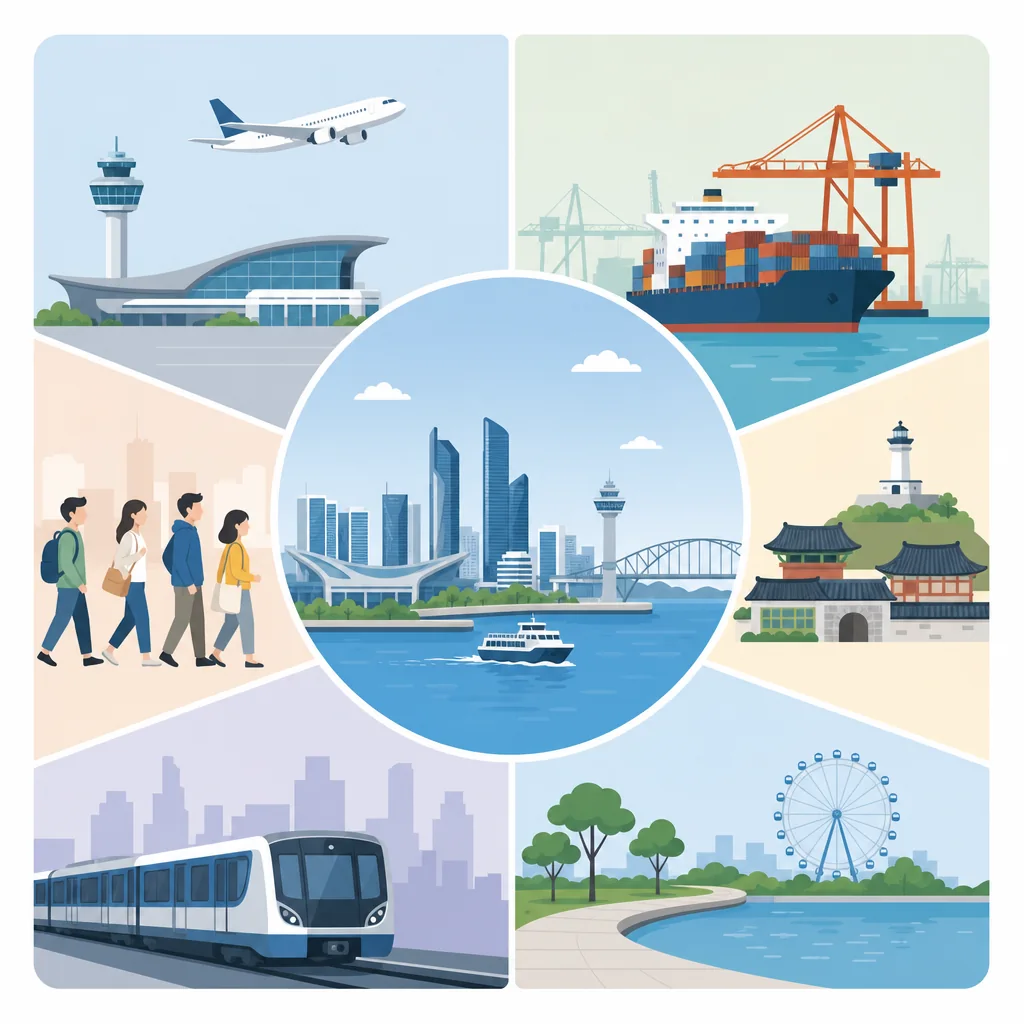
Most international travelers land at Incheon International Airport, spend a few hours in transit, and leave thinking they have seen the city. They have not. The airport sits on Yeongjong Island, while the actual city of Incheon has old port neighborhoods, a working harbor, a lively Chinatown, a futuristic planned district, and several islands reachable by ferry.
Incheon is South Korea’s third-largest city by population. It has its own coastline, subway system, and a city identity that has nothing to do with departure gates. Once you cross from the airport side into the main city, the scene changes fast: older streets, harbor views, dense neighborhoods, and a much more lived-in feel.
The key point is simple. Incheon is not one place. It is several very different areas that share one city name, and each area serves a different kind of visit.
Incheon port city and its open-port history
The incheon port city story begins in 1883, when Korea opened Incheon to foreign trade. The city, then called Jemulpo, became one of the first open ports and quickly drew merchants, diplomats, and shipping traffic. Japanese, Chinese, and Western communities set up near the harbor, and that layered history still shows up in the streets today.
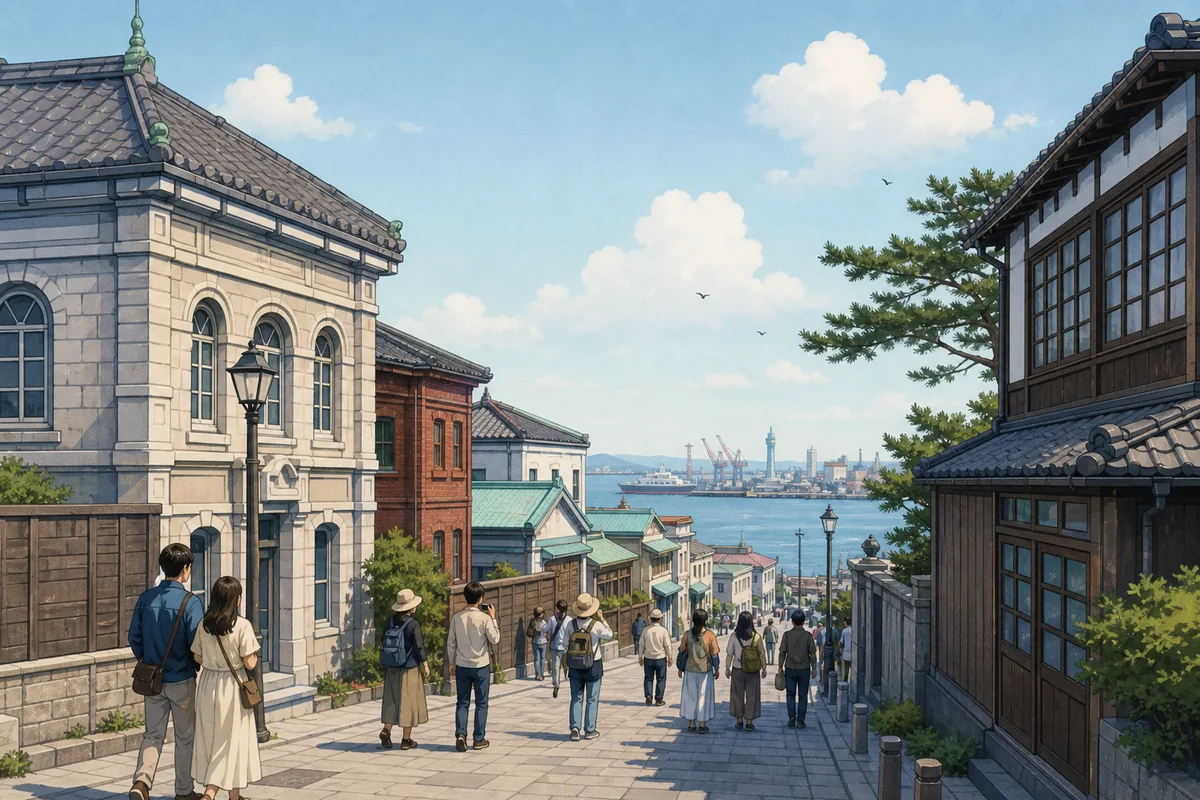
That background explains why Incheon feels different from Seoul. In the historic core, you can still see old brick buildings, Japanese-era architecture, Chinese gates, and market streets within a short walking area. It is a city where the past is not hidden away in one museum zone; it sits beside cafés, shops, and working neighborhoods.
Incheon is still a major port today. Cargo ships move through the harbor, while Songdo shows the city’s modern side on reclaimed land. That mix of old trade history and new development is what makes Incheon unusually interesting for a short visit.
Historic Incheon: the open-port area and old downtown
The historic core sits around Incheon Station, the last stop on Seoul Metro Line 1. This is the oldest part of the city and the easiest place to understand Incheon’s port history on foot. Step out of the station and Chinatown is right there, while the open-port heritage streets begin just a short walk away.
The Japanese Concession area, now called Open Port Culture Street, has buildings from the late 1800s and early 1900s. Some are museums or cafés, while others are still used as normal shops. The Incheon Open Port Museum and the Japanese 18th Bank building are two of the most recognizable stops. You do not need deep historical knowledge to enjoy the area; the architecture alone gives it a strong sense of place.
The old downtown feels more lived-in than polished. That rougher edge is part of the appeal. It gives you a real sense that this is a city with a long, complicated history rather than a neat tourist zone.
Chinatown and nearby heritage streets
Incheon Chinatown is the only officially designated Chinatown in South Korea. It grew during the open-port era when Chinese merchants, mostly from Shandong province, settled near the harbor. Today it is a compact neighborhood of Chinese restaurants, red gates, murals, and snack shops.
The food is the main draw. Incheon Chinatown is closely linked with jajangmyeon, the black-bean noodle dish that became one of Korea’s best-known comfort foods. Several restaurants claim the original version, but the bigger point for visitors is simple: this is one of the best places in Korea to eat it.
You will also find tangsuyuk, steamed buns, and other Chinese-Korean dishes that are easy to order and good for sharing. The streets are compact enough to walk quickly, but most people end up staying much longer because they stop for food.
Near Chinatown, Jayu Park sits on a hill above the harbor and gives a strong view over the old port area. Sinpo International Market is also close by and adds a more everyday market feel, with dakgangjeong as the best-known snack.
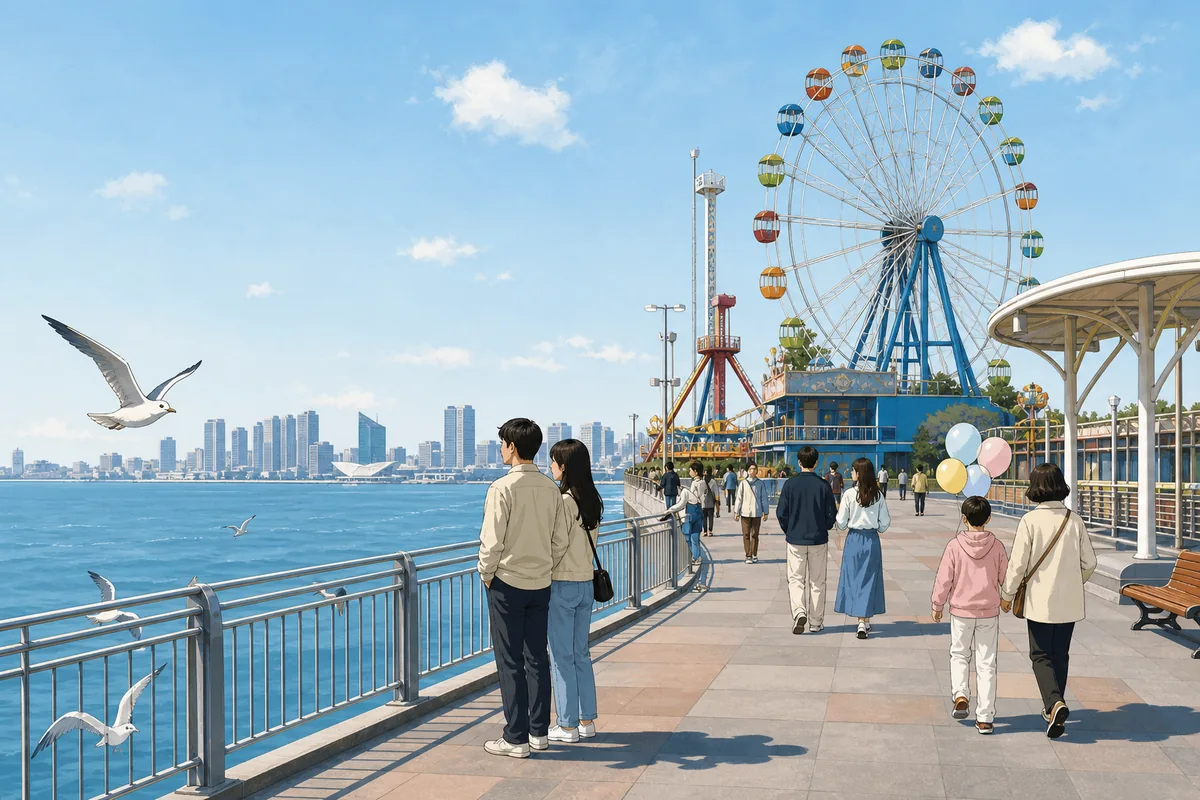
Wolmido: seaside leisure and local trip atmosphere
Wolmido is a small island connected to the mainland by a causeway, about a short drive or bus ride from Incheon Station. It has long been a favorite seaside outing spot for local families, couples, and friend groups.
The waterfront is lined with seafood restaurants, a promenade, and small amusement rides. The atmosphere feels retro in a good way: relaxed, busy on weekends, and built around eating, walking, and looking at the sea. It is one of the clearest places to experience Korean coastal leisure without leaving the city.
Wolmido works especially well with Chinatown because the two areas are close enough for one easy half-day. If you want food, sea views, and a casual local outing, this is the simplest combination.
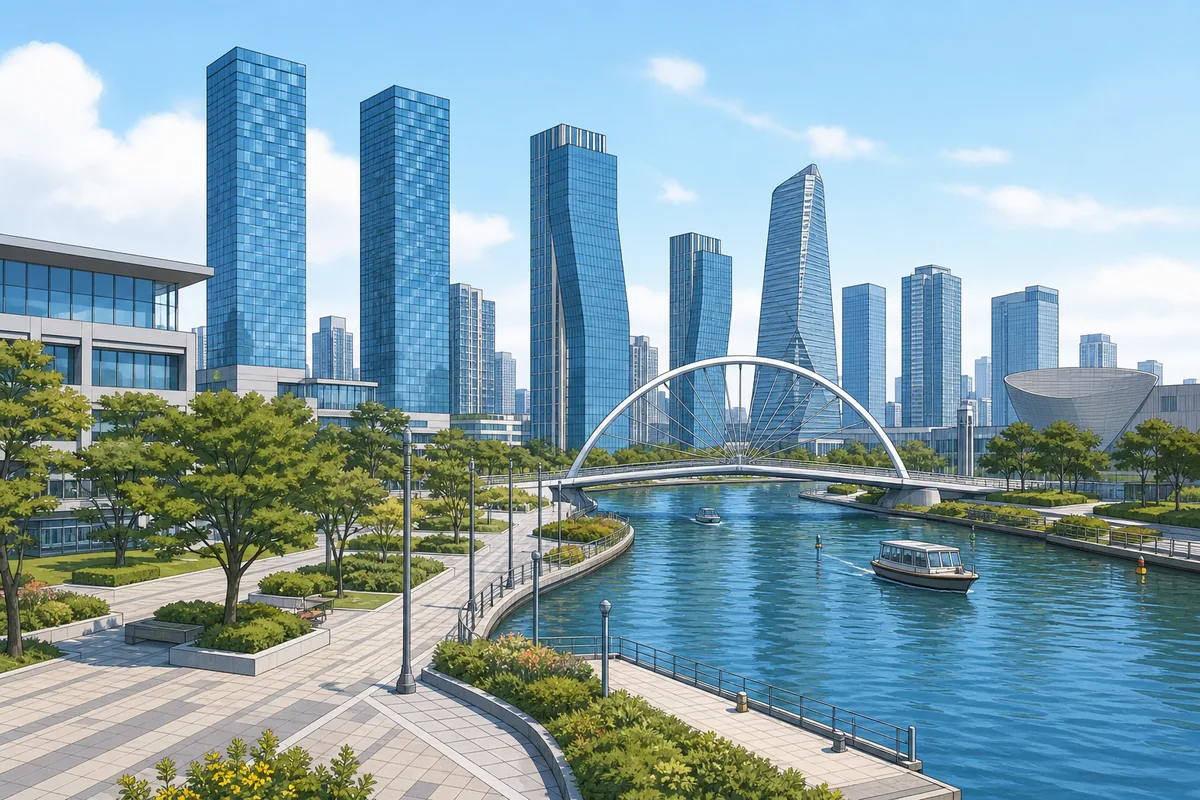
Songdo: the modern planned city
Songdo International Business District is the modern face of Incheon. Built largely on reclaimed land from the early 2000s onward, it was planned as a clean, spacious, business-friendly district with wide roads, glass towers, canal systems, and a large central park.
Songdo looks almost like a different city from the open-port area. Where old Incheon is narrow and layered, Songdo is open and geometric. That contrast is one of the best reasons to explore Incheon as a city instead of treating it as an airport stop.
Central Park is the easiest place to visit first. The waterways, walking paths, and park views are simple to enjoy, even on a short stop. Songdo is also the closest major district to the airport side of the city, so it works well for a layover or a short first look at Incheon’s newer identity.
Islands and coastal areas around Incheon
Incheon also includes dozens of islands in the Yellow Sea. Some of the best-known options are Muuido, Jawoldo, Deokjeokdo, and Baengnyeongdo. They all have different paces and distances, but they share one thing: they feel far removed from the airport image most visitors have of Incheon.
Muuido is the easiest day trip. It is close to the airport area and popular in summer for beaches and quick escapes. Deokjeokdo and Jawoldo feel quieter and slower, which suits travelers who want a more relaxed coastal trip. If you want fishing villages, tidal flats, and seafood with a stronger local feel, the islands show a side of Incheon that most visitors never reach.
Ferry schedules and island access: Ferry times to Incheon’s islands change by season and weather. Departures can be cancelled because of wind or tide conditions. Check the official terminal schedule before planning an island day trip, and leave extra time if you have a flight.
Which part of Incheon should a first-time visitor choose?
If your goal is history, start at Incheon Station and explore the open-port district and Chinatown. If your goal is a seaside walk and local food, add Wolmido. If your goal is modern city design, go to Songdo. If your goal is a slower island break, plan for a ferry trip.
For most first-time visitors with half a day, the best route is Chinatown plus the open-port streets, with Wolmido if you want to finish by the water. That gives you the strongest contrast between old and new Incheon without wasting time in transit.
If you only have a short stop and want something easy to reach, Songdo is the cleanest choice. It does not show Incheon’s full history, but it does give you a clear look at the city’s modern side.
Quick takeaway: old port city and new waterfront city
Incheon is an incheon port city in two very different ways: the historic harbor city shaped by open-port trade, and the modern reclaimed-land city shown by Songdo. Chinatown, Wolmido, and the old downtown give you history, food, and seaside atmosphere. Songdo gives you the new skyline. The islands give you quiet coastal space. Together, they show why Incheon is much more than an airport.
Incheon More Than Airport becomes easier to handle when you recognize the situation and follow the practical steps above.
Incheon More Than Airport becomes easier to handle when you recognize the situation and follow the practical steps above.
Frequently Asked Questions
Is Incheon just the airport in Korea?
No. The airport is only one part of a much larger city. Incheon has historic port streets, Chinatown, Wolmido, Songdo, and several islands.
What is the difference between Incheon old town and Songdo?
Old Incheon is the historic open-port district with narrow streets, older buildings, and a harbor feel. Songdo is a planned modern district with wide roads, glass towers, and large park spaces.
Is Incheon worth visiting for a short trip?
Yes. A half-day in the Chinatown and open-port area gives you a strong sense of the city, and Wolmido or Songdo can be added depending on your time and interests.
Where should a visitor go first in Incheon as a first-time visitor?
Start at Incheon Station. From there you can walk to Chinatown, explore the open-port heritage streets, and decide whether to continue to Wolmido or head to Songdo.
Note: This guide is for travel navigation in Korea. It is not medical, legal, or emergency professional advice. For urgent situations, contact local emergency services, official staff, or your embassy/consulate as appropriate.
For official information, check Incheon Airport official information.